Night Sky: McMurdo, Antarctica

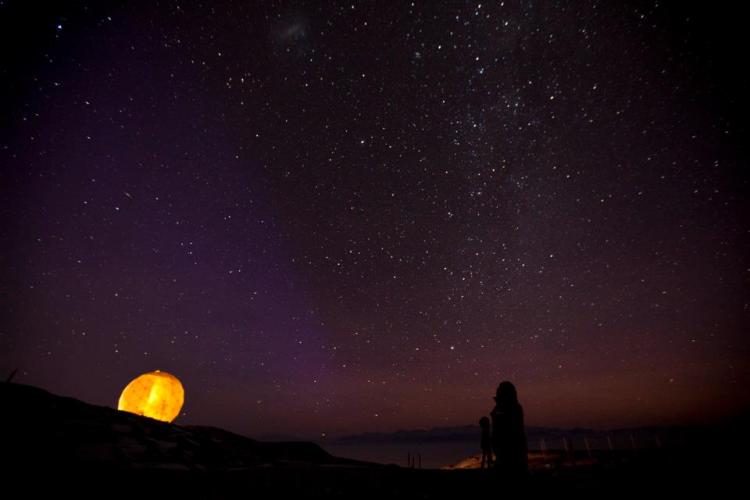
When it comes to night sky, it seems like South Pole generally has McMurdo beat. It’s so much darker, so much further South, and the aurora activity seems more common. However, every now and then, MacTown gets a beautiful show, and on top of it, the landscape there is so much more compelling. These pictures are from Deven Stross, who worked with me as a Materialsperson last summer at South Pole, and whose website you can visit here; keep in mind though, he’s still stuck at McMurdo with not-so-great internet, so most of the new photography isn’t showcased just yet.

These photos are from July, before the sun had begun to rise.

Time lapse photo with a human subject: standing still for 30 seconds at -26F.

Here is a more recent photo, where the sun is illuminating the nacreous clouds over Castle Rock. It’s just so beautiful, don’t you think?

Open Book: on writing, on classes, on not-travel.

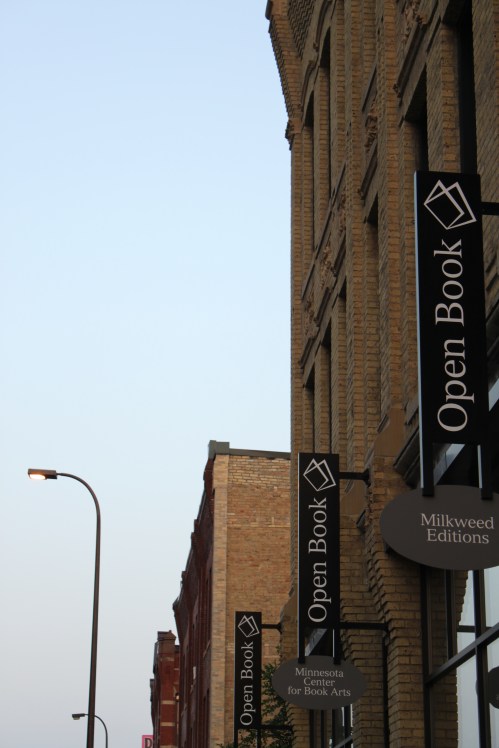
I took a writing class at The Loft in the Open Book building in Minneapolis, ascetic but warm and inviting. There are classrooms and workshops, huge heavy printing presses and stacks and stacks of art books that seep simple beauty.

One of the things I’ve been struggling with lately is finding my writing voice as a person who lives in one place and goes to a normal job—at least for the time being—if I don’t travel, what will I write about? If I don’t write, where can I go? Am I writing for myself or for other people? I’m perfectly aware that many great writers are not constantly deluged with stimuli the way you are when traveling; that a good writer can take a very ordinary thing and make it compelling. Traveling made writing easy for me because I just had to write what was immediately in front of me and there was always something new and lots of things that weren’t ordinary at all. I suppose my challenge now is to find a way to write about things that are not that.

It is starting to become more real to me that I am not leaving for Antarctica this year. As my friends and colleagues scramble to get their contracts, to pack their lives into boxes to place in storage, to fill their suitcases with belongings they need for many months away from home, to get their medical screenings taken care of, I am very aware of things settling down in my life, not winding up. For the past two years the end of summer was the end of my time in Minnesota, and the beginning of a huge trip with long plane rides and new cities and cold, breathtaking arrivals heavy with meaning. Even though I know it’s the right decision to stay home, and even if only for a few seasons, it still hurts to remove myself from the velocity of that lifestyle.

And I have to think harder about what to write.

I always enjoyed school and I like taking classes like this one at The Loft because it helps me to hear other peoples’ takes on similar assignments. I like hearing other people read the same poem I just read, but in a different voice, because it helps me pull back from my own myopic interpretation of its words. I like being immersed in the output of others because it makes me think harder about what I produce, and because for me creativity begets creativity. The more I read and look at art and listen to music and watch performances, the more excited I get to write, to make, to dance.

Antarctica on Google Street View!

Sometimes I seriously love the internet. This is so cool:

Certain parts of Antarctica are now available for you to visit from the comfort of your own computer. Despite the dorky  “armchair explorer” title given by the articles about this, it is really a pretty neat thing. My favorite was Scott’s Hut, which is a 10 minute walk from McMurdo Town and full of polar explorer artifacts–I never got to go inside while I was there but was able to look around here! I had never heard of the World Wonders Project before this, but it’s really interesting; panoramic, navigable, street-level images of world heritage sites. Seriously. Go check it out: http://www.google.com/culturalinstitute/worldwonders/.

This is the Dark Sector on street view, the off-station site that is home to many of the research projects including South Pole Telescope, Bicep and IceCube a little further down the road.

Here is the Ceremonial South Pole view:

If you’re not familiar with Google Street View, when you go to the actual page you can click on the white arrows to move yourself around within the photo’s span.

Read more about this here, here and here. Well.. the last link is a bit sketchy, due to its photo caption “Penguins in the South Pole.” Do your homework, people.

Dazzling Winter Photography from the South Pole

Midwinter has just recently passed at the South Pole–the sun has been down for months, ambient temperatures have dropped below -100F multiple times throughout the season, and life in the name of science is presumably carrying on as normally as it possibly can when you are utterly and completely stuck in one of earth’s most unwelcoming locations.

I am not sure whether I have it in me to winter at South Pole–I want to, but in a way that is more abstract than real right now. On one hand, you are quite literally trapped, come hell or high water or cancer or fuel shortages. As much as the program does to screen for potential illness (physical and mental); and as much fuel as is saved in the emergency caches; despite the fact that the power plant runs four generators and that there is enough frozen food to last for a decade, I really don’t know how I would feel when the last plane of summer left. Maybe I would feel finally free, relieved that the summer contractor population was gone. Maybe I would slowly succumb to massive hypochondria. Not sure. Now, I’m being facetious, but the thought really does worry me a little.

The thing that draws me back to maybe-wintering is the night sky, the aurora australis and the neverending stars and the moon. Every picture I see reinforces the possibility.

Sven Lidstrom is a winterover who is responsible for the day to day running of the neutrino detector/telescope IceCube. For as many times I’ve heard and read the purpose of the detector and the definition of a neutrino, I think I’ll let their website explain: “IceCube is a particle detector at the South Pole that records the interactions of a nearly massless sub-atomic particle called the neutrino. IceCube searches for neutrinos from the most violent astrophysical sources: events like exploding stars, gamma ray bursts, and cataclysmic phenomena involving black holes and neutron stars. The IceCube telescope is a powerful tool to search for dark matter, and could reveal the new physical processes associated with the enigmatic origin of the highest energy particles in nature.” Sven was also my Scott-tent-mate for Happy Camper Training, which you can read about here.

These photos are all by Sven; please do not use them without permission and credit.

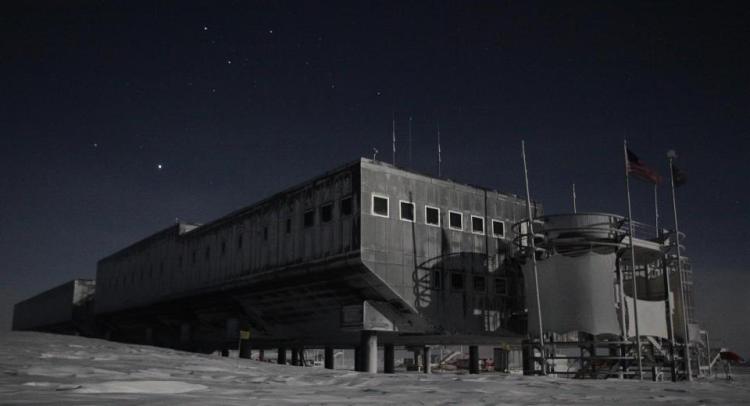
South Pole elevated station by moonlight and by Southern Lights:

TDRSS and GOES, the satellite dishes that link South Pole to the rest of the world:

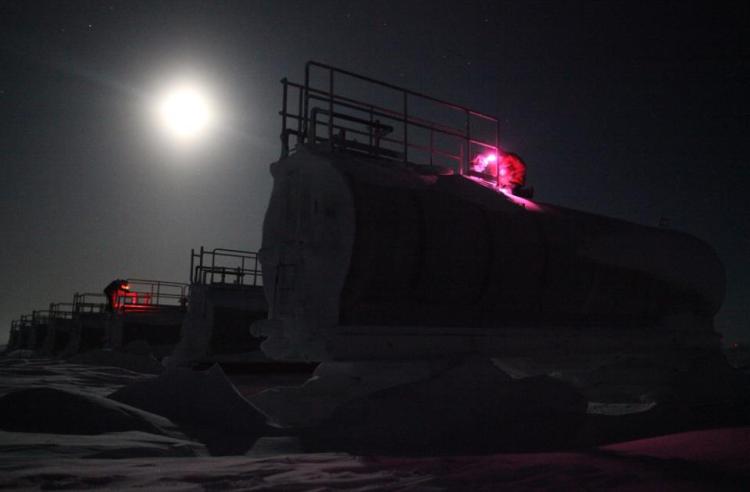
Winterovers checking the fuel levels in the off-site emergency fuel cache at the End of the World:

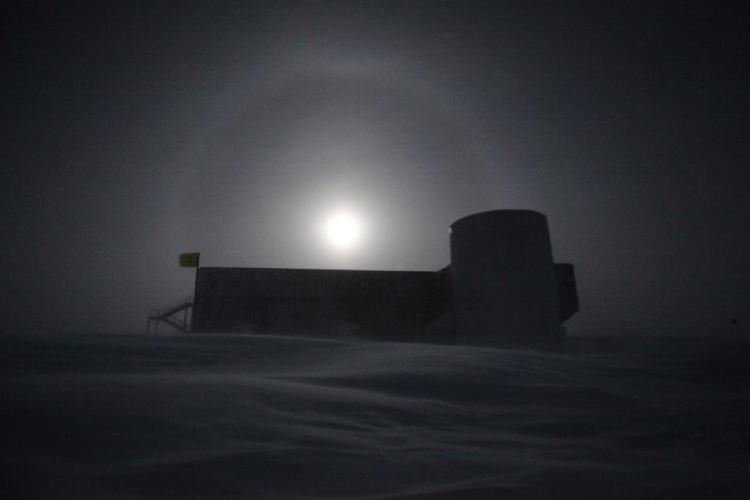
This last photo is one of my favorites: these are the jamesway tents we lived in, which are slated for demolition sometime in the next few years, completely drifted under by blowing ice:

On death, breakups and Big Positive Thoughts

Death is not clean or punctual or forgiving. It has its own clock, makes its way through the beds of wet kleenex feathers full of snot and mascara when you have your eyes closed. Death sometimes comes when you have left for a sandwich, when you have gone to feed your elderly mother, or sometimes when you’re sitting right there, waiting for it. This breakup was bookended by the death of two sweet grandfathers, first my partner’s and then mine.

In February, a few weeks after redeploying from Antarctica to New Zealand, I found myself standing ankle-deep in the Pacific Ocean, feeling that odd vertigo that is specific to when the sea is pulling itself out from under you, eroding the very earth you’re standing on, one grain of sand at a time, creating heel shaped divots under your weight.

It all felt quite significant, like I was in a movie or something and the next thing you knew I’d be walking out and disappearing and the ocean would eat me and the credits would roll. I sang to myself, to add a soundtrack and expand the melodramatic fantasy. D had broken up with me about four days before that. I felt like shit. But I knew that realistically, instead of dying, I would rather go back to the hotel and have beer and pizza and talk more with him about what the future held for us, for him, for me. We had ten days in New Zealand to talk and process the highs and lows and confusing, hairpin-turn-roller-coaster delirium that ensued when our framework and the life we had together began to dissolve. It was kind of fun, in a contradictory way, getting to be painfully honest and brutally interrogative, to cry together and sometimes to even feel like things would be okay in whatever way they came to manifest. I’ll spare you the details, for privacy reasons. But we were seriously in it. We talked about everything.

What I will tell you is that I spent months after getting home (well, okay, I still feel like this sometimes) as a split self: part of me feeling really calm and collected, like the gift in all of this could be a new beginning, a rebirth, an infinite possibility of freedom. The other, smaller part was rebellion and ricochet, like certain isolated atoms of my being were on the verge of nuclear meltdown, destructive and explosive and very, very dangerous.

Everything inside of me felt visceral and raw, while simultaneously too-okay and oddly emotionless. I drank a lot of whiskey. I ran around the lakes, wrote pages and pages and pages of angry, confused words. I tried to do yoga, but it didn’t have the same physical release as running. I read a lot of classified ads, trying to assemble the puzzle pieces into something that resembled a life, and extended little prayer tendrils for good things in all directions, and tried to think Big Positive Thoughts.

After my grandfather died, I wish I could say that it gave me a new perspective on what things are important in life and what things are better to let go, but it didn’t. I just felt sad and panicky. Both of our grandpas’ memorials fell on the same weekend. I watched my grandmother cry wordlessly, a sad gift that in her dementia, she knew he was gone. I saw a lot of friends that have known us for all of the last twelve years as a couple. I felt immensely selfish, thinking about the breakup when bigger things were happening. Life and death things. It was terrible.

I’m not much of a prayer person. But Anne Lamott wrote, “here are the two best prayers I know: ‘Help me, help me, help me,’ and ‘Thank you, thank you, thank you.'” And I can totally handle that. So I tried to ask for a lot of help, and I got it in a lot of different forms. So to those of you who sent love and positive energy; who sent me lots of supportive messages and gave me chocolate and wine and a place to sleep; who listened to my drunken narcissistic stream-of-consciousness rants and then made me laugh or cried with me; who told me your own stories of breakups that were far more traumatizing than mine: thank you, thank you, thank you. I really mean it. The little boat I’m in is lost at sea, paint peeling and leaks sprouting, but it’s still buoyant. So thank you.

The 300 Club, Vicariously.

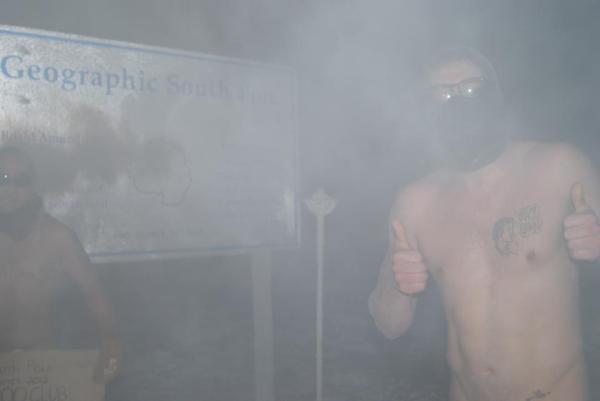
And now, the answer to the age old question of what exactly to do when the ambient temperature at the South Pole hits -100F: you take off all your clothes and run around outside!

Here’s the tradition: when the on-station meteorologists announce the official temperature to be at or below -100 degrees, you strip naked and head into the sauna, which is set at a toasty 200F above zero (to make a 300 degree difference), overheat for a bit, put on your boots and gloves, and take yourself outside for a stroll around the pole itself.

You can read a full post by my friend Lynnette, who is wintering in Materials at South Pole, here.

Image

A little link or two for Antarctica jobs in 2012

You might have already seen it, but the Lockheed Martin Antarctic Service Contract facebook page has quite a few job listings across subcontractors– for contract positions/seasonal stuff.

PAE is the company that’s going to be responsible for a lot of what fell under Operations and FEMC (Facilities, Engineering, Maintenance and Construction), as well as most of Logistics (Cargo and Materials). I don’t have the link handy since it was in my on-ice email account which was deleted after I left, but I’ll post it when I get it.

Gana-A ‘Yoo Service Corporation aka GSC is the new NANA–food, housing and jano services fall under this. I heard that the grub lugger job will be with the Materials department now, but that’s not confirmed.

GHG is the company that will be hiring for IT/Comms, but not Information Security. I don’t remember what the other company was.

I think there are eight total subcontracting companies–Waste, InfoSec, and a couple of others are going to be separate. I honestly can’t even remember what they all are or what they do. It’s going to be really interesting to see how the dynamics will play out on station; everyone will be reporting to separate HR divisions in theory, and I think continuity/fair and equal treatment will be a huge challenge for them.

A lot of jobs aren’t posted yet, it looks like, and I know that the company’s focus when we were still there was on getting winterovers contracted and ready to go. Hopefully we’ll hear more soonish, but for now the facebook page is probably your best bet.

NPX-ZCM-CHC…&MSP

I left as the 24 hour rotating shadows were starting to become a little longer at South Pole, the wind getting sharper, the population getting smaller and more saturated with people getting ready to stay for their winter, bonding with each other and letting go, in a way because they have to, of summer contractors.

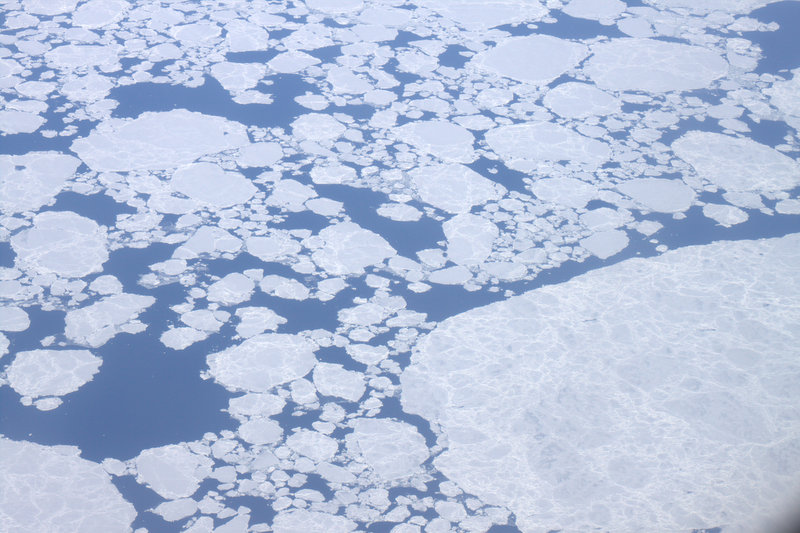
From the plane, hearing the drone of the props, watching the map underneath us change from flat white nothing to the volcanic soil of the mountains and coast, glacier tongues literally melting into sheer, vast open water, to sea ice. The view, visually overwhelming, seems to elicit poetic thoughts from even the most unlikely of mouths.

Being on McMurdo’s runway, letting comparatively temperate air and sun touch our ears, cheeks, necks, starved for that sensation. We watched firefighters shoo a penguin off the runway.

The stress of work peels away on that plane like a sheath of irrelevance—things that were immensely important just a few days before mean nothing at all now; it’s a blissful release, an absolution but also a kind of sad amnesia, because friends are invested in the same issues for the length of the winter season and it feels like giving up, abandoning them in a way.

Off the aircraft and though customs, the sweet New Zealand night air smelled like grass and flowers and rotten leaves, fresh or perhaps imminent rain (rain!), the sky dark and the moon ringed in a cloudy little rainbow. The group made the motions of the unceremonious chaos, dropping gear off at the CDC and boarding a shuttle, realizing that for the first time in a long time, you’re surrounded entirely by people you’ve never met.

The next day, waiting for and sitting through Daniel’s surgery, wondering at the pigeons outside the windows and the wind agitating the mature trees, wondering what happens if there’s an earthquake and they’re mid-surgery; wondering who was in the middle of surgery during the last earthquake and what happened to them, and then trying not to wonder that. And then it was over and he came rolling back up the hall in his bed and hospital gown. He’s totally fine now, no evidence of anything ever having been wrong.

We spent a week in Wanaka, south of Christchurch, soaking in a hot tub with friends and eating avocados, drinking bloody marys, decompressing from the season.

And here we are at home. It’s good to be back. Keep watching for more photos… there are plenty I want to share with you now that I’m back in the lands of plentiful internet.

Berm is a Four Letter Word

This season I’m working as a Materialsperson, which means basically I work with stuff—and we have a LOT of stuff here at South Pole, warehouses and stockrooms and berms and drawers and airplanes full of it. You can’t get rid of much because if you did, and then someone needed it, it would take two years and a lot of money to get it back. But seriously, a lot of it is junk.

South Pole station has a hoarding problem.

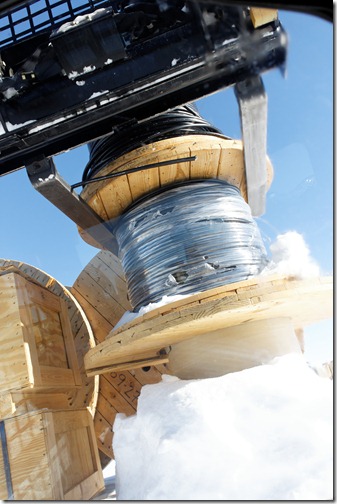
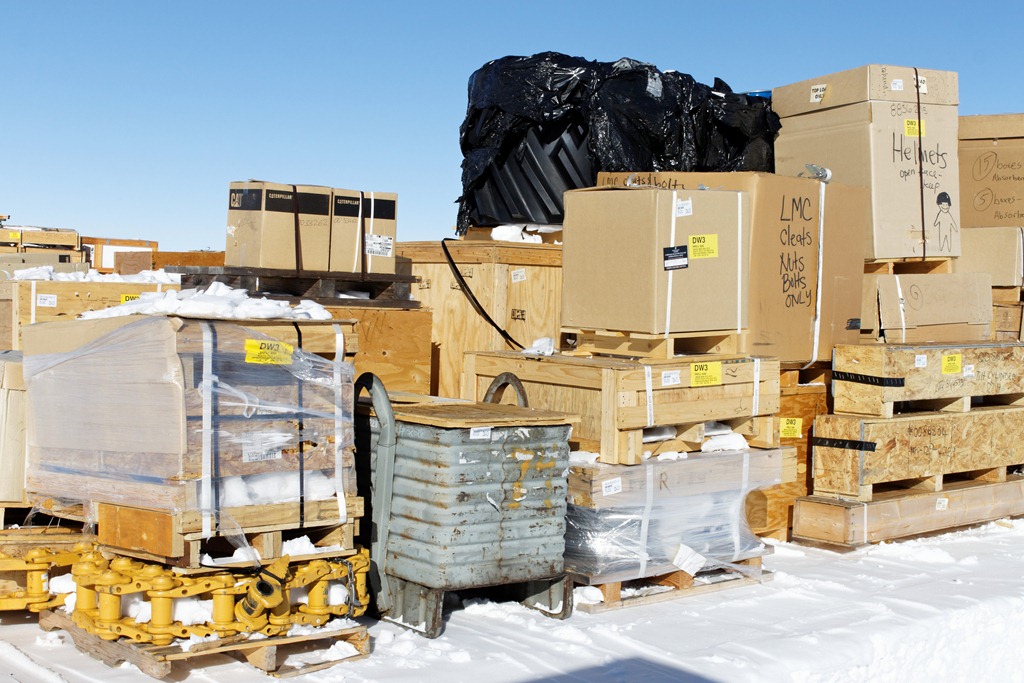
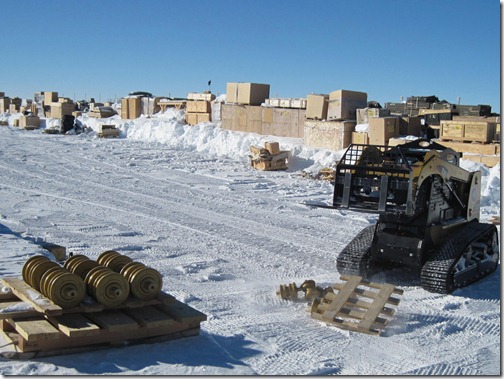
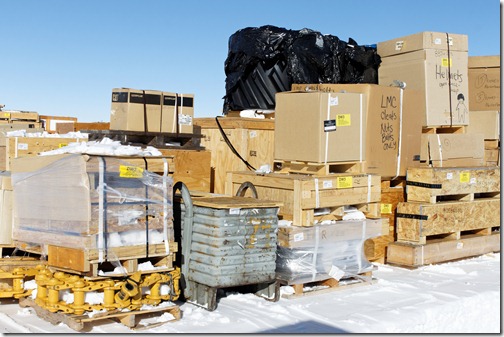
Anyway, we like to keep track of the stuff we have, and we do the best we can given the short season and the high volume of stuff being flown in and going out to work orders. My main project this season has been doing a deep inventory of the C-Berm (one of like 20 berms) which is home to most of the Heavy Shop and Power Plant stuff, as well as Fuels, IT and the greenhouse. To give you an idea of how screwy this berm is, our database, MAPCON, lists about 1000 different kinds of machine engines, CAT track shoes, bolts, cylinder heads, coaxial cable, fuel hoses and other things like that. After taking EVERYTHING off this berm, opening many and recounting all of the crates, researching their contents and shipping documents, putting everything back on, mapping and recording and crosschecking it, I discovered that we are missing 598 kinds of stuff (some of those stock numbers have hundreds of themselves listed in MAPCON but are nowhere to be found). That included three huge engine heaters, two whole snowmobiles and one $92,000 generator for the power plant. It’s not like people put this stuff in their suitcases and took it home, they just used it and didn’t write it down.

There are things that do not belong that we found on this berm, including dumbbells for weightlifting, science equipment and 200 pounds of Ramen Noodles from 2003.

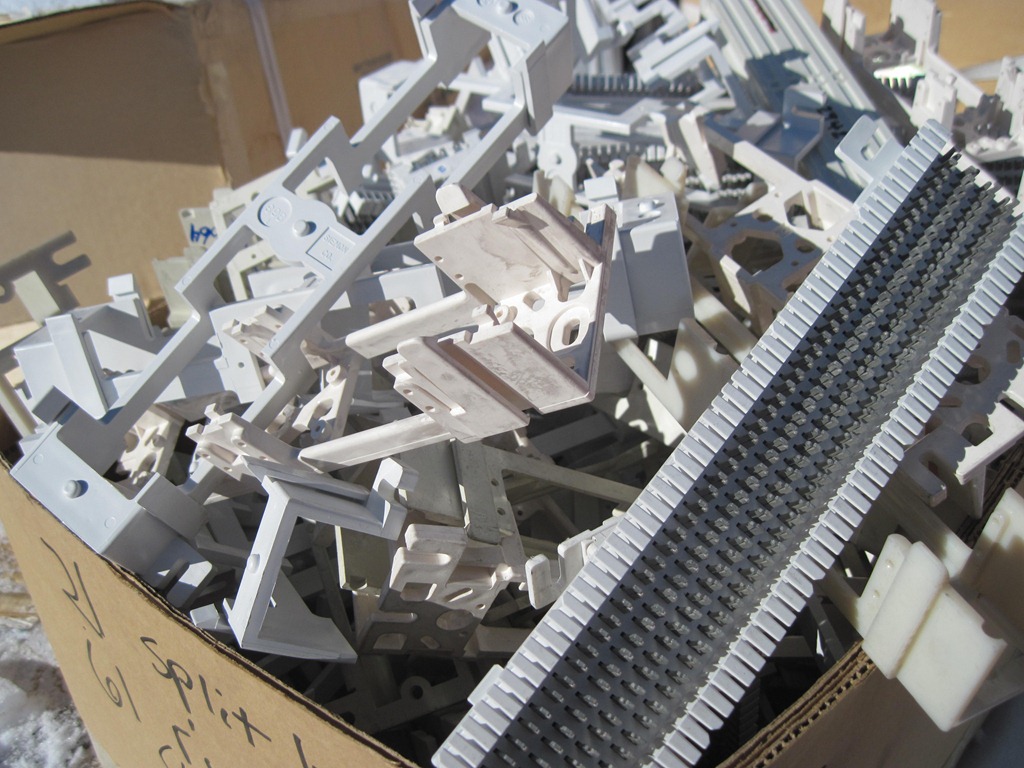
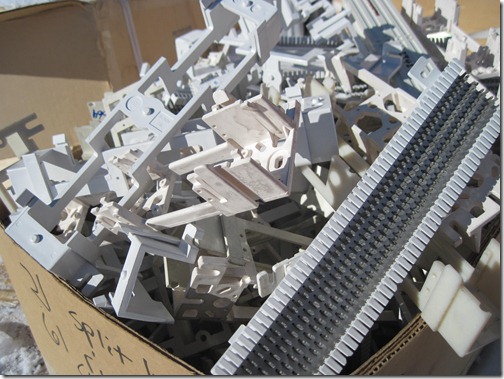
To do this project, we first removed all of the crates and boxes, setting them aside so the heavy vehicle operators could reform and grade the berm, basically carving a neat, 3 foot tall platform that was fifteen feet wide and hundreds of feet long. I took away a lot of things that were obviously trash, and parts for vehicles that we no longer have. I opened lots of boxes that had dubious contents, counted, labeled or laughed at the stuff inside, and if we were keeping it, re-banded and crimped it.
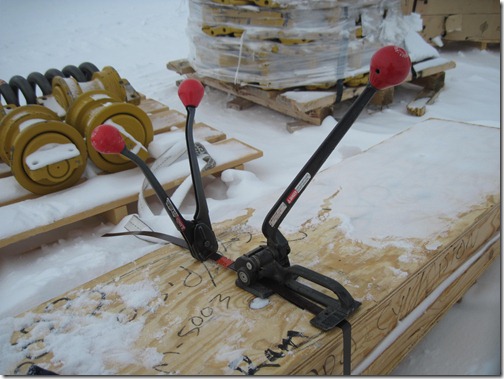
IMG_8259

IMG_8294

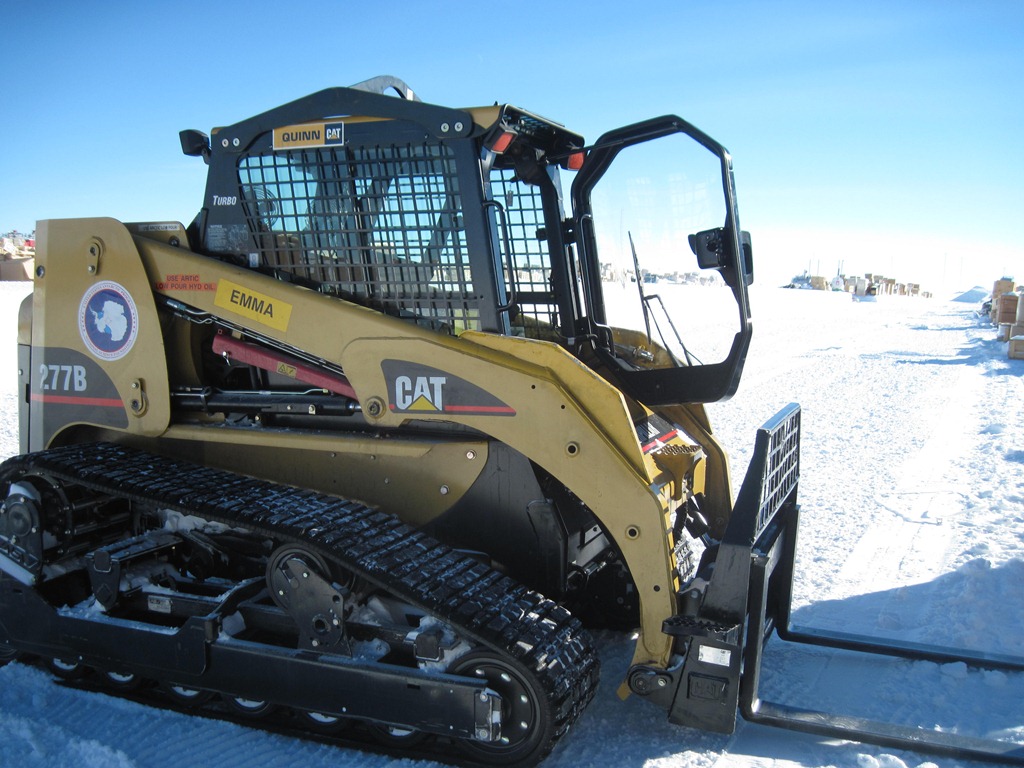
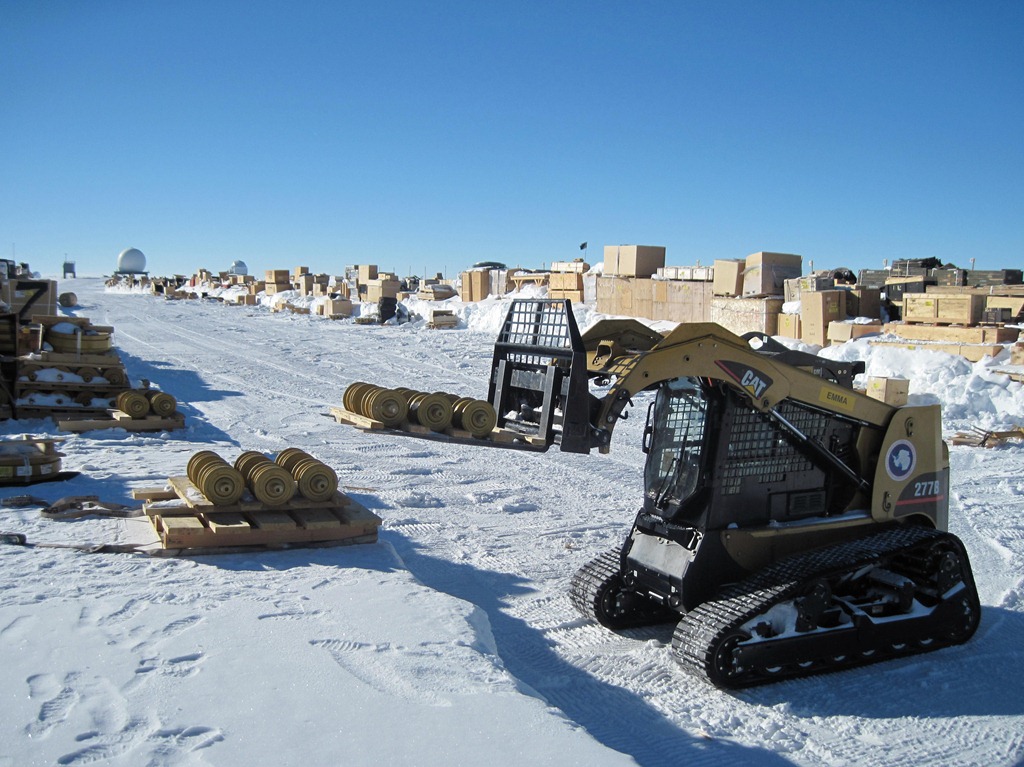
When it was time to start putting things back on the berm, I can use either a 277 or a 953 CAT loader. The 277 is a responsive, zippy little vehicle that is pretty fun to drive. It operates with a joystick and feels like a really big toy with a rollercoaster-like safety bar, and its name is Emma.
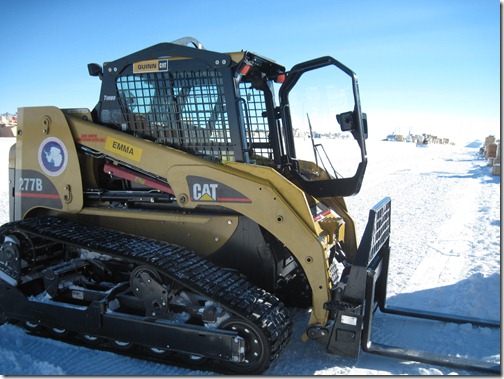
IMG_8282

The 953 is a huge loader (well, not huge in the world of loaders, but huge next to Emma) named Sundog, and Sundog is a huge, rickety loader that has two speeds: crawly and jumpy (also stabby, as in stabbing boxes with the forks, but that’s not really a speed).
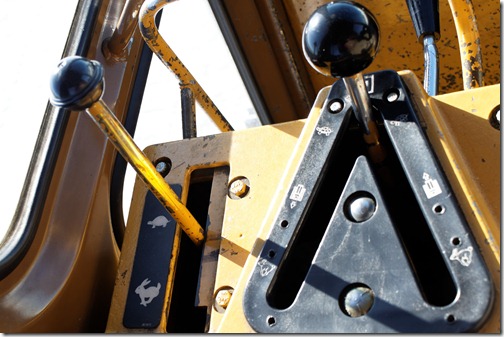
IMG_0923_DxO

I used whichever loader was available, and sorted and stacked the things into categories as well as I could, leaving as little space as possible to prevent snow drifting, a major challenge when next year’s team (maybe including me) has to inventory the whole berm again, although not to quite the extent as this year. I learned a lot working out there by myself, about operating the loaders and the differences between the machines.

I put lots of track rollers on the berms…
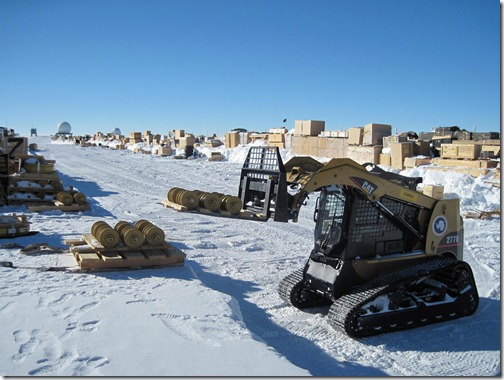
IMG_8311_DxO

And dropped some of them, which was really frustrating…
IMG_8309_DxO

And put some things up really high…

IMG_0928_DxO

And then it was done! Now it’s all ready to get completely drifted in over the winter, and then we’ll shovel it out and recount everything next year, although hopefully it will be much, much easier.
IMG_0921_DxO