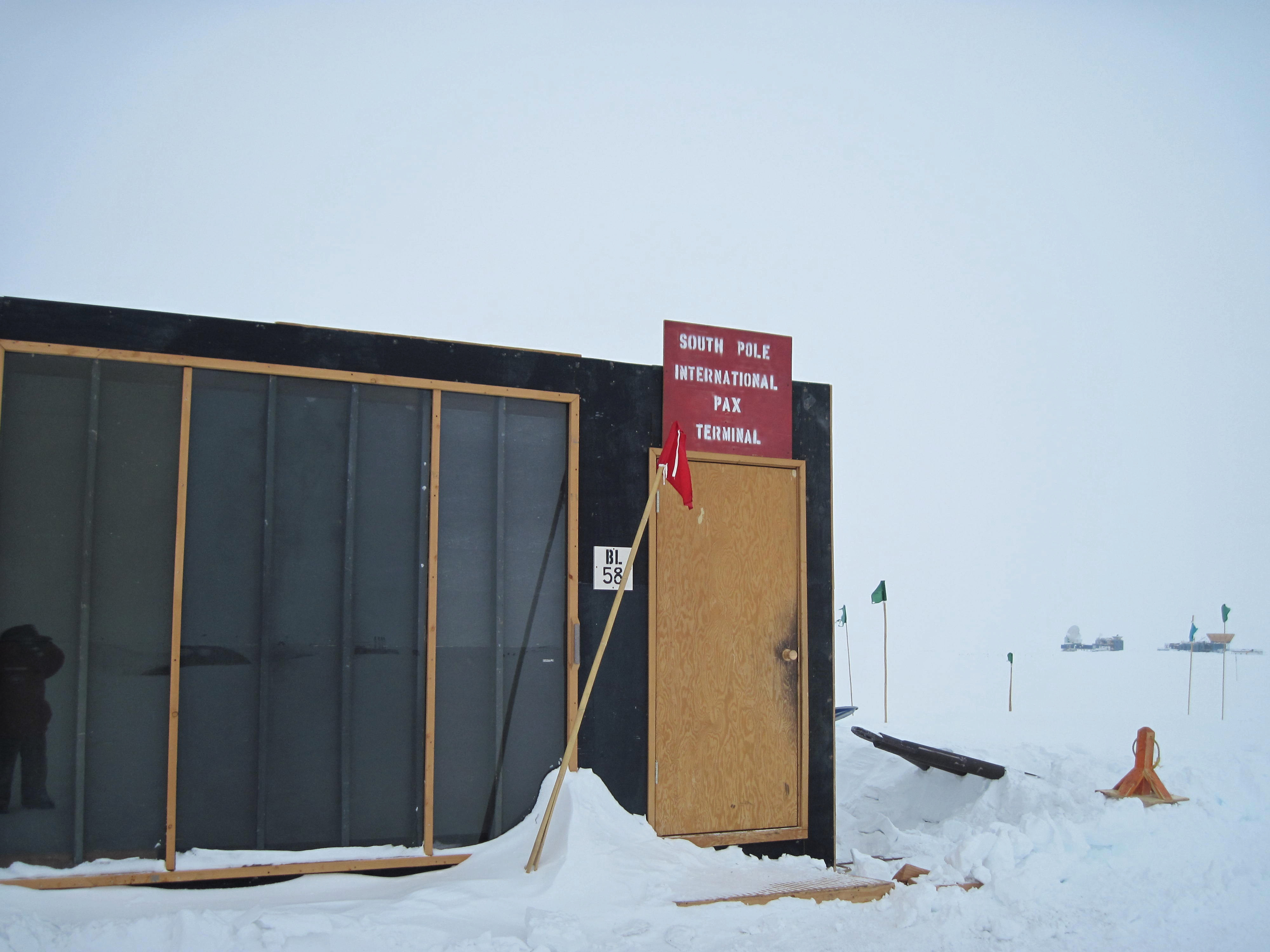
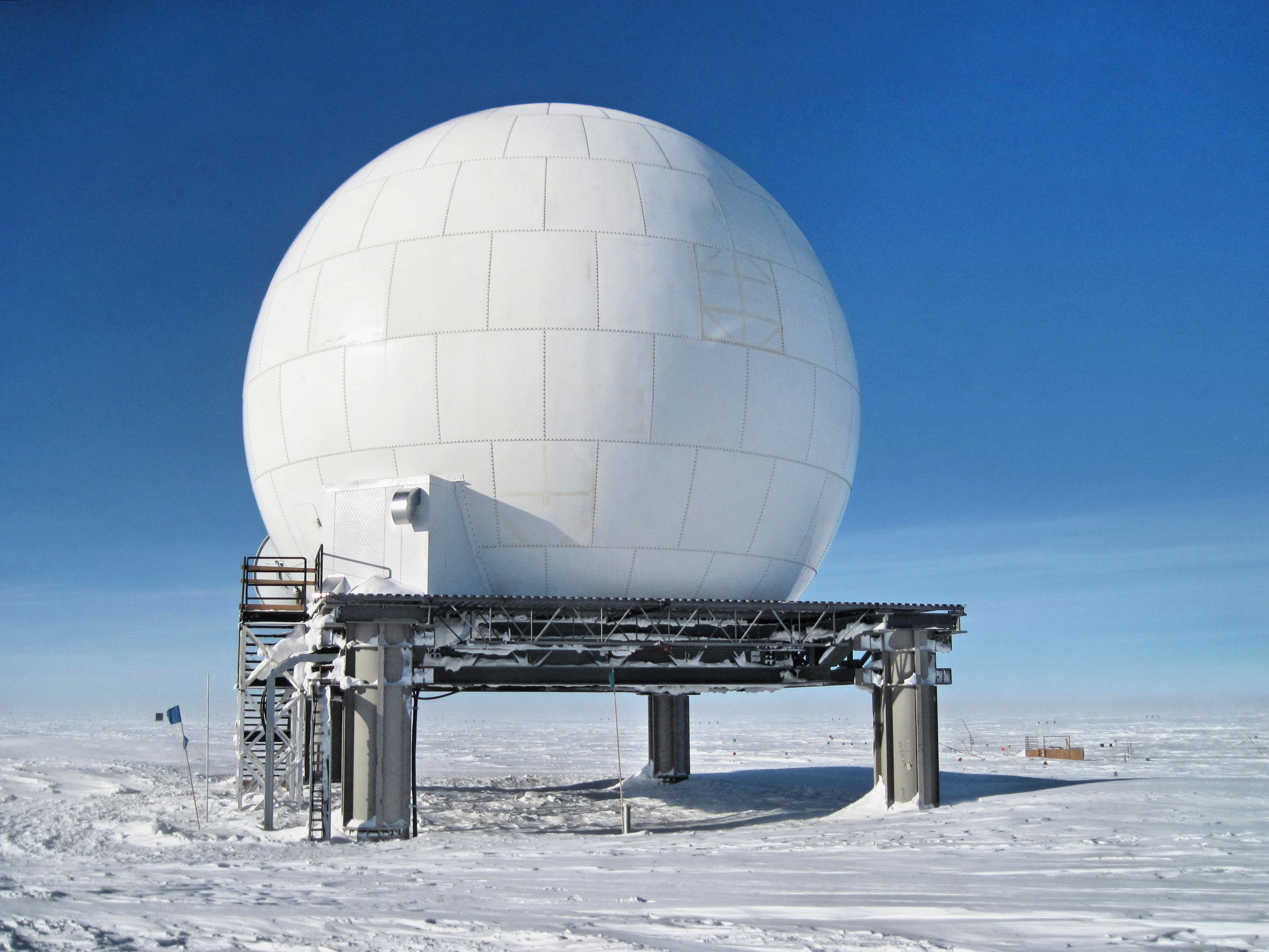
The South Pole International Passenger Terminal/Fuelie warm-up shack.
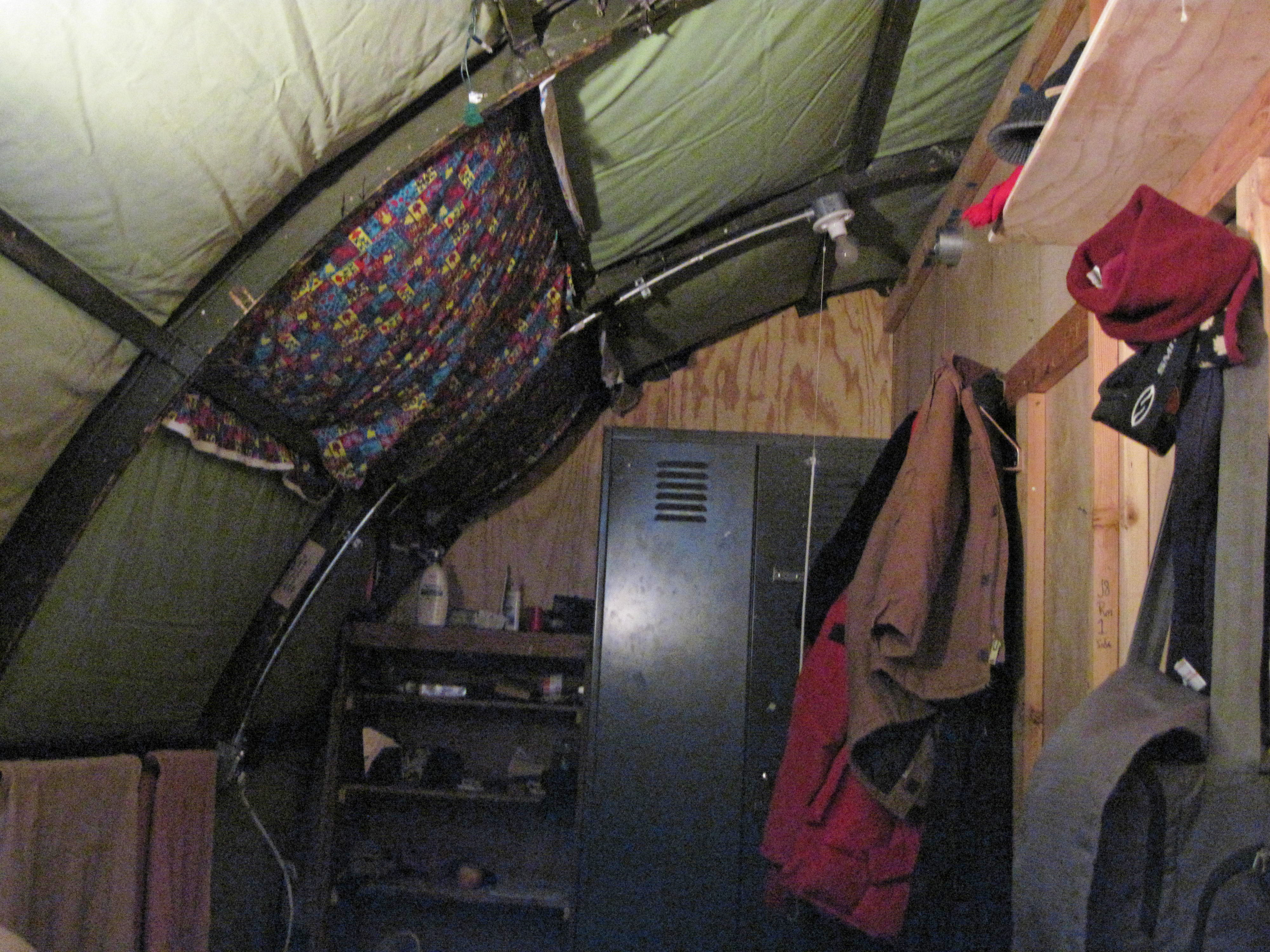
Our room inside Jamesway 8 (taken from the bed).
Icy bolts inside the VMF arch.
Big Country having a cigarette in his undies before bed outside the Jamesways.
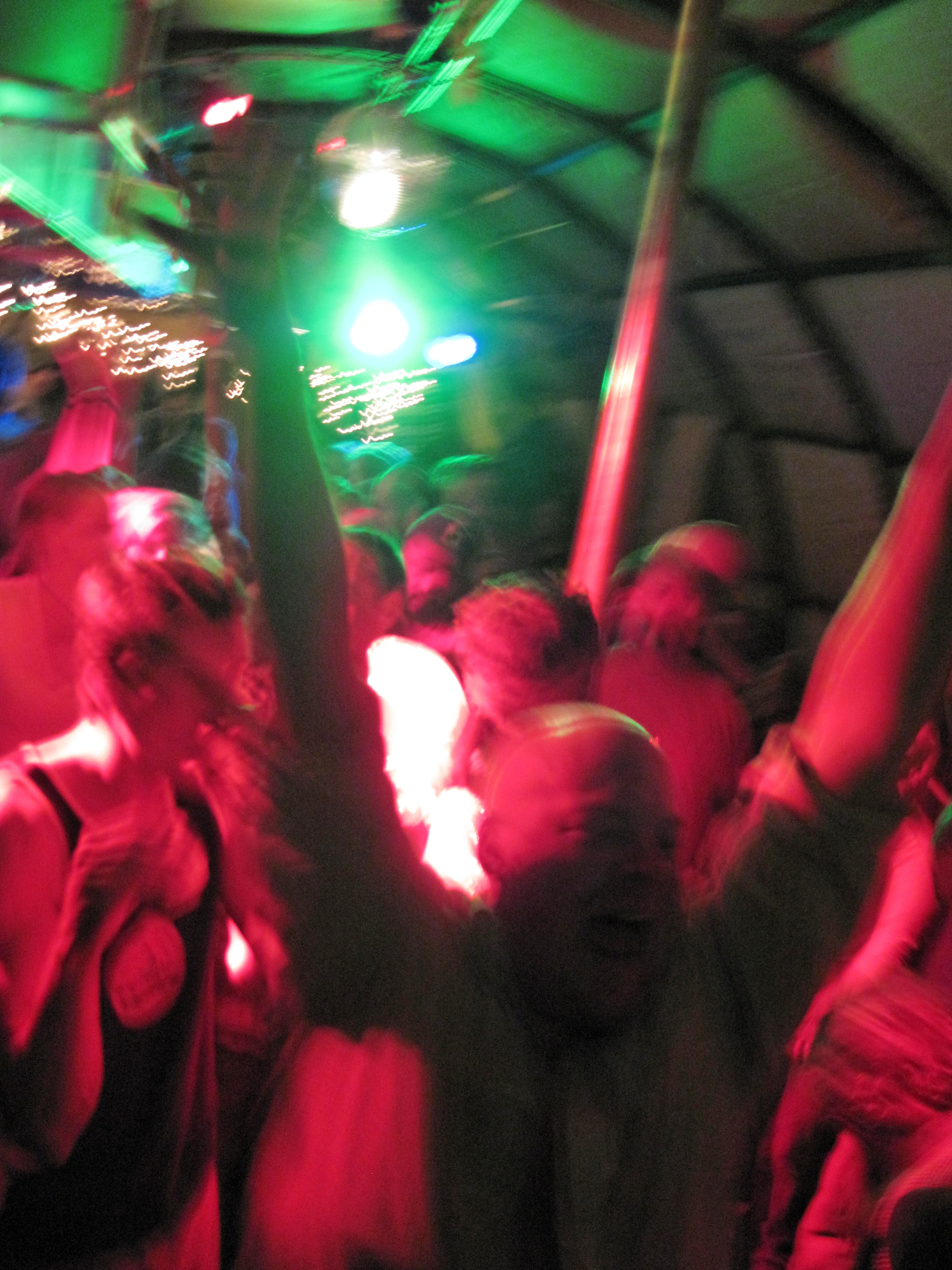
Party in Summer Camp lounge.
Ben and Daniel doing dishes on Manager Cook Day.
Trudy Lyn at the Summer Camp open mic night.
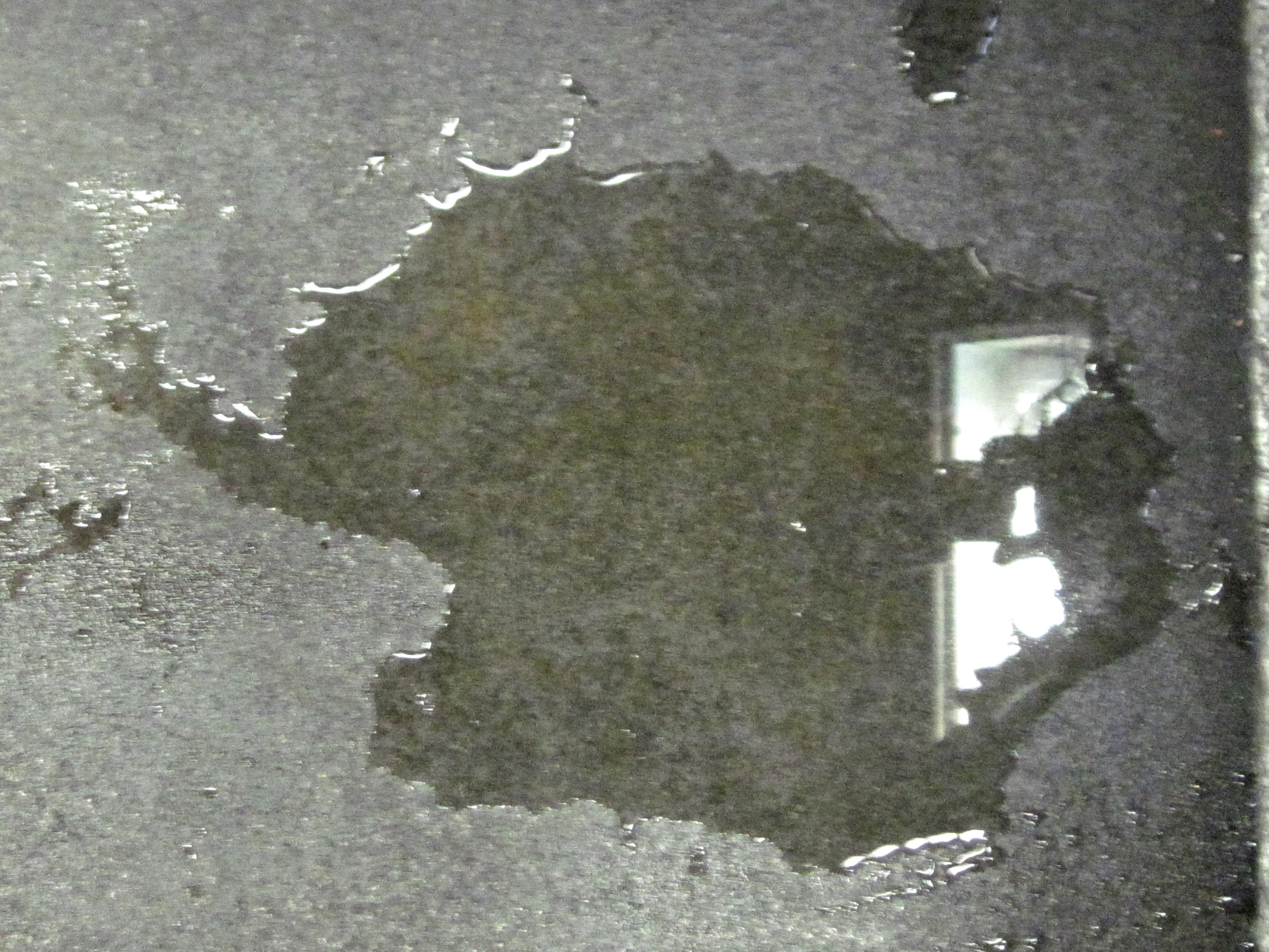
This is a puddle. It looks like Antarctica to me.
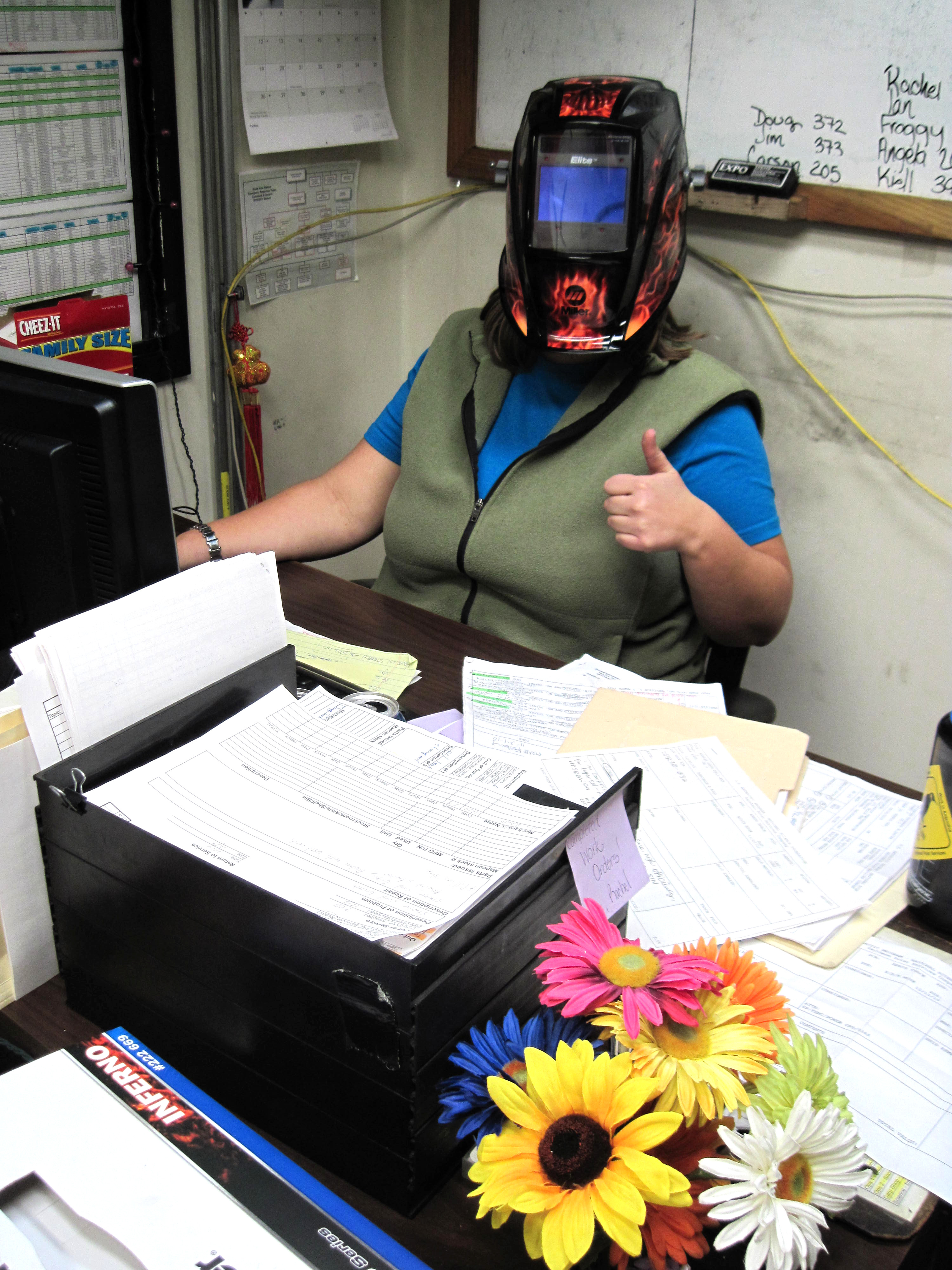
Rachel + new welding helmet + plastic flowers = a normal day in the VMF office.
Playing football at the Carp Shop party.
Playing washers at the Carp Shop party.
The view of the Station, Powerplant Arch and VMF Arch from the Fueling Module.
Plumbers at the Milvans.
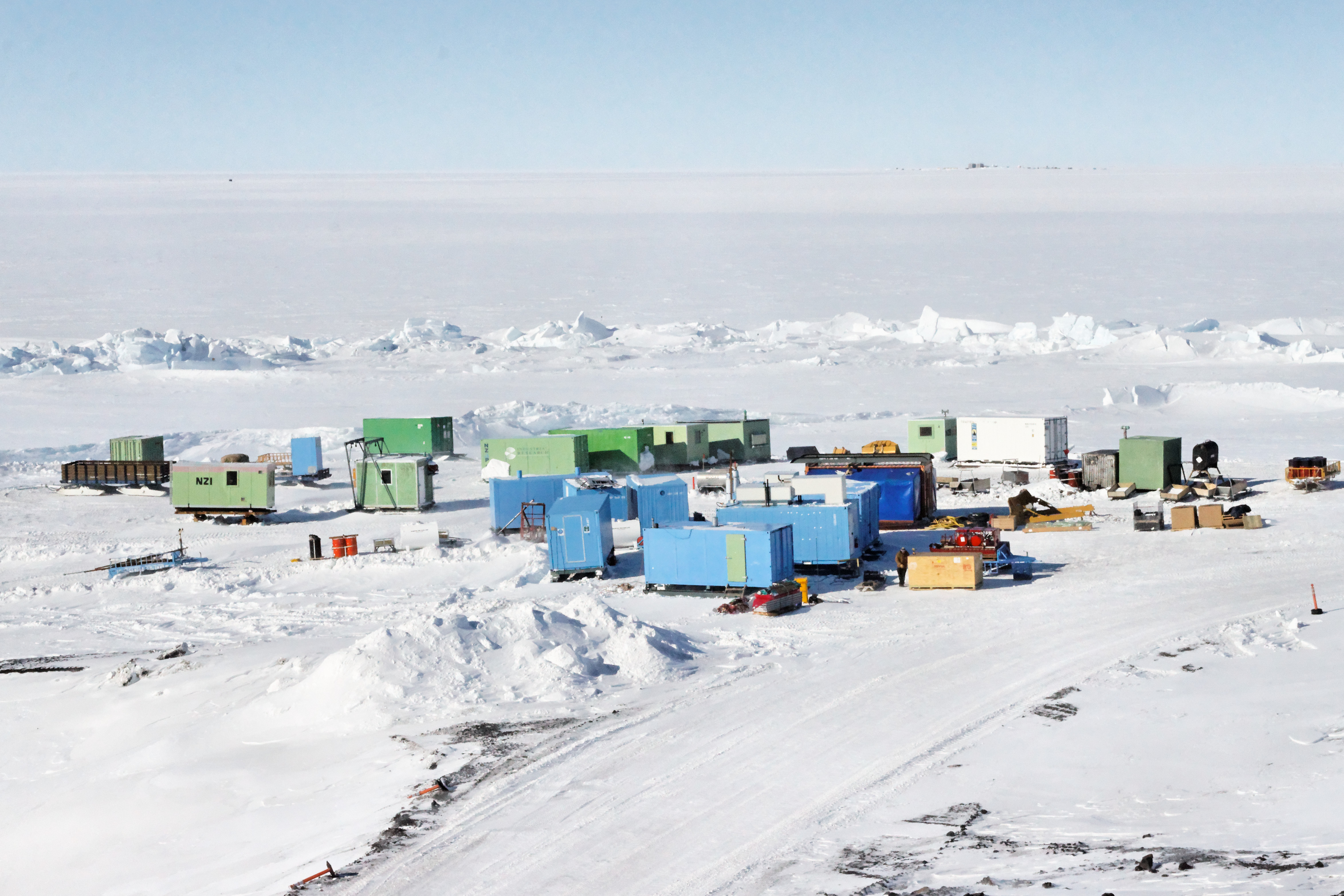
Antarctic Research Observatory–Clean Air Sector.
Sastrugi: wind-texturized snow.
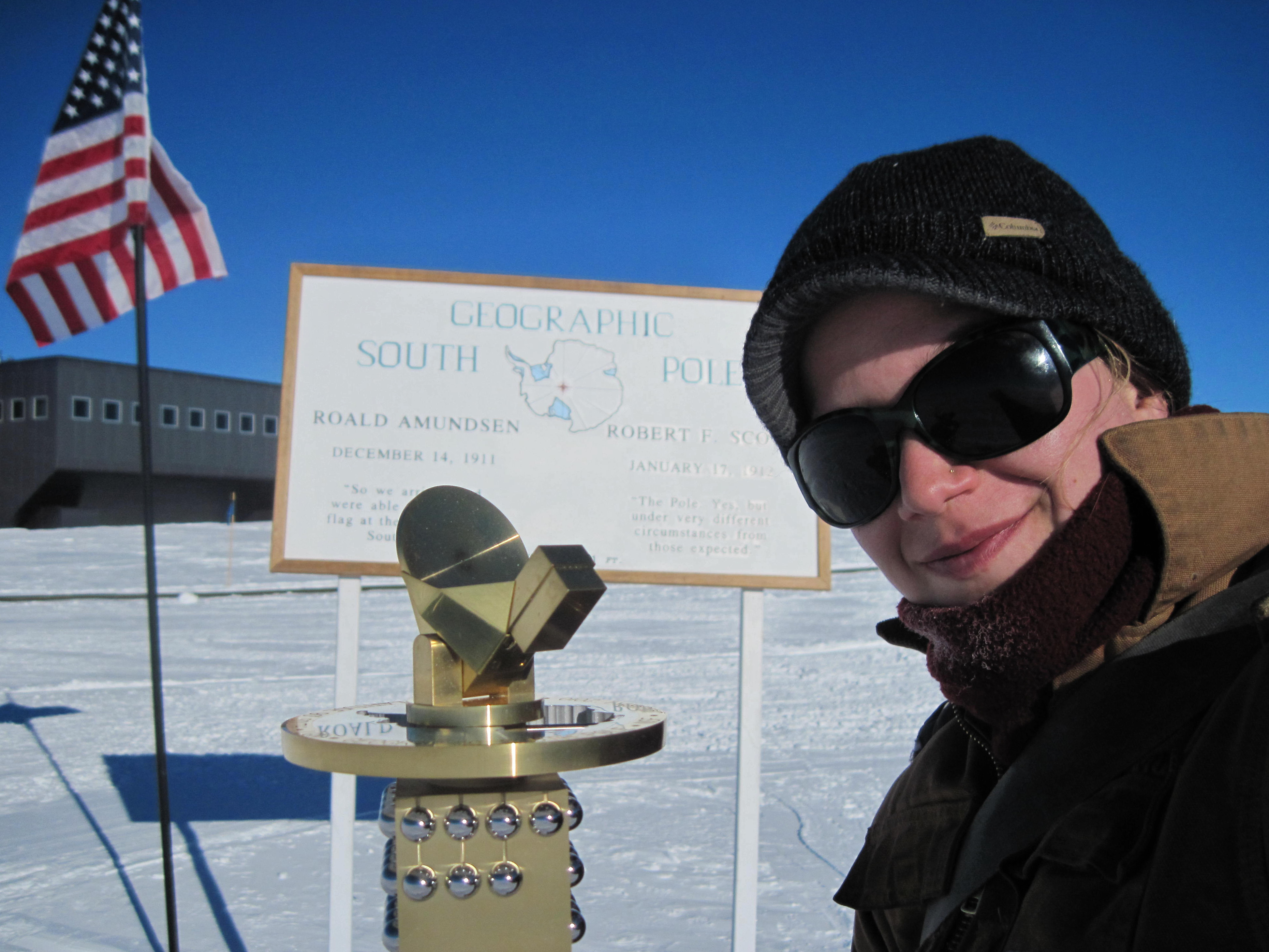
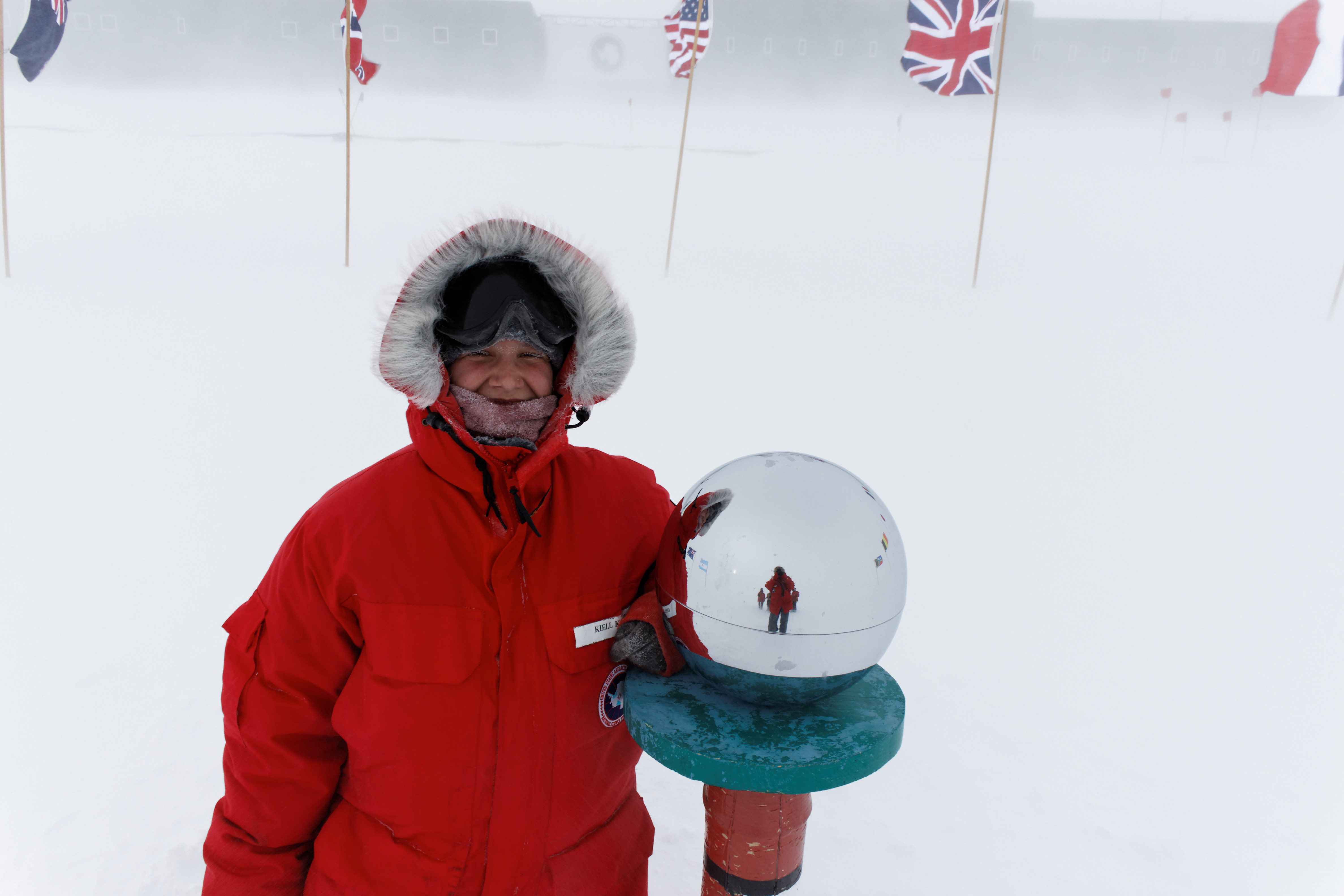
Kiell at the Geographic South Pole.
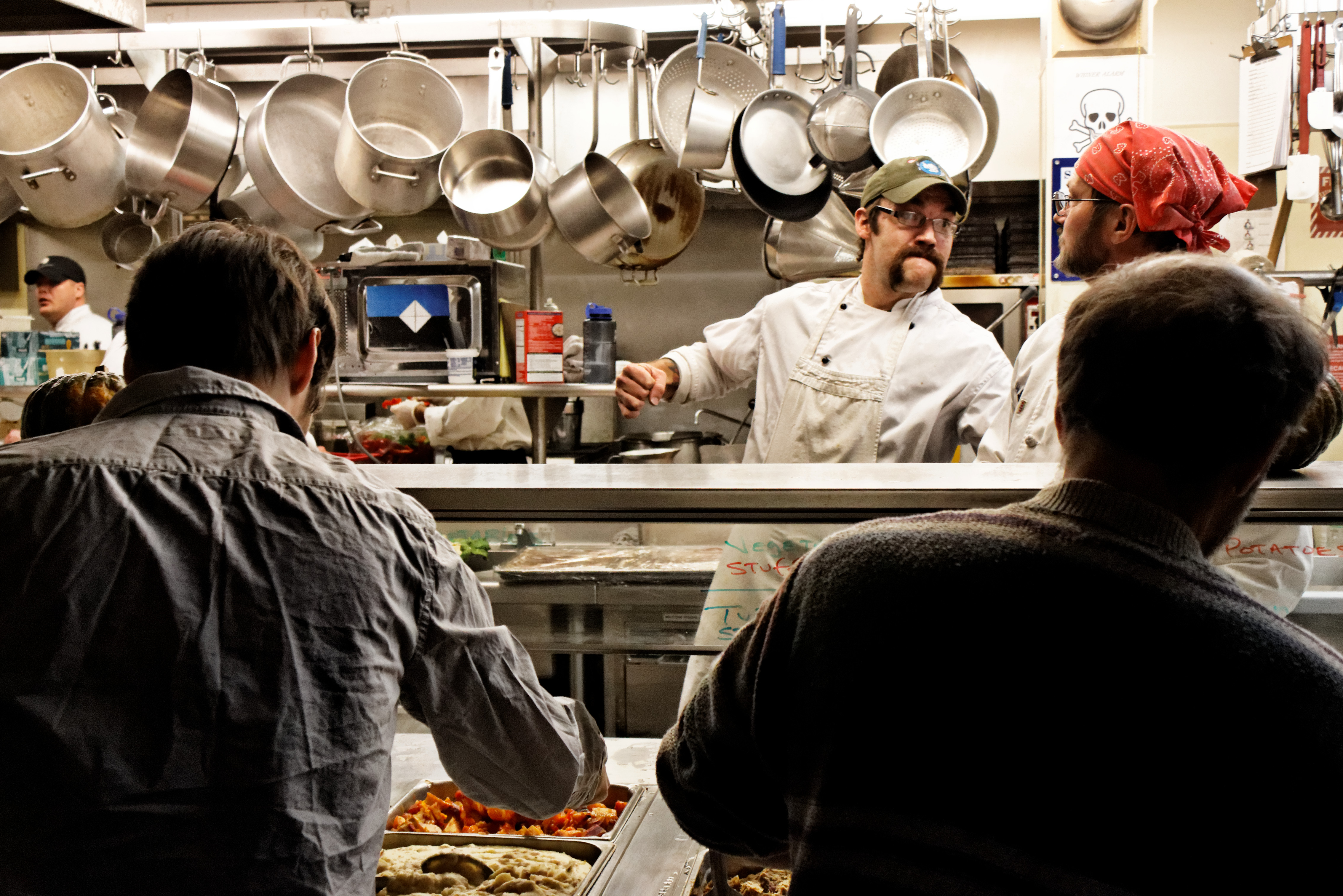
Kitchen shenanigans.
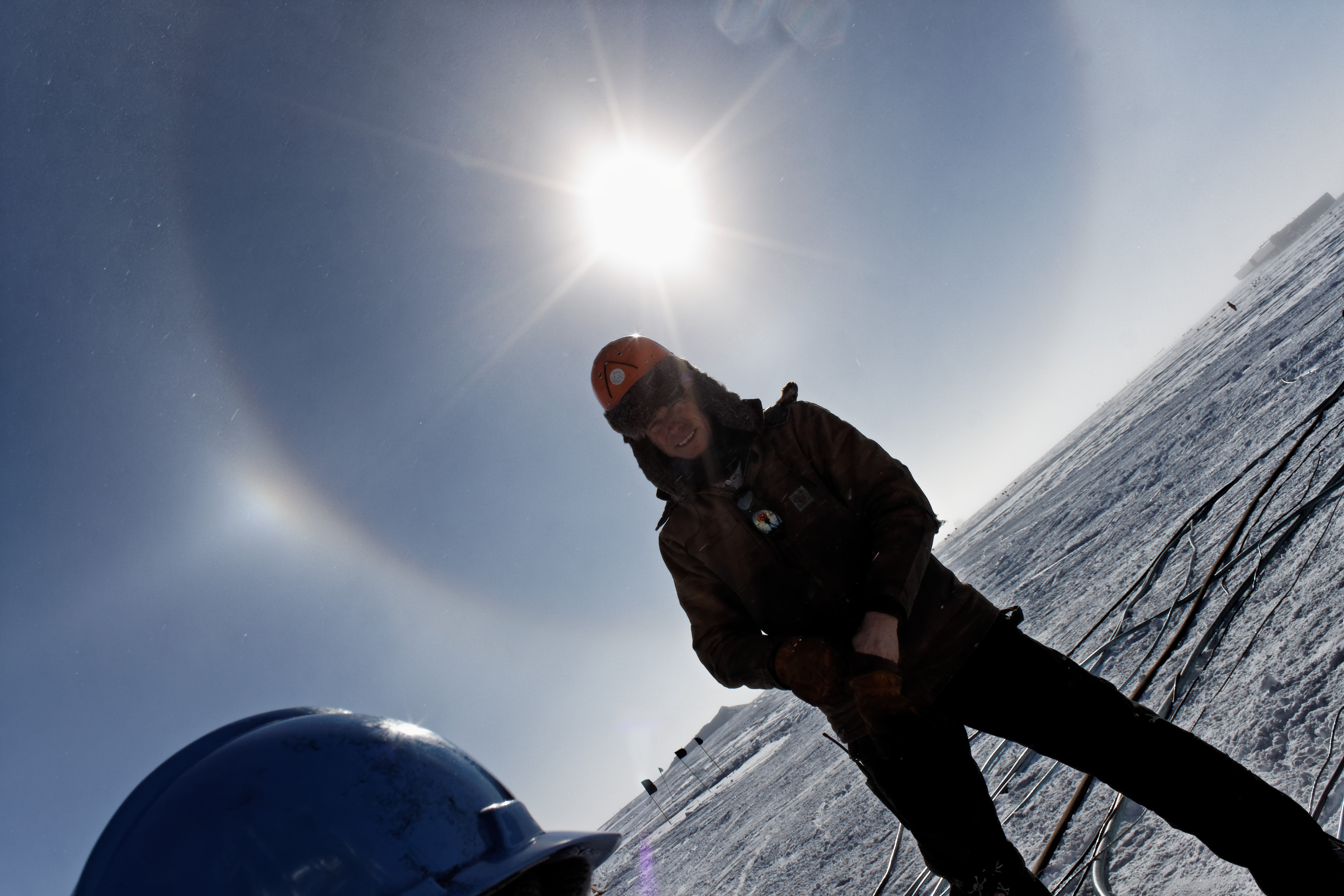
Jim the shop foreman and a sundog.
The incoming South Pole Traverse, the tiny speck right in the middle of this photo. On the left, lines of storage berms and the Remote Satellite Facilities, on the right, the runway.
The view from the End of the World.
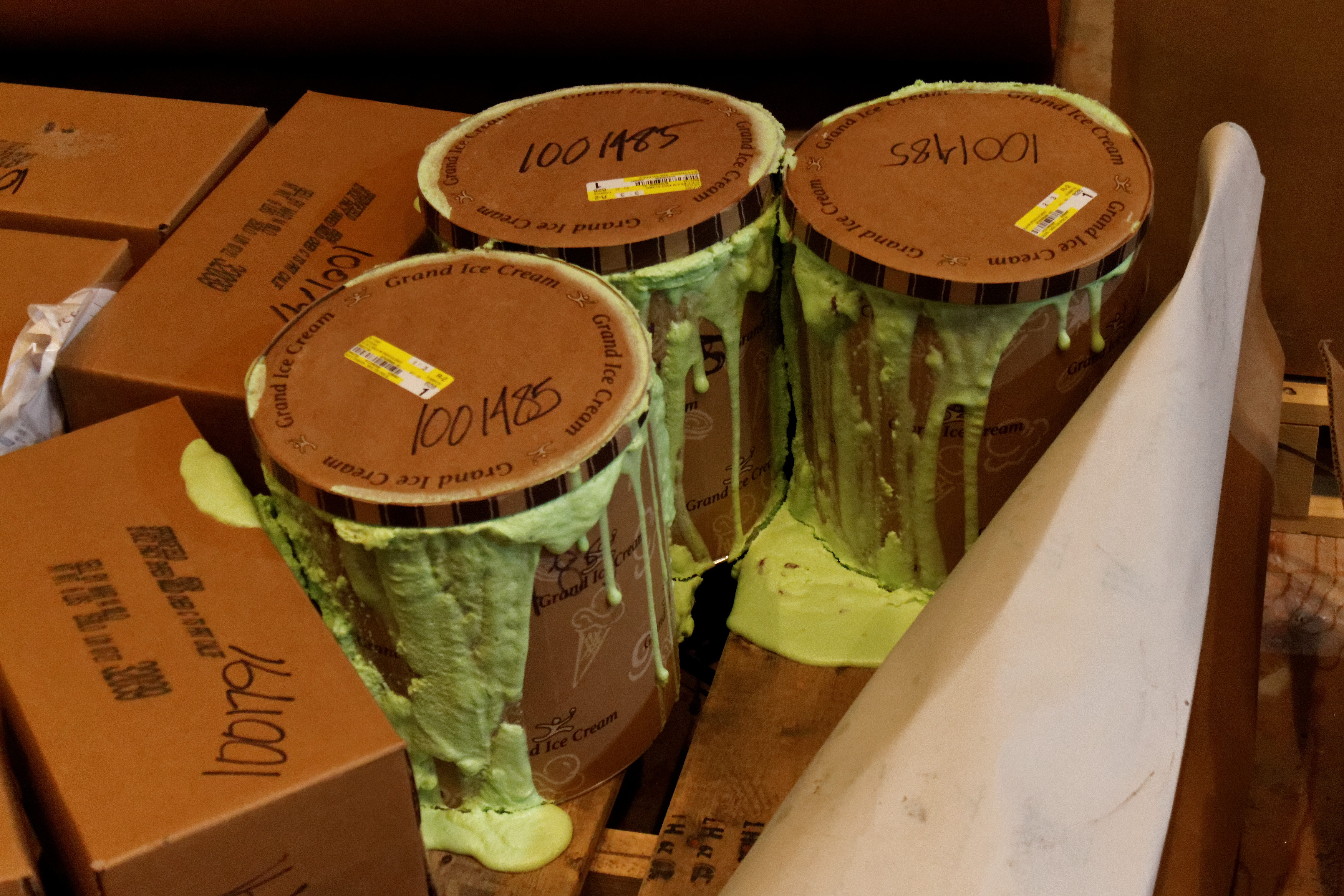
Pistachio ice cream explosion in the LO Arch.
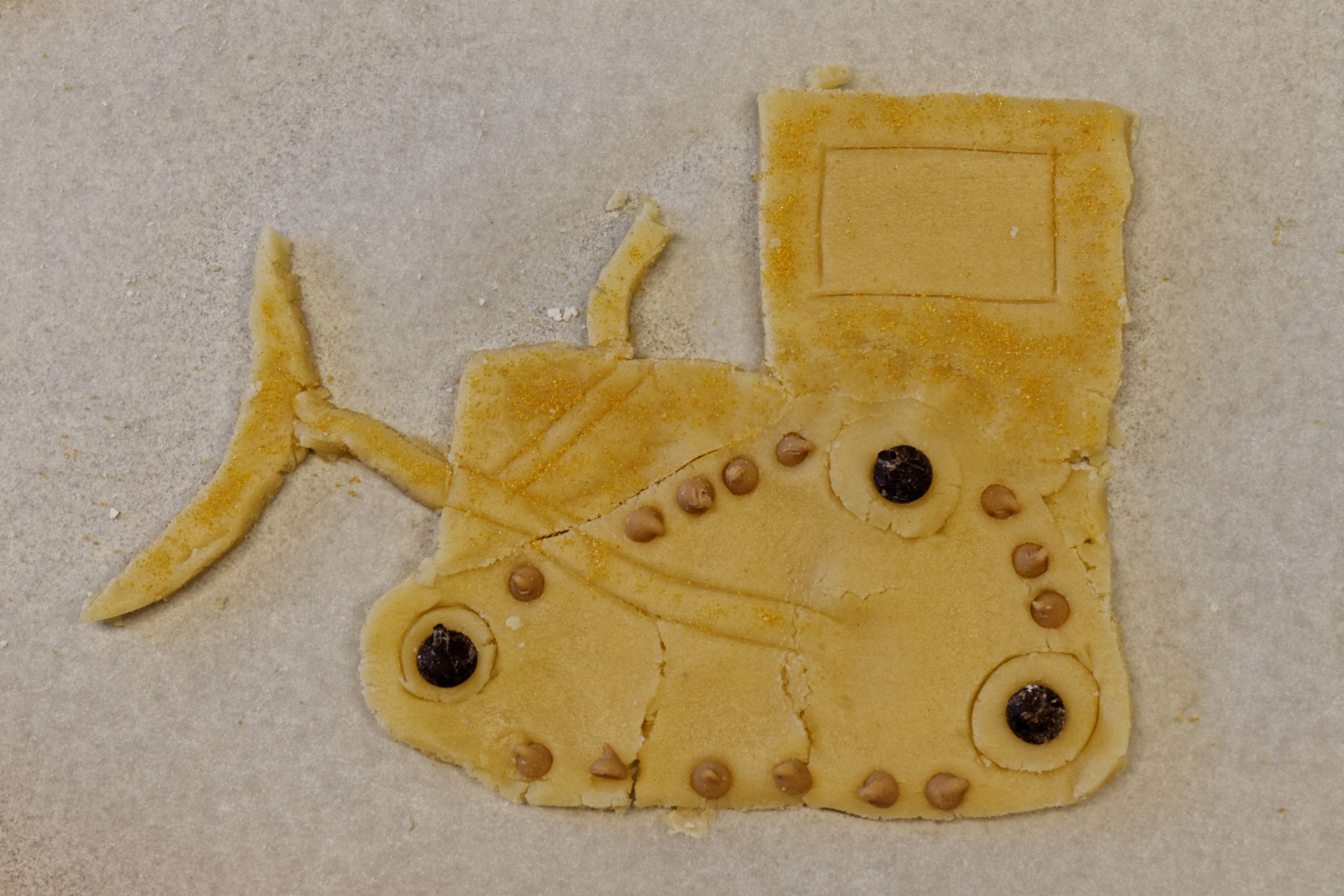
Bulldozer cookie made by Rachel.
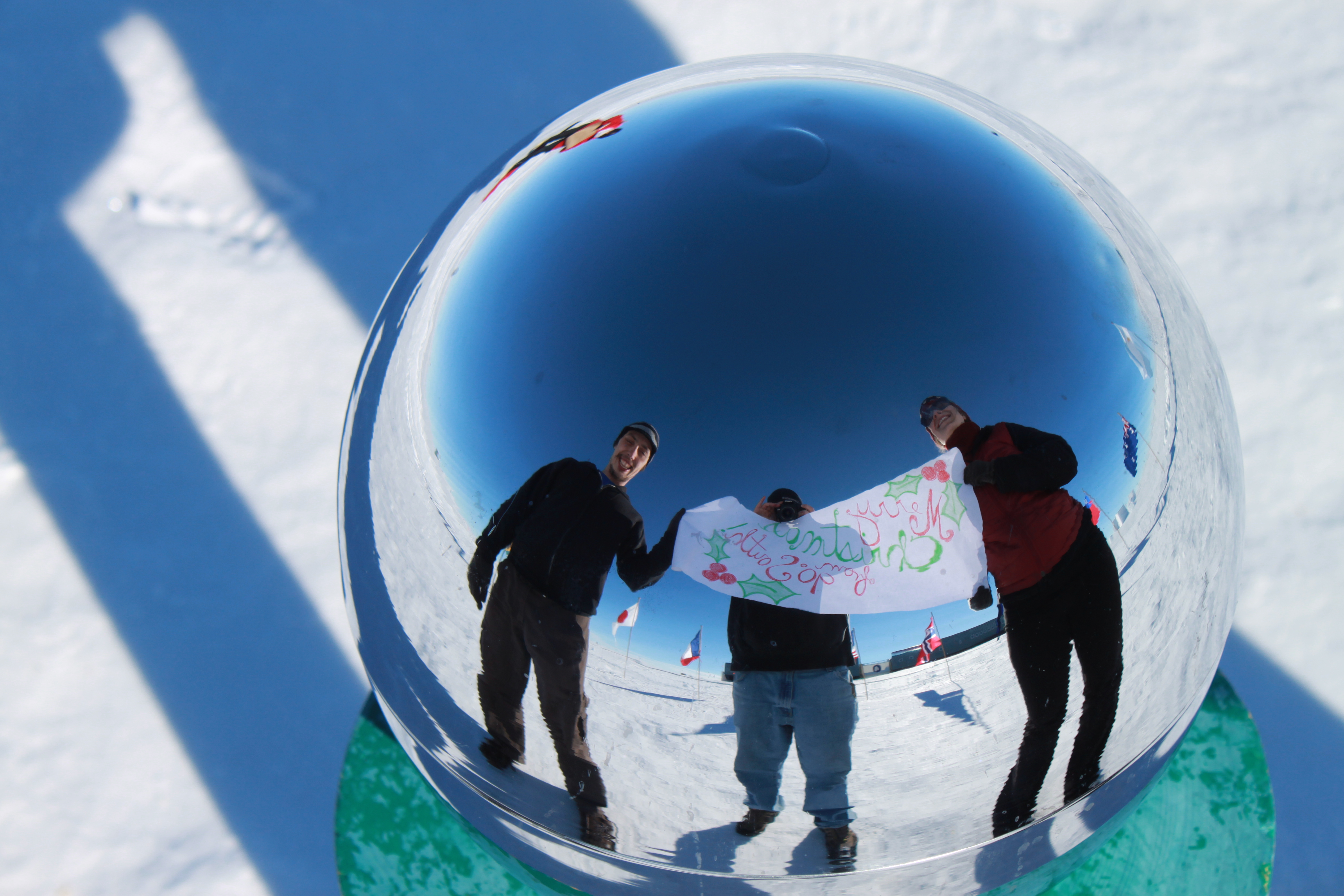
Sarra, Kiell and Rachel at the Ceremonial South Pole.
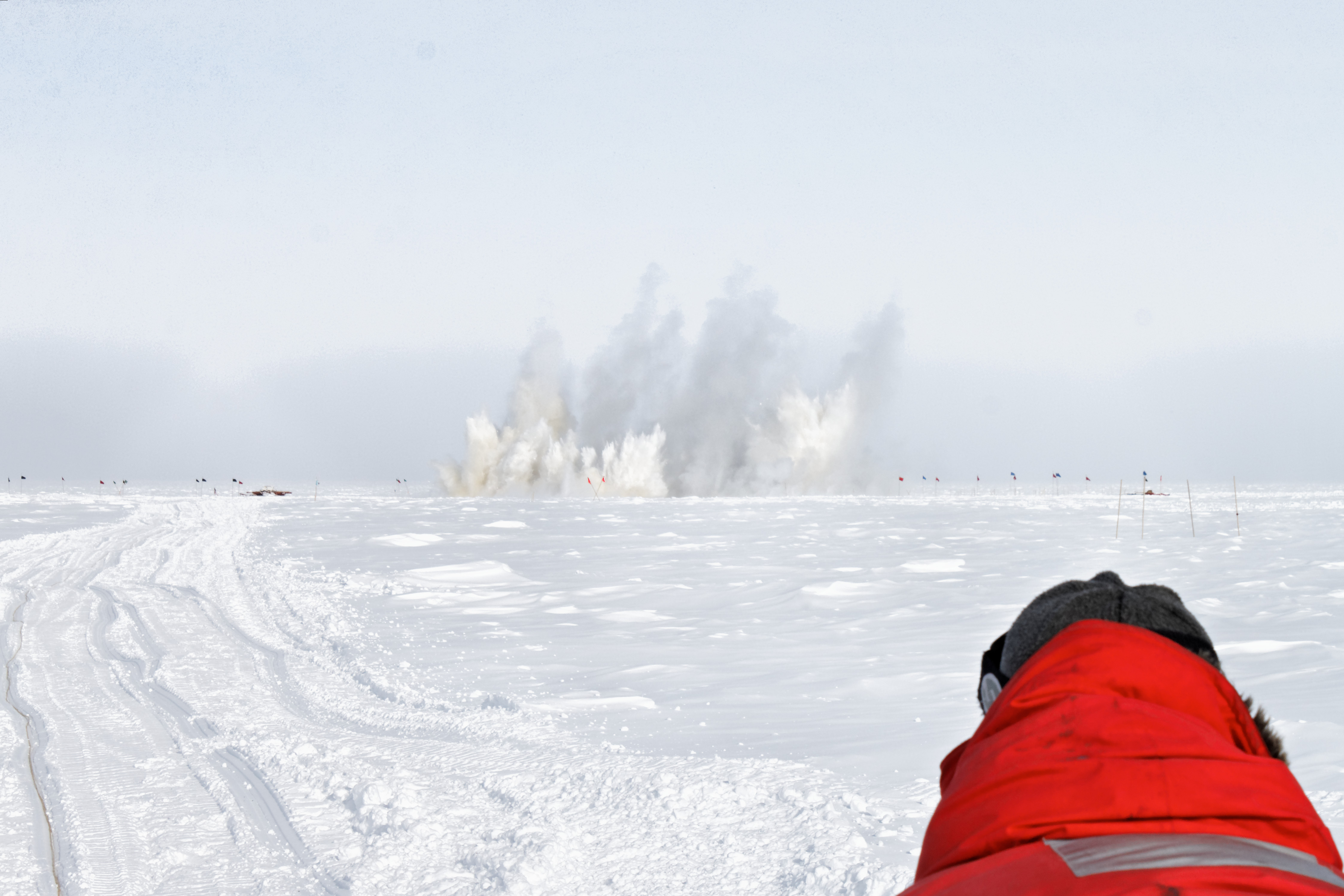
On a windy day in early December, I got to help blow up the South Pole. That morning, a slim band of pale blue sky sat between the white horizon and white clouds, looking really quite pretty from the station. People were getting up from their coffee (dayshift) or cocktails (nightshift) to look out the galley windows, taking pictures, gazing. We took the warm Pisten Bully out past MAPO, past the South Pole Telescope and down a little flagged snow road, pulling up to the snow crater from the first blast just a few days before, the men still smelling like dynamite. We had watched it from Destination Alpha but both Daniel and I, on different levels completely with different cameras, looked away at just the wrong moment and missed the main explosion—the sound arrived some ten seconds later, traveling super-slow through the high altitude air.
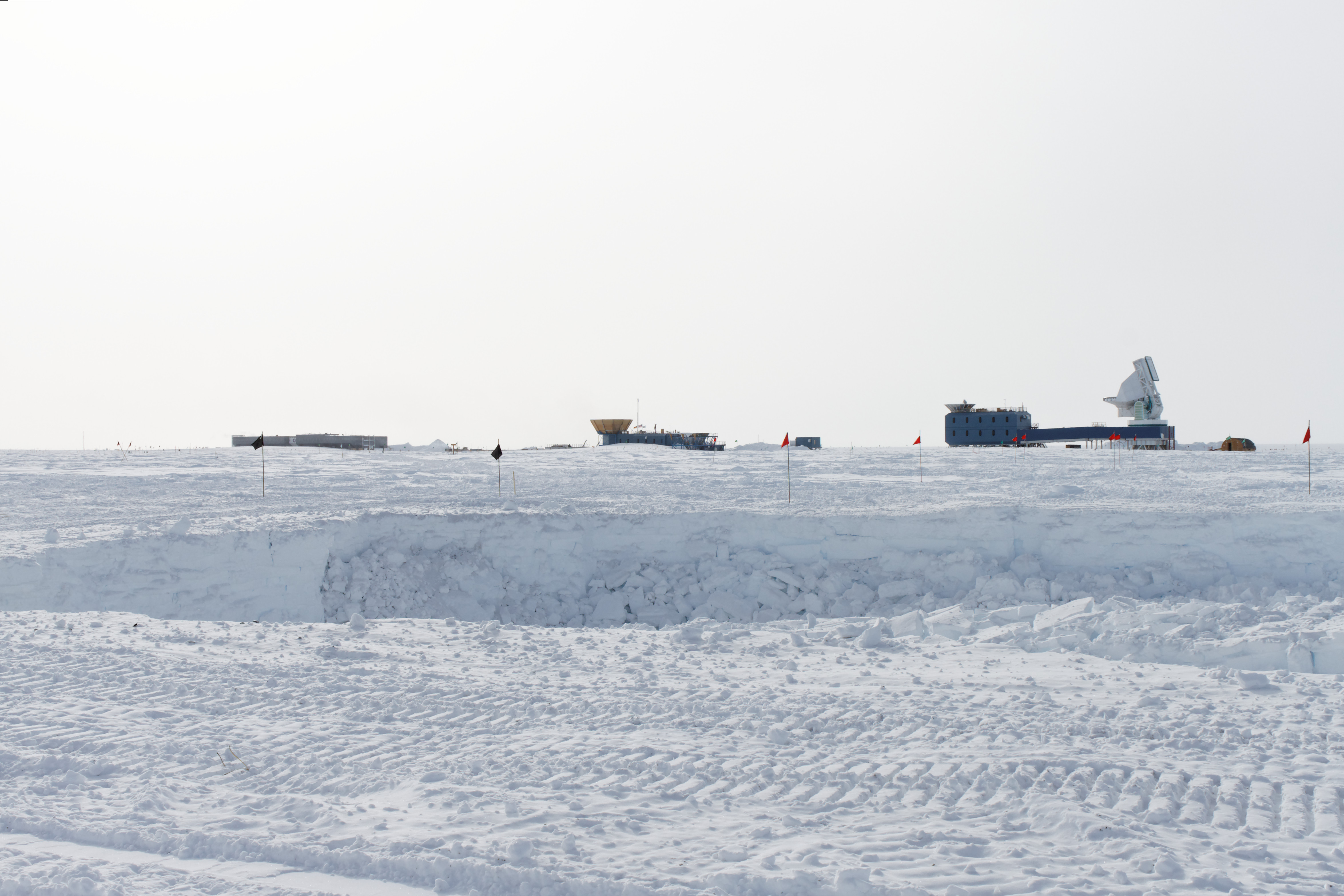
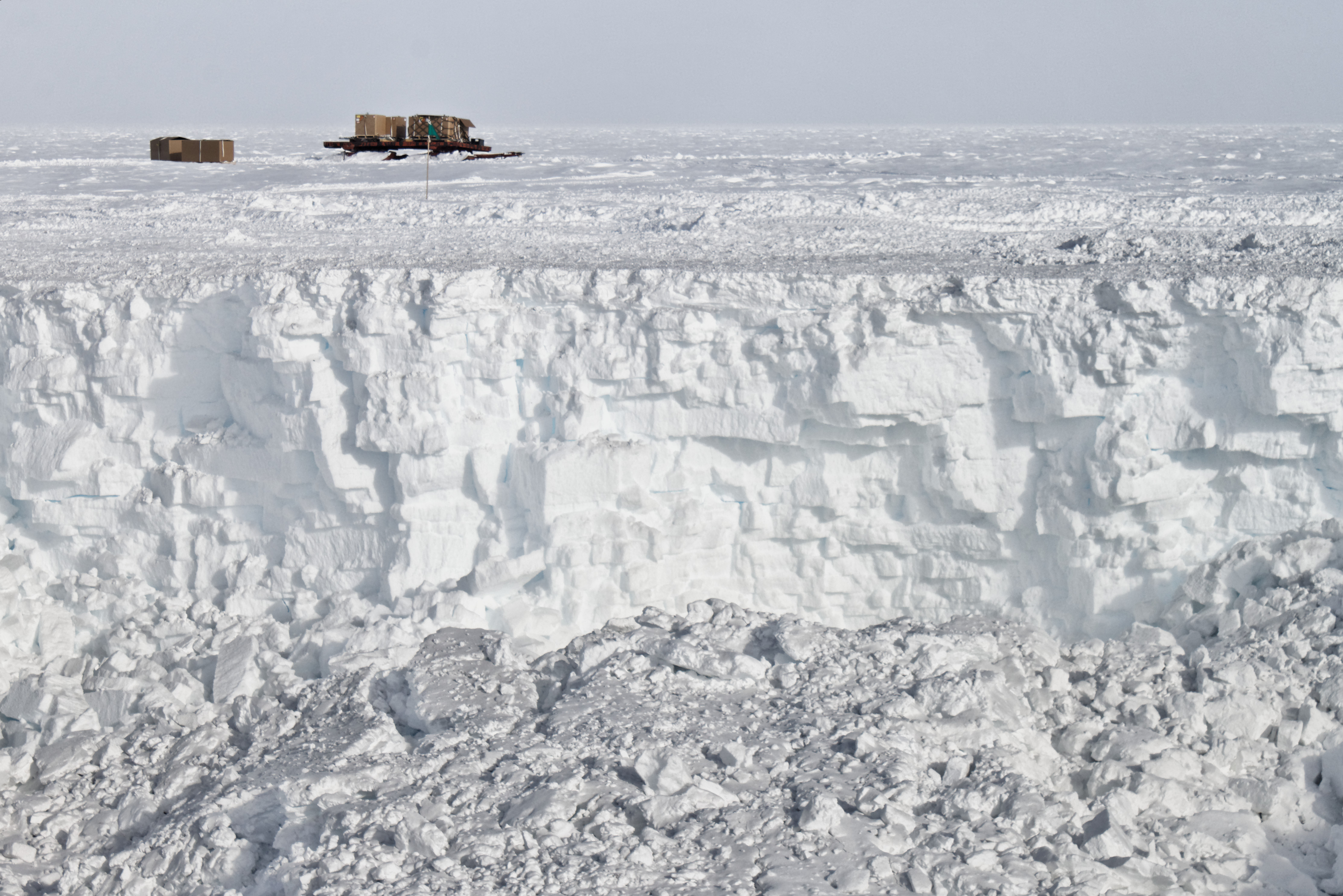
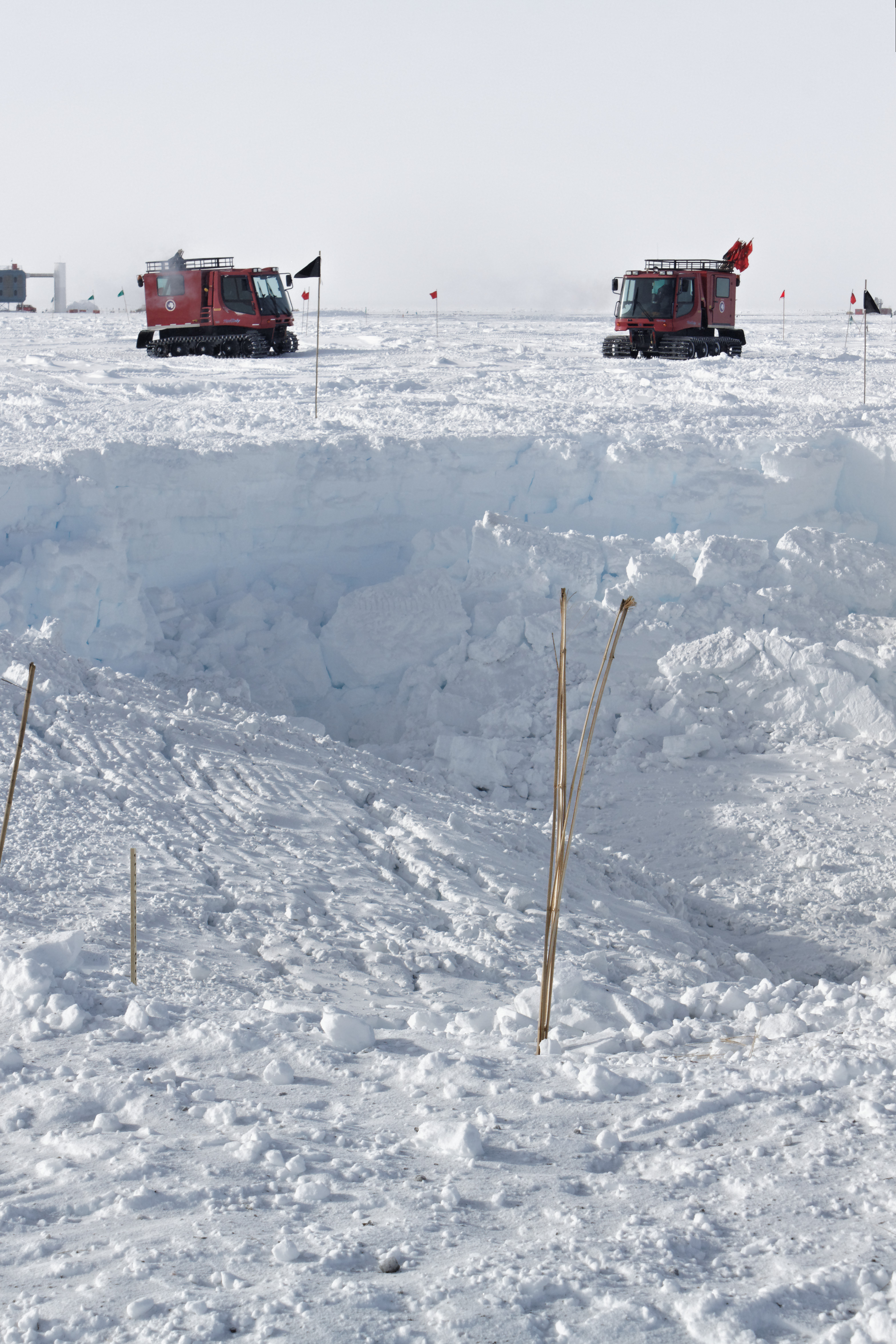
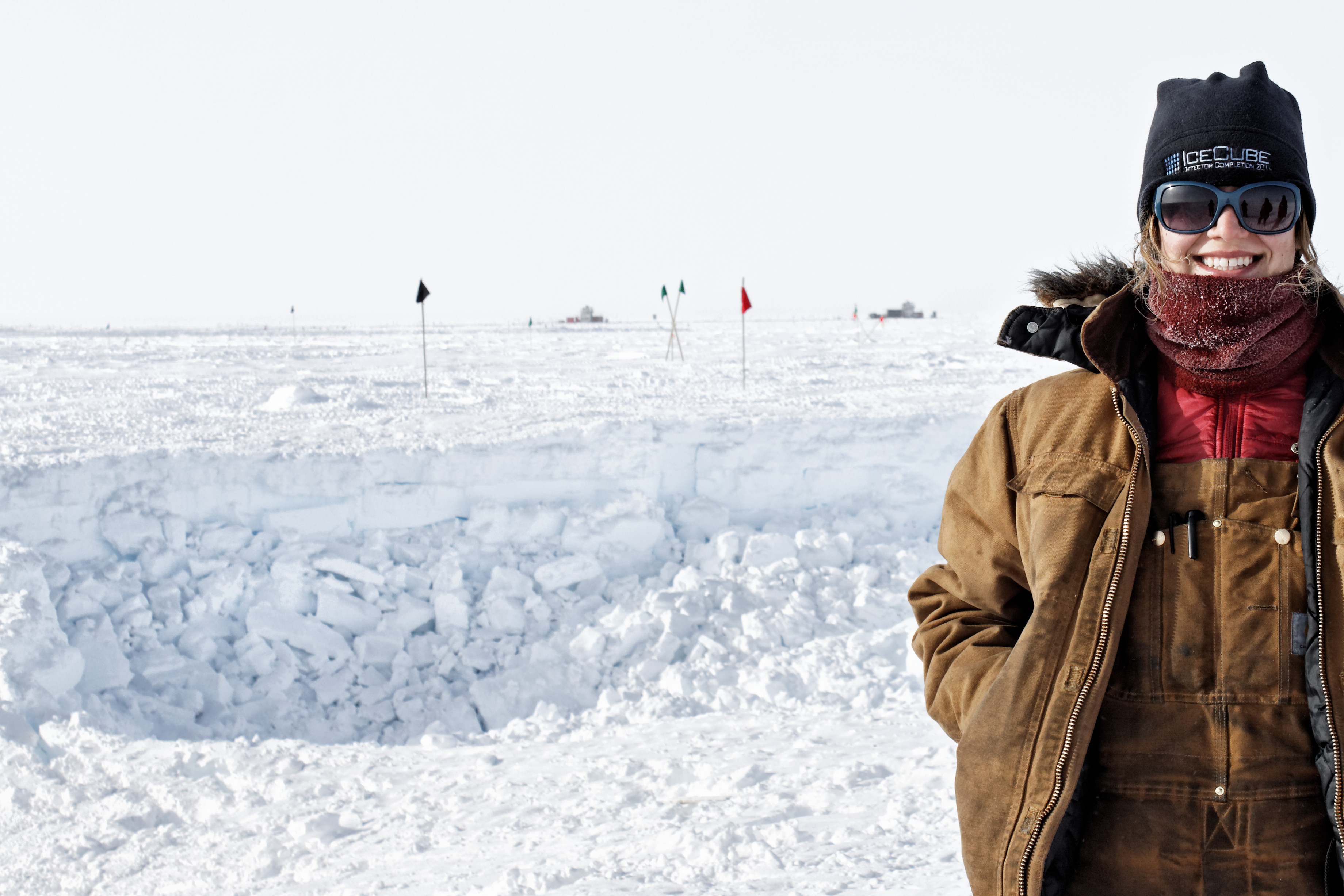
The crater from the first explosion, with the elevated station, MAPO and South Pole Telescope in the background
We started the morning by sorting the packaging from the first blast’s dynamite, digging through and recycling cardboard and greasy looking nitroglycerin-soaked brown paper. A heavy equipment operator brought out a horizontal silo on a sled, a red Wisconsin-Dairy emblazoned piece of farm equipment, 180-degree water sloshing inside of it and shooting out the feed nozzle, instantly transforming into smoky steam streamers.
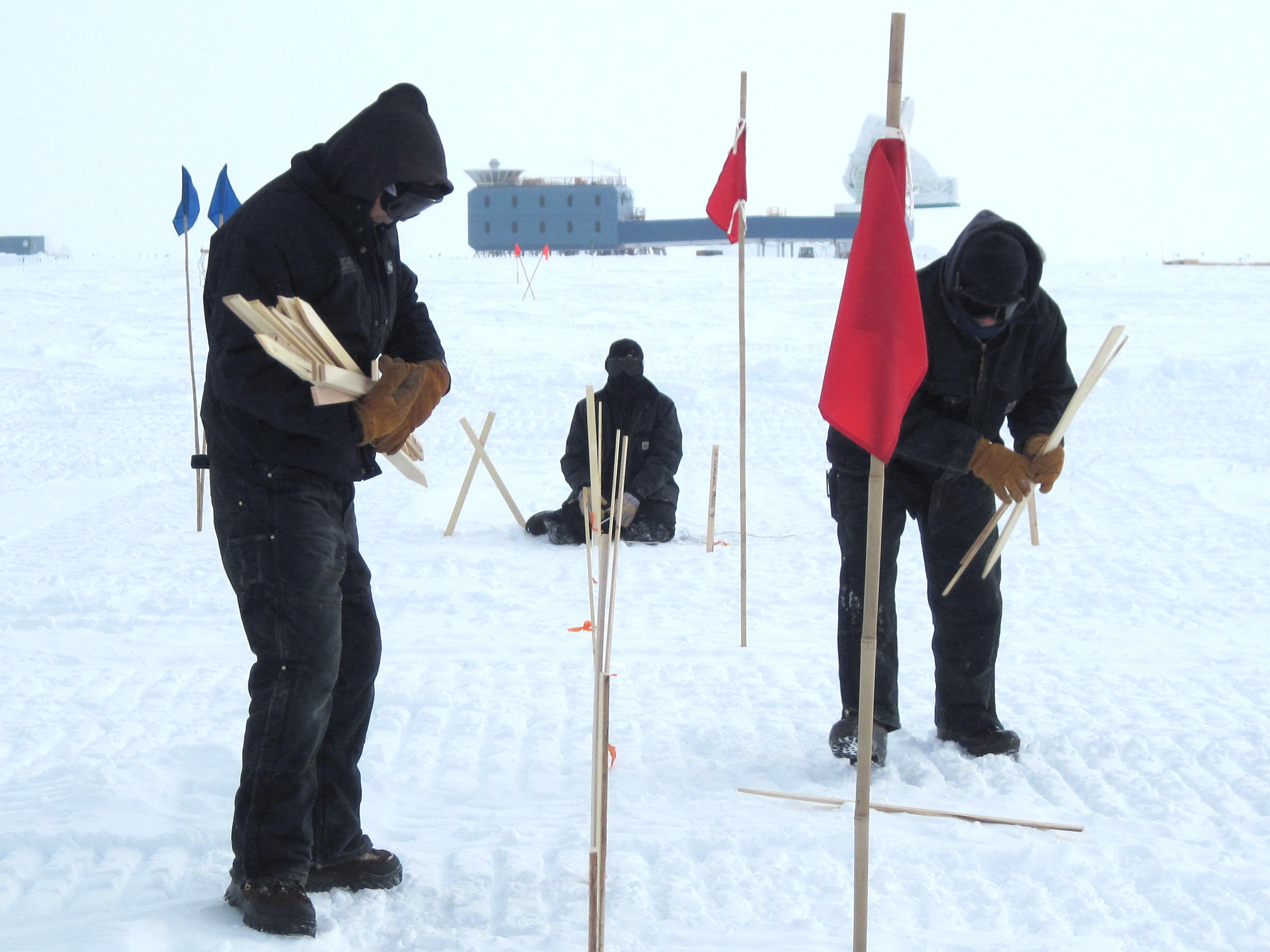
Based on the GPR readings (ground-penetrating radar), the blasters placed stakes along the outer edges of the buildings of the original South Pole Station from the 1950s, now buried under many years of snow drifts, maybe 20 feet below the surface. It was ghostly to walk on top of—knowing that under our feet were open rooms, food left on tables, fuel caches, trash, pee jars and girlie magazine centerfolds plastered on every surface.
Laying stakes
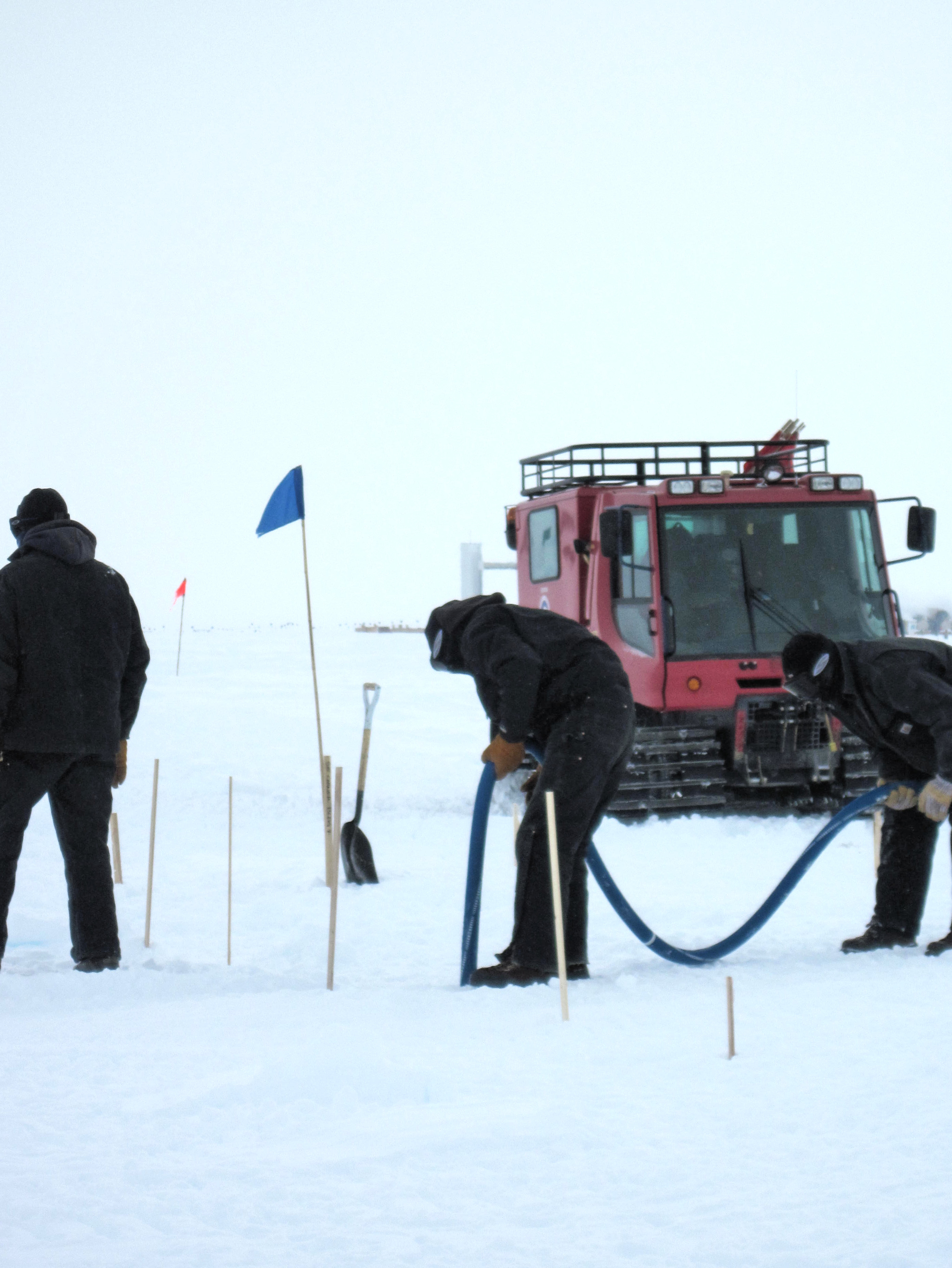
To drill the holes, the blasters would place the flat nozzle of the hose on the surface of the ice and turn the valve at the base of the silo, gravity pushing the water through the hose until a burst of steam came from the far end, the water cutting the ice like a hot knife through butter. The blasters fought with the long hose, full and heavy, until it was positioned to slide straight down aside the buried buildings. When they hit the 25-foot mark (or in some cases, a hollow thud on the roof of a building when the GPR readings had been off—these holes had to be re-drilled) they would turn around and hoist the hose out, three or four of them putting the weight of it on one shoulder and tug-of-warring the hose out of the hole, throwing their whole bodies into the effort. When I helped with this part of the process, my puffy leather work gloves were so icy from water and steam that I couldn’t bend them into any other shape than that of gripping the hose.
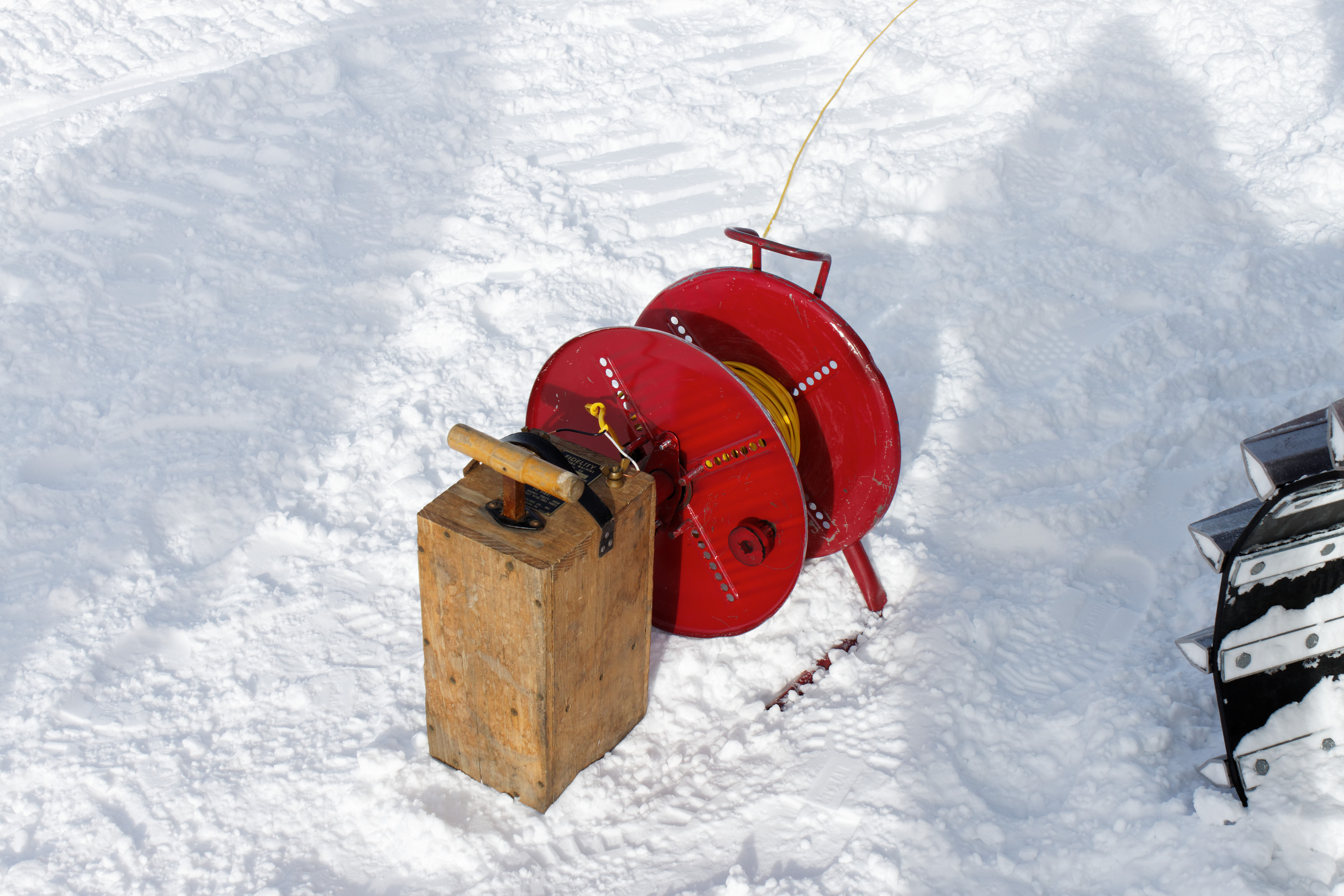
A few days later, those of us who had helped drill and/or lay the dynamite (mostly G.A.s and a few station management personnel) went out to the site to view the blast. The lead blaster had instructed us to always keep an eye on him; while we of course wanted to watch the explosion, we had to be ready to jump behind a Pisten Bully in case something went wrong. Jason, one of the G.A.s who had worked many days with the blasters got to push the plunger, blowing up all the thousands of pounds of dynamite and the contents of the structures below.
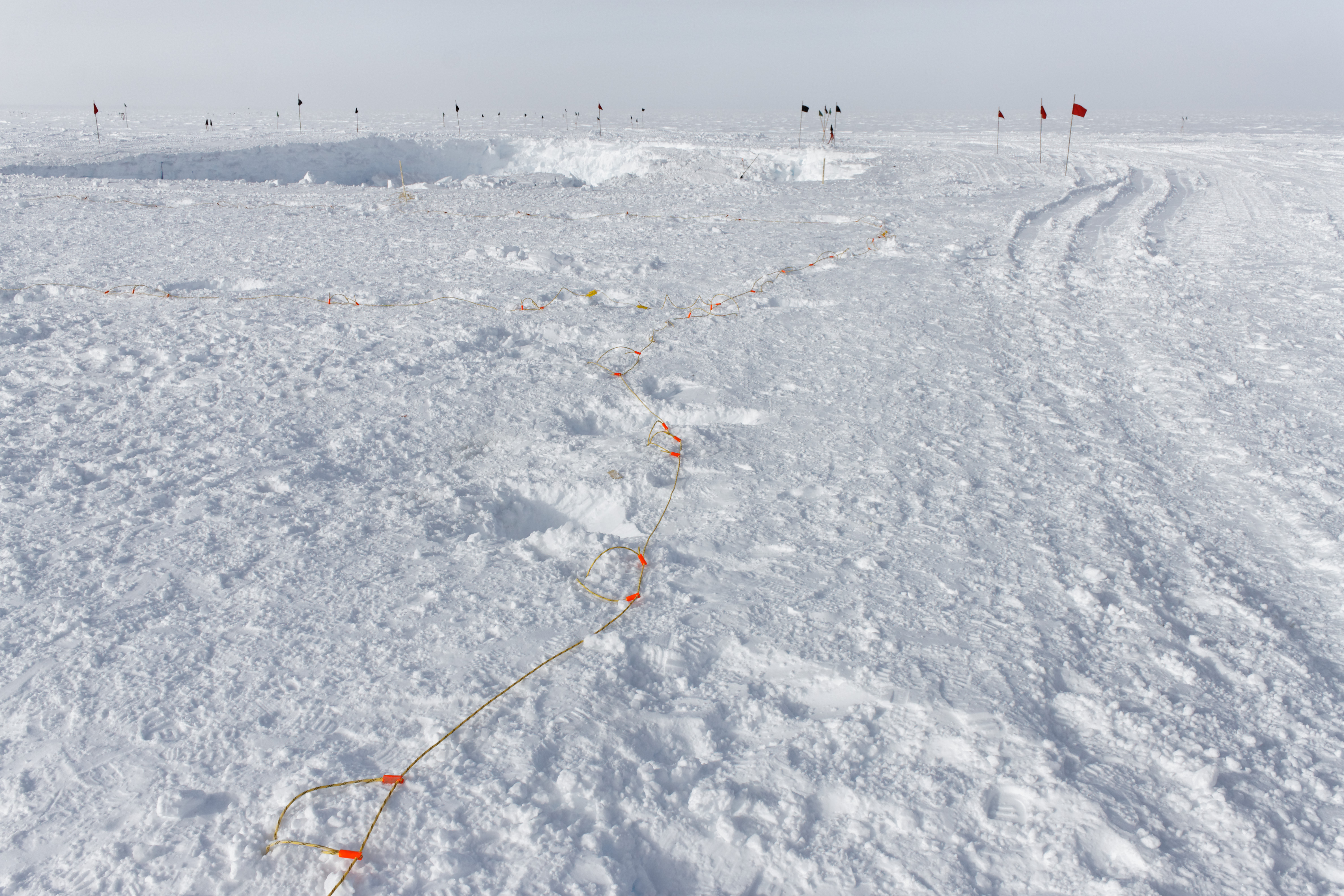
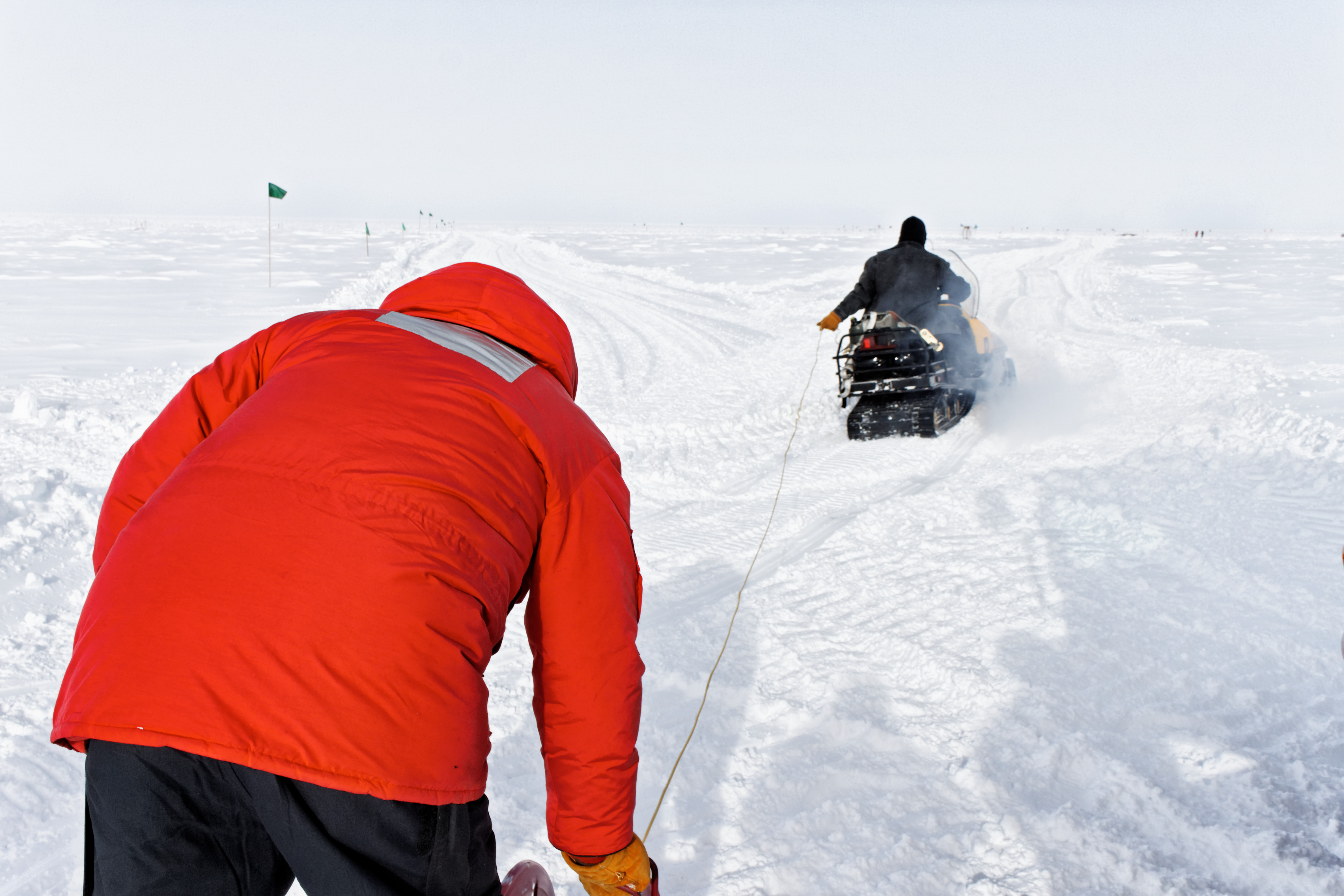
Strings of dynamite below the surfaceRunning the connection wires
Explosion and Jason
After the blasters did a preliminary check to make sure the dynamite had all exploded, we all drove out to the blast site, the sulfurous yellow smoke still hanging low in the imploded crater. The brick-like layers of drift snow, one for every winter, were like tree trunk rings, and we all had to be careful of crevices and cracks near the edge, indicating a shelf that might slide into the hole.
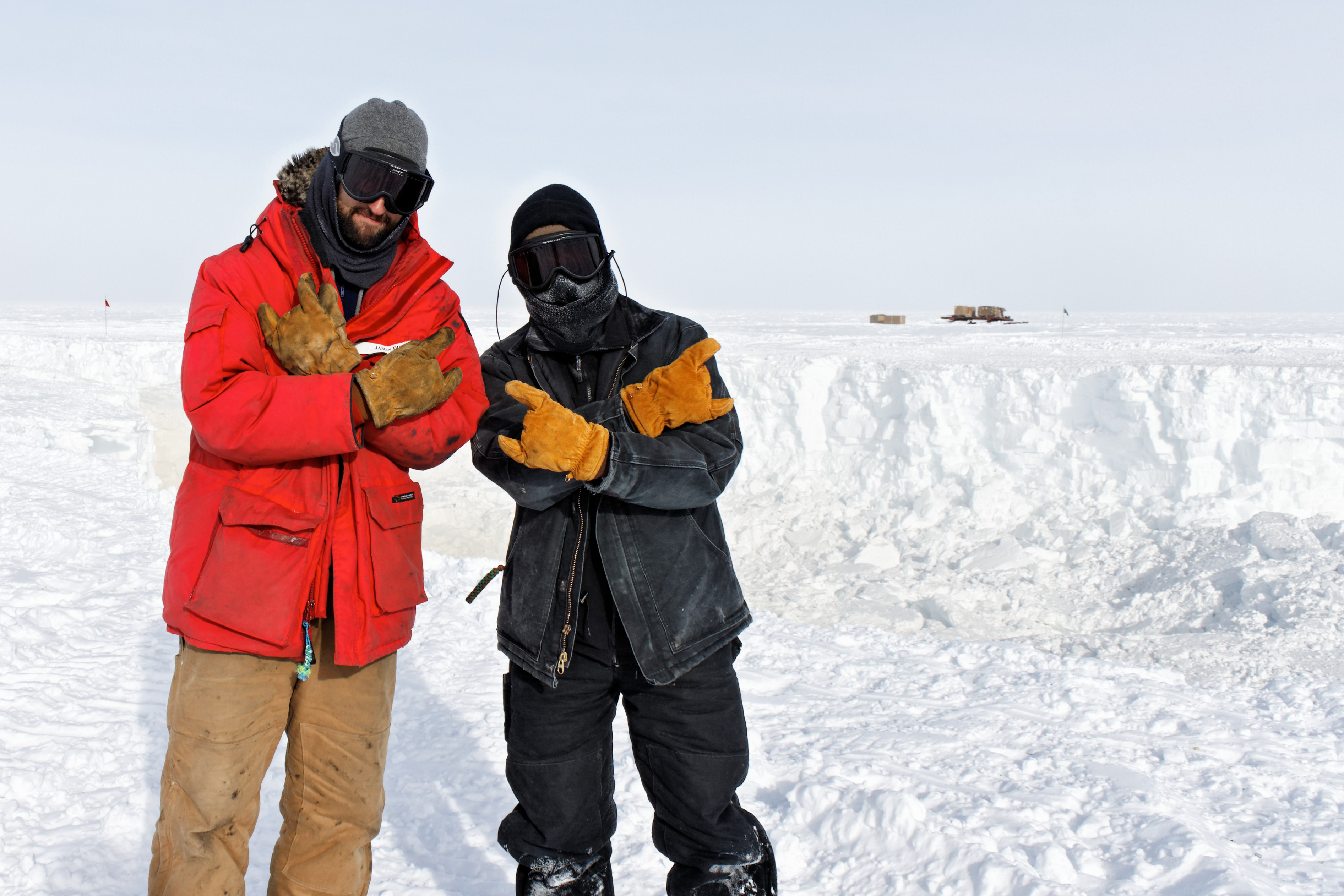
Jason and EdLayers
Pisten Bullys and CraterMe
Last year at the beginning of the summer the original Old Pole Station (1957-1975) was still buried under the snow whole, and the Dome (1975-2003, decommissioned in 2008), the second station, stood on the ice waiting to be deconstructed. This year, they’re now both gone—the elevated station the last man standing.
So, six weeks before we leave the ice, you may wonder exactly what I do to earn my living around here.
Everything we do at the South Pole exists solely for the purpose of supporting science endeavors. The scientists and all of their support staff need to be able to travel to the continent, eat, sleep, and research in the station and the surrounding couple of miles. Most of the science projects and subsequent departments need vehicles at some point; track loaders, snowmobiles, plow-accessorized tractors, Pisten Bullys and LMCs, Ditch Witches for trench digging, cranes, cherry-picker lifts and various other vehicles for special projects and transportation. This is where the Heavy Shop comes in. Most of these machines don’t like the regular 50 below temperatures and tend to break down often and especially need care at the beginning of the summer season after taking an 8-month nap at temperatures of 100 below.
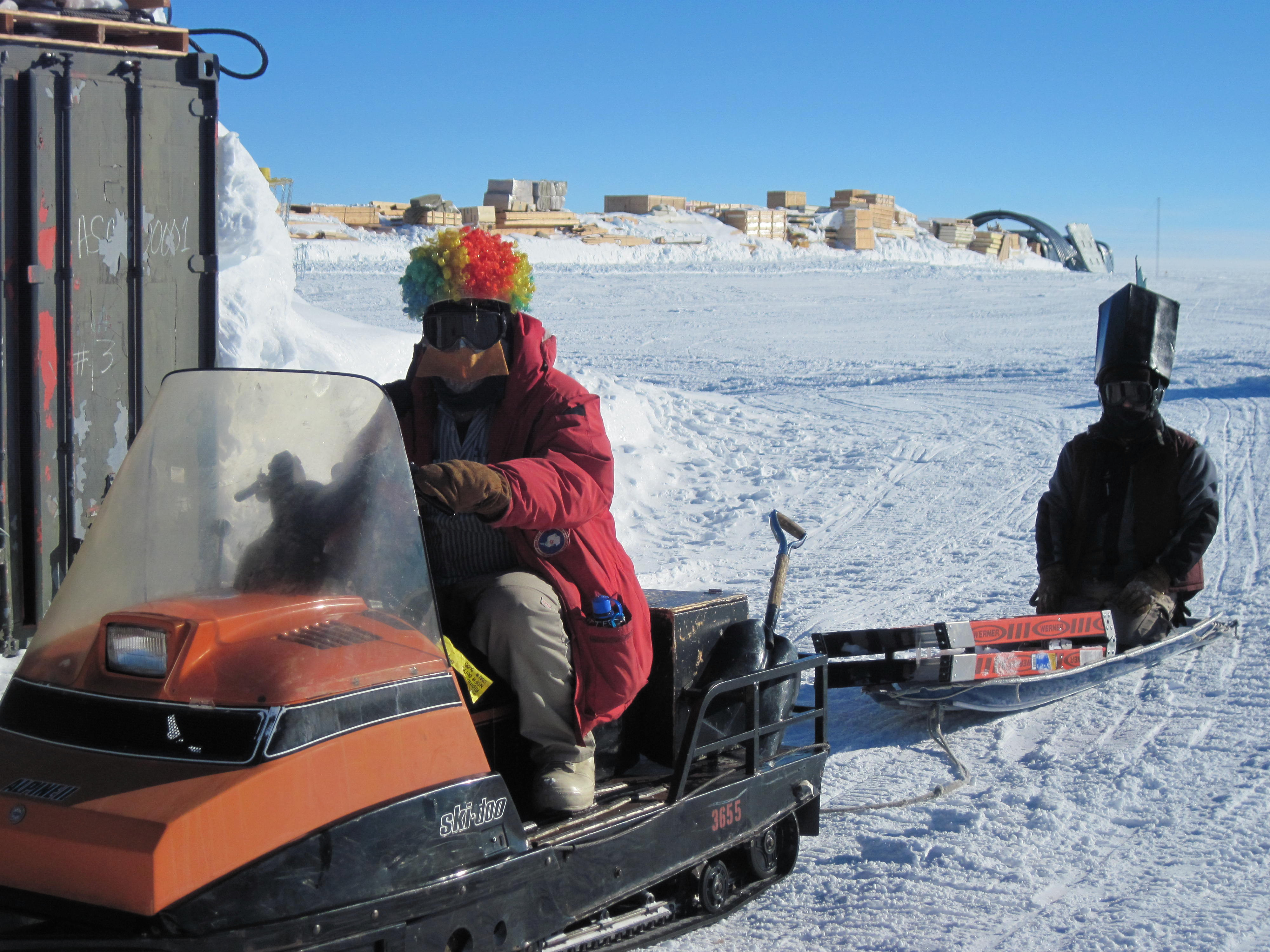
Much of what the Heavy Shop did at the very beginning of the season was bringing up equipment for the summer. We spent a lot of time digging out herds of snowmobiles almost completely buried in winter drifts and towing them back to the shop for warmups and maintenance; towing out huge portable heaters to the heavy equipment and, after digging that out, placing the foot-wide flexible hoses of the heaters on the vehicles’ motors and covering them with old quilts and leaving them running for hours and hours just to warm them up enough for a drive back to the shop; heating up and starting shuttle vans and then pulling them off the blocks they spent the winter on so that they wouldn’t become completely buried with engines full of ice.
Vehicles buried at the beginning of the summer season with the station in the background (photo from VMF common drive)
(Photo from VMF common drive)
Heating the CAT 307B (Photo from VMF common drive)
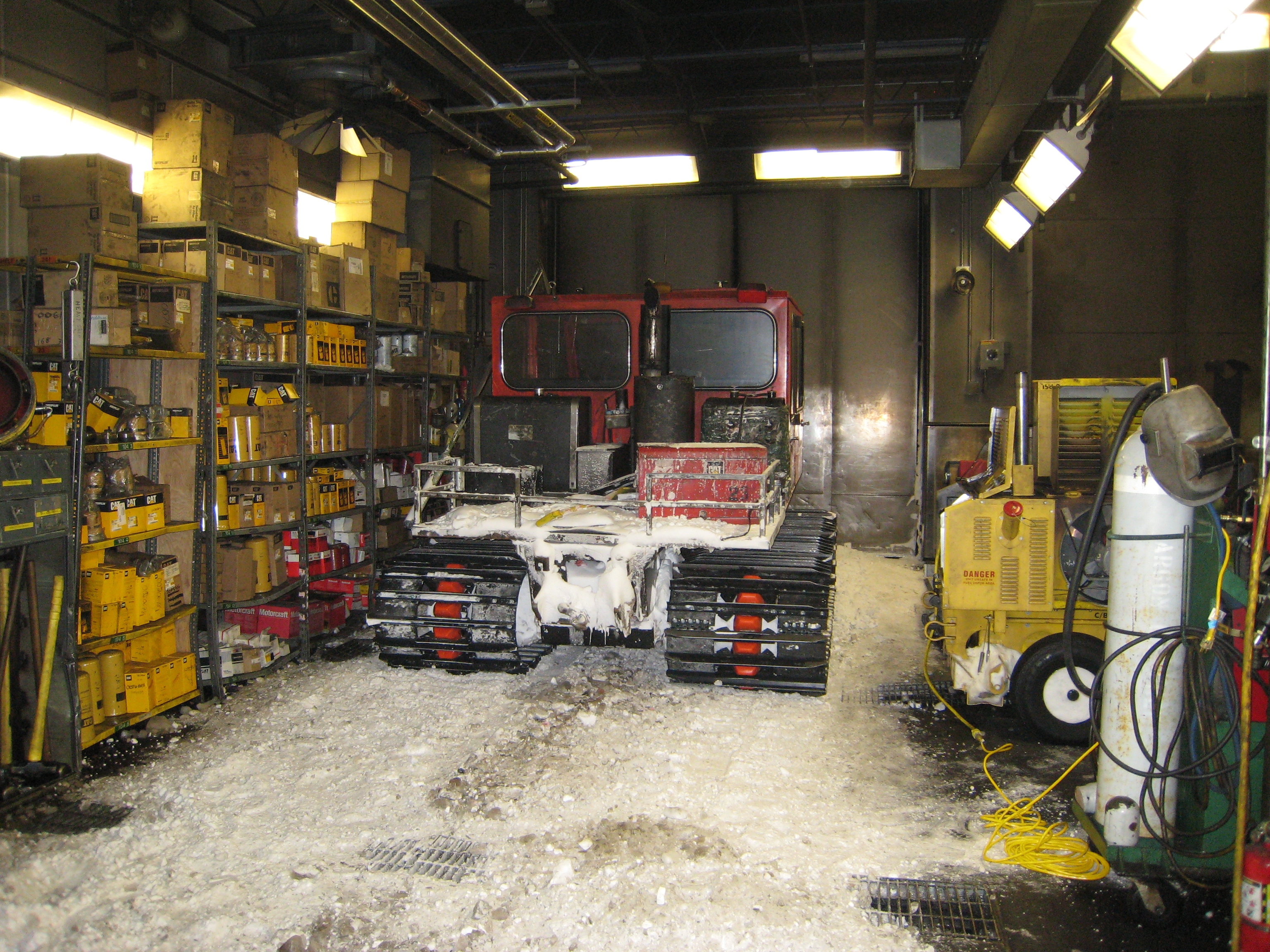
Now, every vehicle that comes into the shop is, understandably, completely covered with snow throughout the body of the engine, packed into the grooves of the track, iced onto the roof and sometimes even the sides. When it comes into the shop it melts everywhere, mixing with glycol, engine oil, and sometimes hydraulic fluid. Because of the rules of the Antarctic Treaty (and general common sense) this can’t just be shoveled back out onto the clean snow.
A snowy LMC in the shop (photo from VMF common drive)
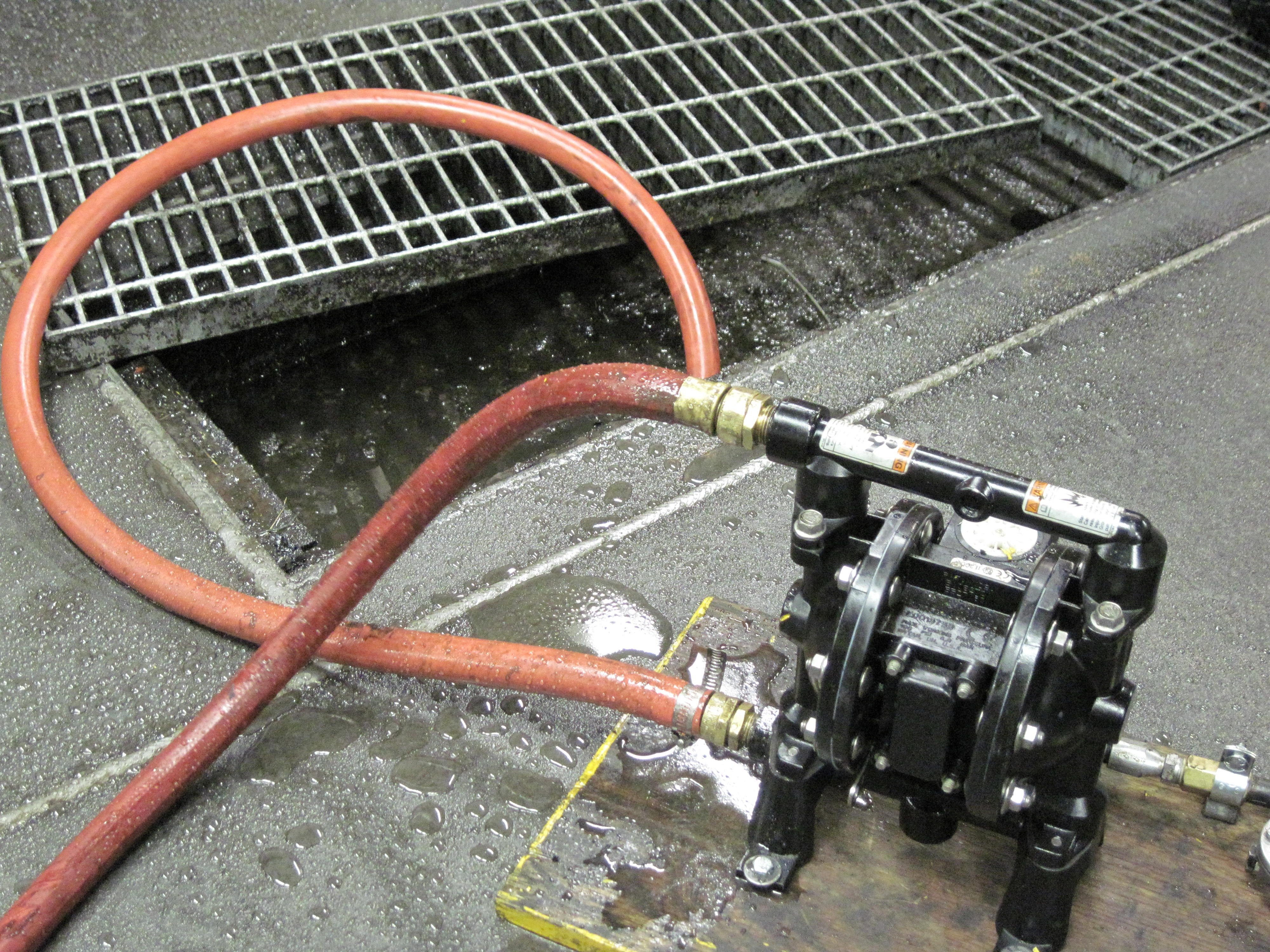
I get to remove waste ice from the shop in a variety of ways, and I spend probably two to six hours a day doing this. I can place a heating fan on the frozen grates and, when they melt to water, use a pneumatic pump to suck it out of the floor into the oil/water separator.
I can also use an air hammer, sharpened iron bar, or pickaxe (sometimes all three) to break the grate contents into smaller bits and take them out with a bucket if it’s really watery, a shovel, or by hand—pocked, sharp, oily slippery ice. If the melted water misses one of the ten or so grated reservoirs in the floor, and freezes solid to the floor, then I use the pickaxe or pointy iron bar to chop that up into small bits and sweep-shovel it off the floor. With the latter two crud-removal systems the ice has to be put into a 55-gallon drum and melted with a hot electric band. Then I get to use that same pneumatic pump to suck that waste water into the oil/water separator.
Crud, barrels and pump (on a block so it won't freeze from the cold floor)
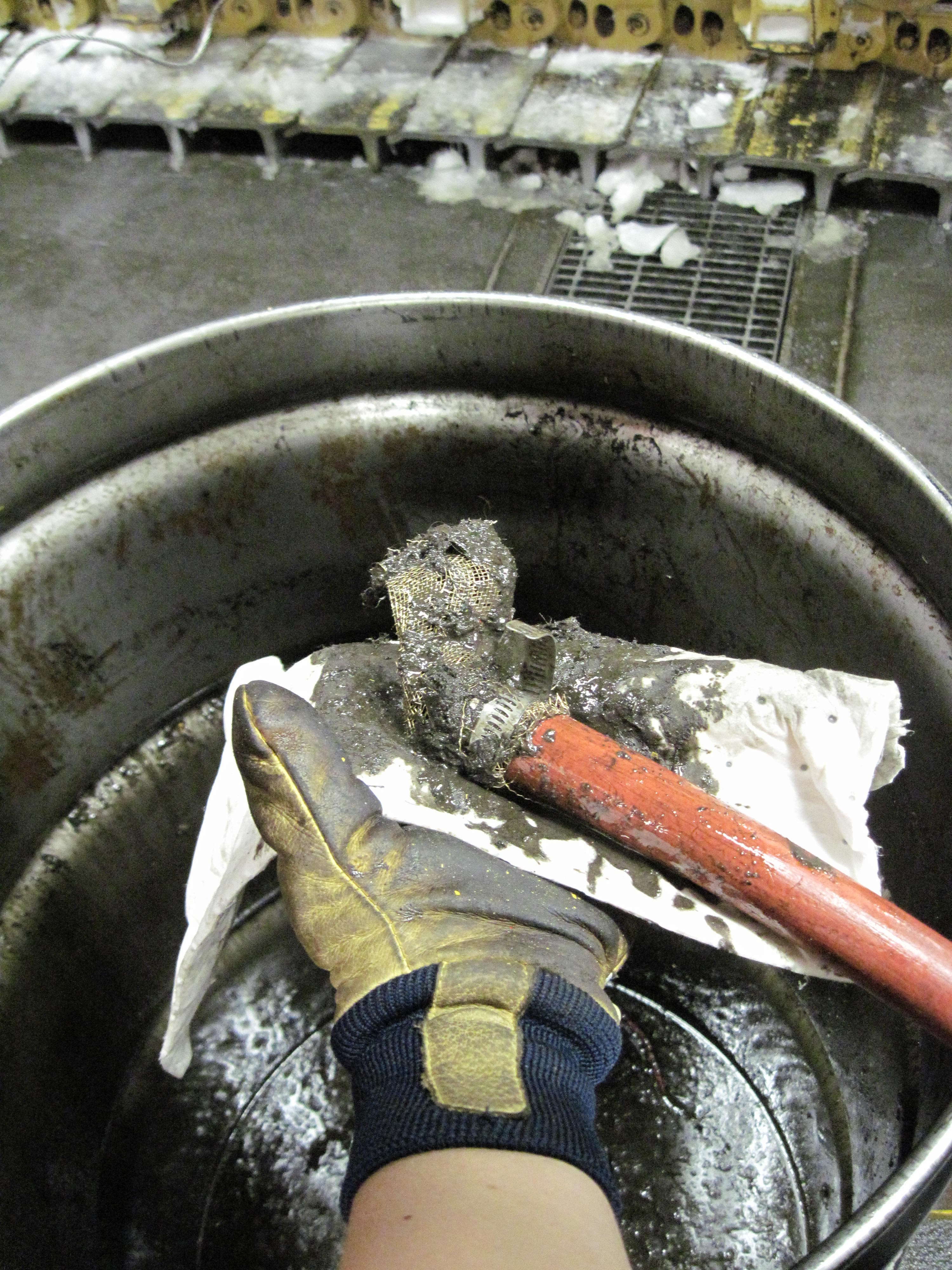
This pump (which I’ve given many nicknames that I keep to myself) tends to freeze up anytime the water running through it is too cold or slushy, when the mechanics open the bay doors to bring in a vehicle, letting 50 below air pour in (this happens all the time—it’s a shop), when it sucks up a blob of crud that blocks the suction, or when you look at it the wrong way.
Clogged
Most of the rags we have are recycled torn up clothing and sheets, and once, when I put a frilly, lacy rag on the pump to keep it reasonably dry, it stopped working for almost a week out of spite; no amount of taking it apart to look for blockages, bleeding the hoses, soaking the hoses in hot water, cajoling it, or priming it with oily water could make it work again until I removed the frilly rag.
Once the water has gone through the separator, I use an electric pump to transfer it to different 55-gallon drums. Once I have two or three of these full–at the beginning of the season it was about 5 per week, but now that the temperature is up to -10 and everything is really melty, the shop is like a swamp and I do up to 4 per day–I grab it, all 440 or so pounds of it with a dolly, throw my whole weight on it, and take it for a walk. The wastewater input is through a subterranean (sub-ice-ean?) hallway that remains at 50 or 60 below no matter how warm it gets outside. I drag the now-wheeled barrel through the shop and VMF office, past the plumbers and electricians’ shop, across the Logistics Arch which houses much of the station’s frozen food storage, and over to the power plant arch. The pipe is in the naturally refrigerated hallway, but the switch to turn off the pump inside of the wastewater input pipe, which helps to prevent me from getting covered in raw sewage, is inside of the power plant bathroom, the only unisex toilet for five floors and as many departments. This is incredibly irritating because I have to wait until whoever is depositing their own sewage while reading hunting and fishing magazines is finished before I can begin my job. Once the internal pump is turned off, I remove the cap of the pipe and connect yet another pump (pump count for this task: 4) before sucking the separated waste water into the pipe to be treated.
Other things I do at work include receiving, inventorying and putting away anything we ever purchase including hoses, pumps, turbochargers, tools, o-rings, bellypans, windshields, welding materials, batteries and many more exciting objects, and anything the entire Ops department purchases (read: half the station), like amplifiers, DVDs, and sousaphones. I sweep and put things away, push water into my favorite grates and suck it out again, change the empty barrels for full barrels of ethylene glycol, arctic low-pour hydraulic fluid and engine oil, and dolly out full barrels of waste liquids and used oil and fuel filters.
Using the hoist to swap empty barrels for full ones. This was a few weeks into the job, and those Carhartts were shiny new when I received them in CHC.
I take out and sort shop trash, which is much more complicated than it sounds—everything here is recycled if possible, and the waste system is quite extensive. I’ve also gotten to do some more mechanic-y things like fixing the pump when it clogs, repairing leaky couplings on the fresh oil and glycol pumps, helping change the oil on Elephant Man, the beast of a vehicle that drags the mobile firefighting sled, and learning how to change broken fittings on hydraulic hoses. I have learned how to operate and start snowmobiles, Pisten Bullys and LMCs, and, unofficially, some of the heavier equipment like track loaders. I also get to shovel quite a bit, sometimes even for different departments which is actually pretty fun.
Shoveling out a fuel hose that was buried in snow up to my waist
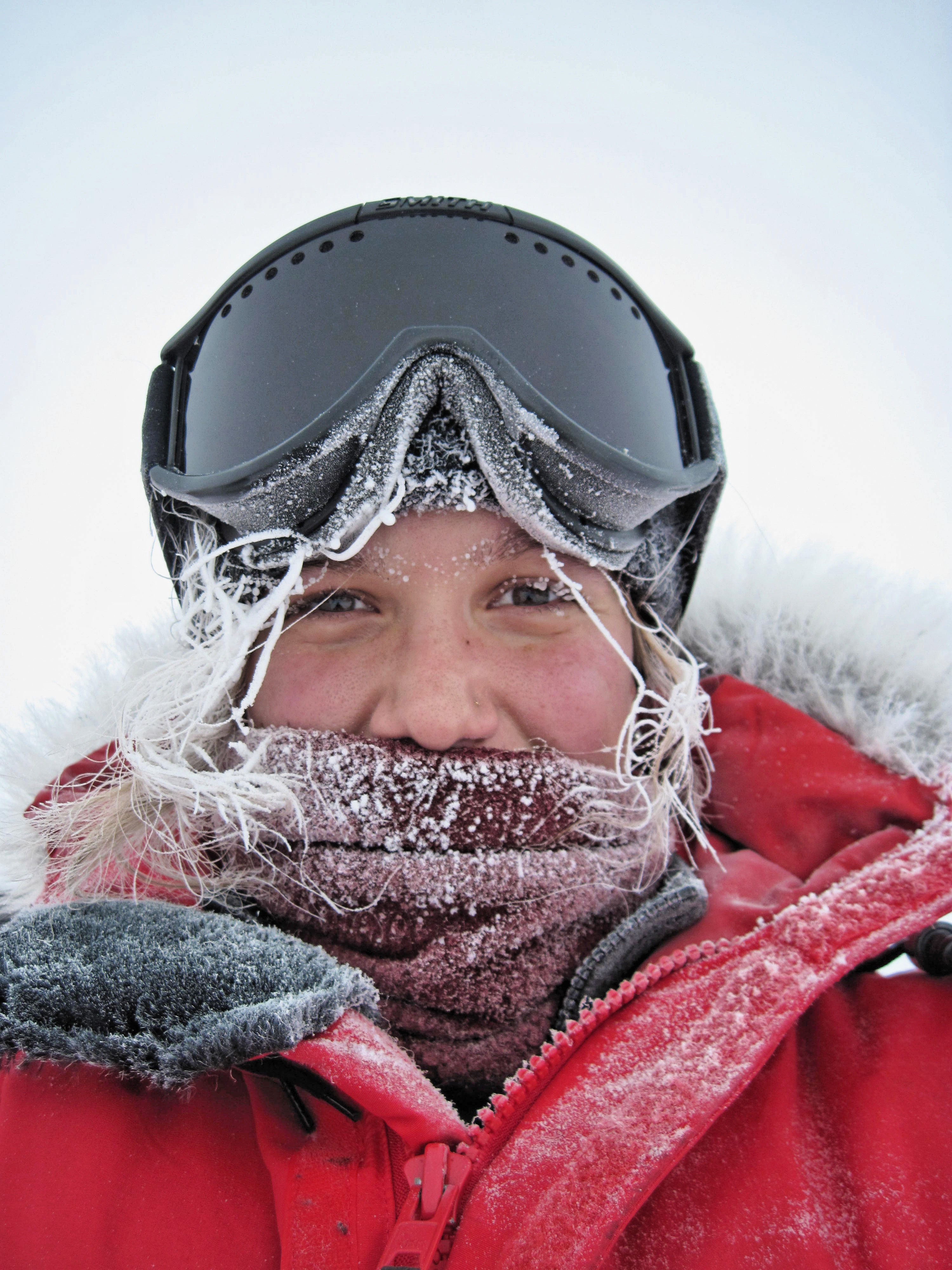
Frozen eyelashes and hair while shoveling for Fuels
Despite the greasy nature of the job, I actually enjoy it. The tasks are pretty simple, just physically tiring, but it feels good to get exercise at work every day and it’s satisfying to see a task get done, even though it will get undone by the next morning. I feel really lucky to work in the VMF—the crew there is so funny and relaxed, while somehow simultaneously being some of the hardest workers on the entire station and being really responsive to the needs of the crew. My supervisors just laughed and offered advice when I overflowed the waste water barrel all over the entire shop (a HUGE mess), and later the water/oil separator (a slightly less huge mess), or when I dropped the cap to the waste input pipe through the grated floor outside the power plant, never to be seen again. I honestly think that the heavy shop is the best department at the whole South Pole, but I might be a little biased.
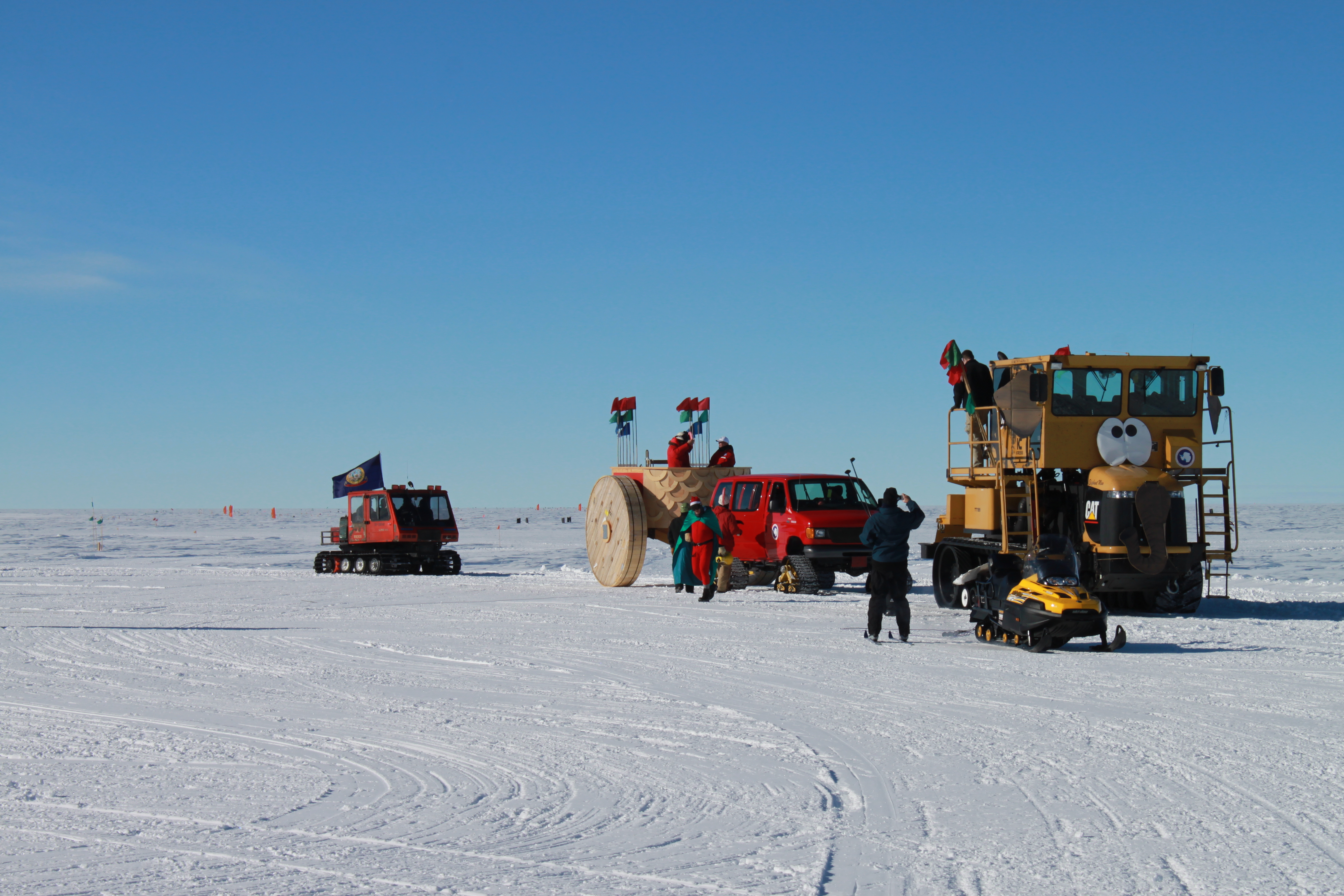
Daniel and I ran our first race ever, a Christmas morning 2.1 mile course at 10,000 foot physiological altitude, with a -25 windchill and soft ice underfoot. Participants in jogging clothes and costumes ran, jogged, walked, skied, drove snowmobiles, Pisten Bullys and tractors decked out like parade floats.
Click to enlarge photos.
Participants getting ready to race around the world
Pre-race
My goals in the race were to jog the whole time—optimistically jog, I told people who asked if I planned to run the race—which I did, except for to snap a few pictures, and to clock in under half an hour. I had spoken to a real skier/runner who said he hoped to be able to average 12 minute miles due to the terrain and altitude, so I thought 15 minute miles was okay for a novice runner.
Elissa and Fire Captain Don
Ralph, Eric and Max don't let safety get in the way of fashion--check out those snowmobile helmets
The male winner ran the race in 13:32 minutes, and the female winner ran it in 18:22 minutes. Daniel was close behind the female winner, beating the second place woman, and I ran it in a little over 28 minutes. The male and female winners of the race get to fly to McMurdo in a few weeks and run their sea-level marathon. I have heard that the South Pole contestants do quite well and often win this race due to the drop in altitude.
Daniel crosses the finish line at 18 or so minutes–we didn’t get an official time, unfortunately
Kiell crossing the finish line
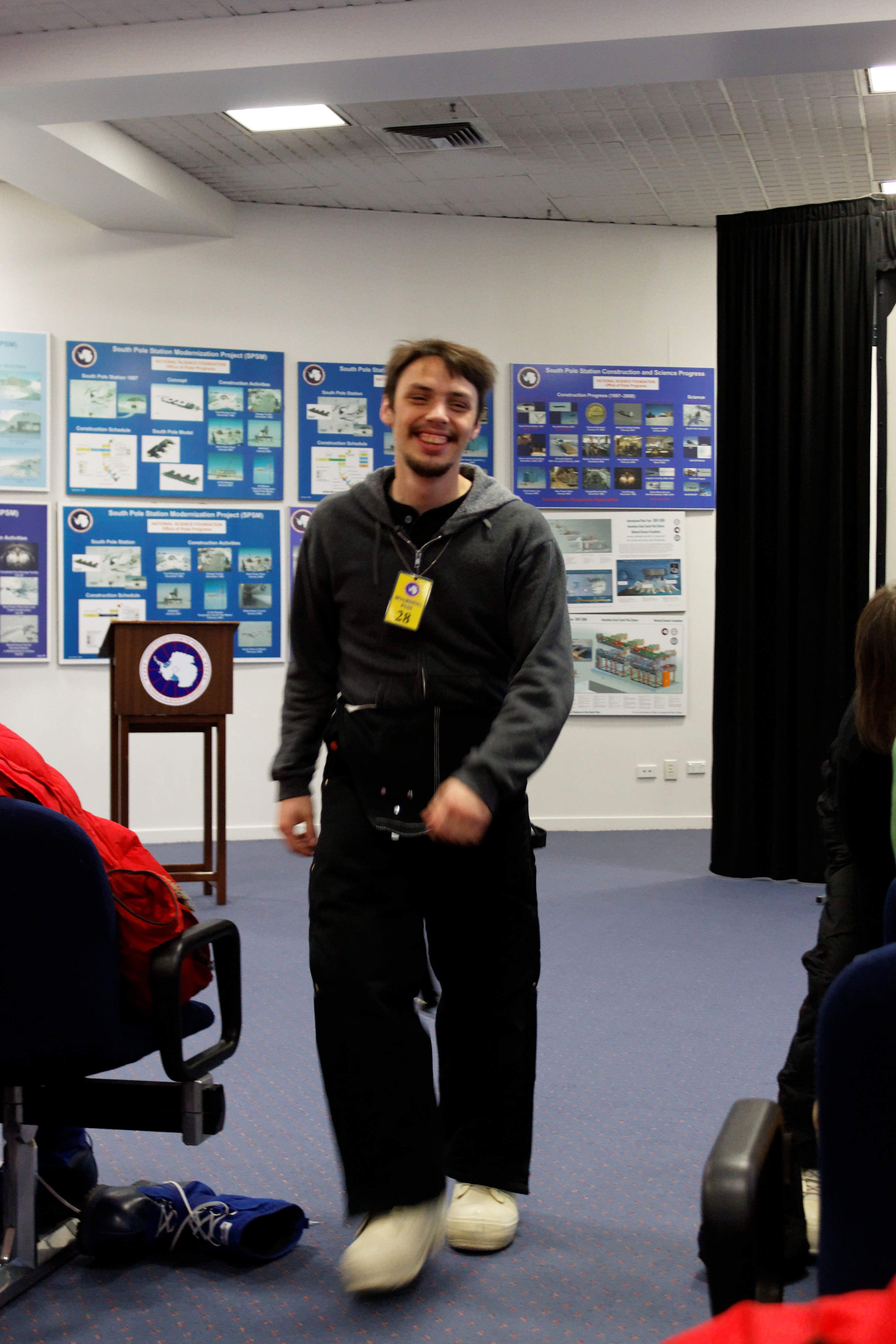
After the race we had brunch, eggs to order, potatoes, fresh fruit and cheese, pastries, scotch eggs, bacon, sausage, toast, coffee. We returned to Summer Camp to shower and start getting ready for evening festivities and dinner. People get pretty dressed up for holidays—Thanksgiving was like this, too—some people went all the way in suits and ties, dresses heels, and makeup. It’s fun to see everyone dolled up like that since most of the time we’re quite dirty due to showering restrictions, and lots of people tend to wear their issue clothes, like the Carhartt overalls, even when their workday is over.
I put Charlie Brown Christmas on, with my laptop on the sink in the bathroom while my friend Rachel showered and got ready to serve wine at the second of three dinner seatings. When it was time, we started with appetizers and eggnog in the hallway outside the galley, musicians singing Christmas carols while we noshed. Dinner was delicious, beef wellington, lobster tail, basil mashed potatoes, green beans with hazelnut shallot butter, challah, red wine and cherry pie with fresh whipped cream and orange chocolate for dessert.
After dinner we played four games of paper telephone (I don’t really recommend laughing so hard on a full stomach), followed by dancing until 1 in the morning in the galley before going back outside to the midnight sun and walking home to our little jamesway room to go to bed.
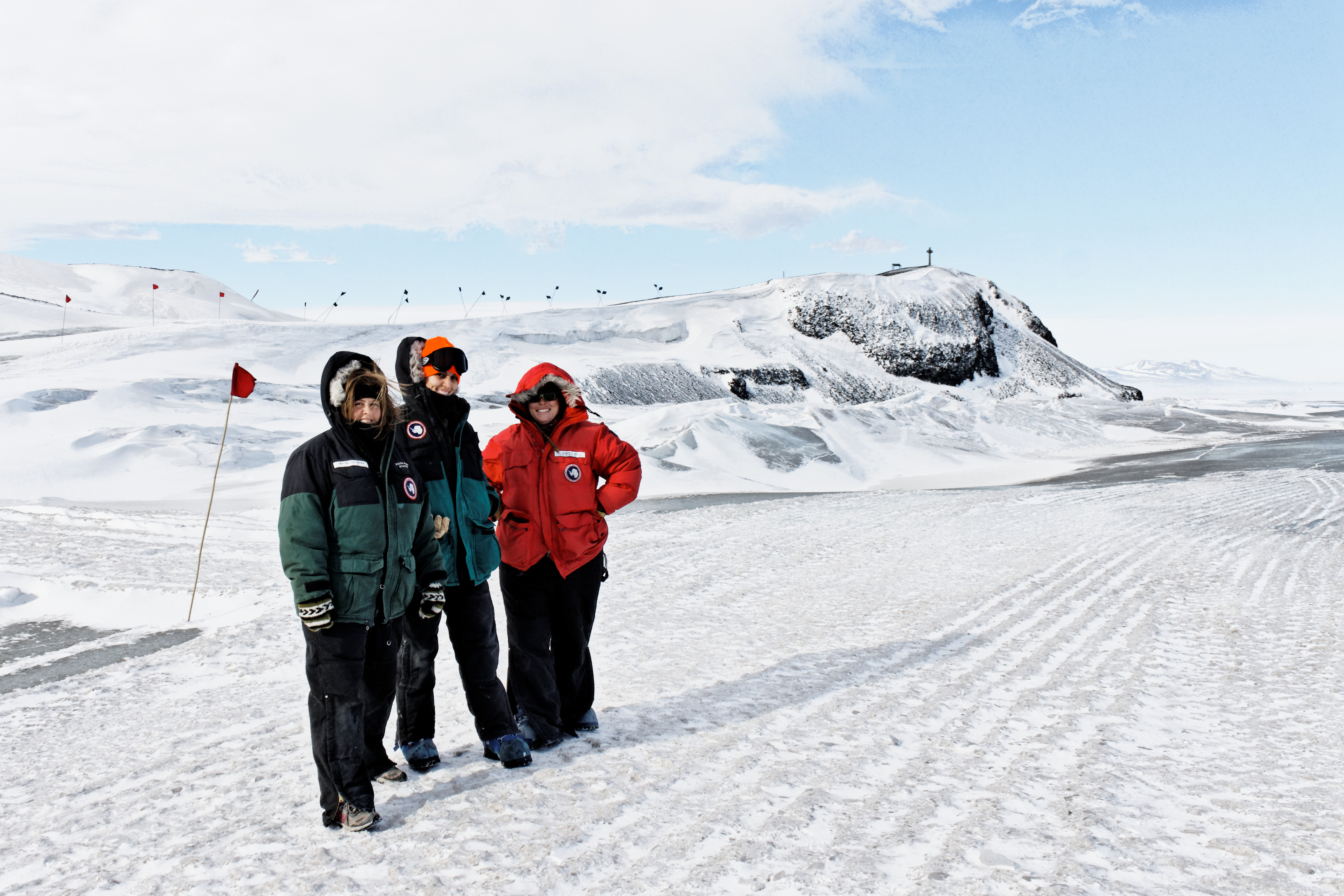
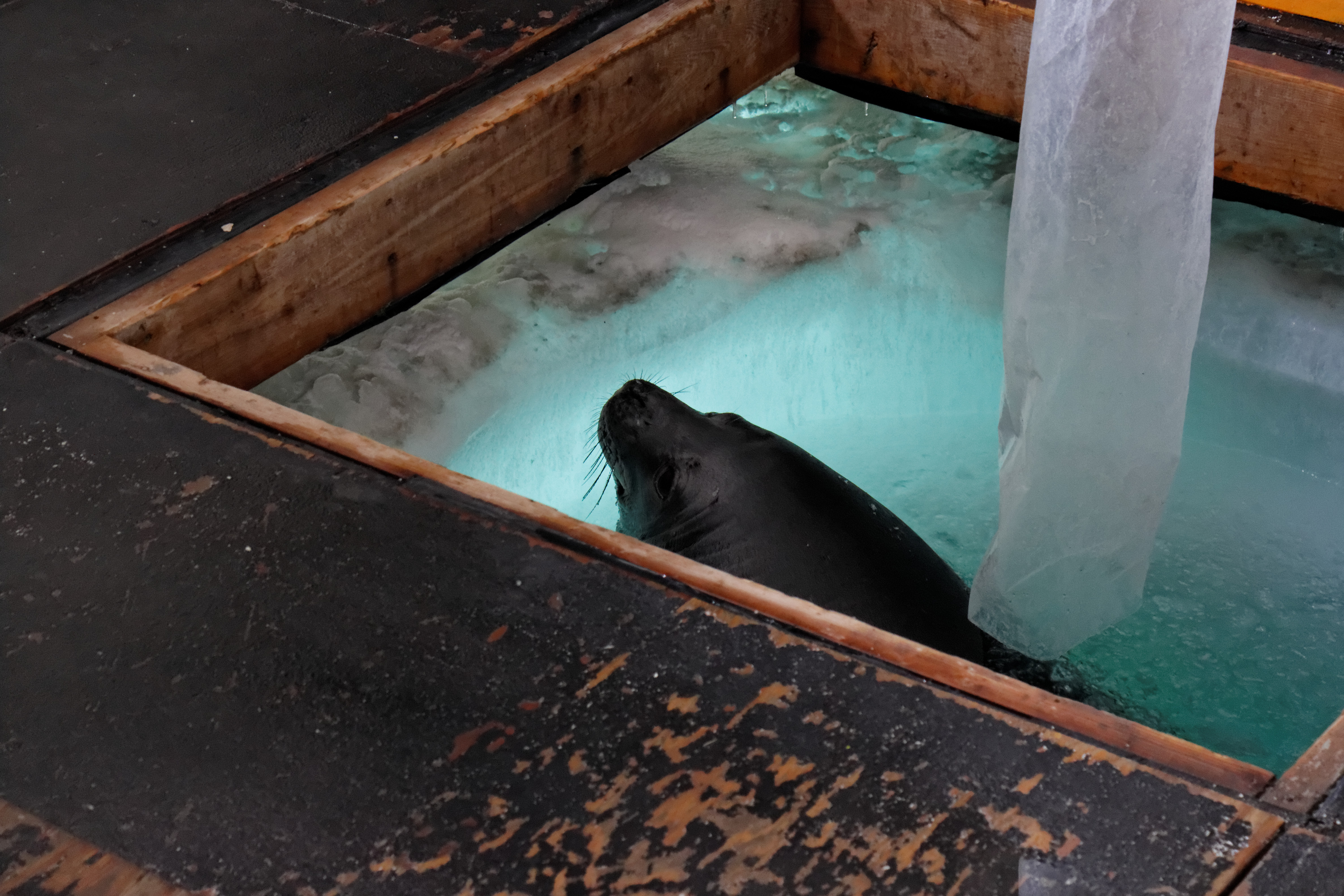
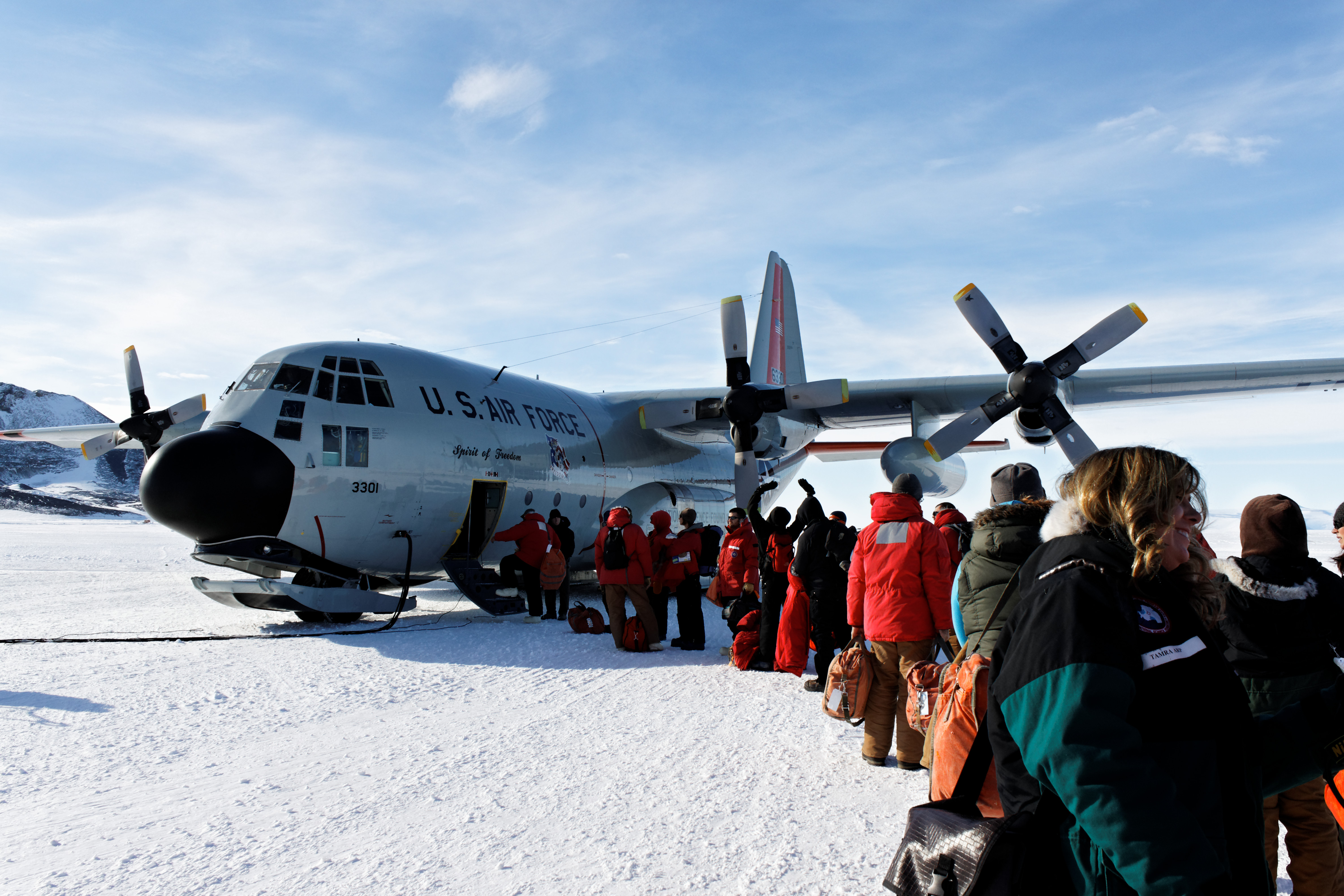
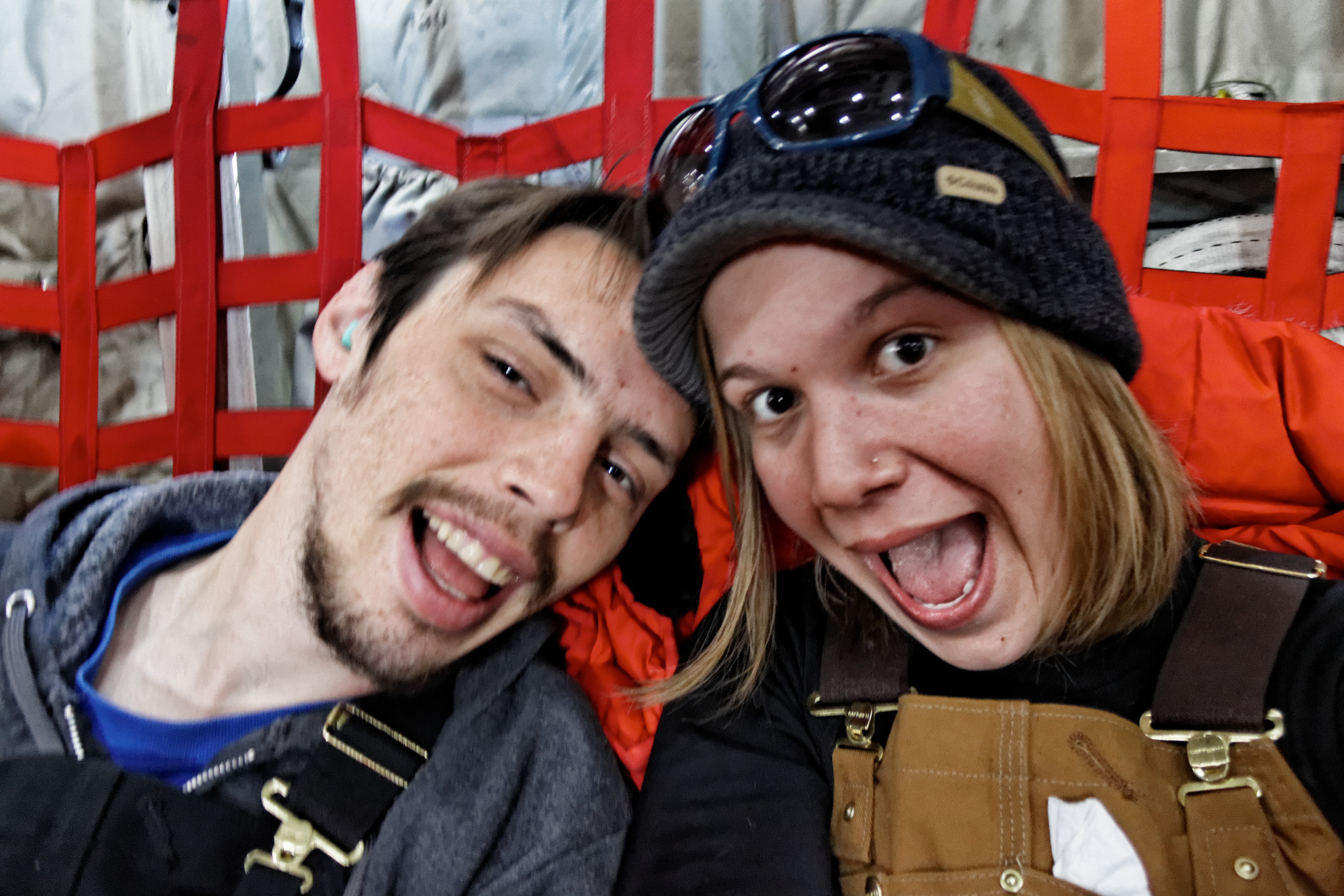
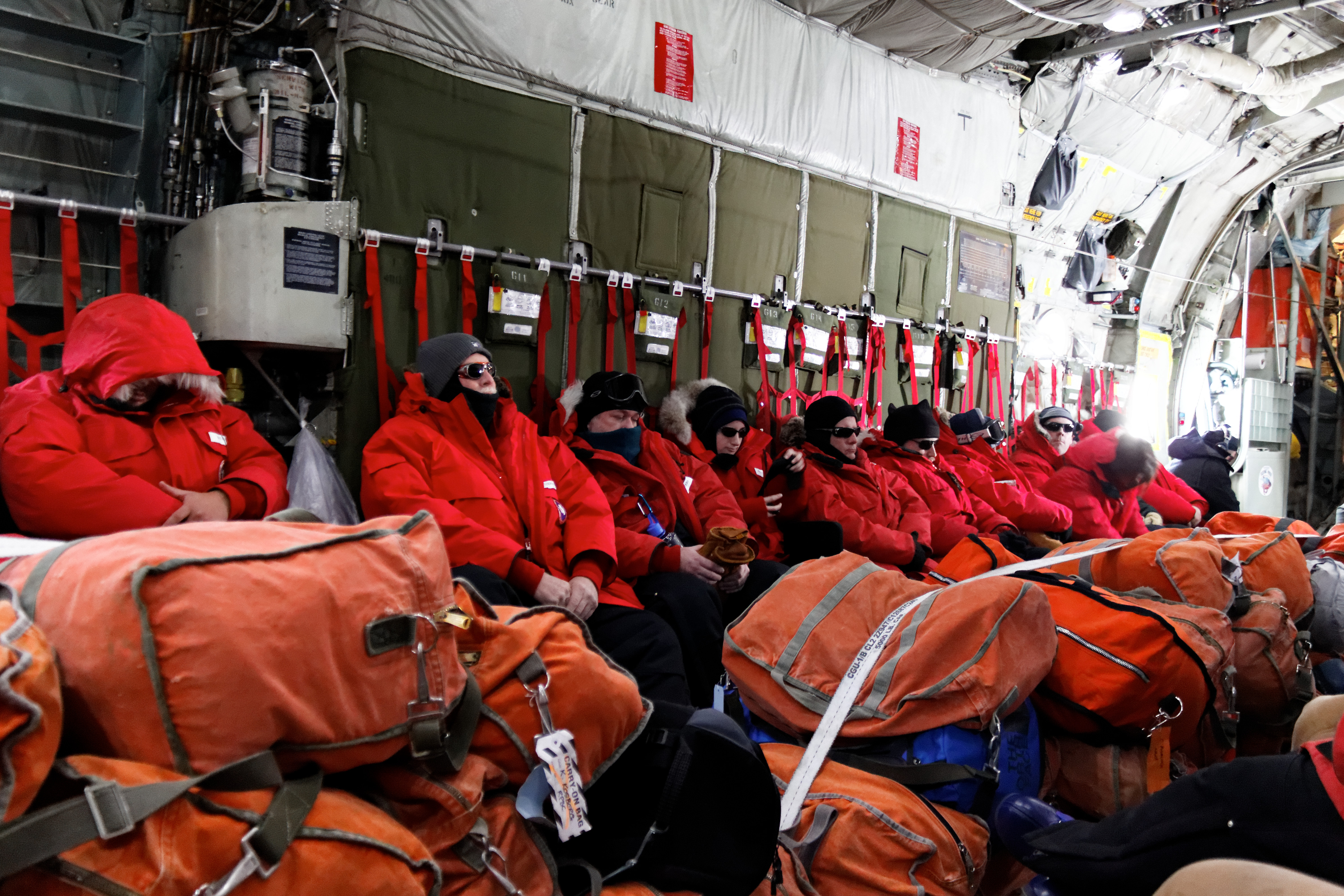
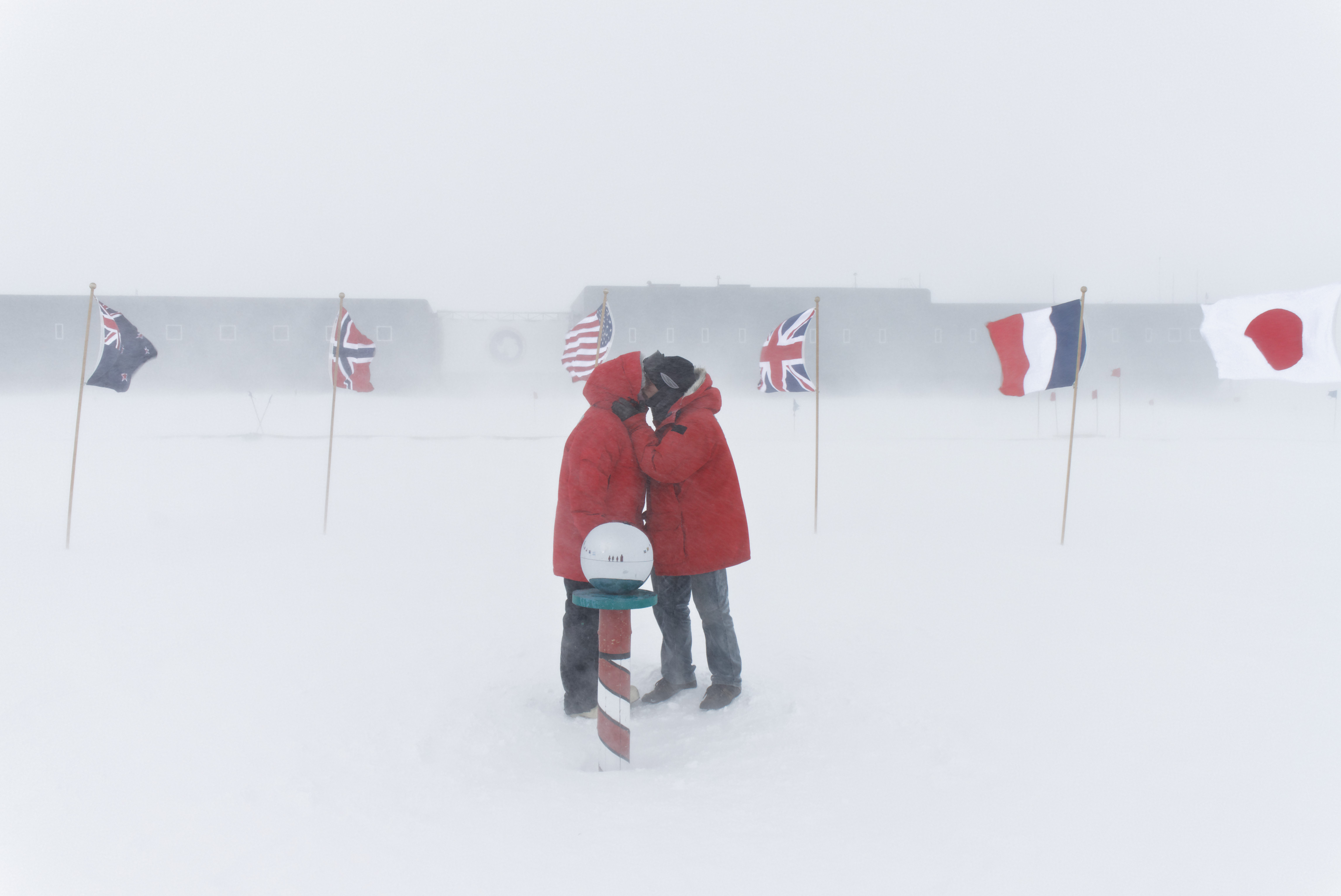
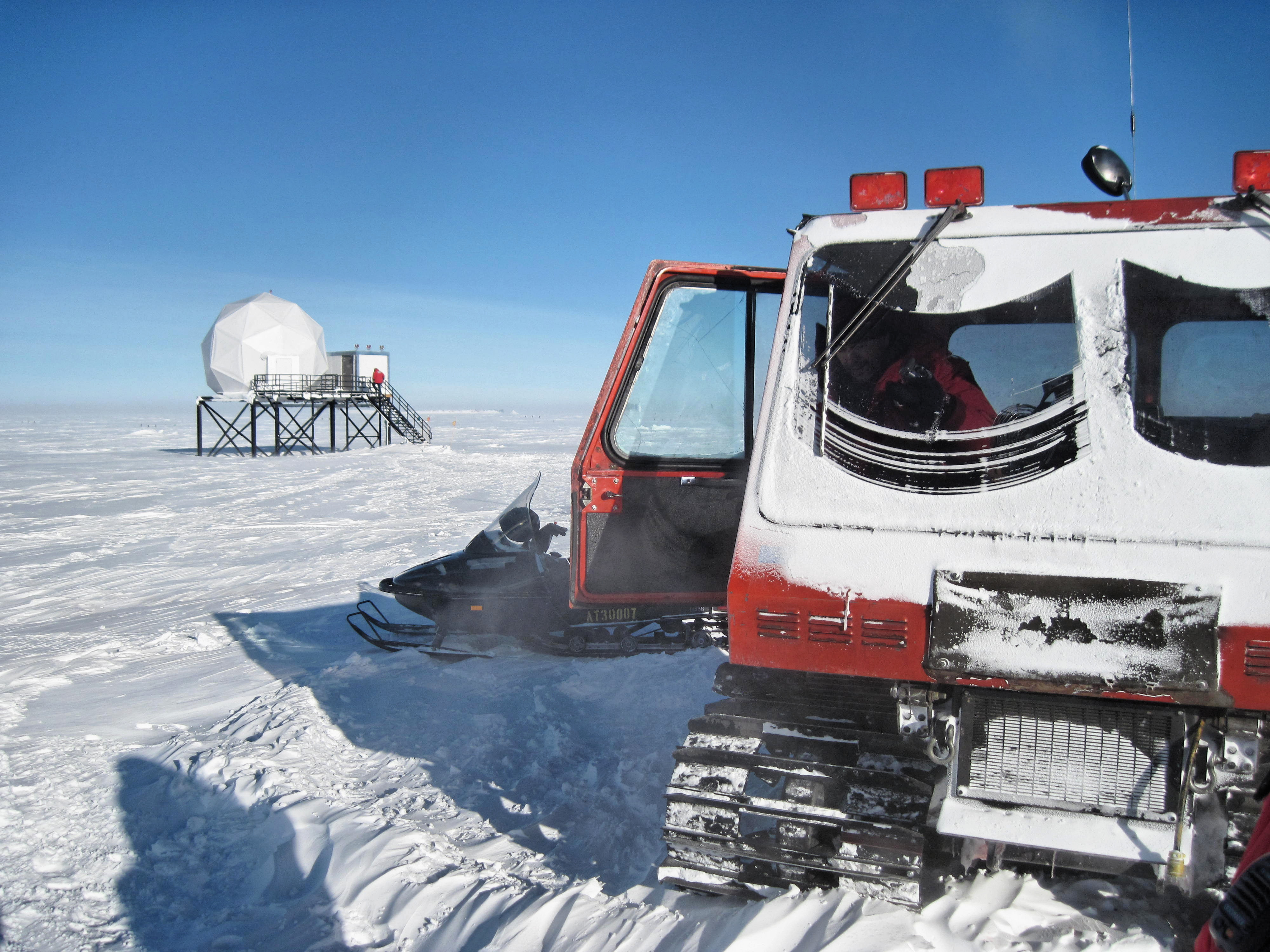
McMurdo seal!!Boarding the plane to PoleOn the planeAntarctic Mountain RangePassengers on the flightA few days after arrival, the storm dubbed "Deathclaw" hit--we decided to go out to the Ceremonial Pole for a photoshootKiell and Daniel at the South PoleAw.Driving the LMC out to the Remote Facilities--the SPTR shack, where half of our internet livesGOES, the other half of the internet
Daniel taking a photo on our walk back to bed one night
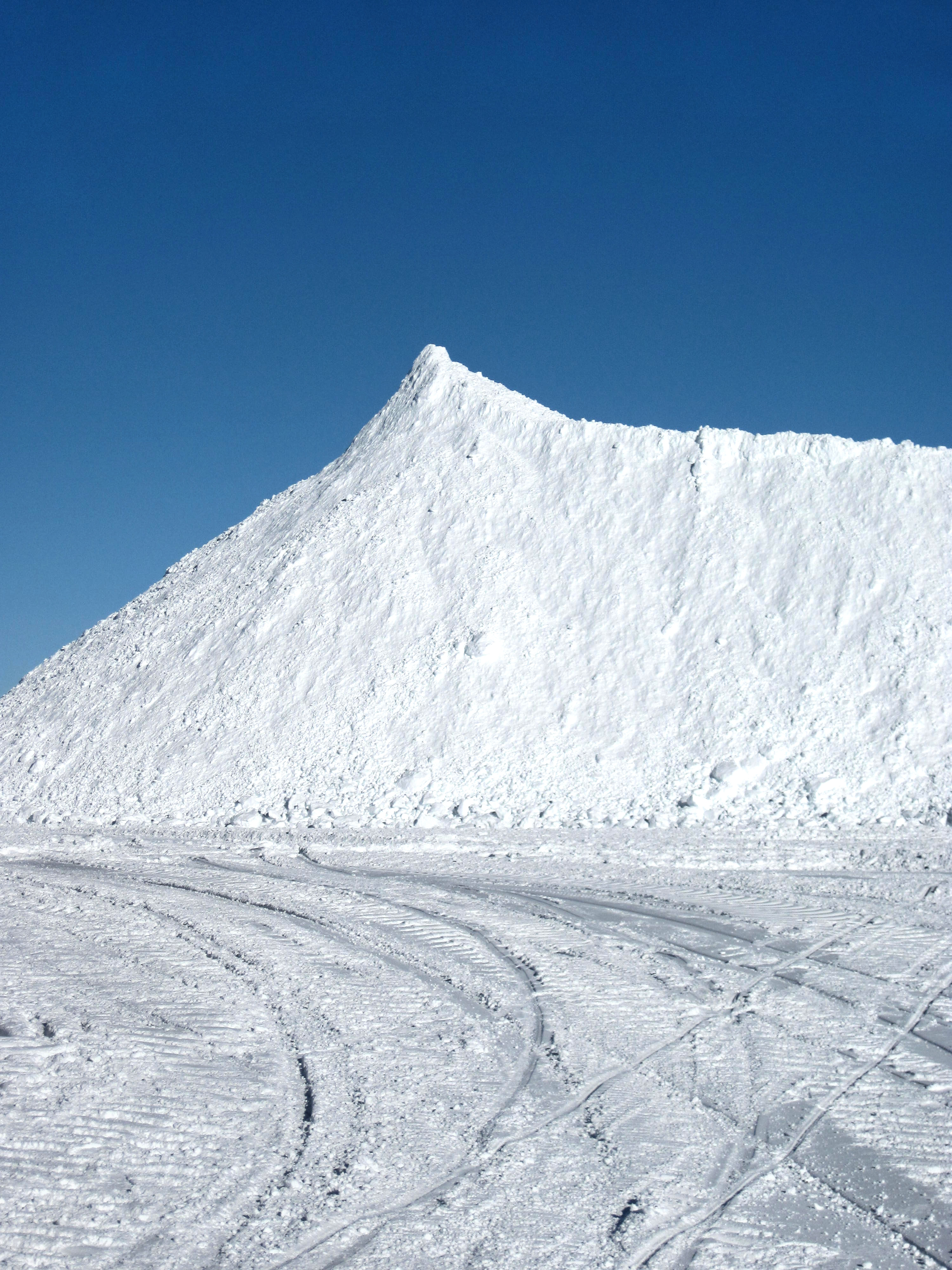
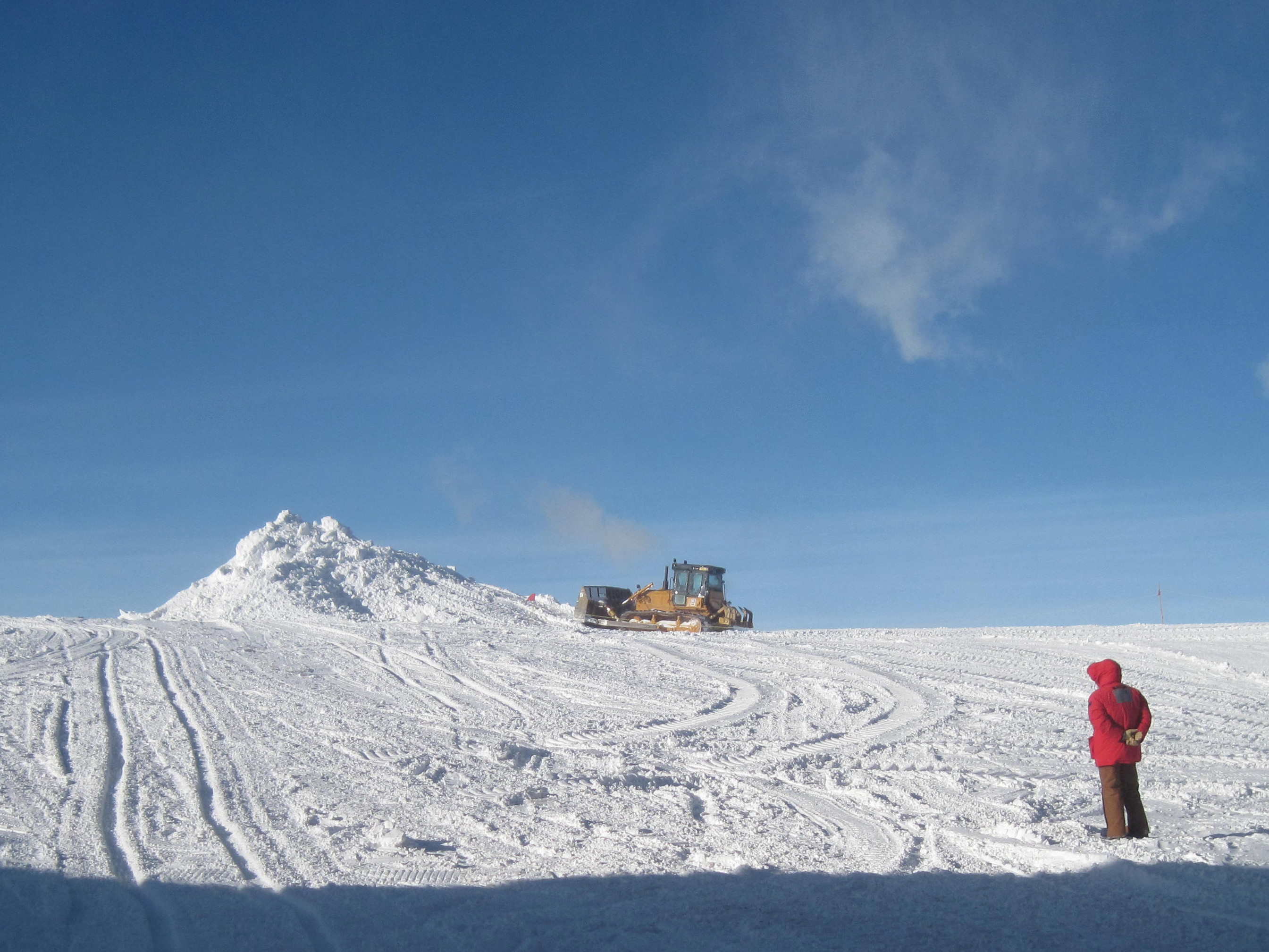
Snow Mountain right between the station and Summer Camp, ready to be movedContemplating a small snow pile and track loader
I celebrated my 25th birthday differently than any other year, waking up at 5am, slightly jetlagged, to catch a pre-arranged shuttle to the Christchurch Clothing Distribution Center. All of the people in my training group, plumbers, electricians, bakers, power plant operators, IT staff and manual laborers such as myself, were presented with two worn orange duffel bags filled with loaner extreme cold weather (ECW) gear, washed and folded. Our project for the day was to try on each item and make sure, for comfort and safety, that everything fit well.
(Click on images to enlarge!)
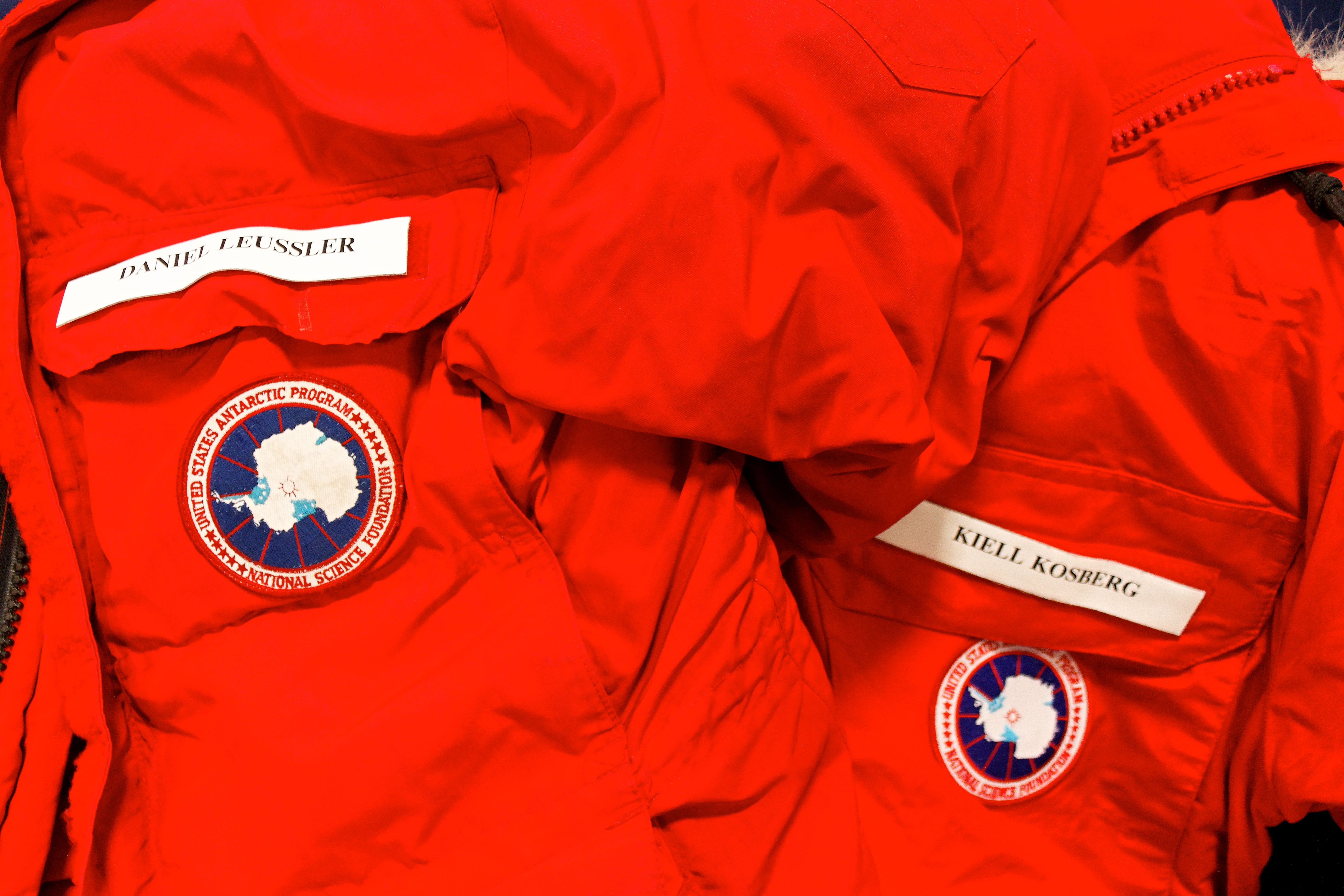
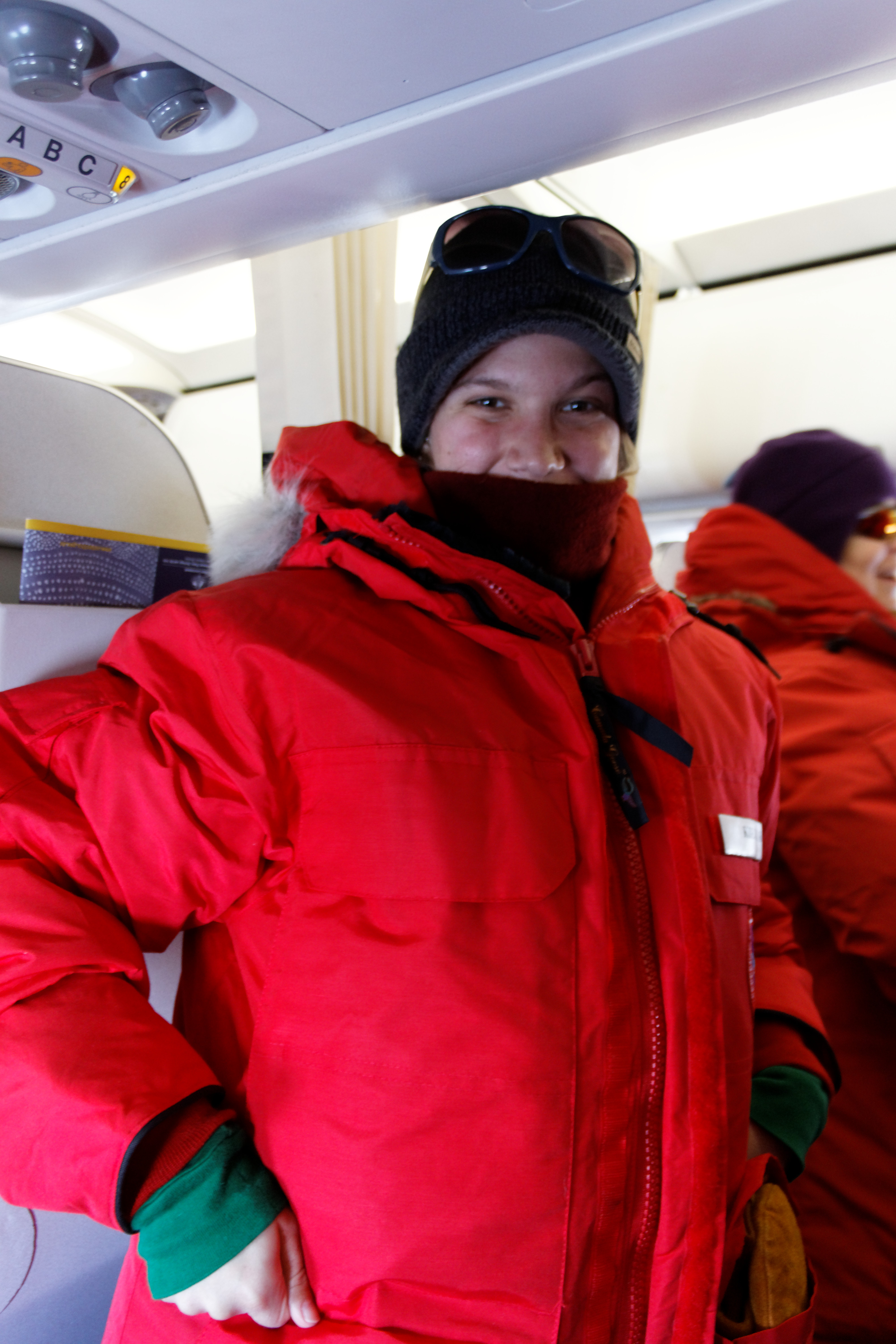
Inside the bag was a pair of off-white rubber bunny boots, awkward but very insulated Cold War Era footwear so named for their rabbit’s foot-esque appearance; a heavy red parka with a faux fur-lined hood; Carhartt overalls and work jacket; slippery windpants; multiple pairs of expedition-weight long underwear; polar fleece pants and jacket; fluffy gray tube socks; balaclava, fleece hat and neck gaiter; huge leather bearpaw mittens; work gloves, and a few other odds and ends. Once it was all tried on and any misfits exchanged for different sizes, we repacked everything, leaving it in the Center until our morning of deployment.
Daniel in bunny boots
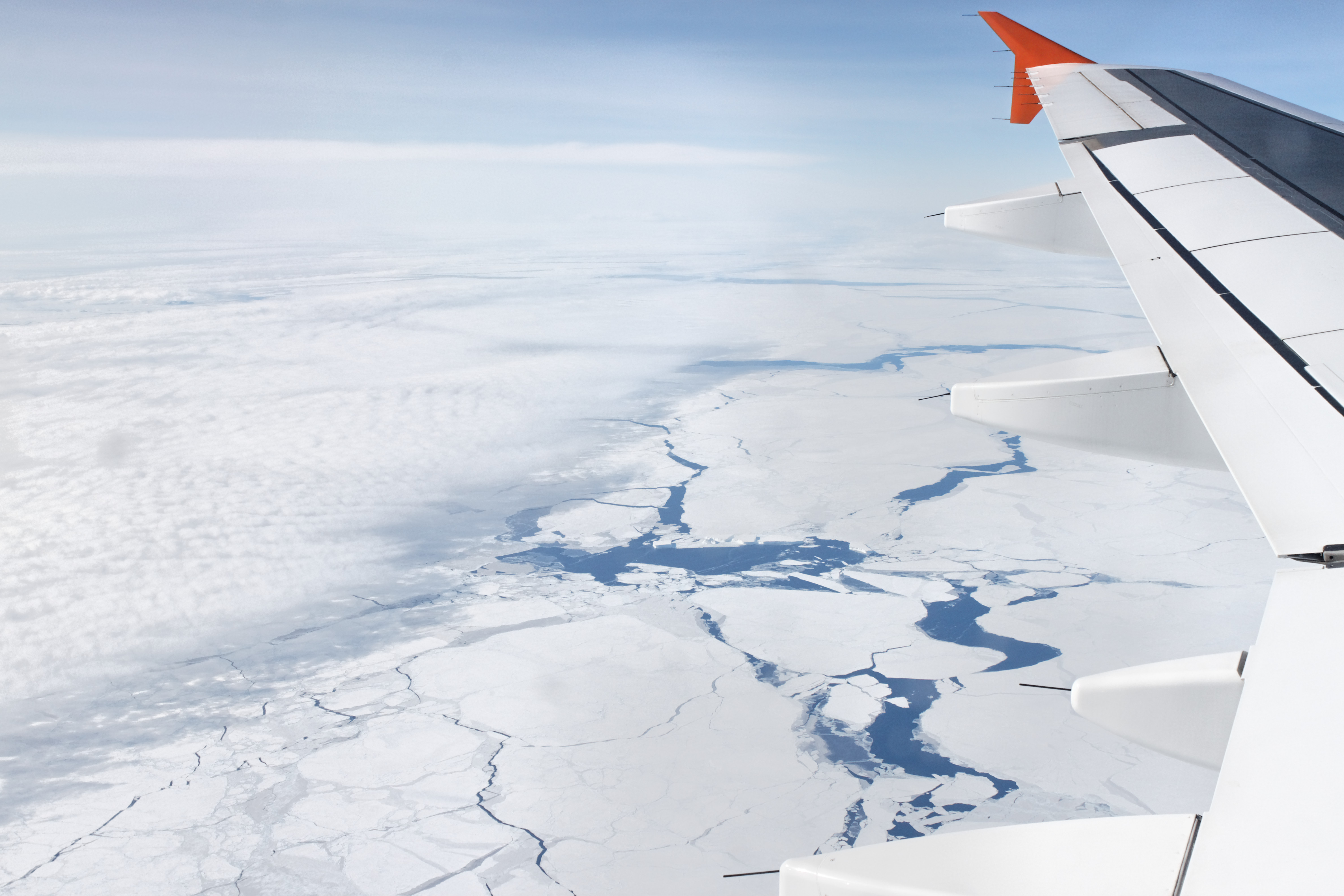
We flew to the continent in a commercial airliner, which afforded us an amazing view on arrival, veins of cerulean and navy blue ocean, striking through cracks in the sea-ice. The stewardesses transitioned from their skirted, nylon’d and heeled uniforms, to soft fleece pants, to black overall snowpants and chunky Sorel boots.
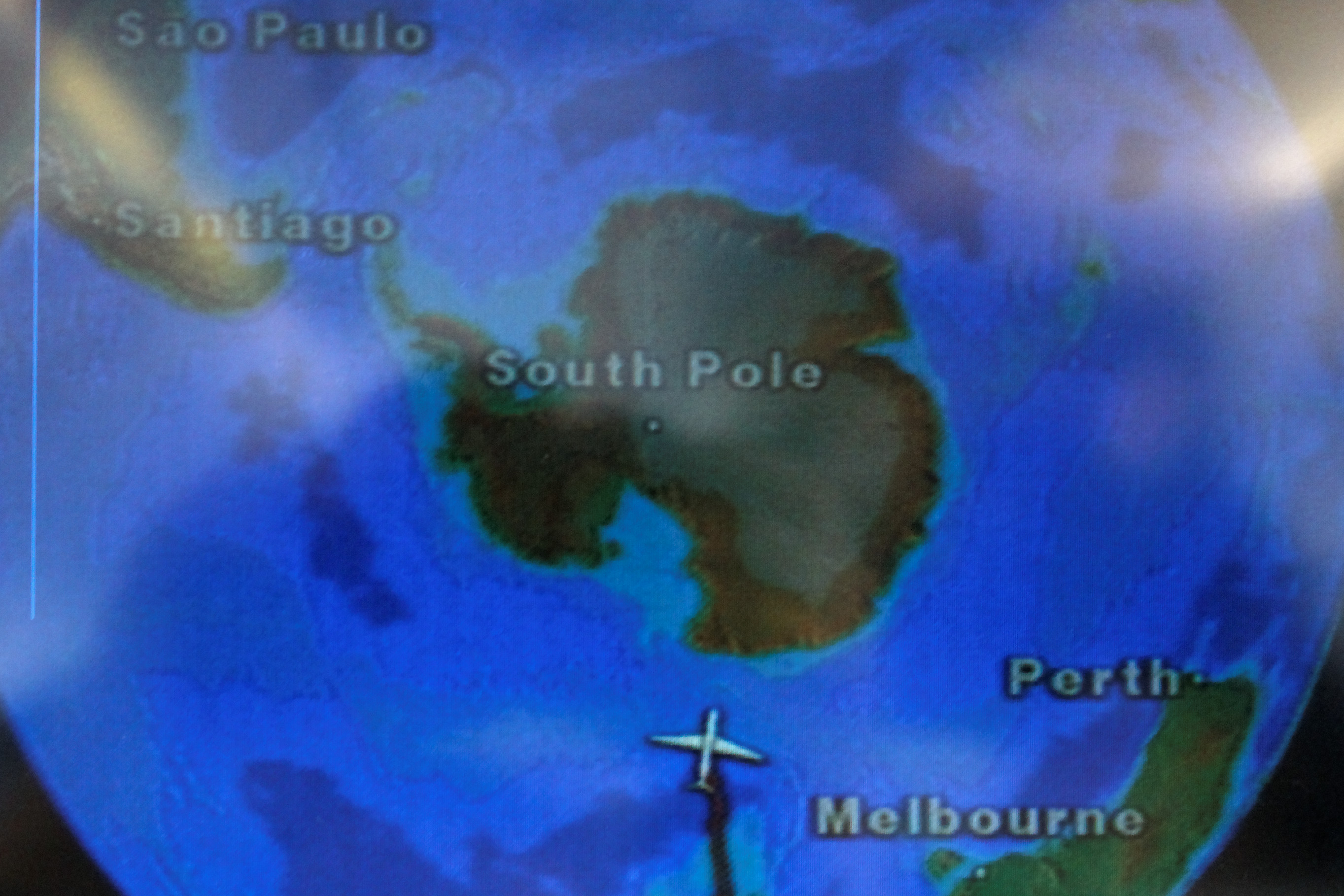
Flight path screen
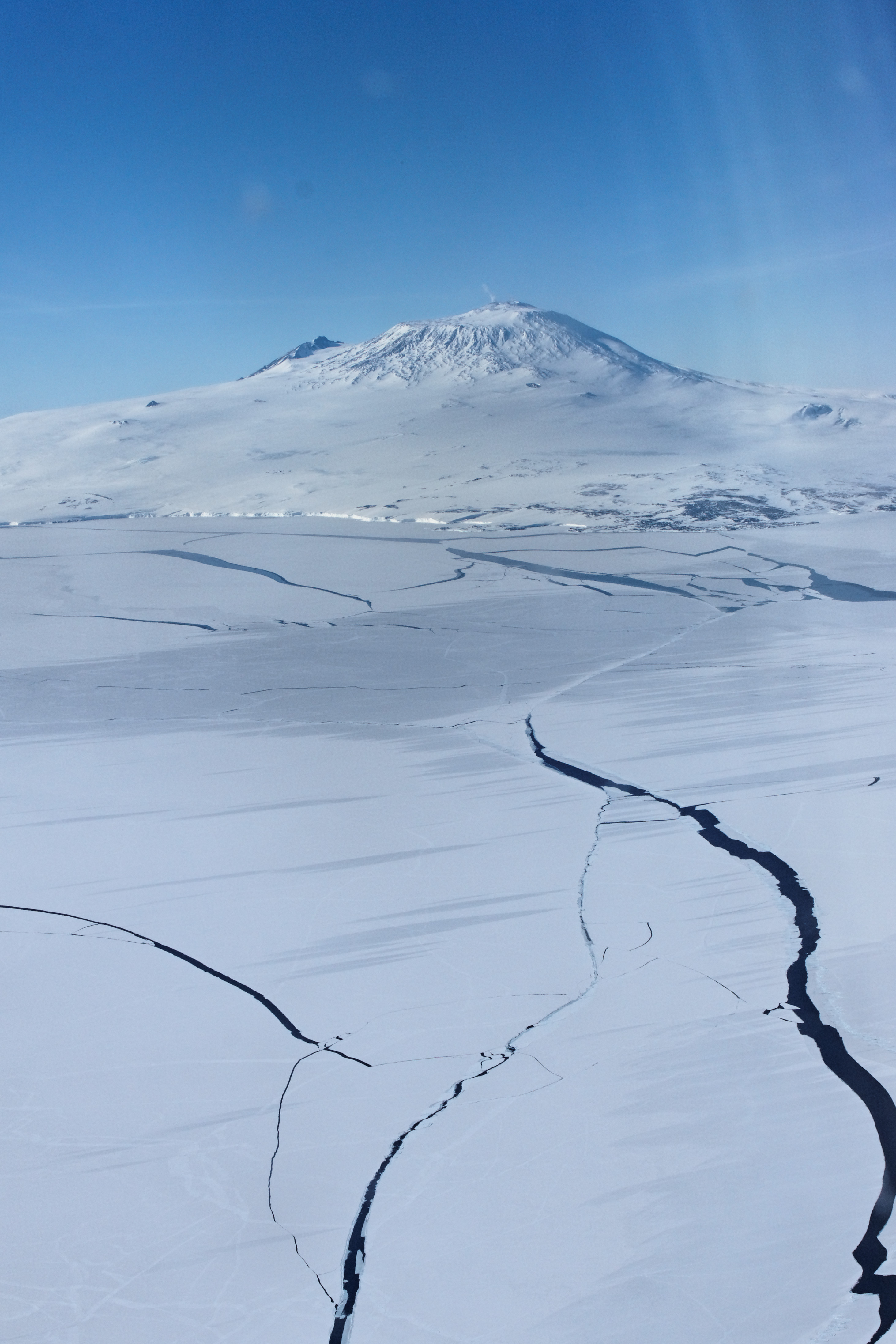
Sea Ice and CloudsMount ErebusA seat with a view
All of us, craning towards the windows to see the ice, the land, steaming Mount Erebus—like giddy kids on a school bus, sitting backwards in our seats, climbing over each others’ laps to see outside. We landed on the ice runway, McMurdo in the distance like a construction town during a Minnesota winter, dirt churned up in the snow.
Daniel looking out the plane windowKiell getting ready to disembarkIvan the Terra Bus, our ride into McMurdo
We walked to New Zealand’s Scott Base one morning, about a mile away. As we crested the ridge dividing the stations, the wind picked up, stinging our faces in the gaps between our balaclavas and snow goggles, making me feel like a kite in my huge jacket. Walking down the hill toward the frozen shoreline, textured by pressure ridges where the ice crushes up against the earth and vaults up a bit, the wind blew snow past us, slithering like smoke on the road. An American mechanic was kind enough to give us a ride back against the headwinds, all ten or so of us piled in the bed of the pickup like red marshmallows. I took my hands out to take a photo, and by the end of that minute, my bones were aching and my hands were so stiff I nearly lost my mittens to the gust as I tried to put them back on.
Kiwi Scott Base
We climbed steep Ob Hill, spectacularly overlooking the town and the ice runway, struggling up in our ECW gear, crab walking and sledding down on our bottoms in the parts that were too slippery to walk.
View of McMurdo from Ob HillRussell the Electrician and Kiell on Ob Hill, with McMurdo town in the background (about 10 pm)
Kiell sliding back down
Walking back from Hotel California, home to the infamous 24 bunk male dorm room not-so-affectionately nicknamed “Man Camp,” near midnight— the sun glaring brightly, everything was silent but the wind, straight line and brutal, playing with power lines and handrails, sounding a bit like a boatyard in a storm. People struggled by with their parkas cinched up around their faces. I drank hot tea in the galley, getting ready to fly to the Pole in the morning.
This post is dedicated to the four French workers who died in a helicopter crash in Antarctica the day we arrived on the continent. My heart goes out to their families.
We camped in the middle of August with Val and Peter, leaving Minneapolis in the middle of a heavy rainstorm, feeling apprehensive about the bad weather. When we got to the park a few hours later, the weather had turned, and we hiked in to the site to set up camp and help out with dinner. There was just enough time walk a bit further down the path to a little dock for a private sunset swim. Hiking the next morning to Lake Maria, we sunned on the dock, swimming, having lunch in our wet bathing suits—cheese, bread, stone ground mustard, apples. We picked a lunchbox full of fresh blackberries from the bramble behind the ranger’s office, our arms and legs stinging from thorny branches, our lips stained purple.
I flew to Atlanta to visit my mom, spending ten hours in the car with her driving to Florida and feeling really lucky to have her. Catching up with my grandparents over cocktails and 5pm “salties,” having really good, really real conversations. Mom and I tanned through the clouds by the pool, swimming in the rain when it started. Doing one or two (or six) last cannonballs before going in for dinner, with her laughing and running up to the pool, hugging her knees and jumping in, her hair so straight when wet.
Daniel and I drove out west and back for two weeks, through torrential prairie downpours the first night, lightning eventually illuminating the hills forming out of the North Dakota flatlands and making camping impossible. The red, brown, sage and black striated earth of Montana made us regret only driving through and we want to plan a return trip in the future.
We stayed with a friend of Daniel’s from South Pole at the permaculture farm he lives on on Orcas Island, a few hours north of Seattle by ferry. He let us sleep in his quarters, a double layer canvas tent lit with a smoky oil lantern, drink his home brewed beer, and make pancakes with fruit we picked on our walk and eggs taken straight from the chicken coop. The three of us hiked down a mountain on the island on a mossy-quiet, switchback-riddled path, short but steep. We stopped at a pair of lakes nestled on the side of the mountain, skinny dipping off of a rock ledge into the breathtakingly cold water; dark, clear and still, save for us gasping at the chill. The sunset that night was purple-orange, one of the most beautiful we have ever seen.
In Portland, we stayed a night with artist friends we met in Beijing earlier this year, comparing travel notes and catching up, eating pad thai and wandering around the funkier-than-thou jewelry shop openings, microbrew pubs, secondhand clothes shops and record stores. Later in the week we went further west to see good family friends, driving out to Tillamook and following a gravel path to their super-secret beach spot and making a huge driftwood fire in the sand. We watched riders on horseback gallop down the waterside with Mabel the Oceandog loyal at our feet.
Grasshopper at Craters of the Moon National Preserve, Idaho
Dogs in an RV
Back east, we drove through the snowy looking sands of the Great Salt Lake Desert at sunset, coming all of a sudden through a twisty mountain pass and confronting a vast, unreal flatness. Through Colorado on Highway 14, our prairie driving mindset was again shattered by nighttime mountain driving, foxes and moose crossing our path, almost less scary not being able to see off the precipice on the really sharp curves. We drove and drove that same night, unsuccessfully looking for a campsite in Wyoming and Nebraska and gave up in the wee hours of the morning, drinking the best-ever warm beer and falling asleep on the nearly exposed mattress springs of a roadside motel, late night TV on in the background.
Carhenge, Alliance, Nebraska
On our last marathon day of driving, Daniel read aloud to me from a book he bought for us as I drove, and we stopped midday for overcooked bison burgers and bitter diner coffee, the South Dakota sun warming us through the window.
In September we camped with close Danebod friends by the Temperance River gorge, clambering down slippery log stairways late at night to feel the cold Superior wind on our faces, lying on our backs on the bridge over the river, listening to the crashing water and counting the north shore stars. We hiked during the day across the red lava rock flows, pocked and studded with pale green lichen and butting up against the insanely blue water. I listened to Daniel talk about this cove or that rock formation, fond memories from his childhood, realizing with a sorrowful but excited shock how soon we’d be leaving.



































 brown paper blue ink