Slow and Steady Wins the Race

…well, completes it, anyhow.

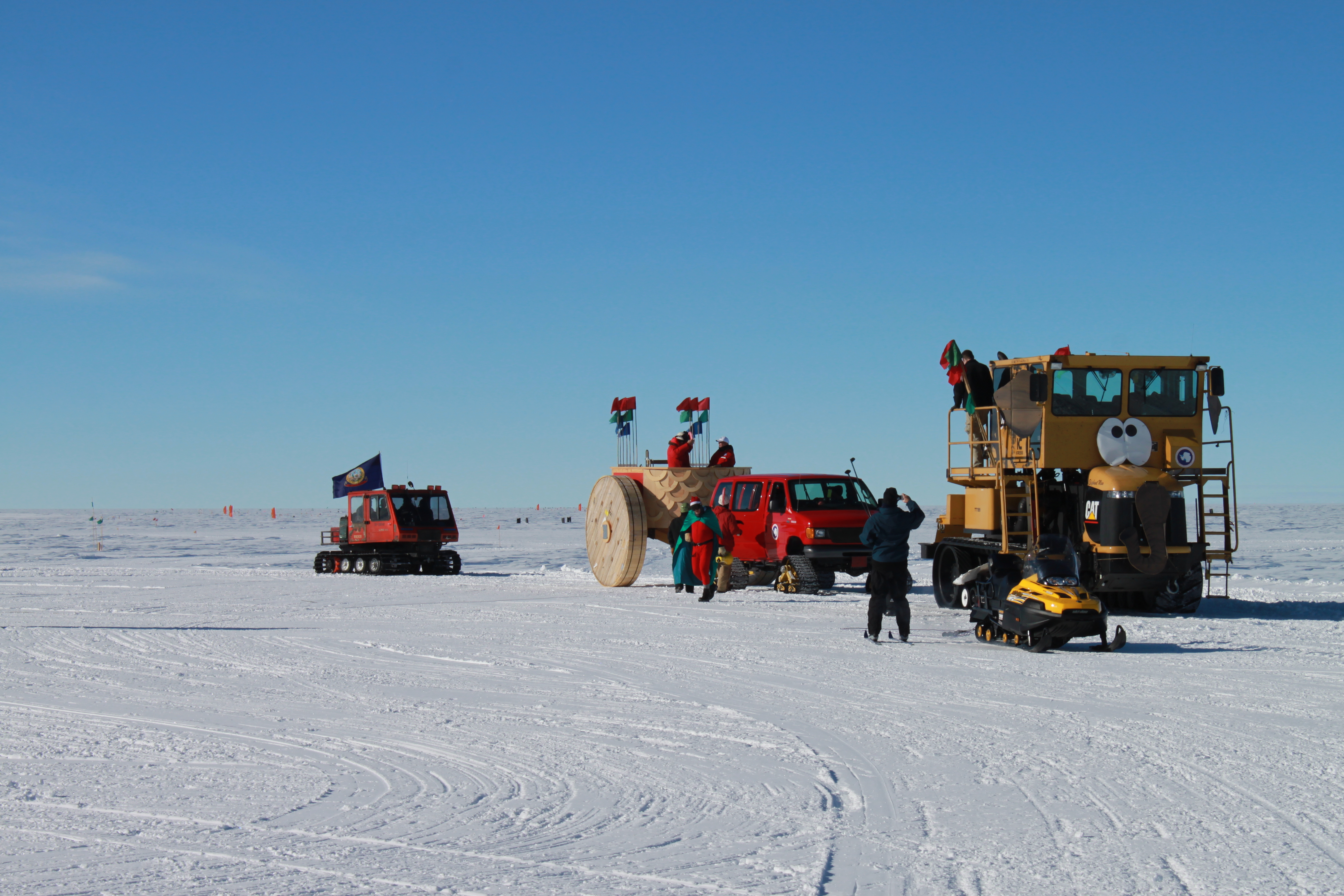
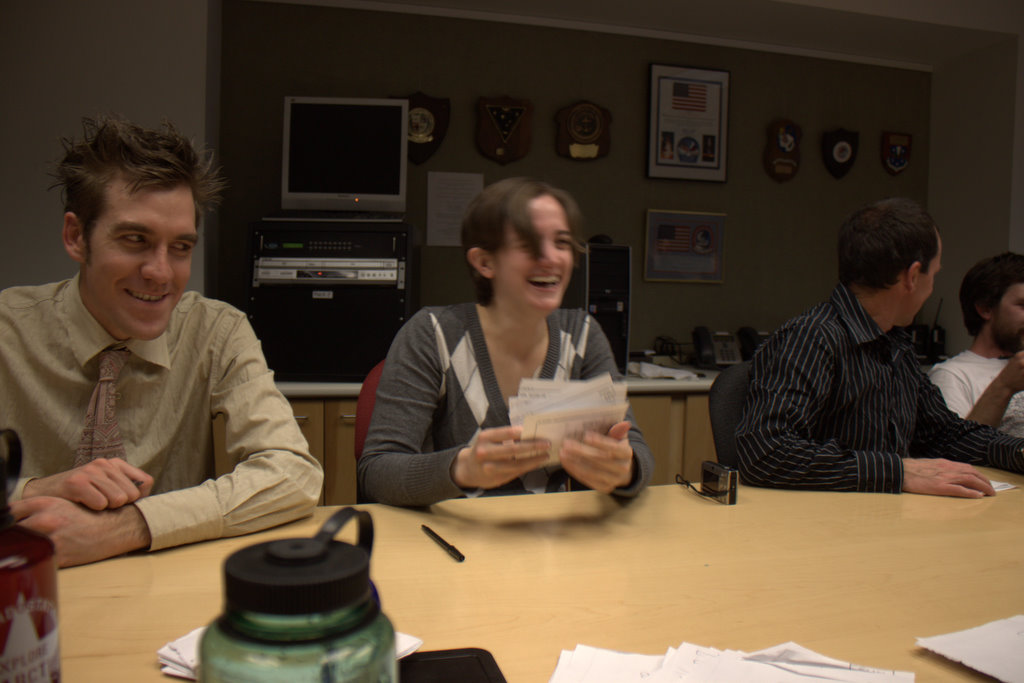
Daniel and I ran our first race ever, a Christmas morning 2.1 mile course at 10,000 foot physiological altitude, with a -25 windchill and soft ice underfoot. Participants in jogging clothes and costumes ran, jogged, walked, skied, drove snowmobiles, Pisten Bullys and tractors decked out like parade floats.

Click to enlarge photos.

Participants getting ready to race around the world
Pre-race

My goals in the race were to jog the whole time—optimistically jog, I told people who asked if I planned to run the race—which I did, except for to snap a few pictures, and to clock in under half an hour. I had spoken to a real skier/runner who said he hoped to be able to average 12 minute miles due to the terrain and altitude, so I thought 15 minute miles was okay for a novice runner.

Elissa and Fire Captain Don


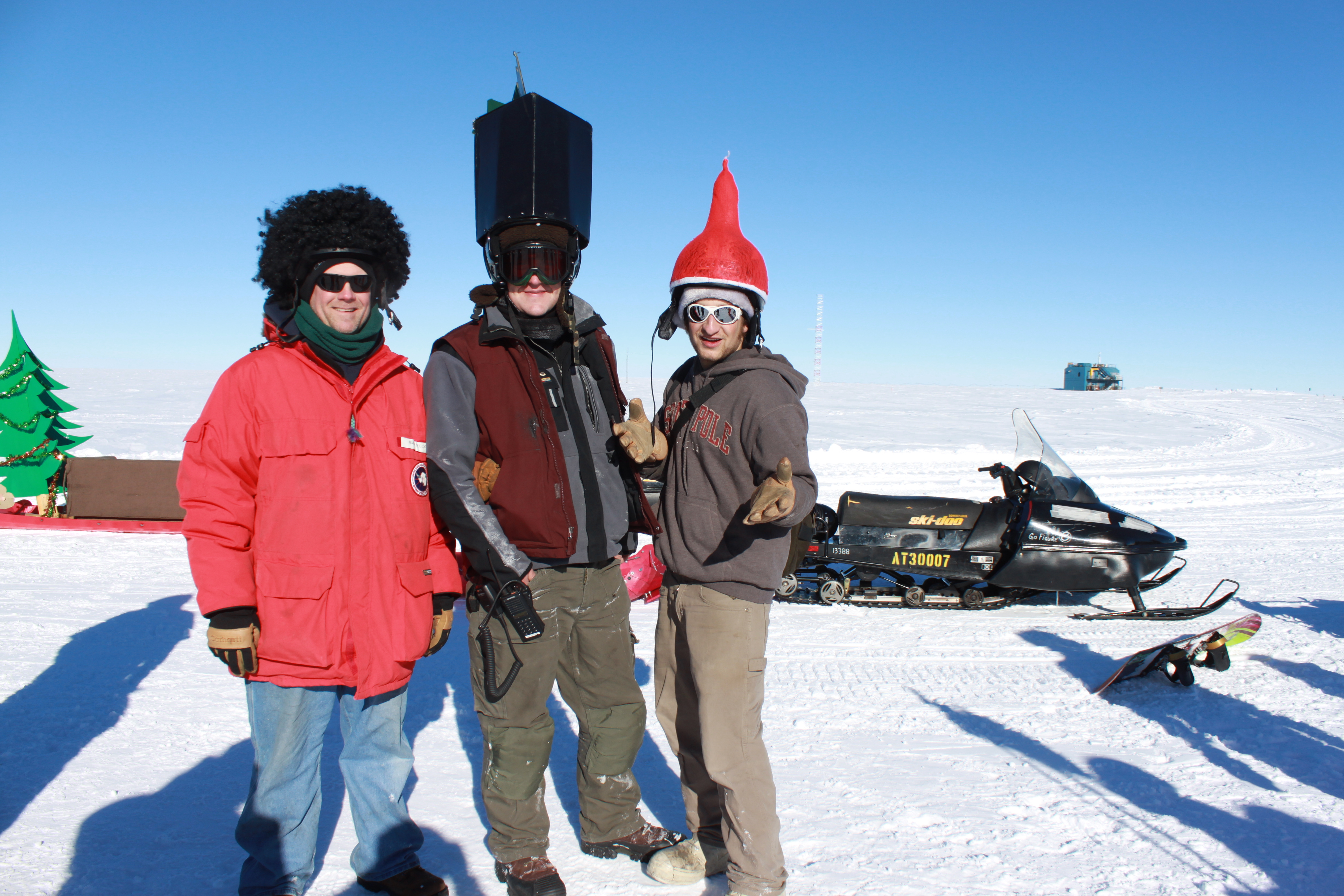
Ralph, Eric and Max don't let safety get in the way of fashion--check out those snowmobile helmets

The male winner ran the race in 13:32 minutes, and the female winner ran it in 18:22 minutes. Daniel was close behind the female winner, beating the second place woman, and I ran it in a little over 28 minutes. The male and female winners of the race get to fly to McMurdo in a few weeks and run their sea-level marathon. I have heard that the South Pole contestants do quite well and often win this race due to the drop in altitude.
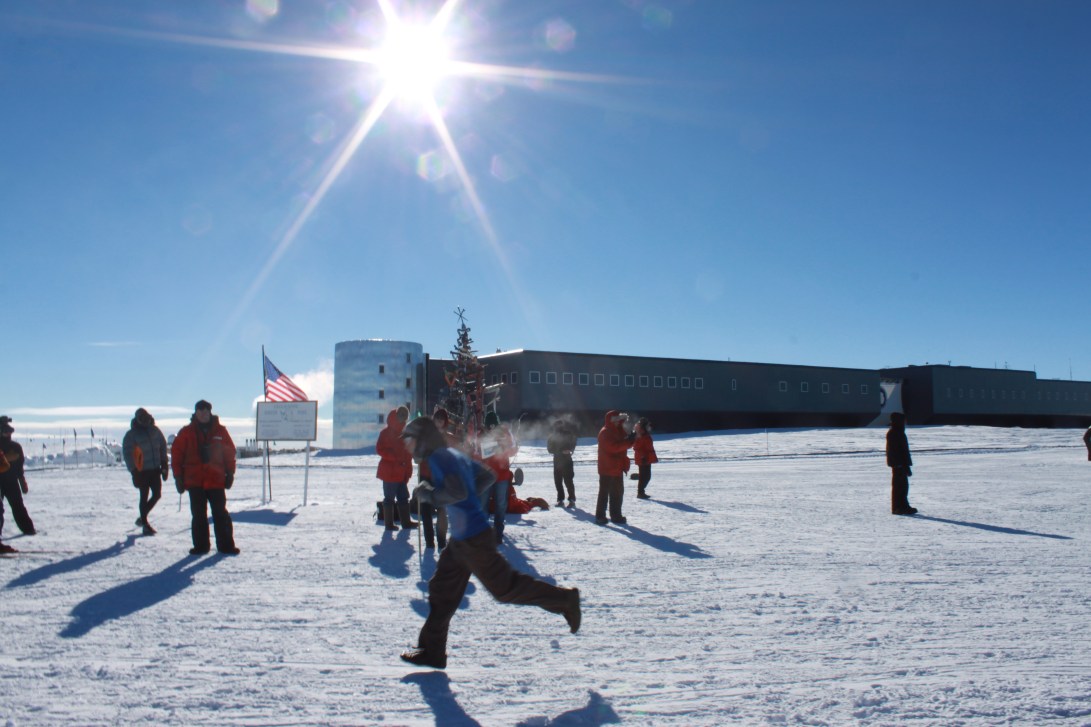
Daniel crosses the finish line at 18 or so minutes–we didn’t get an official time, unfortunately
Kiell crossing the finish line

After the race we had brunch, eggs to order, potatoes, fresh fruit and cheese, pastries, scotch eggs, bacon, sausage, toast, coffee. We returned to Summer Camp to shower and start getting ready for evening festivities and dinner. People get pretty dressed up for holidays—Thanksgiving was like this, too—some people went all the way in suits and ties, dresses heels, and makeup. It’s fun to see everyone dolled up like that since most of the time we’re quite dirty due to showering restrictions, and lots of people tend to wear their issue clothes, like the Carhartt overalls, even when their workday is over.

I put Charlie Brown Christmas on, with my laptop on the sink in the bathroom while my friend Rachel showered and got ready to serve wine at the second of three dinner seatings. When it was time, we started with appetizers and eggnog in the hallway outside the galley, musicians singing Christmas carols while we noshed. Dinner was delicious, beef wellington, lobster tail, basil mashed potatoes, green beans with hazelnut shallot butter, challah, red wine and cherry pie with fresh whipped cream and orange chocolate for dessert.

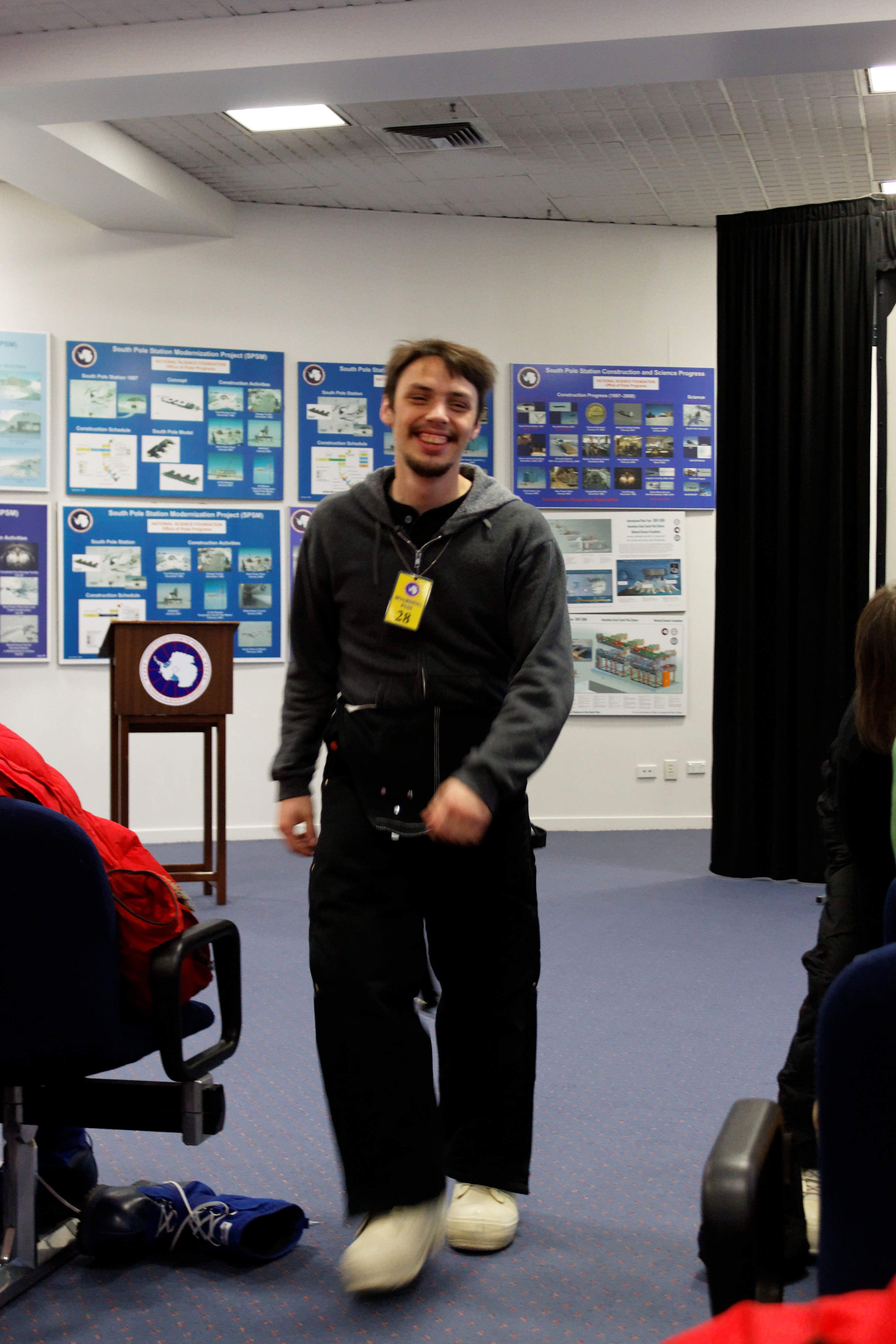
After dinner we played four games of paper telephone (I don’t really recommend laughing so hard on a full stomach), followed by dancing until 1 in the morning in the galley before going back outside to the midnight sun and walking home to our little jamesway room to go to bed.

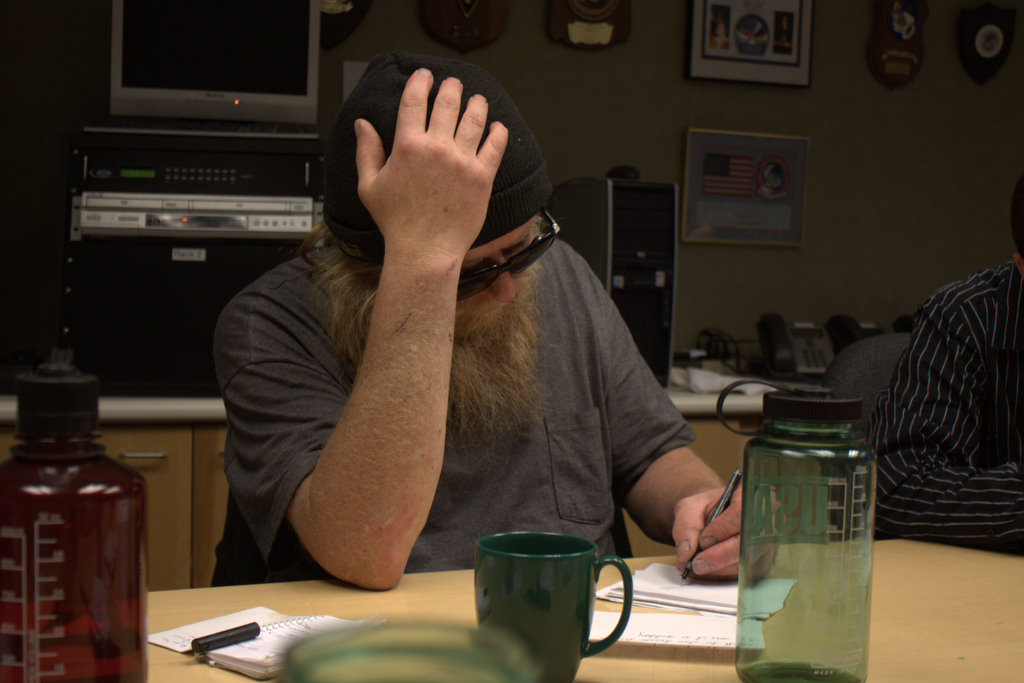
Paper Telephone
Thinking hard…


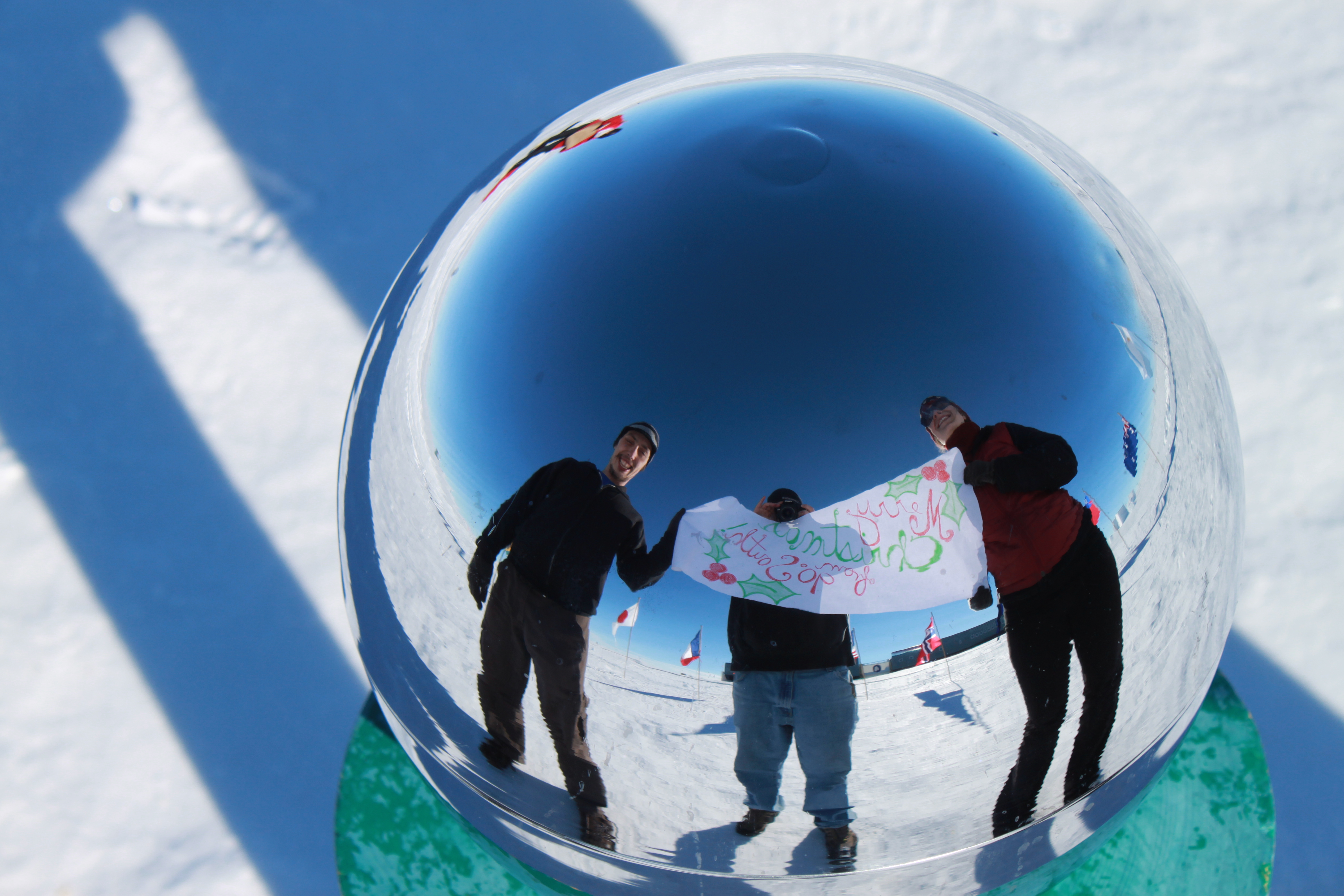
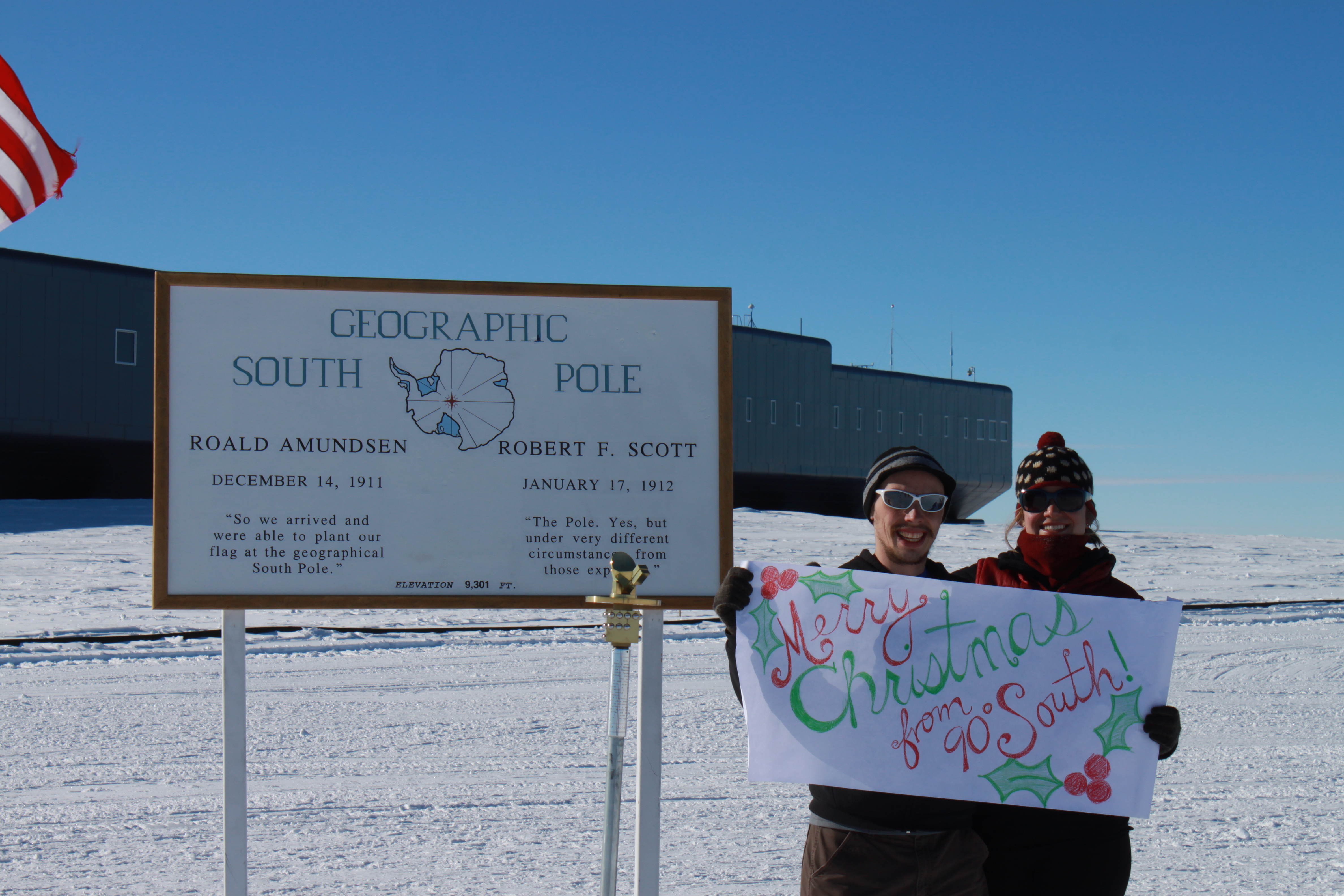
Merry Christmas, everyone, we missed you tons.
Finally, Photos from the End of the World


Rachel, Sarra and Grace at McMurdo


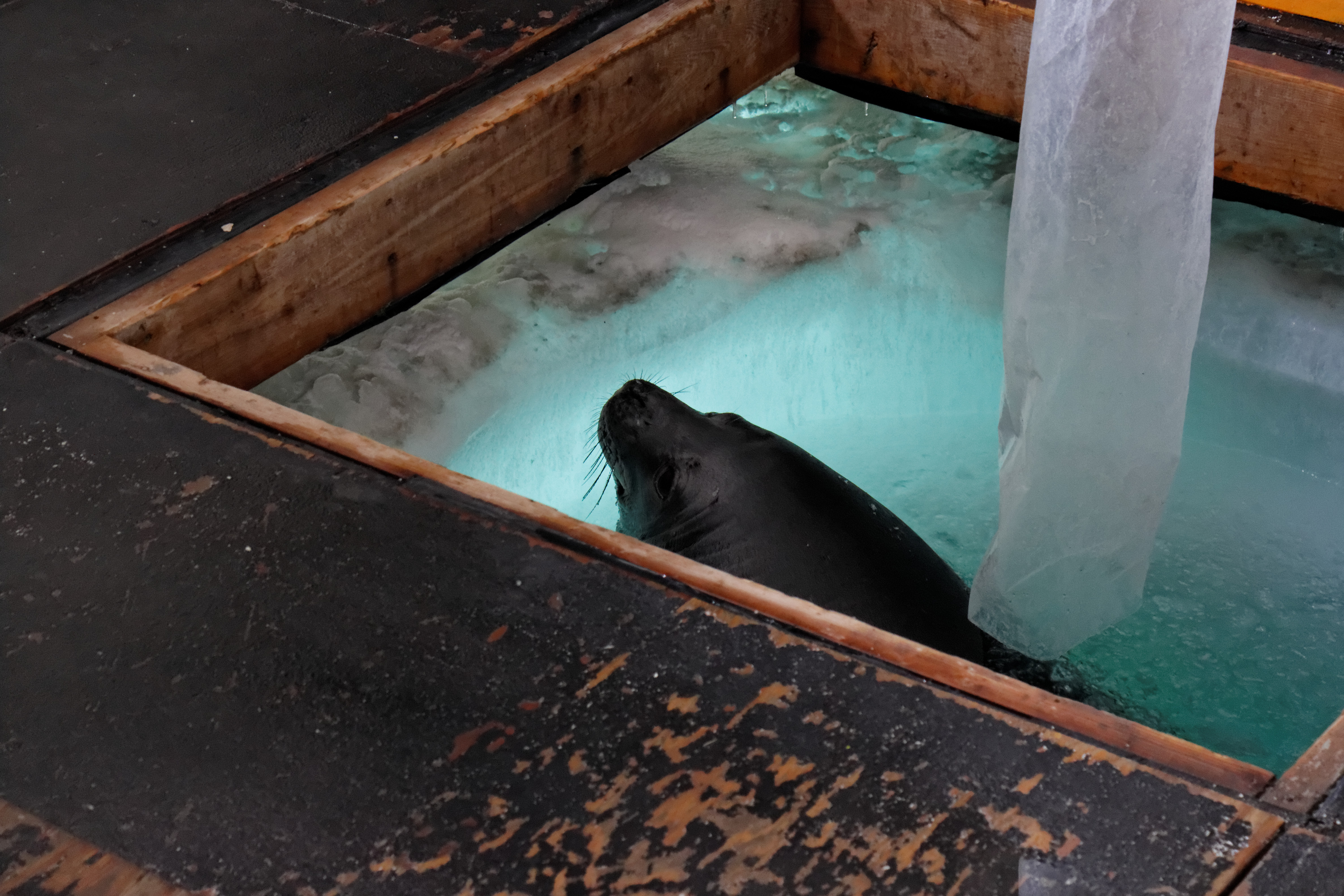
McMurdo seal!!
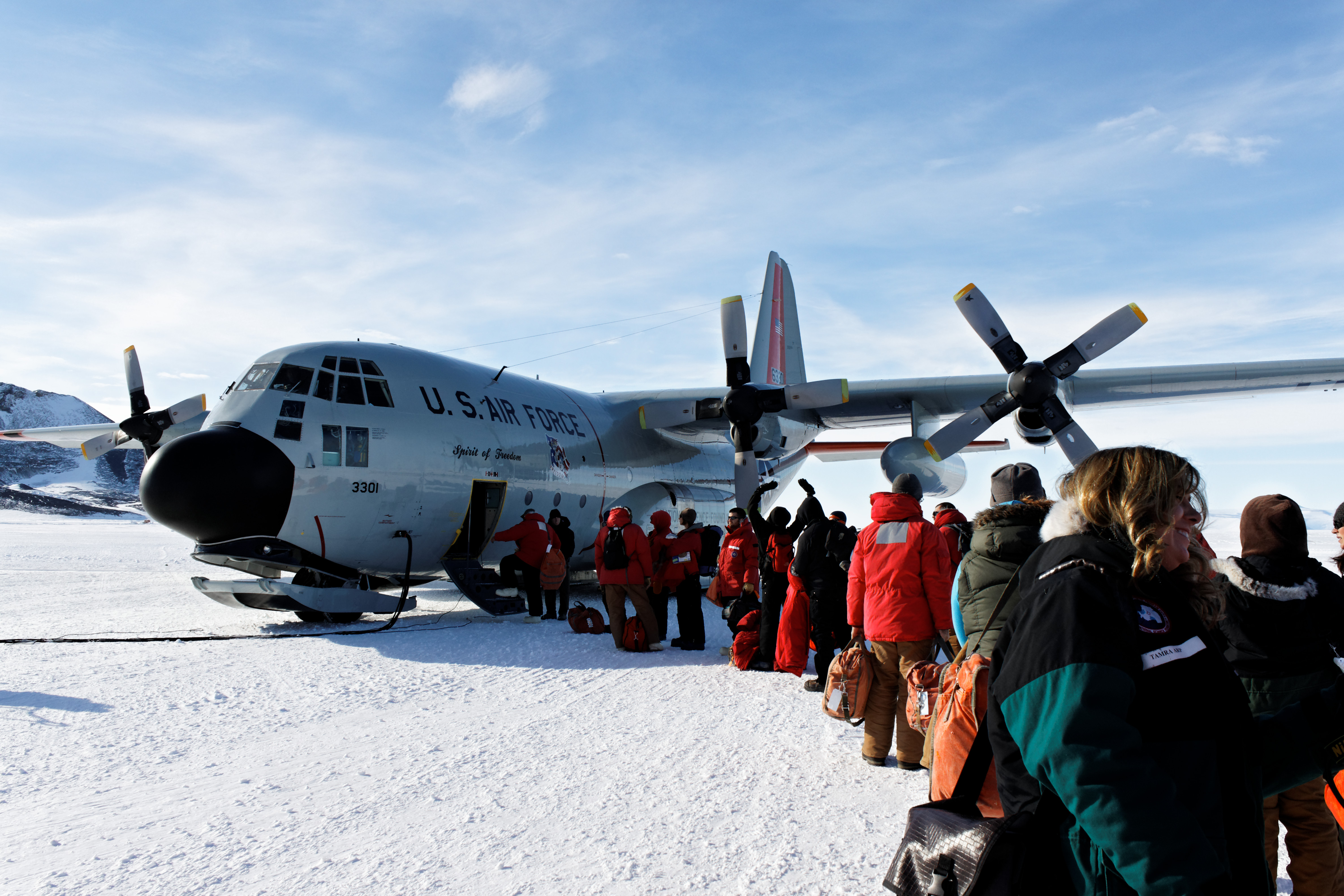
Boarding the plane to Pole
On the plane
Antarctic Mountain Range
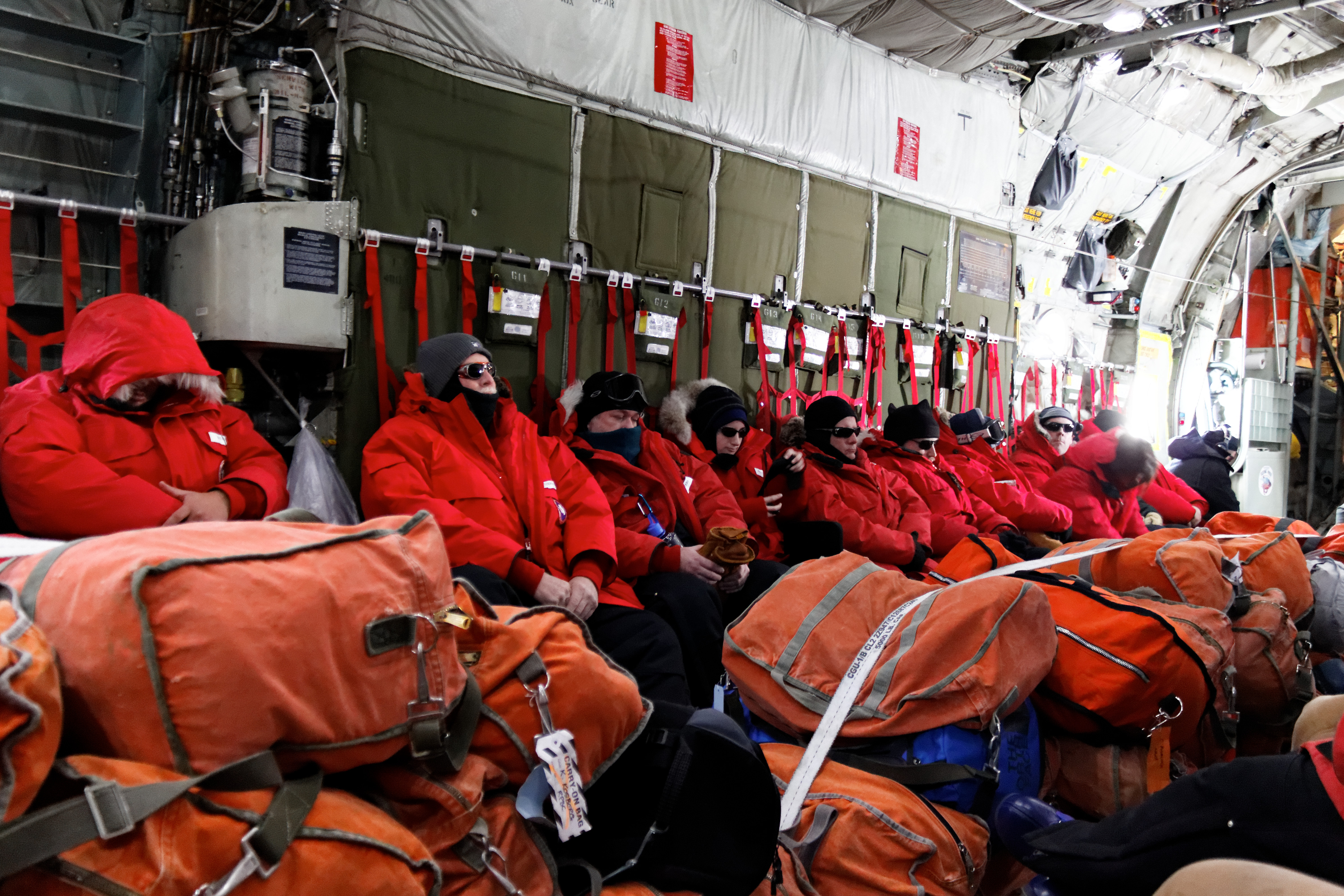
Passengers on the flight
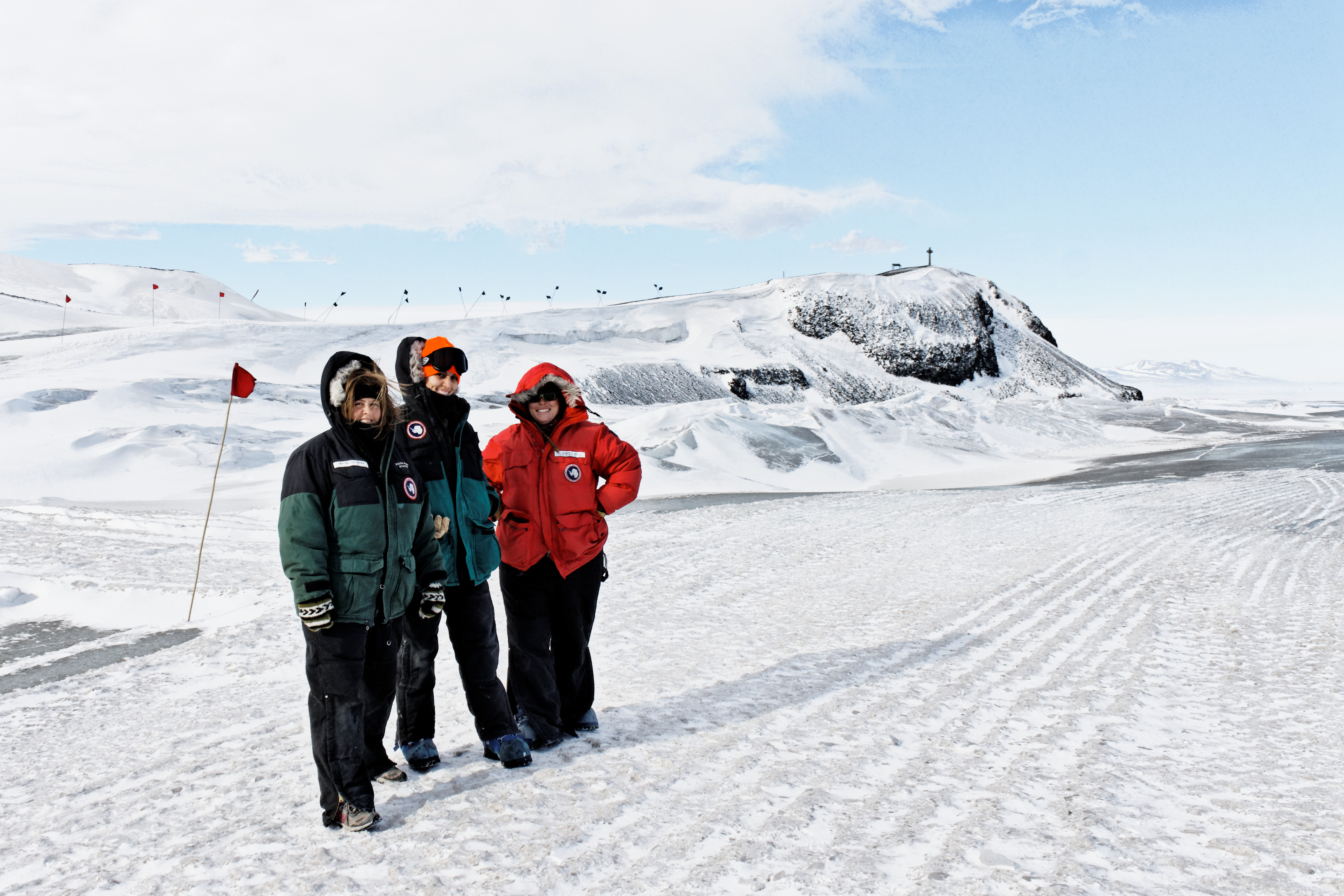
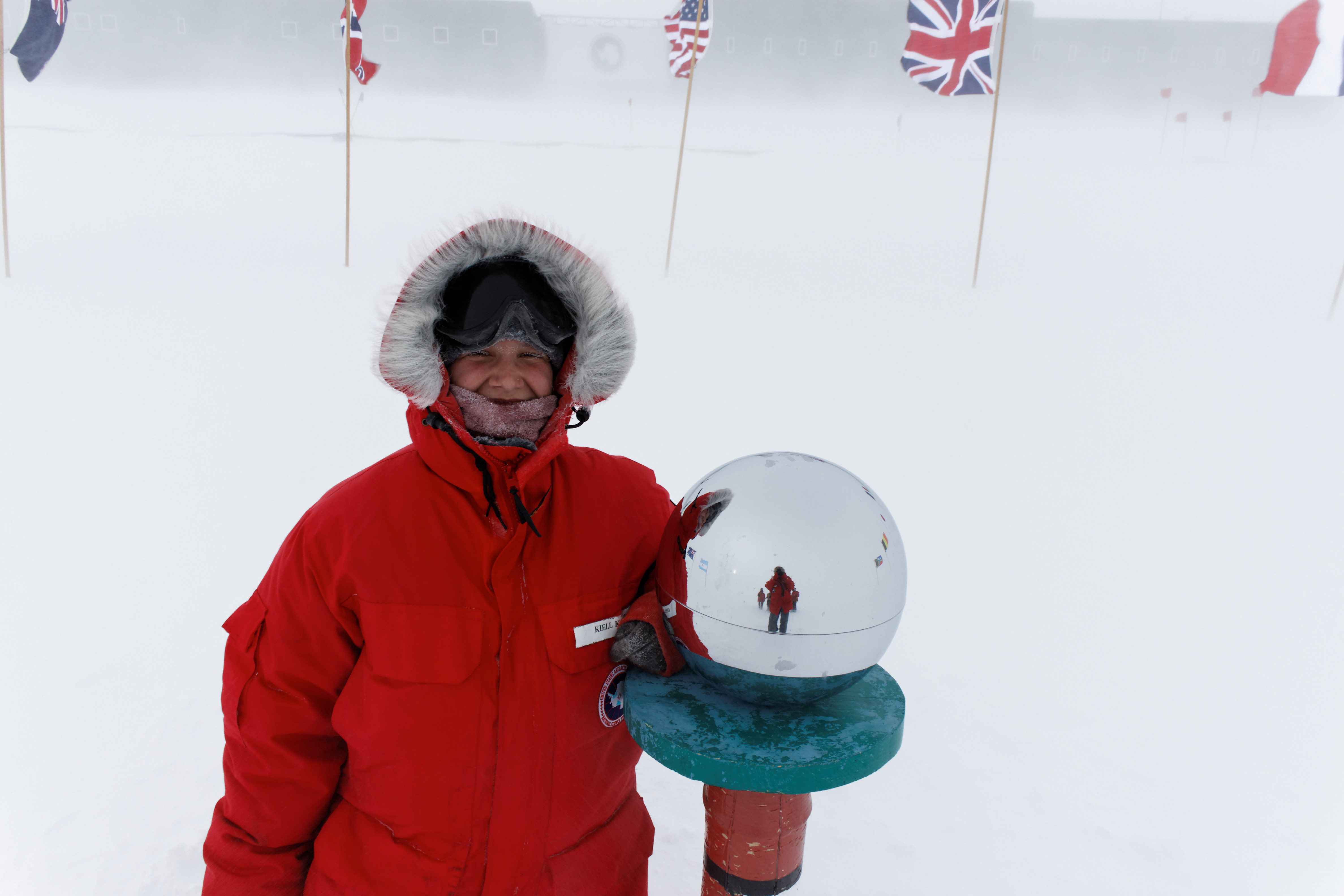
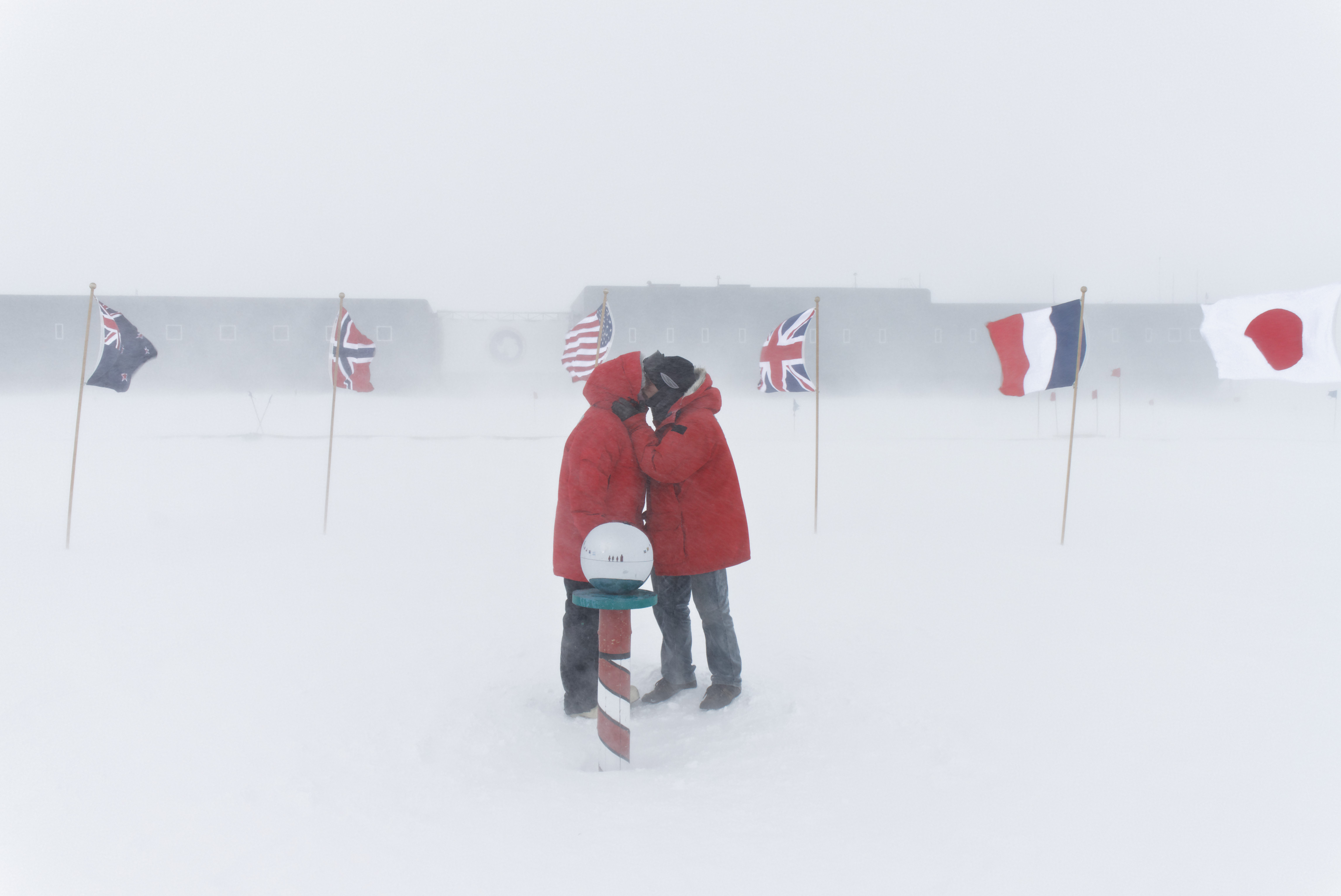
A few days after arrival, the storm dubbed "Deathclaw" hit--we decided to go out to the Ceremonial Pole for a photoshoot
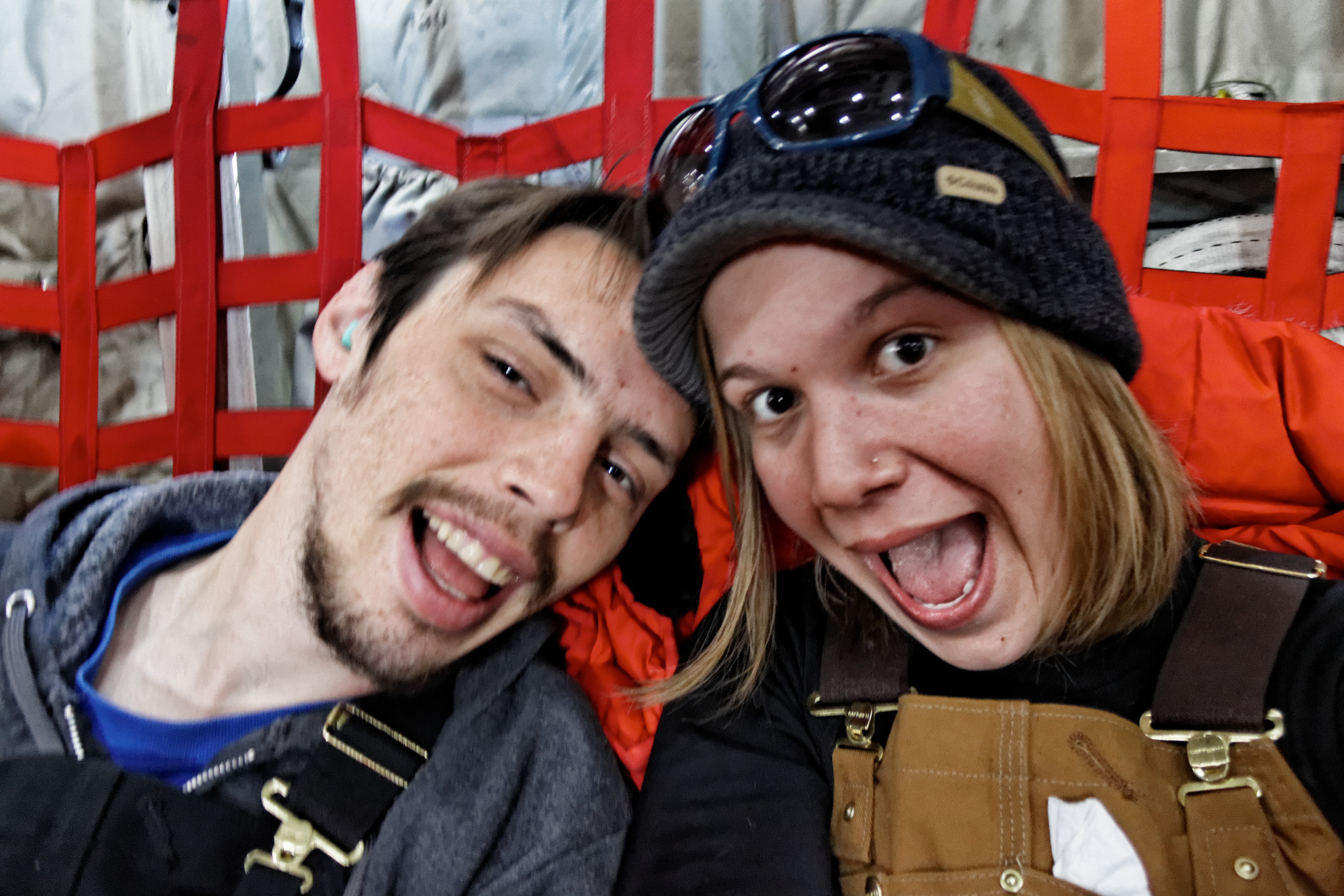
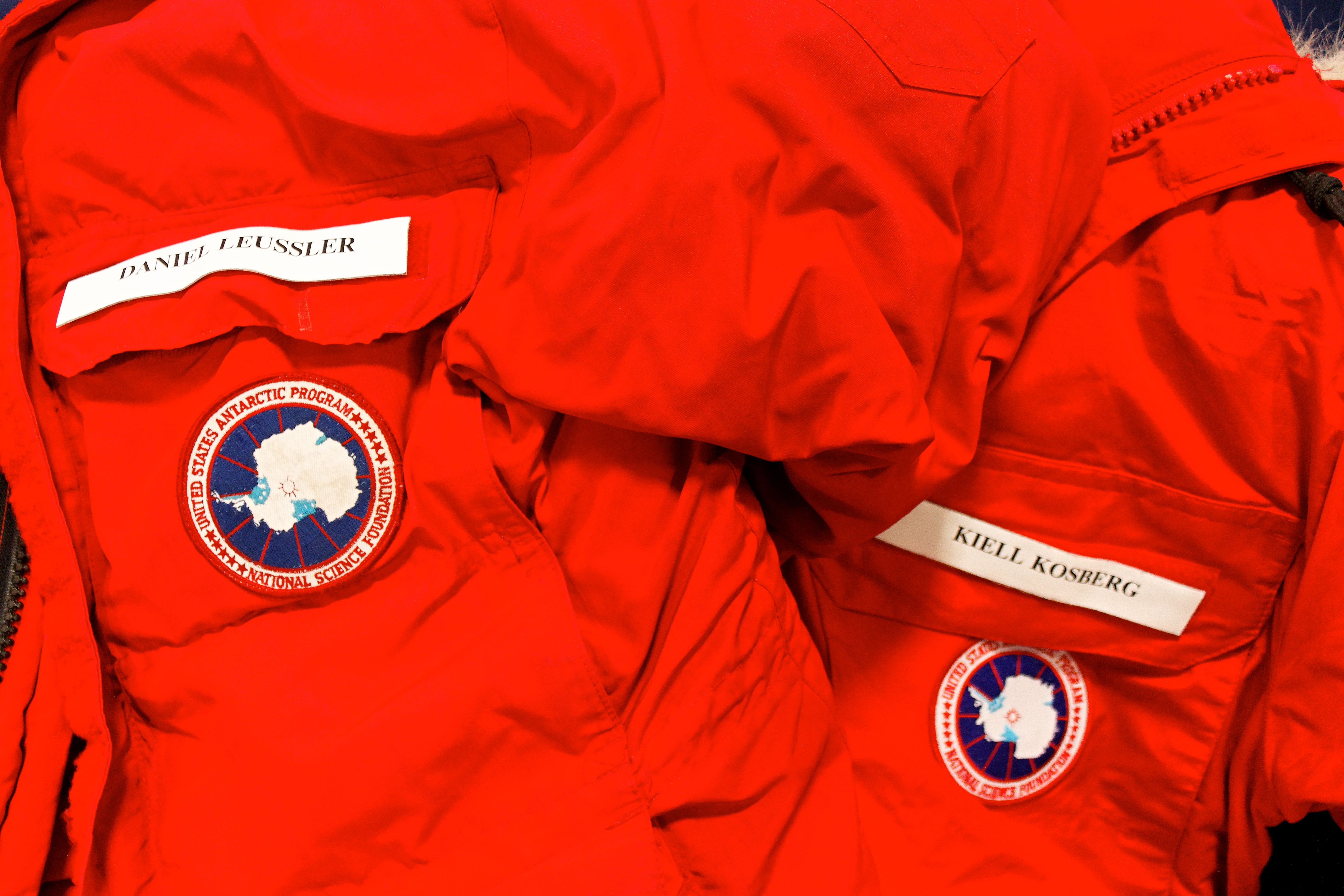
Kiell and Daniel at the South Pole
Aw.
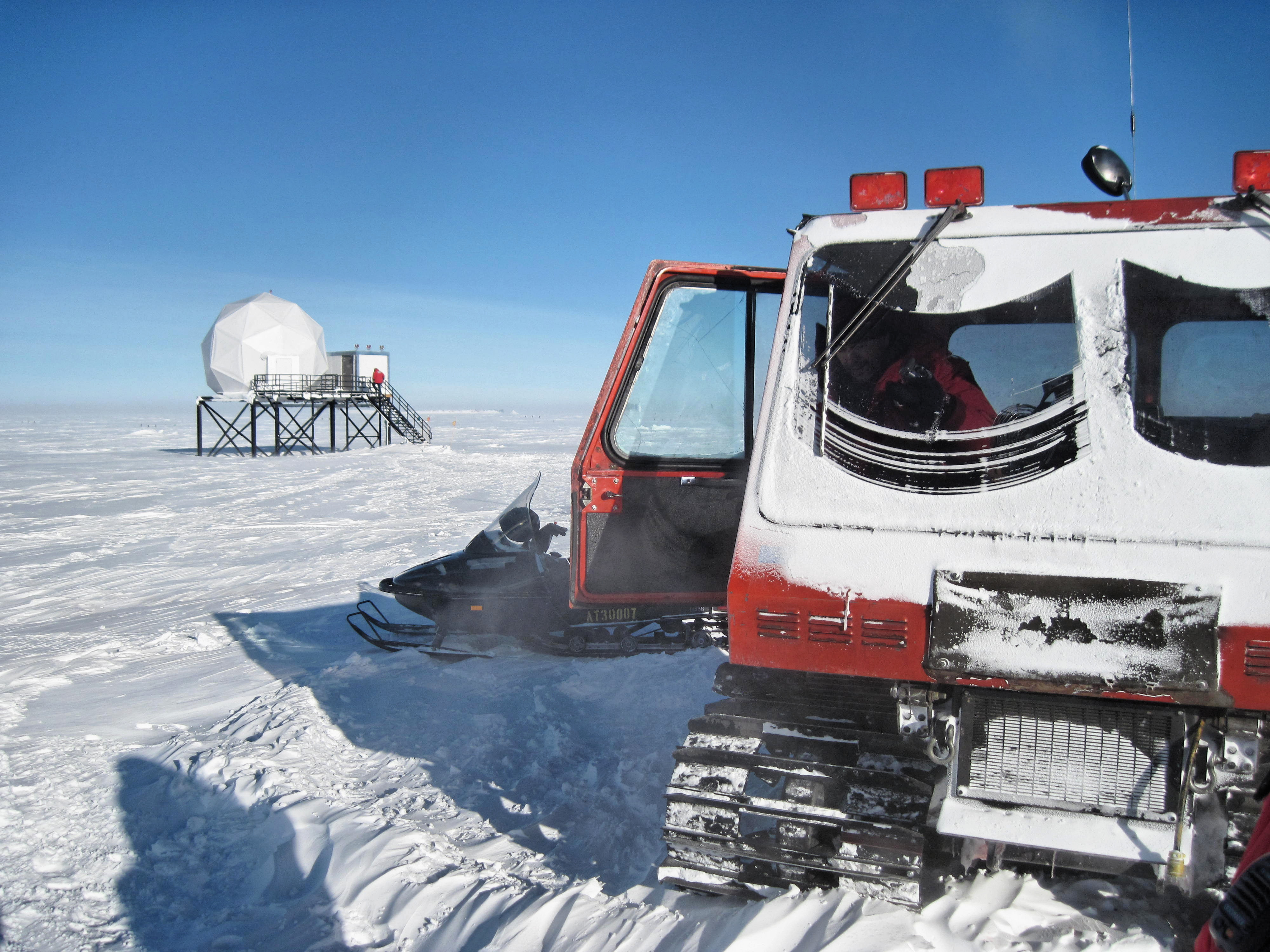
Driving the LMC out to the Remote Facilities--the SPTR shack, where half of our internet lives
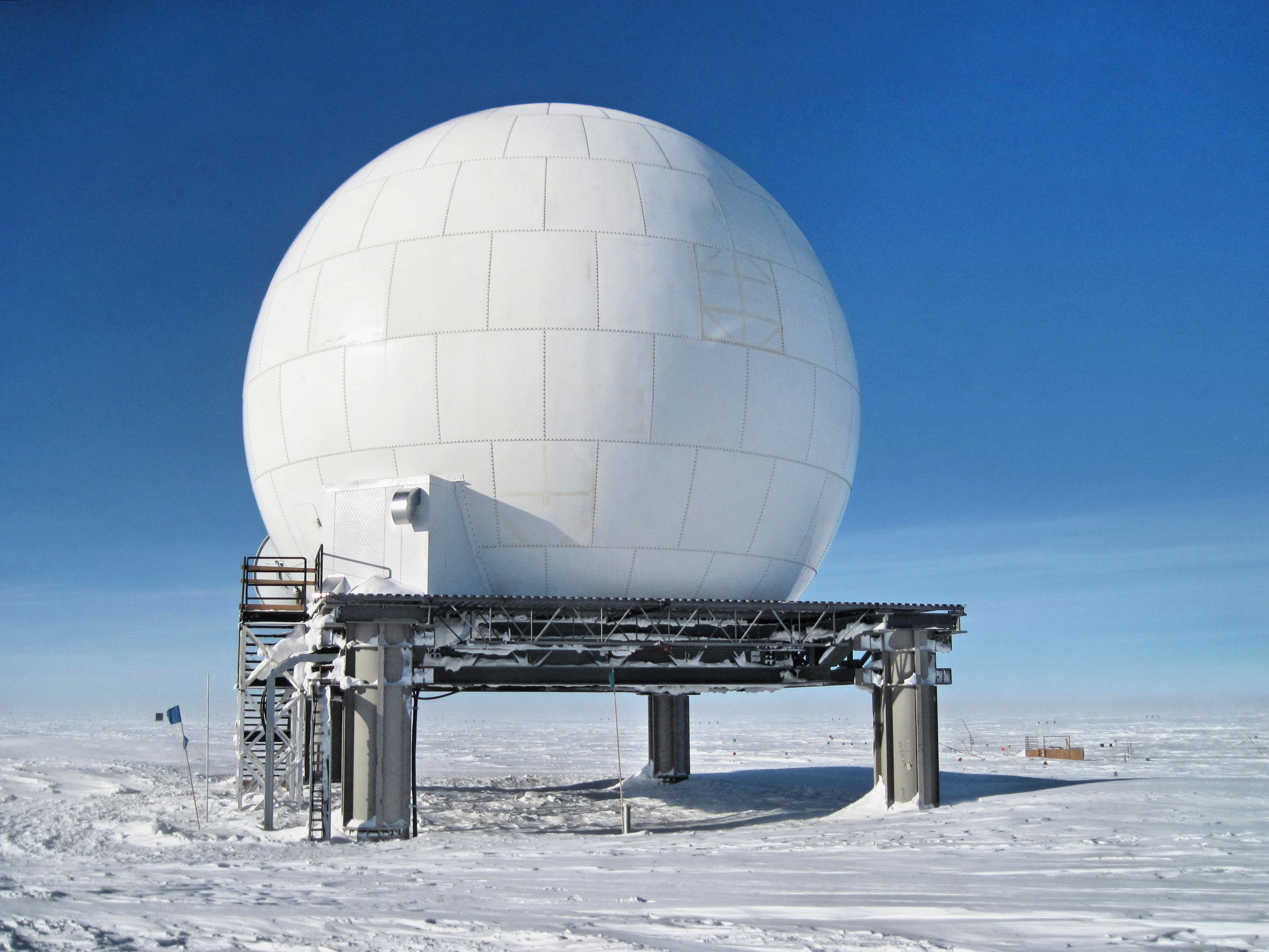
GOES, the other half of the internet


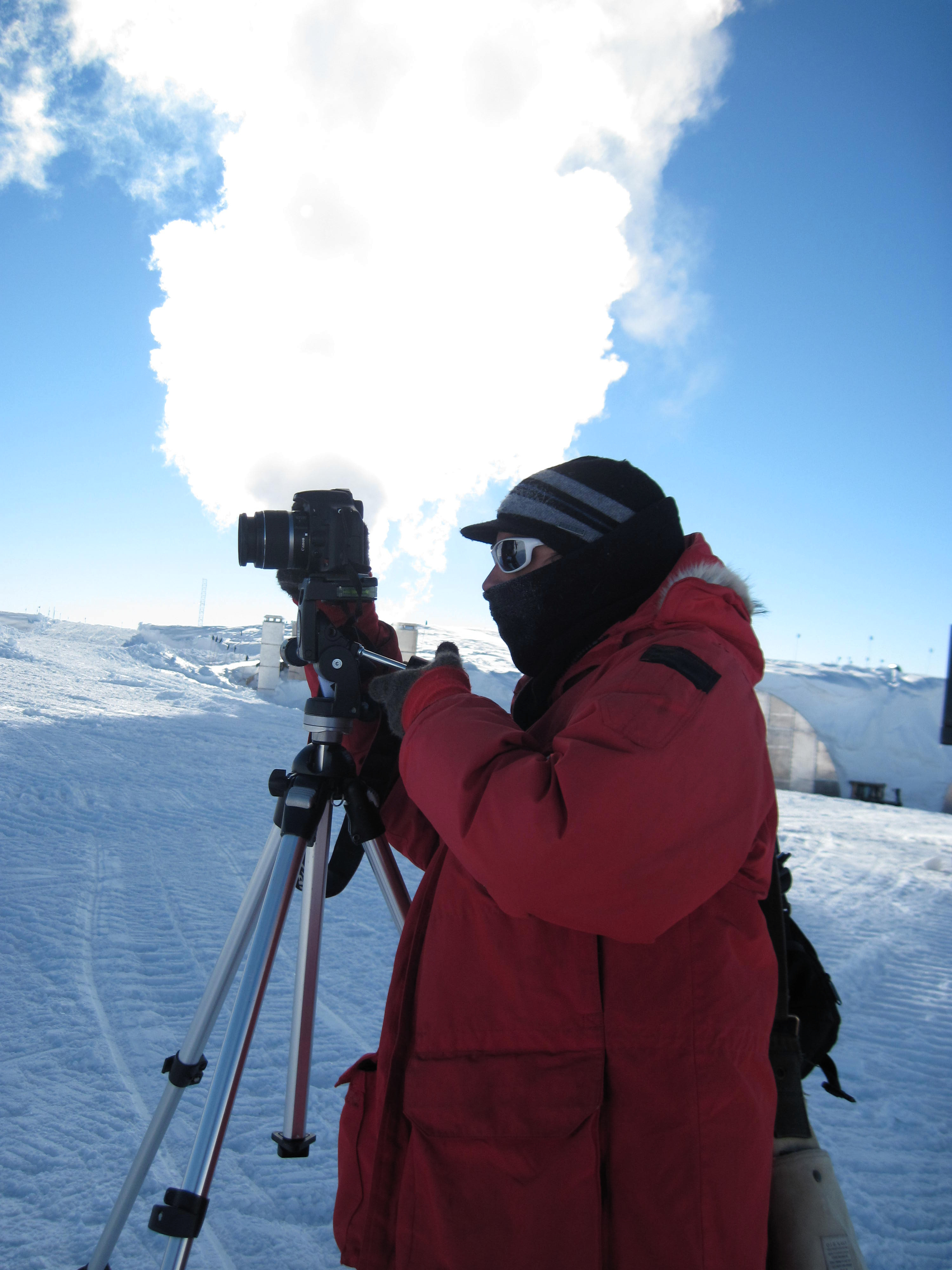
Daniel taking a photo on our walk back to bed one night


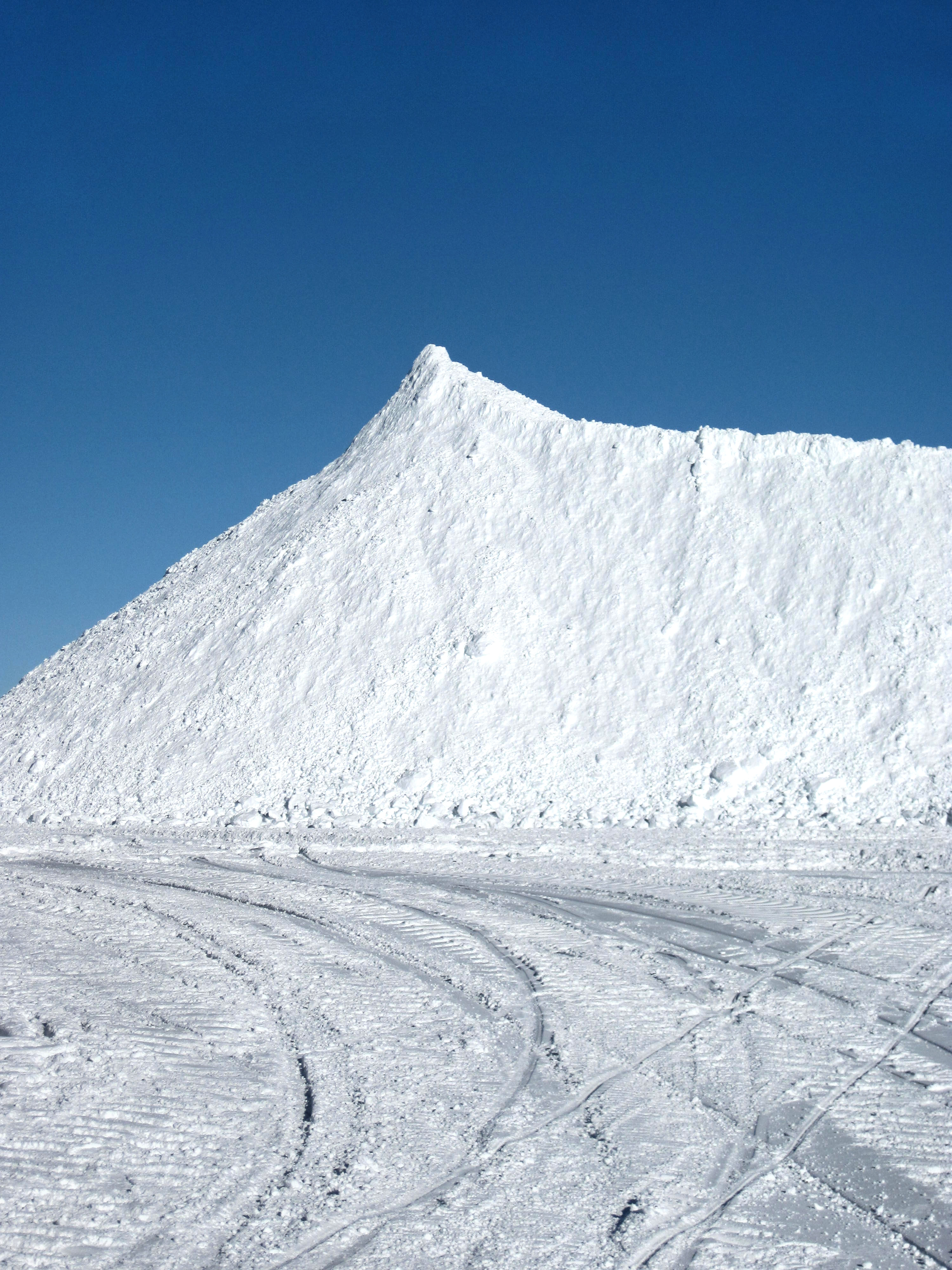
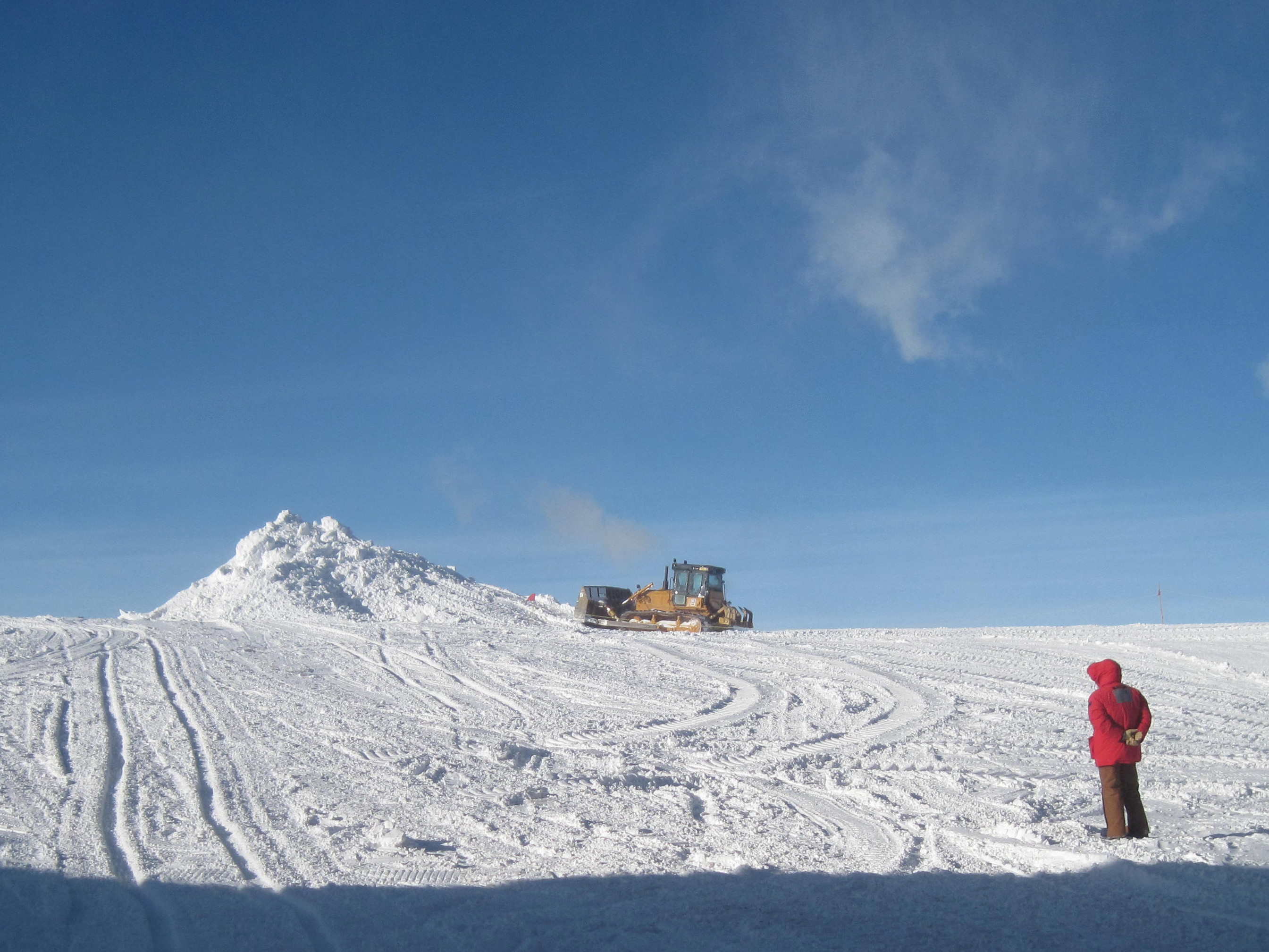
Snow Mountain right between the station and Summer Camp, ready to be moved
Contemplating a small snow pile and track loader

Welcome to the South Pole

From McMurdo, we flew to South Pole Station in a C-130 military plane, a deep gray monster machine, passengers lined up along the walls stuffed in in our ECW gear, slouched on the industrial webbing cot-like seats. Our carry on luggage, mostly in orange issue duffel bags, was lined up neatly in the center of the plane and strapped down tight for stability; our checked luggage, which we had parted with at Bag Drag the night before our first of many scheduled and canceled flights to Pole, was palletized and loaded into the back of the plane, right where we could see it. Because of the noise from the engines, everyone wore earplugs, making conversation strained. Most of us read or slept, people sinking into their parkas and nearly disappearing for a few hours.

We landed smoothly, about three and a half hours later, some thousand miles South and nine thousand feet higher, greeted by a bitterly cold, dry wind and a bundled up welcoming committee standing off to the side of the ski-way; all you could see was red parkas, white snow, metallic blue-gray buildings, sky-blue sky. Many of our managers were there to meet us, including mine, although I had to be reintroduced to him later that evening since both of our faces were entirely obscured by polar fleece and snow goggles. We carried our bags across the ski-way and towards Destination Alpha, essentially the well-dressed front door to the station. We were heaving and breathing hard by the time we reached the stairs leading up to the station (which is elevated to prevent it from being buried in snow drifts) due to our added gear weight and the altitude. The galley had saved us dinner, and after a brief orientation we ate, explored the building that would be our home for the next four months, and made the first quarter mile trek to Summer Camp.

Summer Camp is a grouping of about a dozen Jamesways on a slightly elevated ice platform, olive drab war issue tents about twelve feet tall and forty feet deep, each with plywood partitions between the little rooms, and plywood or curtain doors separating the twelve beds from the very dark hallway through the center. Daniel and I got rooms 1 and 3 in the same Jamesway, which we were relieved to discover is a double—not only do we get to share a room, but we get twice as much space. The room came with a plywood wall and a door with a latch, two tall shelves, two twin mattresses with twin sheet sets, a princess-castle-frog themed bolt of fabric for decoration, a string Christmas lights, a carpet patched together of sample sized rectangles, a crusty homemade snow globe that appears to depict the Pole and station, and, unfortunately, a previous resident’s plastic water bottle labeled “pee.” Some people who live in Summer Camp (and some very, very lazy souls who live on station) use jars to pee in so that they don’t have to leave their rooms at night; I guess this makes sense as you have to go outside and face the cold and the bright sun to get to the Summer Camp bathrooms, but it’s not a practice we partake in. It’s really not that bad going outside, especially now that we’re acclimated to the temperature; I can go outside in just long underwear, boots and sunglasses without getting too cold.

Within the first few days of arrival, we experienced the full gamut of weather. From -40 degrees Fahrenheit with a -60 windchill when we arrived, the temperature dropped to -50 with a -80 windchill, and within a few days an unusual storm blew in, warming the air to -11 but blasting us with 30 knot winds for nearly a week and covering the sun with a heavy haze of blowing ice crystals. This made Summer Camp invisible from the station, transformed the walk to the station into an aerobic fight every morning, and prevented all incoming and outgoing flights, about 6 a day, leaving Pole winterovers stranded here and incoming Polies at McMurdo Station. Part of my work before the storm was to help install lines of red flags from the station to some of the remote science facilities and to Summer Camp; we also ran guide ropes from the station to Summer Camp to prevent people from losing their way.

The drifts from the storm were enormous, and all old ice crystals rather than fresh snow. One morning I spent four hours shoveling out the inside of the big bay doors at the Vehicle Maintenance Facility (where I spend most of my time), dense snow drifts up to my armpits. The outside of the door was considerably worse, with fifteen foot drifts blocking some doorways. The plows can only get so close to the building, leaving some intense shoveling for the GAs (General Assistants—that’s me). The heavy vehicle operators plowed for days, clearing out the “bowl” that the VMF is nestled inside of; its metal arch encasing used to be on top of the ice years ago when it was built, but has been slowly buried and now has a somewhat cavernous entryway. The tractors waltzed around each other, one pulling backwards into the bay doors of the VMF while another slid up alongside the front side of the building, pushing snow into its pathway, then backing up while the first vehicle pushed the pile up the bowl hill to sit on the “ground” level until it could be taken care of at a later date.

This post is photoless because we have been having some major satellite failures and I have very little access to internet. I hope to get some pictures up soon.

Antarctica, the Beautiful

I celebrated my 25th birthday differently than any other year, waking up at 5am, slightly jetlagged, to catch a pre-arranged shuttle to the Christchurch Clothing Distribution Center. All of the people in my training group, plumbers, electricians, bakers, power plant operators, IT staff and manual laborers such as myself, were presented with two worn orange duffel bags filled with loaner extreme cold weather (ECW) gear, washed and folded. Our project for the day was to try on each item and make sure, for comfort and safety, that everything fit well.

(Click on images to enlarge!)

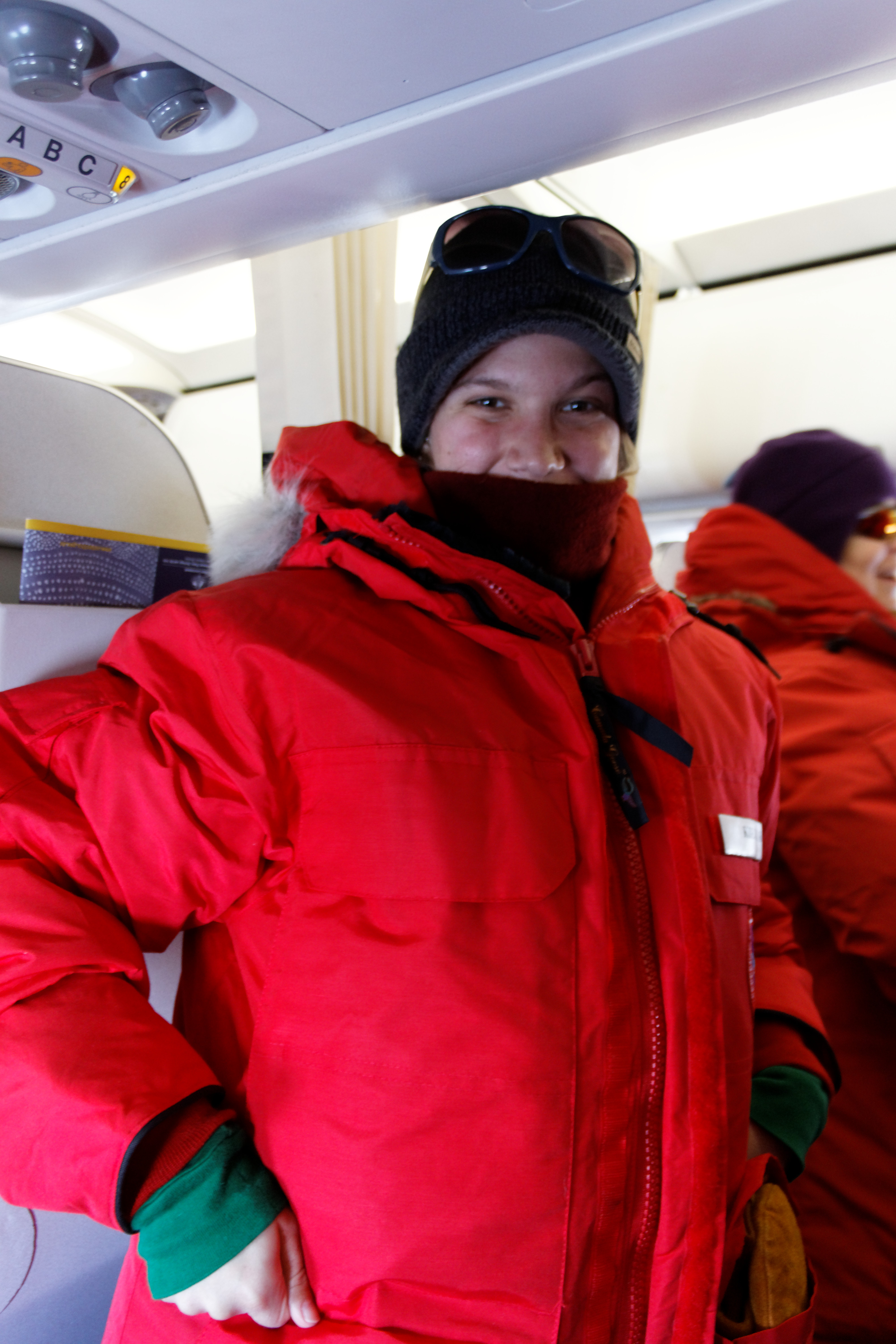
Inside the bag was a pair of off-white rubber bunny boots, awkward but very insulated Cold War Era footwear so named for their rabbit’s foot-esque appearance; a heavy red parka with a faux fur-lined hood; Carhartt overalls and work jacket; slippery windpants; multiple pairs of expedition-weight long underwear; polar fleece pants and jacket; fluffy gray tube socks; balaclava, fleece hat and neck gaiter; huge leather bearpaw mittens; work gloves, and a few other odds and ends. Once it was all tried on and any misfits exchanged for different sizes, we repacked everything, leaving it in the Center until our morning of deployment.

Daniel in bunny boots

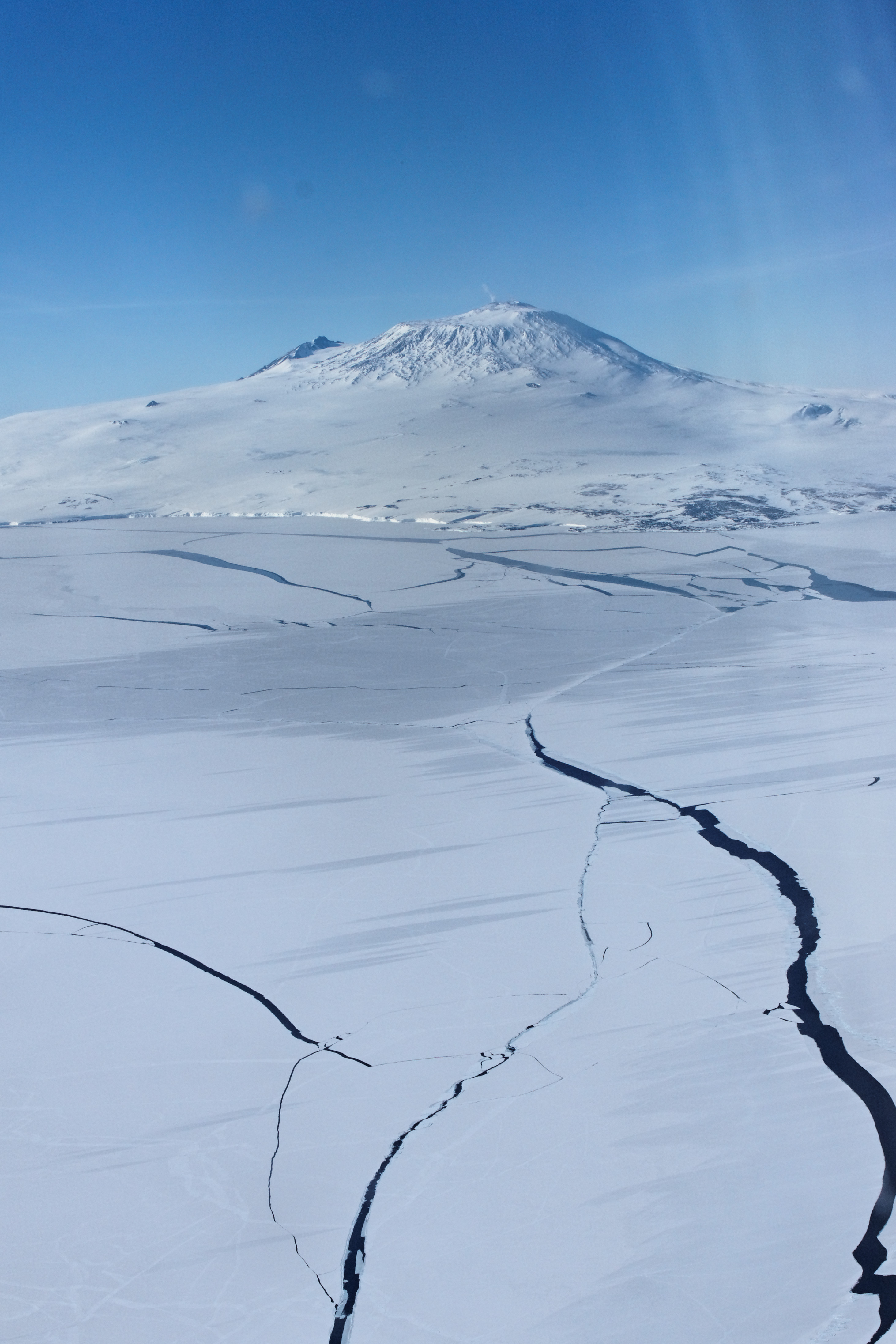
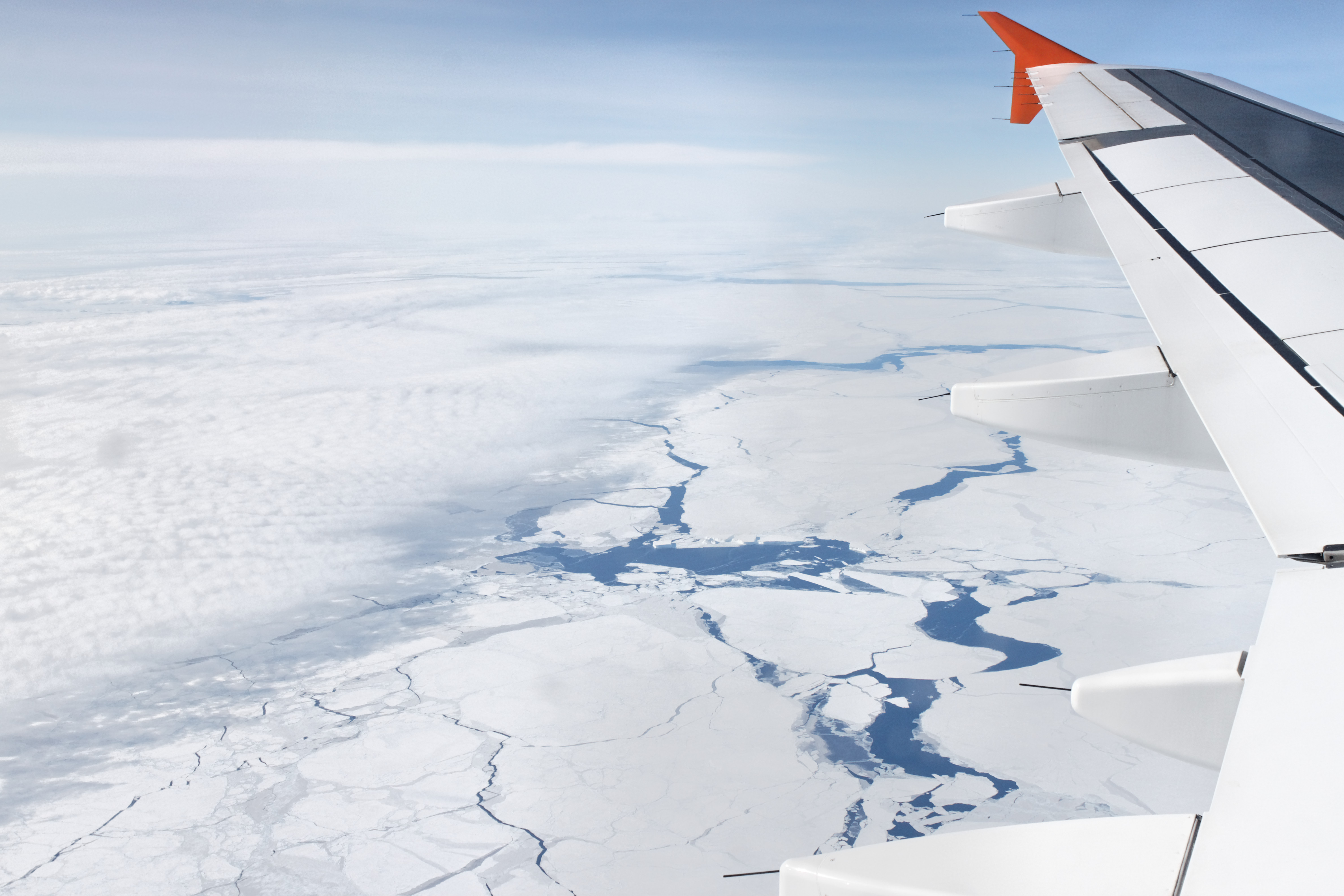
We flew to the continent in a commercial airliner, which afforded us an amazing view on arrival, veins of cerulean and navy blue ocean, striking through cracks in the sea-ice. The stewardesses transitioned from their skirted, nylon’d and heeled uniforms, to soft fleece pants, to black overall snowpants and chunky Sorel boots.

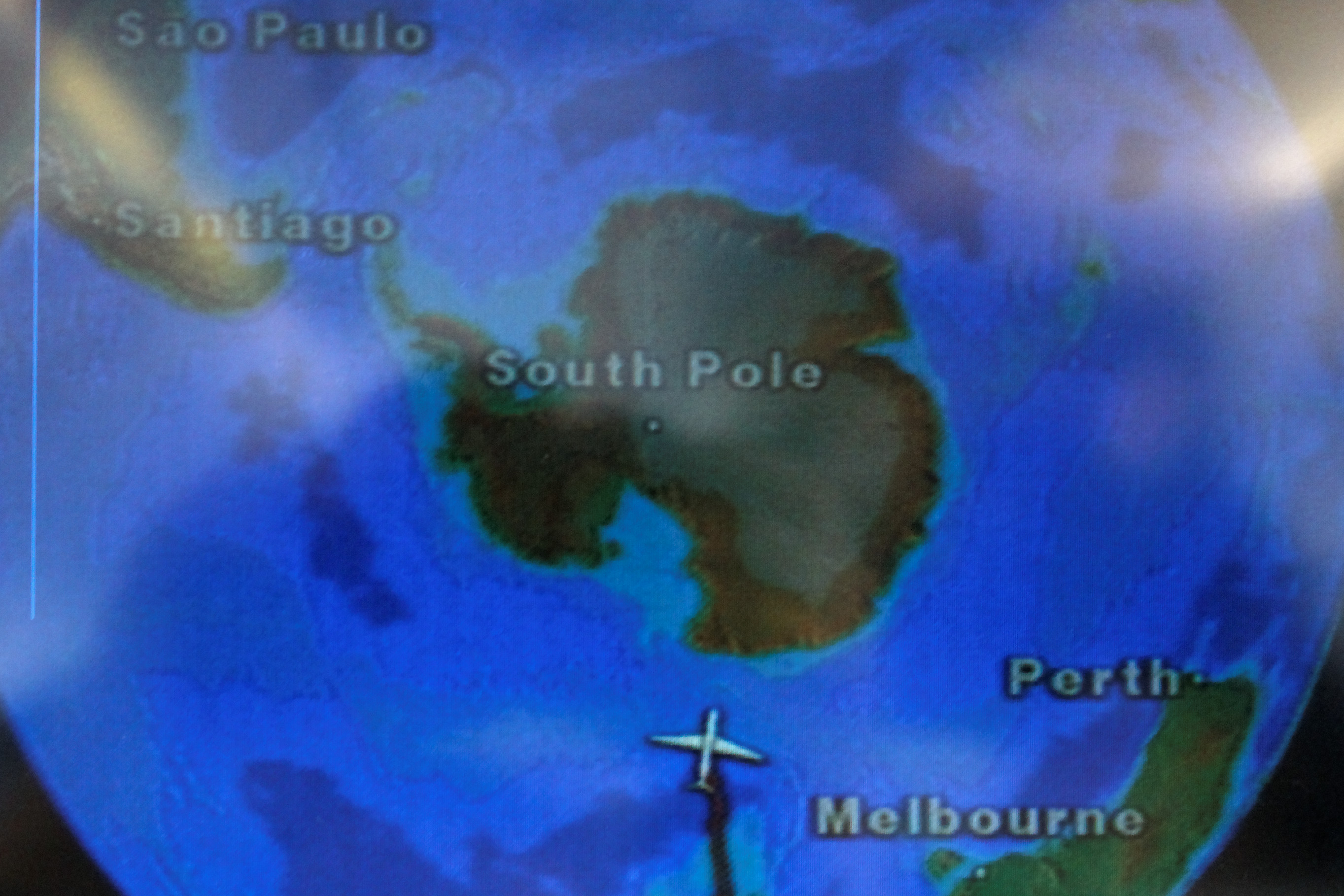
Flight path screen
Sea Ice and Clouds
Mount Erebus
A seat with a view

All of us, craning towards the windows to see the ice, the land, steaming Mount Erebus—like giddy kids on a school bus, sitting backwards in our seats, climbing over each others’ laps to see outside. We landed on the ice runway, McMurdo in the distance like a construction town during a Minnesota winter, dirt churned up in the snow.


Daniel looking out the plane window
Kiell getting ready to disembark
Ivan the Terra Bus, our ride into McMurdo

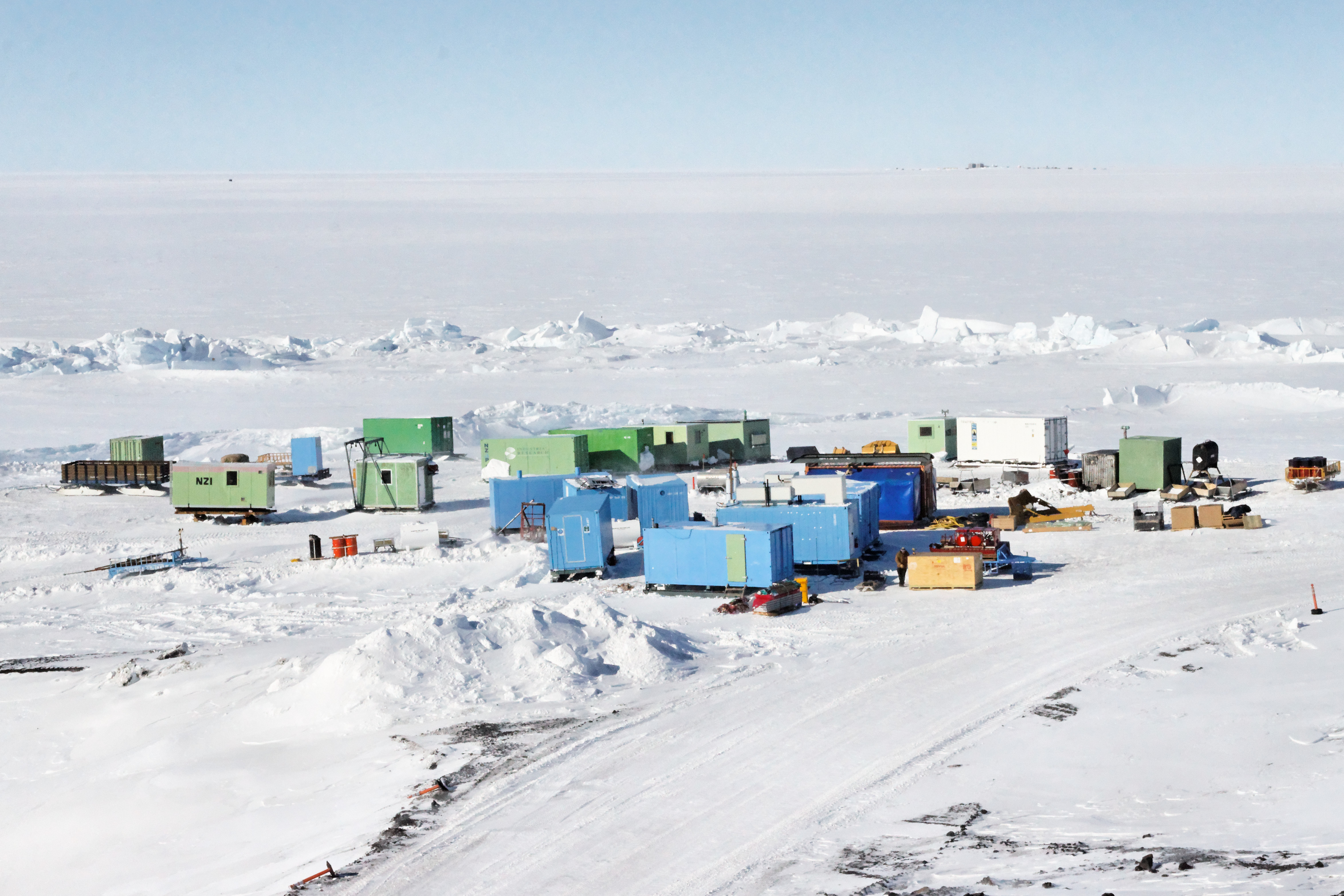
We walked to New Zealand’s Scott Base one morning, about a mile away. As we crested the ridge dividing the stations, the wind picked up, stinging our faces in the gaps between our balaclavas and snow goggles, making me feel like a kite in my huge jacket. Walking down the hill toward the frozen shoreline, textured by pressure ridges where the ice crushes up against the earth and vaults up a bit, the wind blew snow past us, slithering like smoke on the road. An American mechanic was kind enough to give us a ride back against the headwinds, all ten or so of us piled in the bed of the pickup like red marshmallows. I took my hands out to take a photo, and by the end of that minute, my bones were aching and my hands were so stiff I nearly lost my mittens to the gust as I tried to put them back on.


Kiwi Scott Base

We climbed steep Ob Hill, spectacularly overlooking the town and the ice runway, struggling up in our ECW gear, crab walking and sledding down on our bottoms in the parts that were too slippery to walk.


View of McMurdo from Ob Hill
Russell the Electrician and Kiell on Ob Hill, with McMurdo town in the background (about 10 pm)


Kiell sliding back down

Walking back from Hotel California, home to the infamous 24 bunk male dorm room not-so-affectionately nicknamed “Man Camp,” near midnight— the sun glaring brightly, everything was silent but the wind, straight line and brutal, playing with power lines and handrails, sounding a bit like a boatyard in a storm. People struggled by with their parkas cinched up around their faces. I drank hot tea in the galley, getting ready to fly to the Pole in the morning.


This post is dedicated to the four French workers who died in a helicopter crash in Antarctica the day we arrived on the continent. My heart goes out to their families.

Pre-Deployment Thoughts

This particular brand of anticipation is different than I had expected when I first considered applying for a job with the Antarctic program. It’s a blend of excitement, ordinariness and relief—that I got a job at the South Pole, that I don’t have to spend another winter without my partner, that Daniel and I will be working at the same station. It seems so routine and normalized after his season that one would be going to Antarctica for a job that sometimes I forget about what an incredible, unique thing it really is.

This July, I got a call from the manager who interviewed and hired me as an alternate for the General Assistant position for last year’s season, asking me a few questions, making sure I was still interested, and letting me know that he would hold a place for me if my other interviews didn’t pan out. A few weeks later, I got a quiet offer letter by email, which I signed and faxed back. It seemed so anticlimactic after all the stress, excitement and anguish of the application process in early 2009—but easy enough that it feels a little bit like I didn’t work my ass off for it, which I did. And now that deployment is here, only days away, it feels like it isn’t happening, which it is. And I can’t wait.