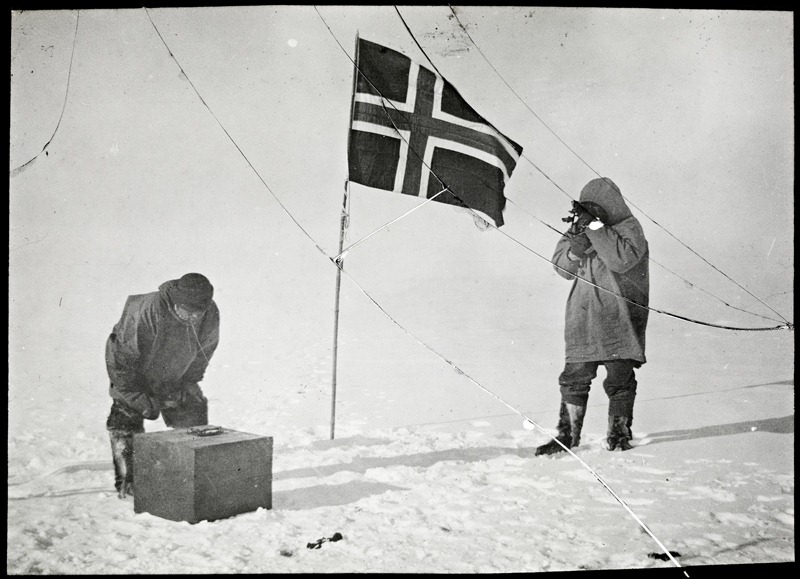
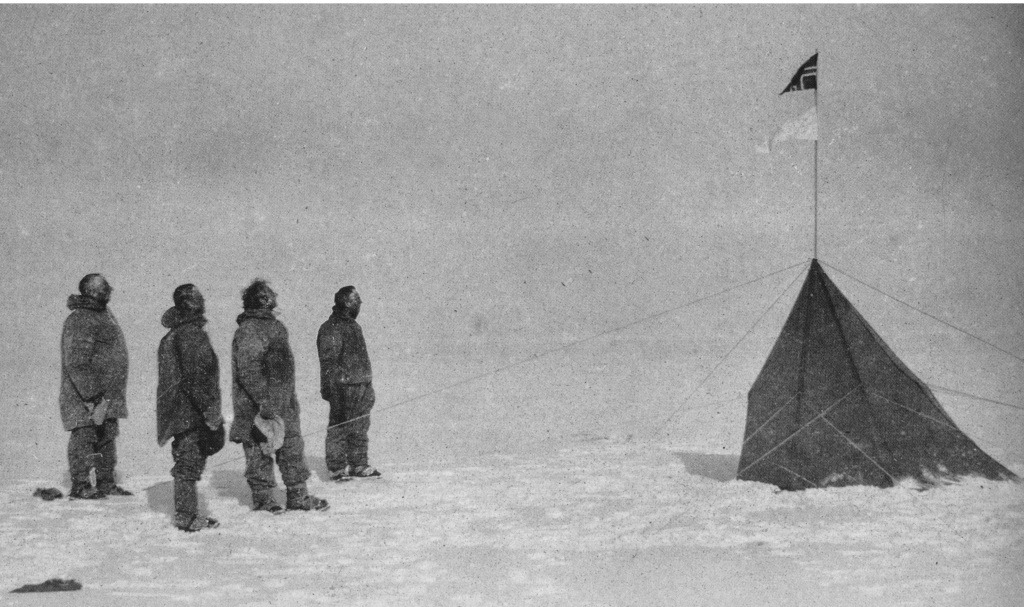
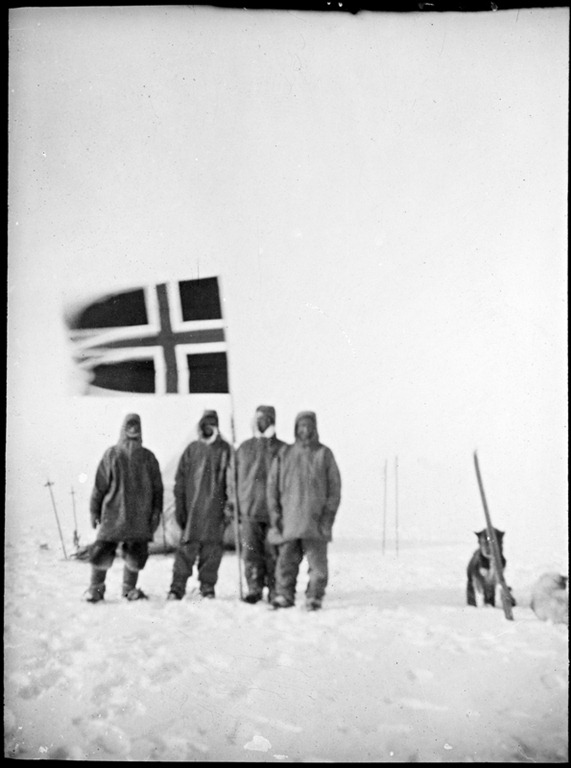
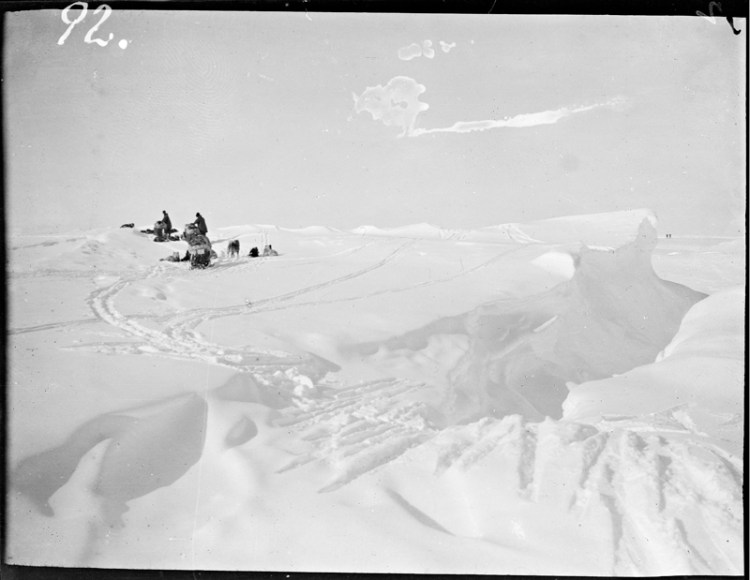
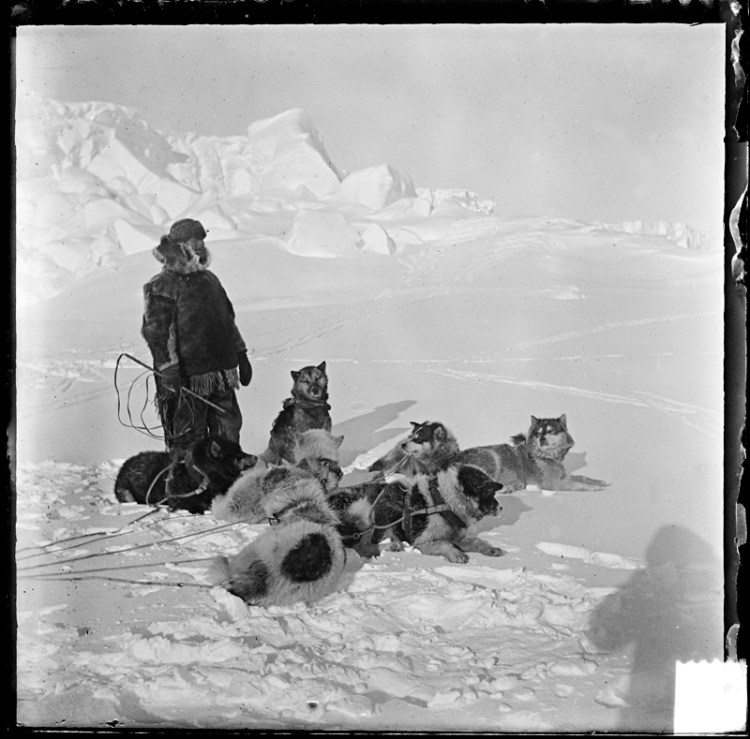
One hundred years ago today, after months of desperate cold, preserved food, wicked dryness and beating wind, after skiing many, many miles and enduring lost and broken gear, tired men, cranky dogs and dangerous terrain, Roald Amundsen and his crew (Olav Bjaaland, Helmer Hanssen, Sverre Hassel, Oscar Wisting, four sledges and 52 dogs) reached the South Pole, alive and happy and sunburned, the first men in history to reach the bottom of our earth. They took measurements to determine their accuracy, and planted the flag of Norway to mark their achievement.
December 14, 2011
“When the explorer comes home victorious, everyone goes out to cheer him. We are all proud of his achievement—proud on behalf of the nation and of humanity. We think it is a new feather in our cap… But the rails of science are laid; our knowledge is richer than before. And the light of the achievement shines for all time.”
–Fridtjof Nansen, May 3, 1912
~
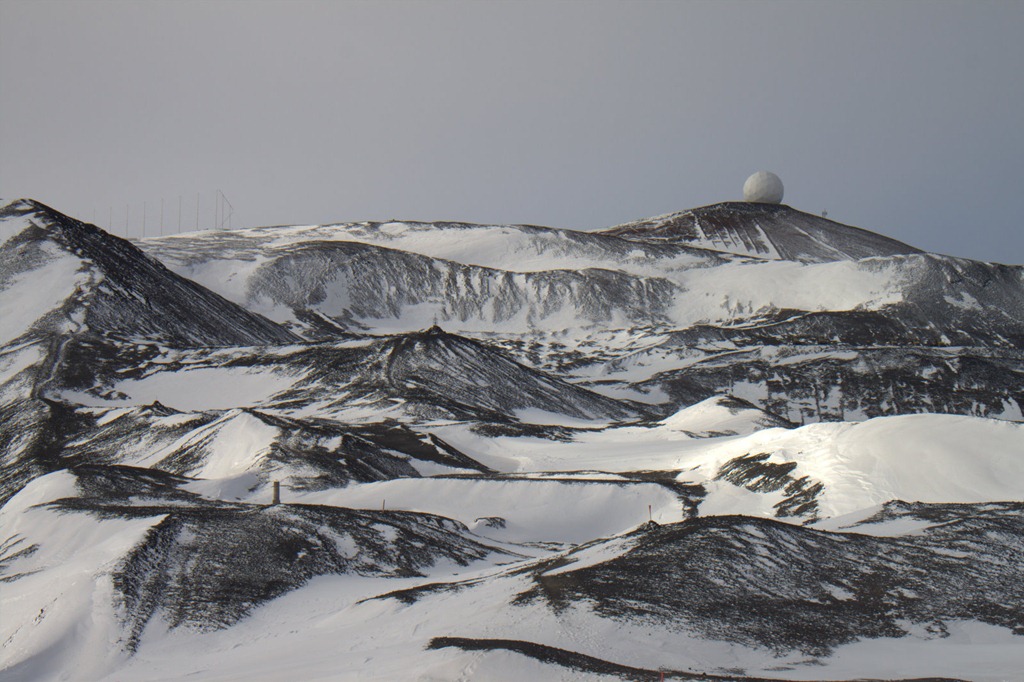
We are so proud to be here and to be a part of the US Antarctic Program, to support in our own small, peripheral ways the science that is carried out: astronomy and astrophysics, aeronomy, auroral, and geospace science studies, meteorology, geomagnetism, seismology, earth-tide measurements, and glaciology. Here we live on the seventh continent, dedicated to science and peaceful international exchange, and we are grateful to be a part of its history.
Happy Centennial, everyone. Here’s to the next hundred years.
Yesterday, Norway’s Prime Minister Jens Stoltenberg and his party landed at South Pole Station, just in time for lunch. The galley was packed full of people, craning, trying to look like they weren’t looking, trying not to choke on their sandwiches.
Tomorrow, Mr. Stoltenberg and his party will ride out to twenty or so miles off station to spend a night with their countrymen, the Norwegians who have skied in from the coast, and they will, on the Centennial itself, ski back in together following Amundsen’s footsteps.
He gave a speech at dinner last night, trying to put words to the grave and joyous importance for Norway as a country in 1911 to arrive first to the South Pole in an era where parts of the world such as Antarctica were still unexplored. He thanked us for a warm welcome, and congratulated us on the work we do here (now, I’m not sure he was referring specifically to shoveling or inventory, but I’m being liberal with my interpretation).
It was quite sweet, really.
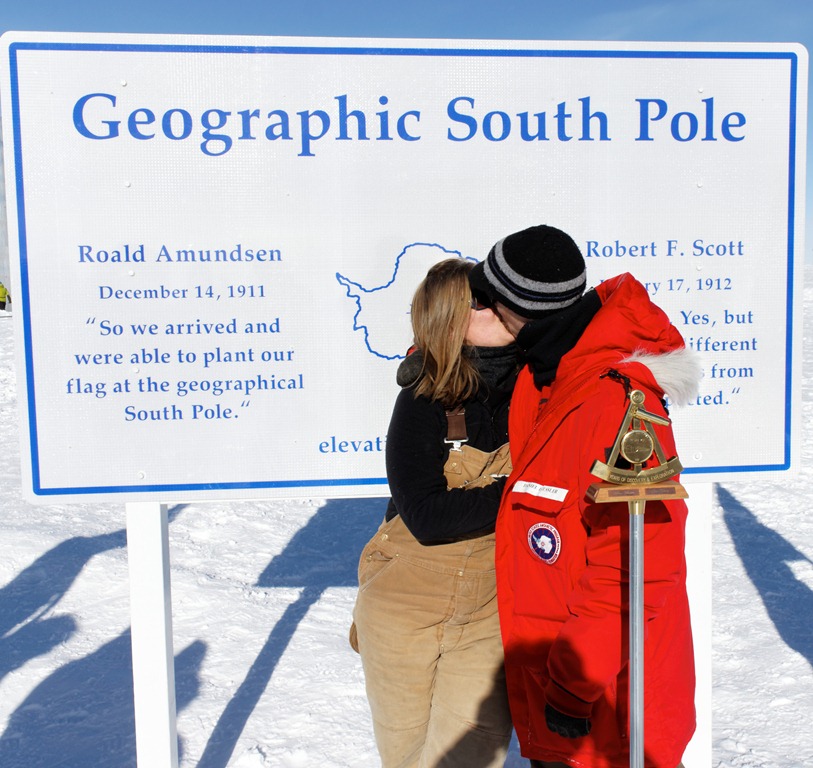
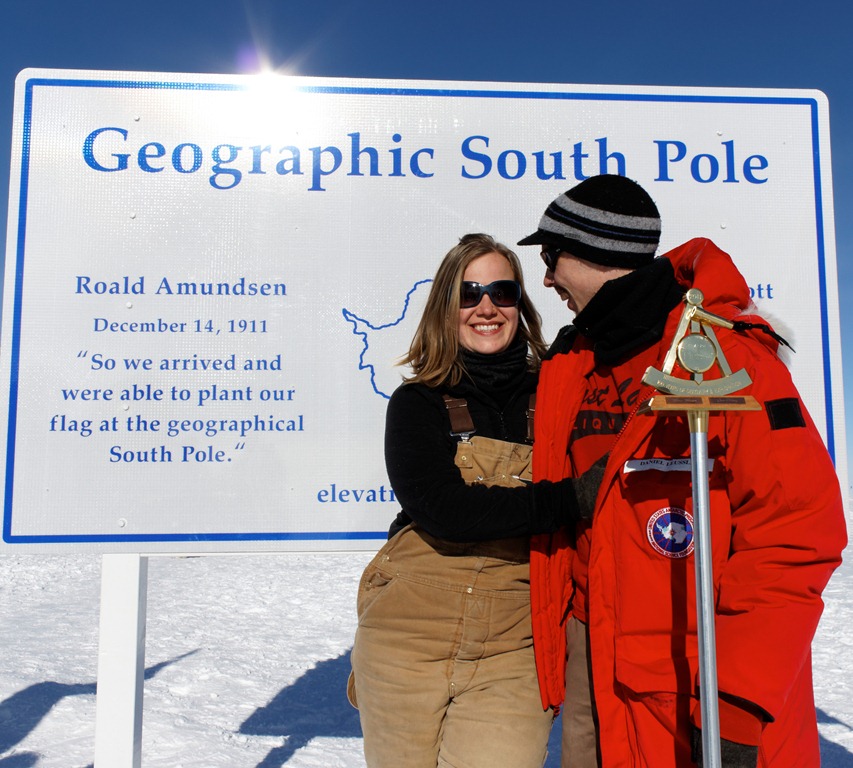
After dinner he went out to the geographic South Pole to take a photo with most of the station population. We were able to meet him and take a few photos.
Here are the Norwegians walking out to the Pole:
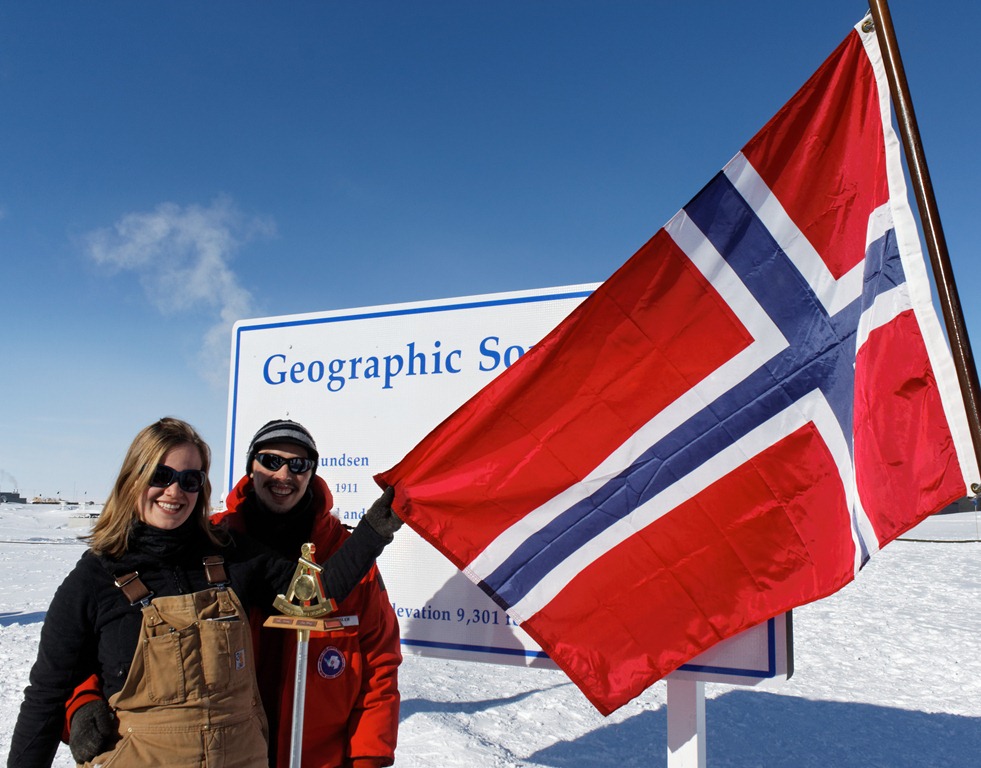
Daniel and I with Mr. Jens Stoltenberg:
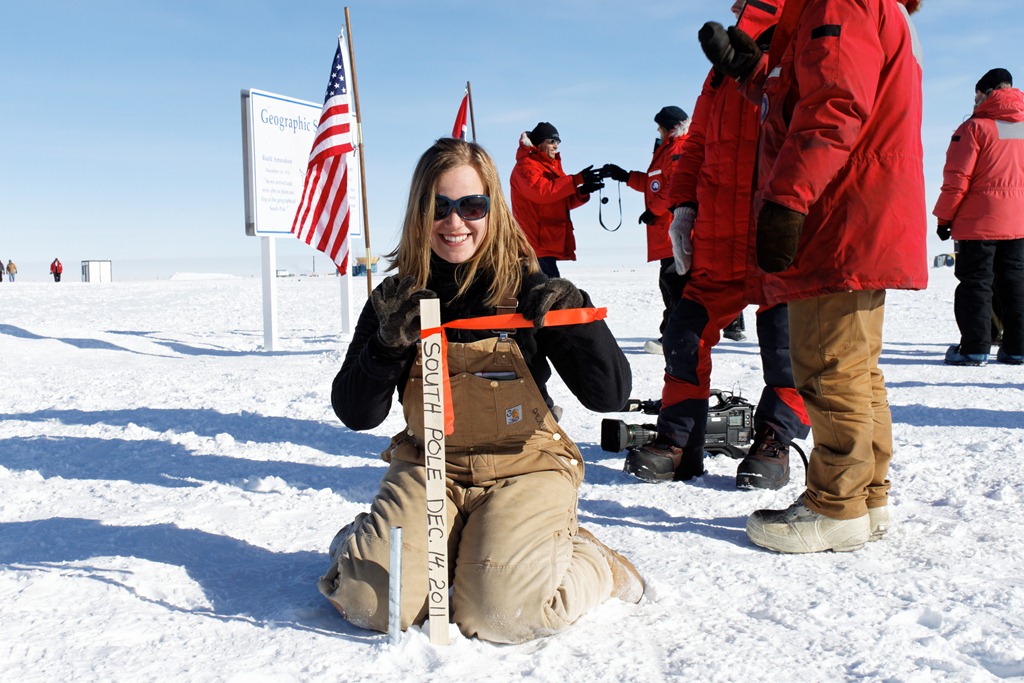
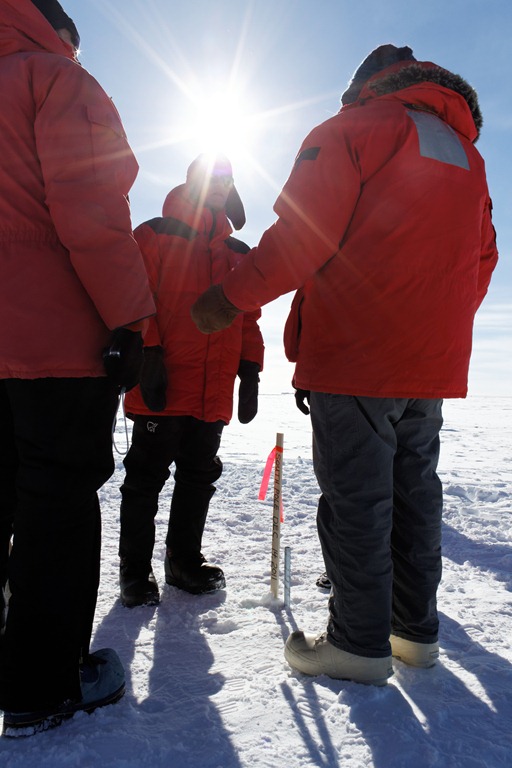
As you may know, the ice shelf drifts constantly because of the geography of the continent. What that means is that the geographic South Pole shifts something like 30 meters in relation to the station every year. On New Year’s Day, there is a ceremony in which the Pole marker is changed to a new design and the whole Pole gets plucked out of the ice and moved to the actual location. It is not New Year’s Day yet, and so we currently have three Poles: the Ceremonial Pole, with the barbershop red and white stripes and the silver garden ball on top, surrounded by the flags of the original treaty nations; the 2011 Geographic Pole, with the artist-cast Pole marker (which unfortunately gets missed by many distracted tourists); and the actual, current Geographic Pole which has been determined by the surveyors:
I’m not joking: that’s the real deal! The stick with the orange surveyor tape is the southernmost point on our planet. Here’s the Prime Minister (center) with the real-deal South Pole:
It’s humble, but also awesome.
We all came in to some special Norwegian mulled wine, the spelling of which I can’t remember for the life of me (glůgg? glŏvvig? I’m going to stop trying). It was delicious, hot and spiced with slivered almonds and raisins plopped in to the bottom.
Step 3: Physically qualify (medical and dental for austral summer, plus psychological for winter). Do lots of paperwork. Actually, this is like 30 steps, but you probably don’t want to hear about them all.
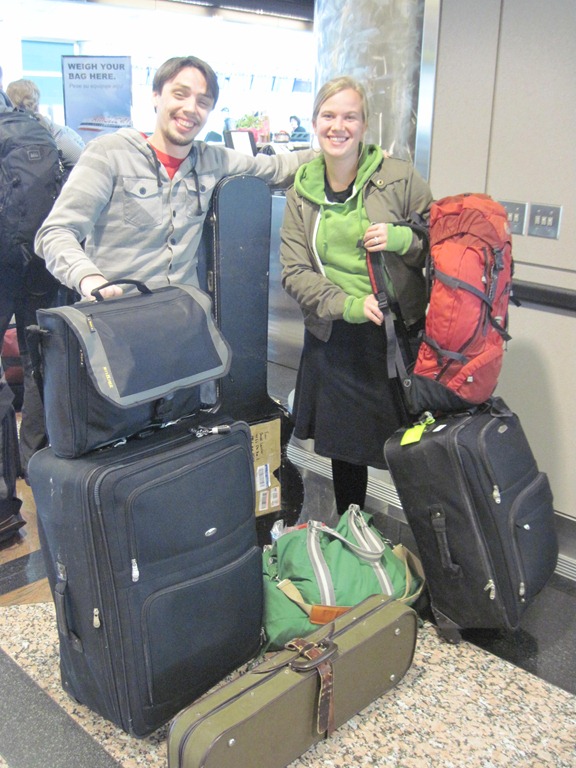
Step 4: Pack, unpack, repack, take some stuff out of your luggage, repack again, and still end up taking too much.
Step 5: Go to a lot of orientations and learn about riveting things like OSHA, Information Security, payroll, health insurance, waste procedures and New Zealand BioSecurity.
Step 6: Fly. A lot. Arrive in Christchurch.
Step 6.5: Sleep off the flight.
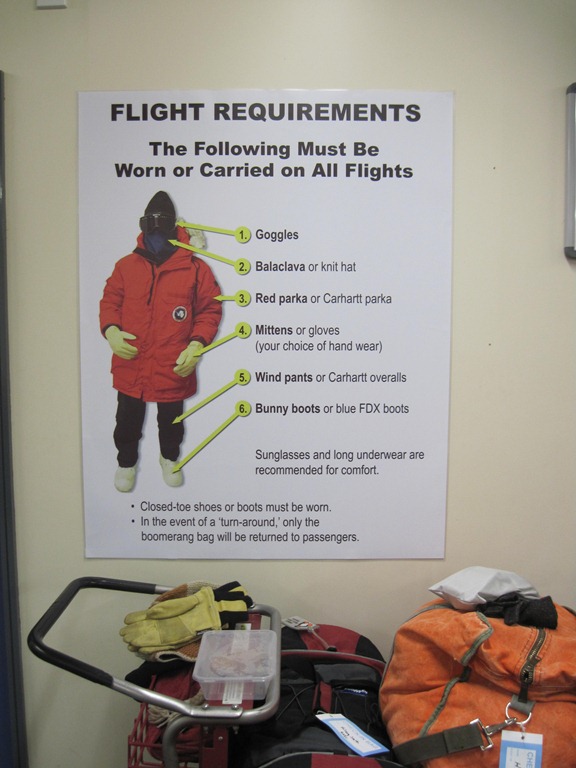
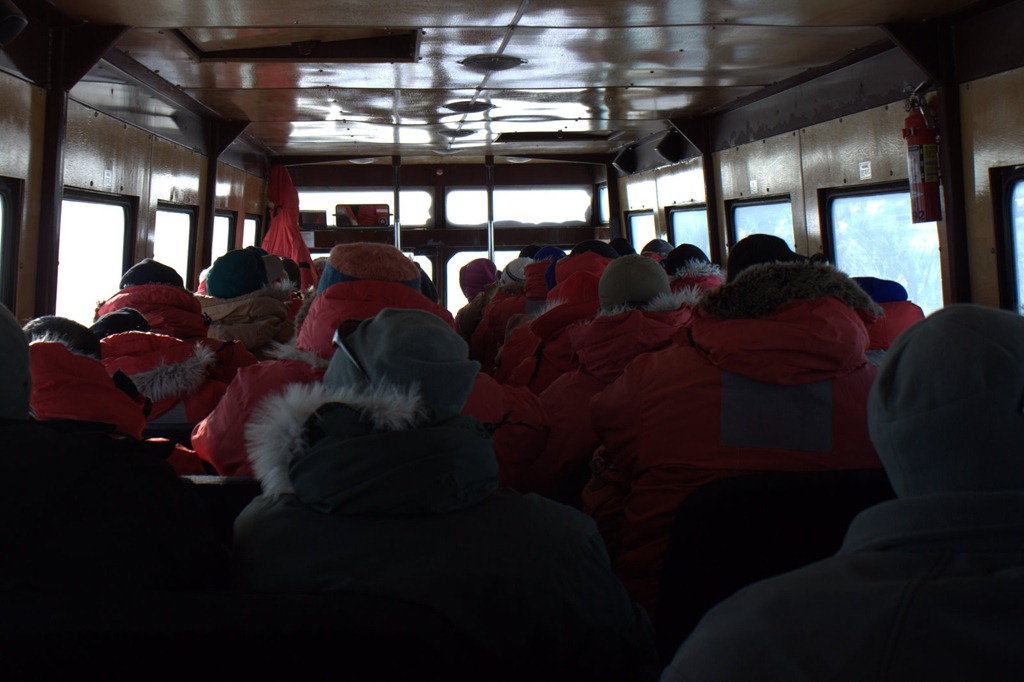
Step 7: Go to the clothing distribution center (CDC) and try on Emergency Cold Weather gear (ECW), which has been pre-sorted and neatly lined up in giant orange duffel bags just for you: big jackets, insulated overalls, clunky boots, neck gaiters, mittens, gloves, hats, long underwear of varying weights, socks, boot liners, and more. Exchange anything that doesn’t fit.
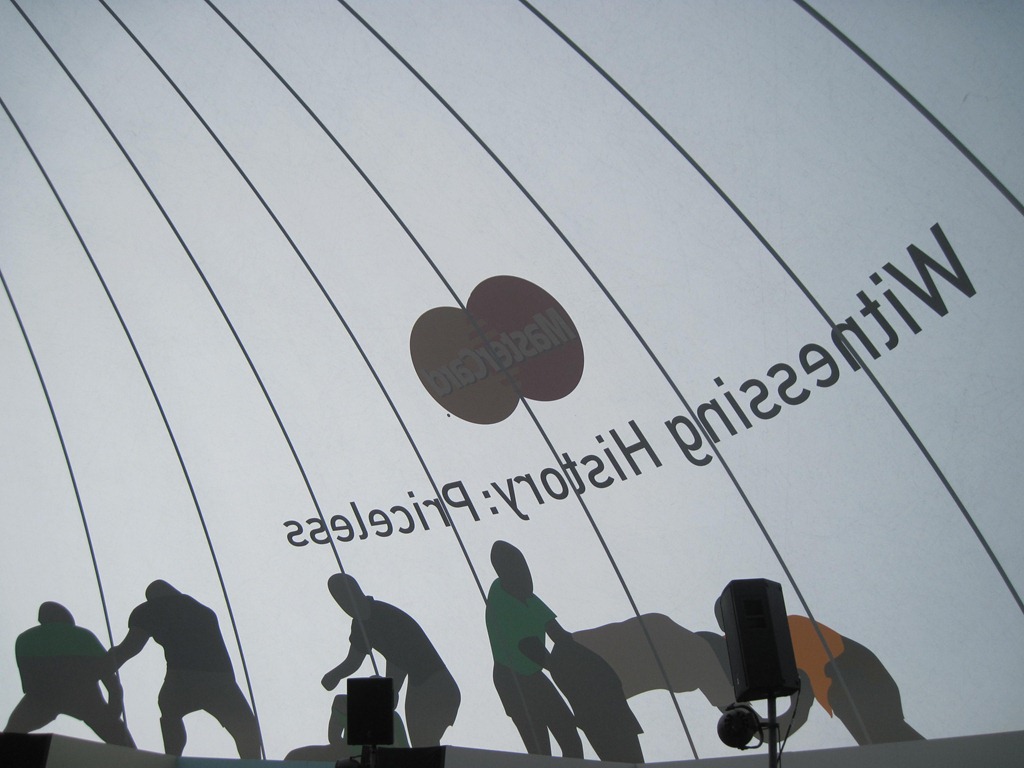
Step 8: Enjoy Christchurch a bit, (we got to go to the Rugby World Cup Expo, and then after we got here, the New Zealand All Blacks won!), see some beautiful scenery, or pretend to, and buy anything else you need.
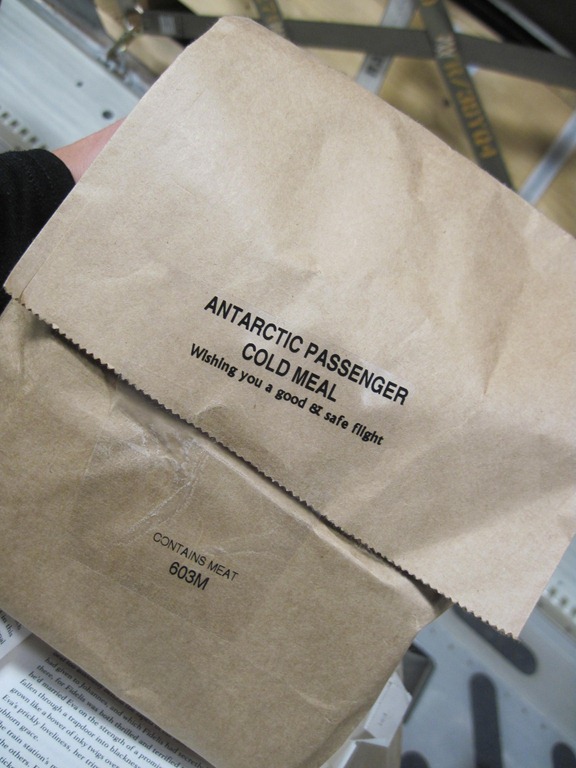
Step 9: The next day, put on your gear and get on the plane.
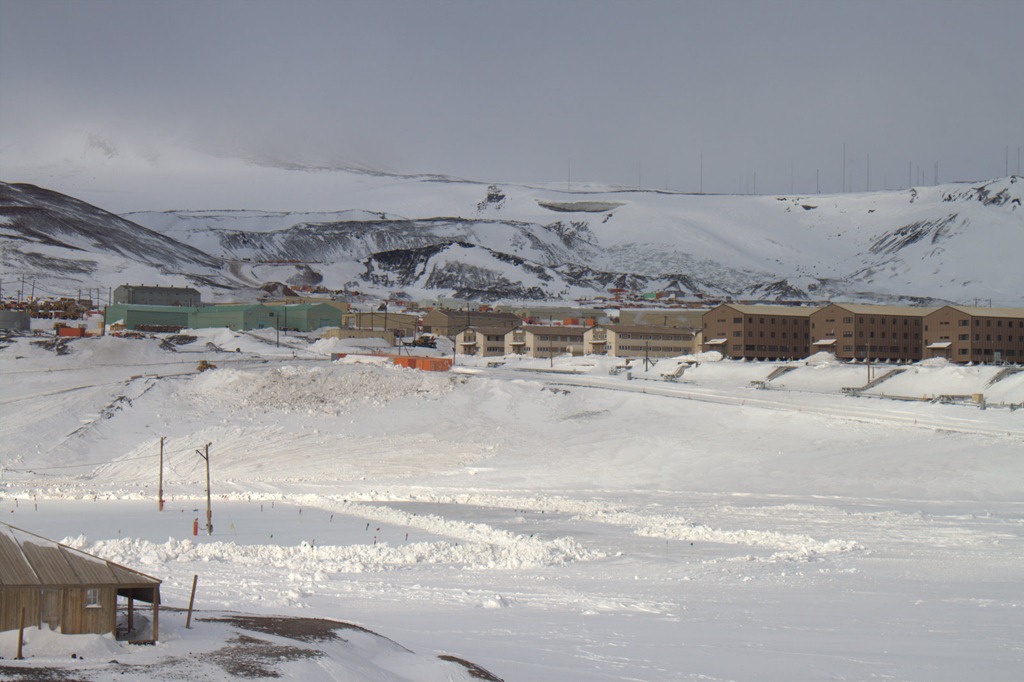
Step 10: On arrival in McMurdo, get off the plane and onto another shuttle.
When my boyfriend was feeling a little better after our IV drip adventure, drinking his prescription-strength Gatorade and eating a stale cookie or two (bought from a stall vendor, complete with a millimeter thick layer of dust on the package), I went shopping. I was hoping to buy a few kangas, the Tanzanian printed cloths women wear as skirts, turbans and baby holders, printed with proverbs I don’t understand. When I was at one of the shops, haggling over prices, two young men got into a scuffle–not quite a fight– and a fat, strong-looking, grandmotherly lady stood up and went over to one of the men, giving him a full strength whomp in the shoulder with a stick of sugar cane she was chewing before sitting back down. Everyone laughed, even me.
Drinking exotic-tasting spiced coffee, a slight breeze on the backs of our necks.
Daniel looking for a wifi access point, walking around with the netbook like it was a metal detector or a divining rod.
Athletic, sweaty men running with a pushcart in Dar es Salaam, keeping up with car traffic.
We took a long taxi ride to Jambiani beach, watching the land and people go by. Grilled maize, lumber yards and power tools, a boy balancing a stack of plastic bowls and pitchers taller than himself, tire shops and land rover parts, a funeral procession with men standing on the back of a fenced-in pickup truck.
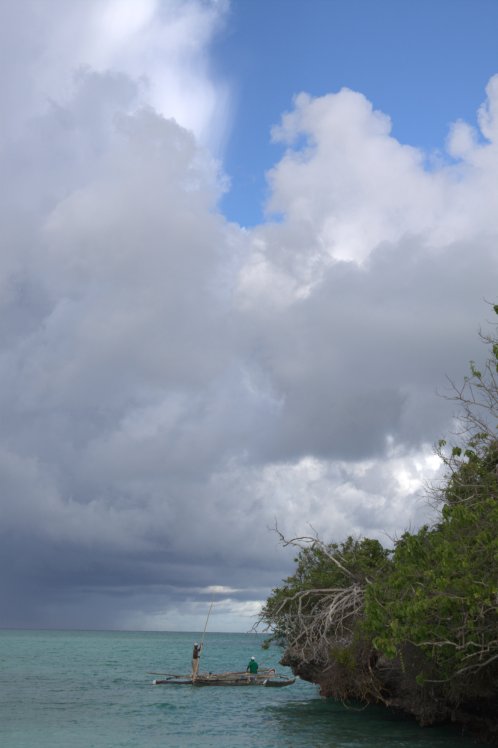
On Jambiani, we sat on scratchy woven hemp twine chaises, contemplating the unreal turquoise ocean; the fishing dhows were beached twice a day when the tide went way, way out: nearly a quarter mile. You couldn’t even hear it anymore. Kids rolled bike tires along the beach, tires almost as big as they were, laughing and playing, and little blue sandy crabs ran for their lives as if pulled by a string or blown by a little puff of wind. Stormy weather sat out on the horizon like a plateaued mountain, topped with puffy clouds.
Colobus monkeys sat in the trees, preoccupied with something on a particular branch, while we ate the catch of the day and the sun disappeared completely but its evidence remained. The moon, like a spotlight, illuminated the receding tide and the reflective white sand.
On the night that we didn’t order the catch of the day, but rather the beef, Daniel was again so incredibly ill that we were up all night. This time the clockwork vomiting kept us up again, scared and tired, but not quite so afraid as in the previous week. The tide, in at 4 in the morning, lapped literally at the foundations of our little screened cabin, loud, roaring, calming (to me at least)–a reminder of the presence of where we were, despite the food poisoning. Grounded but not grounded. Serene but not serene. Ready to go home, right now.
In the morning, kids played soccer on the beach, a homemade goal set up against the coralline rock, practicing their impressive moves. I remember thinking to myself, I can’t imagine growing up in such a beautiful place, where families live off the ocean. Little fenced in seaweed gardens were exposed when the tide rolled out twice a day. Piles of coral rock lay in the morning arranged at low tide, to be collected and later sold out of the bed of a truck. Fishermen with nets tossed small fish to kids up on shore. The older ones gathered them by handfuls, the youngest one picking up a fish now and then, and when it flopped in the air he would squeal and twirl it around by its tail.
Eventually, we took another taxi ride back to Stone Town, back to the ferry, back across the ocean to Dar es Salaam and started the long journey home. Having gotten some bug or another, I was so sick by that point that I could barely stand in the line for customs, could barely contain my nausea. I thought they would take my illness for nervousness and detain me like a would-be bomber on our flight home. Multiple multiple immodiums and bottles of water later, we landed in MSP, our luggage stranded somewhere in DC. But, one way or another, we were home. Home, home, home.
~
And now, it’s almost time to leave again. Is it normal to have every year of your life go faster than the last?
Within a week of arriving in Tanzania, I had learned the Swahili words for health clinic (matibabu) and thermometer (tamomita), visited said matibabu, and an hour later had pulled an intravenous drip out of Daniel’s arm, spilling IV fluid everywhere and sending the elderly Tanzanian pharmacist into an angry and confused tizzy.
Let me back up.
We had taken the TAZARA train direct from Kapiri Mposhi, Zambia, and arrived late in the evening at Dar es Salaam station. Dar seems like a mixture of Africa and Everywhere Else, with heavy trading port influences, deep and historical, manifesting themselves in the modern city. Muslim men wear flat, intricately embroidered hats, some women wear full coverage robes and scarves despite the heat, women of Indian descent in saris work at their pharmacies. Young men sell flat baskets of cigarettes, SIM cards and small sundries from their left hand, jingling a little silo of shillings in their right, making little kisskisskiss noises to advertise their presence to customers, dodging murky puddles on the street.
There is a whole micro-economy based on cell phones, SIM cards and air time. Even in the smallest, most rural areas we saw on the train, people selling dry beans and bananas from baskets would have cell phones.
We took a ferry to Zanzibar’s Stone Town and explored the fisherman’s market, soggy fishy mud clinging to our feet. We ate grilled meats and rice, french fries and bottled water. We changed guesthouses, having chosen the one we were at in exasperation, touts seeing our backpacks and following us off the ferry, hounding us the whole walk in. I must say, that is perhaps my least favorite thing about traveling.
I still don’t know what caused it, but after a night at our new guesthouse, Daniel came down with a fever and some digestive problems. The fever was coming and going in waves, causing us great unease. And as you know if you’ve been anywhere with endemic malaria threat, one is supposed to treat any fever as malaria; travel health brochures are terrifying when you are slightly ill. We waited a bit, but since the fever was behaving erratically, and Daniel was feeling worse after a few days, we decided to go in for a test. At home, I know how to call 911. Abroad though, you’re suddenly aware that you haven’t any idea how emergency infrastructure works. What do you do if you get sick in the middle of the night, isolated by language barriers (real or imagined) and without a basic understanding of just about how long an ambulance takes, whether there is an ambulance at all, without a mom to call for advice?
We walked out in the direction we thought the health clinic was based on a magazine we had picked up at the ferry dock a few days back. Stone Town is a maze of little alleys and twists, corners and minarets and shops and cafes. Beautiful, sultry, and infuriating if you need to get someplace in a hurry. Lost, we asked a stranger, unasema Kiingereza? Do you speak English? He did, and we asked how far we were from the Mazrui Dispensary. He drew us a map in my planner, at the time agonizingly slow and meticulous (and ultimately very helpful and accurate) and I could feel Daniel starting to get a little sick and panicky beside me.
We walked to the clinic and Daniel was given a finger prick malaria test. As we waited in the lobby for the results, he fended off nausea, stood up as if to step out for a breath of air and, with his hand on the small of his back, very slowly collapsed, face and lips terrifyingly white. A nurse/pharmacist/aide (retrospectively, I’m not sure what sort of training she had), an elderly woman much smaller than Daniel or I, helped me drag him into one of three beds in the back room. The second toe on her bare right foot pointed straight up at my face as we dragged him, and for some reason that very clear image has persisted in my memory of that day. Daniel started to walk a bit and passed out again. When he came to in the little bed, the pharmacist lady put in a saline drip IV the color of Mountain Dew, filled his prescriptions, and sent me in to see the doctor.
The malaria test was negative, most likely Daniel was just severely dehydrated as a result of a stomach bug. On my way back into the back room, the pharmacist intercepted me: “Your bill will be 50,000 shillings,” she said, “but I’ll write 40,000.” Thanks, I said. “You give me the 10,000 shillings.” Oh. The numbers weren’t too bad. I didn’t do the math in my head at the time, but 50,000 TSH is about 30 USD, so the bribe/gift she asked for was about $6. Taken off the original bill. Whatever, just take good care of my boyfriend. Be careful with those needles, lady.
The drip was going pretty slowly, as they tend to do, but the pharmacist was ready for things to move a bit more quickly. She turned a knob on the tube, and things were moving along. Here’s something you might not know about me: I’m pretty paranoid. Here’s something you didn’t know about the IV drip: there was a little air bubble sitting in the tube, not going anywhere, but whose stationary presence I had been monitoring the whole time. All of a sudden, this bubble was quickly bumbling along down the tube, heading right for Daniel’s vein. Now, I might have seen too much CSI, but I imagined Daniel dying of an embolism right there and after frantically trying to alert the pharmacist with the crooked toe to the miniscule bubble’s velocity to no avail, I pulled the needle right out of Daniel’s arm. Crooked-toes yelled at me in shock, saline dribbled everywhere, Daniel stated he was feeling better, and we left.
We looked it up later and small air bubbles entering the body is apparently rather common, and usually doesn’t cause any trouble. Oh.
“Travel is glamorous only in retrospect.” -Paul Theroux
I’m getting the travel bug again… just a few months ago I was so exhausted, so jaded and homesick, so over traveler’s diarrhea and malaria fever scares and IV drips at foreign clinics, so hungry for home and family and familiar sights and smells. And yet…
There’s this capacity for selective amnesia; the distressing and banal things about travel are fading. I find myself idly looking at travel guides for Turkey, Albania, Korea.
The TAZARA train never leaves on time, except when it does.
On a Friday morning in April we set out for Tanzania. Our one-week visas were due to expire the coming Monday, and this was the last train leaving during that time period. Neither of us wanted to find out what happens if you overstay your visa in Zambia, so we stopped by the TAZARA office in Lusaka. An employee there told us she had reserved a compartment for us and that when we got to town and arrived at the office, we just needed to speak with “Alfred” and we’d be all set with our own compartment for the three-day train ride (mixed genders are not an option in compartments unless you reserve all four beds as a family). We had four hours to take a two hour bus ride to Kapiri Mposhi and depart at 2pm, which seemed like it should be enough.
It wasn’t, really. After an hour of waiting for the bus to fill, finally leaving with a little more than enough time to make it, and nearly three hours of Bus Stop Reverend preaching and conversion, loud music, white-knuckle passing and infuriating dirt loop detours, we arrived in Kapiri Mposhi at 1:52 pm. We had been shuffled to the very back of the bus with all of our stuff (a backpack and messenger bag each) and as soon as the bus started to slow down, Daniel took his first opportunity and shot to the front of the bus. It took me a minute and I got waylaid behind slow adults and even slower kids, and a few minutes later when I finally got to the door, I found myself in the middle of a fist-fighting mini mob. Daniel ran in and pulled me out by the arm, and as we got into our taxi he explained to me that he agreed to take the first driver that offered, and the next three or four guys had gotten into a fight over our prospective fare.
As our driver lurched over an apparently recently plowed road, red dirt lumping along under the tires and pedestrians casually scooting over to let us drive by, we counted down the minutes. Now, Kapiri Mposhi is not much of a town. The reason the train begins here is supposedly because, when laying the line southwest from Dar es Salaam, they ran out of tracks in Kapiri Mposhi, and so the train station was born. The place is maddeningly spread out for a town of such small origins, and it took what felt like forever to get to the station. We prayed that the train would leave late, which is apparently common.
We barely remembered to pay the cab driver when he stopped, dodged the pushy “bag porters” and ran through the gate, literally at 2pm, the hour of departure. Sprinting to the now-empty sales desk, we asked anyone who would listen where we could find Alfred, our magical ticket holder, but the people just yelled at us to go, get on the train. “But we need to pay,” we protested. “Just get on!” The train blew its whistle and shuddered to a start, and we ran down a few cars before finding one with open doors, hopping on as best we could without knocking each other down.
We were on the last train to leave before our visas expired, but we didn’t have tickets. And Alfred, the only person who could vouch for us, was nowhere to be found. None of the staff had us on our list, and the train was full. The staff on the train, however, were wonderful. They rearranged a few other families, put us in with a random white South African tourist (mixed gender compartment!), took our money and wrote us tickets.
Never have I been so happy to squish skittering blonde cockroaches while eating chewy organ meat with the valves still on, or sleep on pillows that felt like a bag of popcorn and smelled like a wet towel. The train started and stopped so suddenly and forcefully that we kept getting knocked over if standing. Each time, we assumed the train was starting to derail itself. But we had made it.
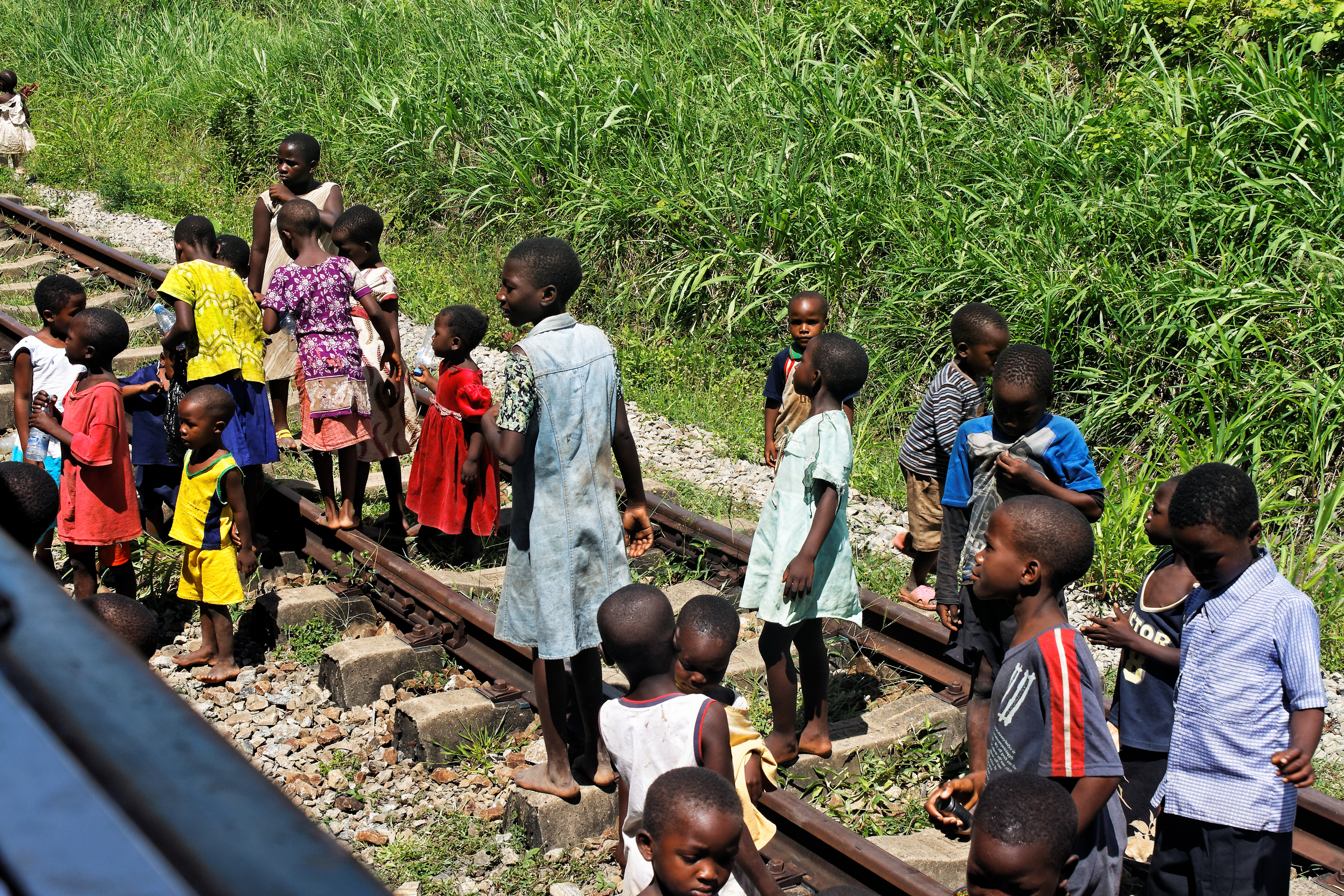
Outside the train, men, women and children sold corn on the cob, hard boiled eggs, finger-sized bananas, rice from open sacks balanced on the head, mealy meal, cassava and potatoes, leather jackets, SIM cards, limes and groundnuts. Women in printed cloth kangas and kids in clothes so oversized and tattered their shoulders lay bare to the sun asked us for empty water bottles (maji ya chupa!) or money. Passengers exited carrying luggage on their heads, rollerboard suitcases or mystery packages in giant woven plastic totes. Zambia rolled past: flat, felled areas, fields eaten clean by herds. Cool air and few mosquitoes blew through the windows.
Maji ya chupa!
Crossing the border, officials charged us 100 USD each, twice what we expected; we put up a fight and protested corruption until the border officials lectured us on reciprocal visa fees and threatened to throw us off the train if we didn’t pay up. We later found out that the visa fee is actually $100 for a US citizen now, and although the border officials had started off seeming rude and unprofessional, that we were the ones overstepping our bounds.
The scenery in Tanzania was so much more lush–in no man’s land we went through a tunnel and came out in another world. Huge, tropical, prehistoric-looking palm plants, tall trees and a wall of hot and humid air that smelled like an herb I couldn’t identify marked our entry into the Great Rift Valley. Instead of drought-ridden Minnesota-prairie-like flatlands, there were hills and trees and moist flora clutching to sheer inclinations of land.
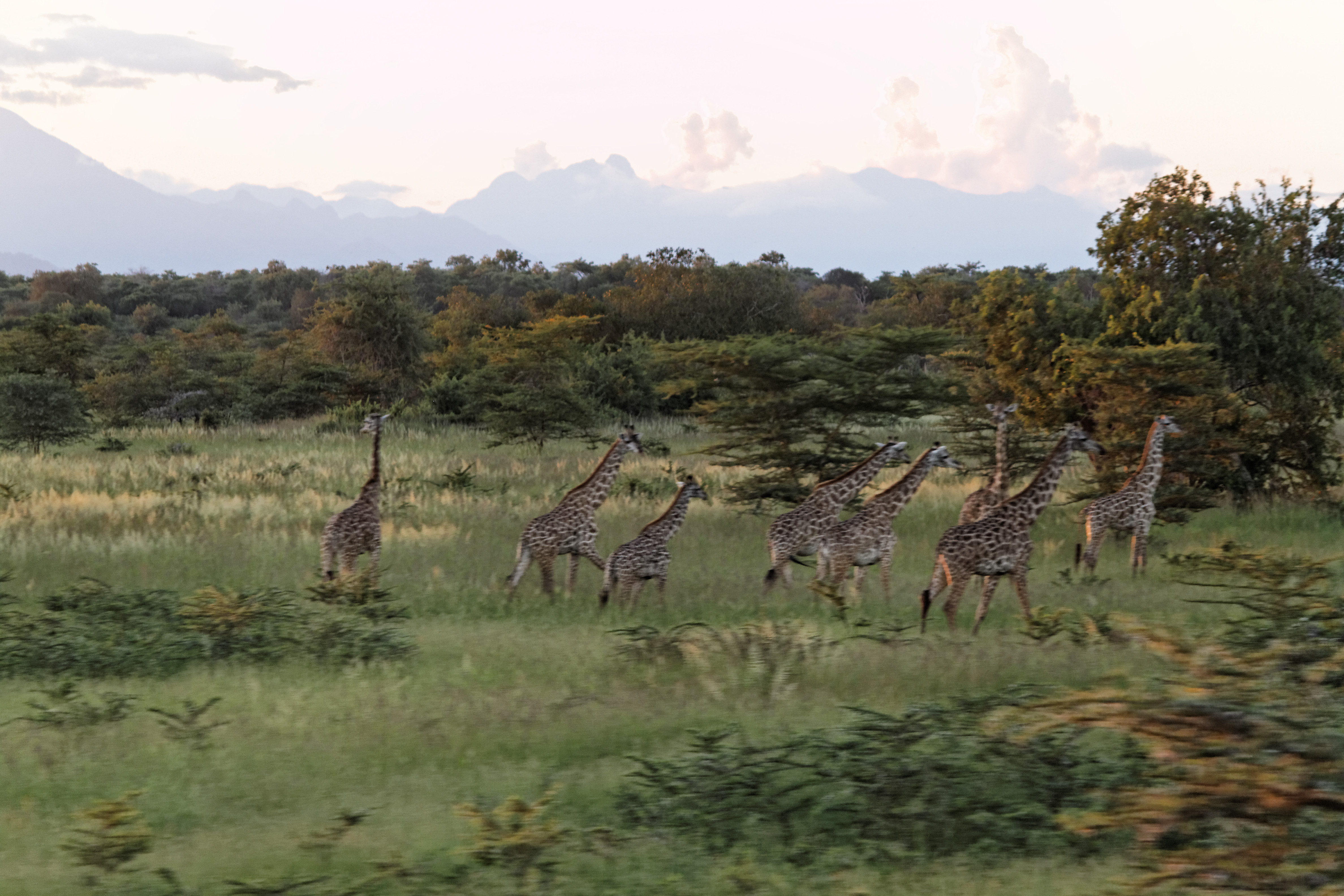
Near the last ten hours of the trip, we got a new bunkmate, a Tanzanian lady who spoke very little English. As the train ran through the Selous Game Reserve, we saw zebras, giraffes, wildebeests, antelope and one extremely terrified elephant, running away from the train as fast as it could manage. This was the closest we came to a safari the whole time we were in Africa–the budget traveler safari. Our new bunkmate, along with all the other passengers, hung out the train as far as she dared to take pictures with her cellphone, telling us the words for the animals in Swahili and pointing out the ones we missed. At one point I asked her, with Swahili read from a little phrasebook, where she was from, and she said something I didn’t recognize. I asked, “Tanzania?” and she indicated that it was outside of Dar, where we were headed. She slapped my palm and held on, laughed and said, “Dar es Salaam IN DA HOUSE!”
(For more information on the TAZARA train, or any train travel worldwide, check out www.seat61.com. We have used this site so many times when preparing for train trips in Thailand, China, India and Zambia/Tanzania. I highly recommend its content, especially when researching for a leg of your trip right before you go: they have a lot of practical information on things like how you get visas on an international train or money exchange, safety tips, food and photos of what different classes of seating look like.)
A few bits and pieces, playing blog catch-up; summer is absolutely flying by. We’re starting the PQ process again (physical qualification–medical and dental checks), getting ready to return to South Pole. We are planning on leaving for Denver/New Zealand around October 15th, but won’t get our tickets until we PQ and complete all the HR and travel paperwork.
*
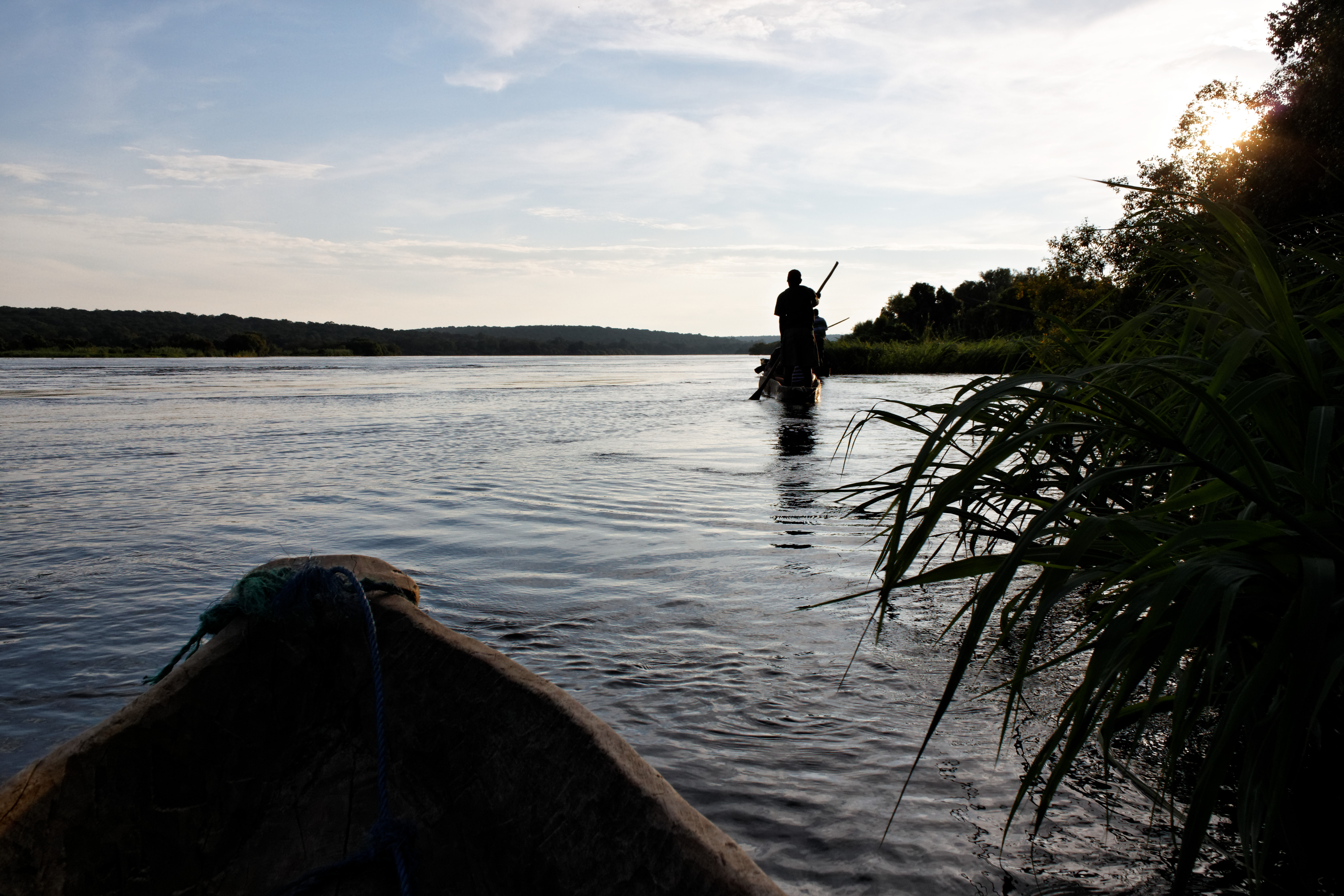
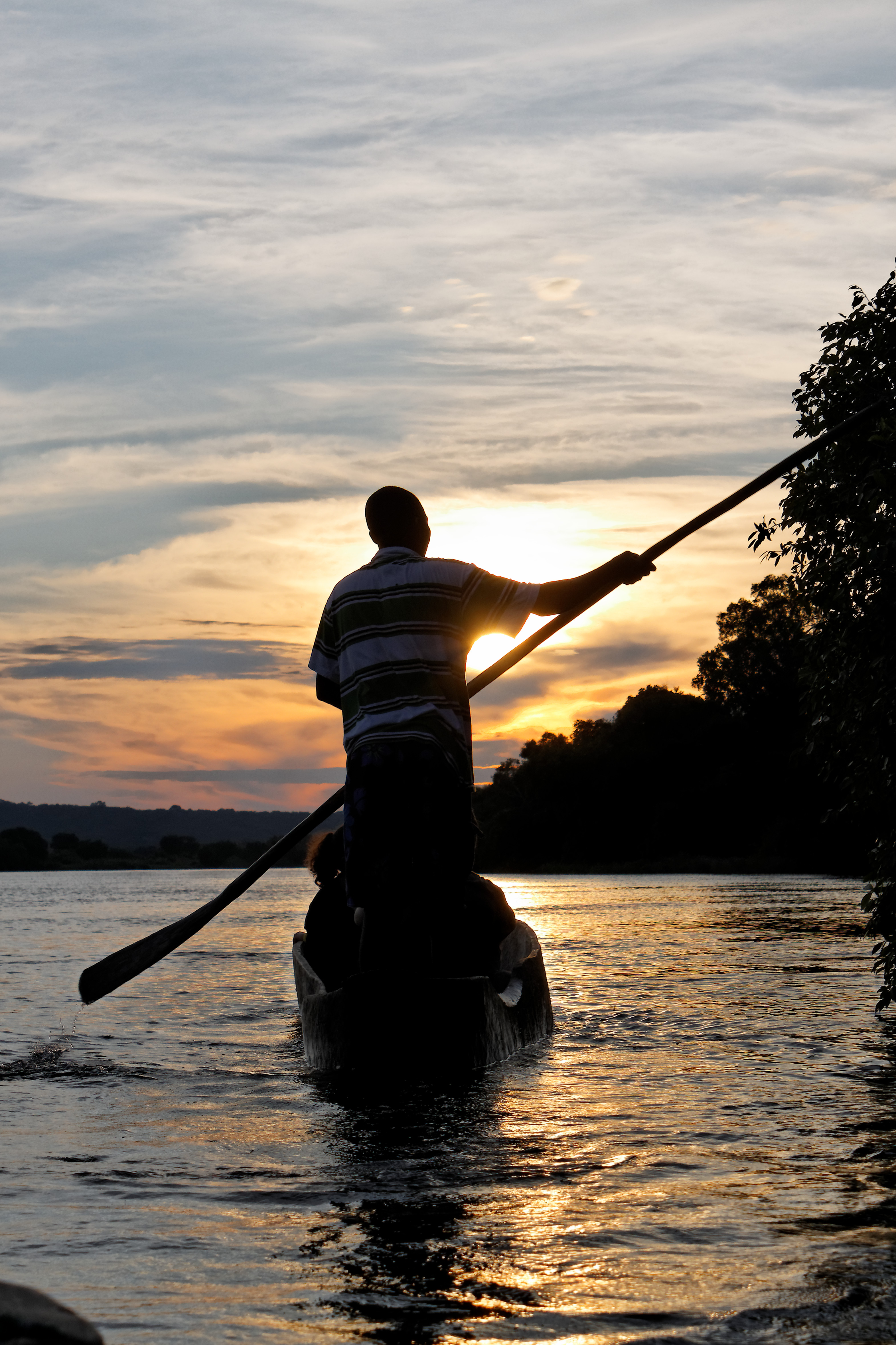
In early April, Daniel and I arranged a few nights on Bovu Island in the Zambezi river. They picked us up in a shoddy pickup truck, and after an hour of driving rutted, mudslid roads, hot dry sun baking the truck, switches of trees whipping at our arms and faces, we arrived at the riverbank. Stepping gingerly into beautiful little handmade dugout canoes, we tried not to think of the crocodiles and hippos we’d seen on the river the night before as the three captains punted and paddled the boats through river flats, eddies and gentle whirlpools, exposing stunning nooks and wide river vistas around the bends of tall grass. The other folks staying on the island welcomed us with a beer on arrival, and we buried our feet in the silky cool sand floor. We slept in a little three-walled hut, perched on stilts and open to the river, listening as the jungle sighed, shrieked, became quiet and later reawakened; monkeys and millipedes and some mysterious catlike shrew animal sleeping nearby.
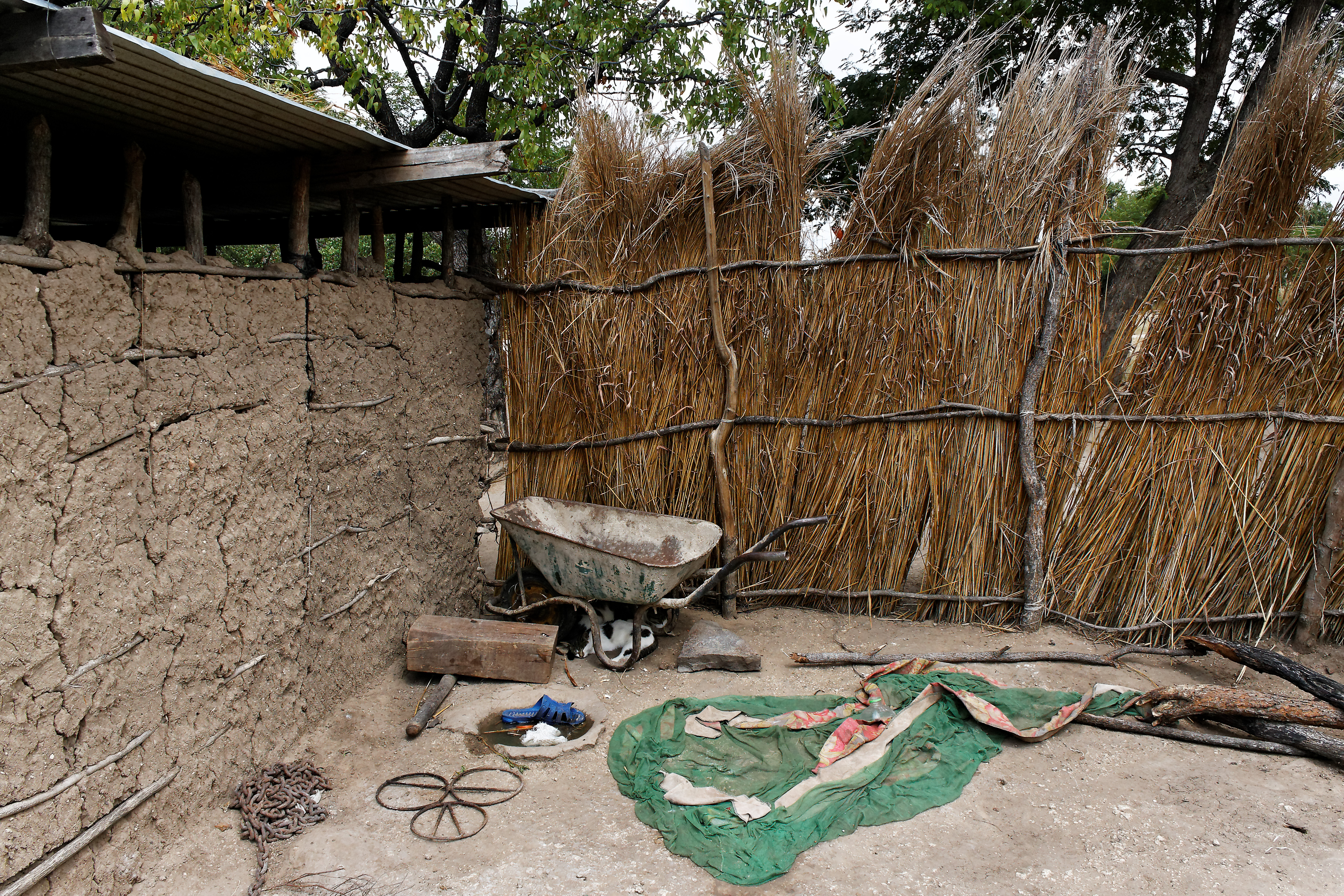
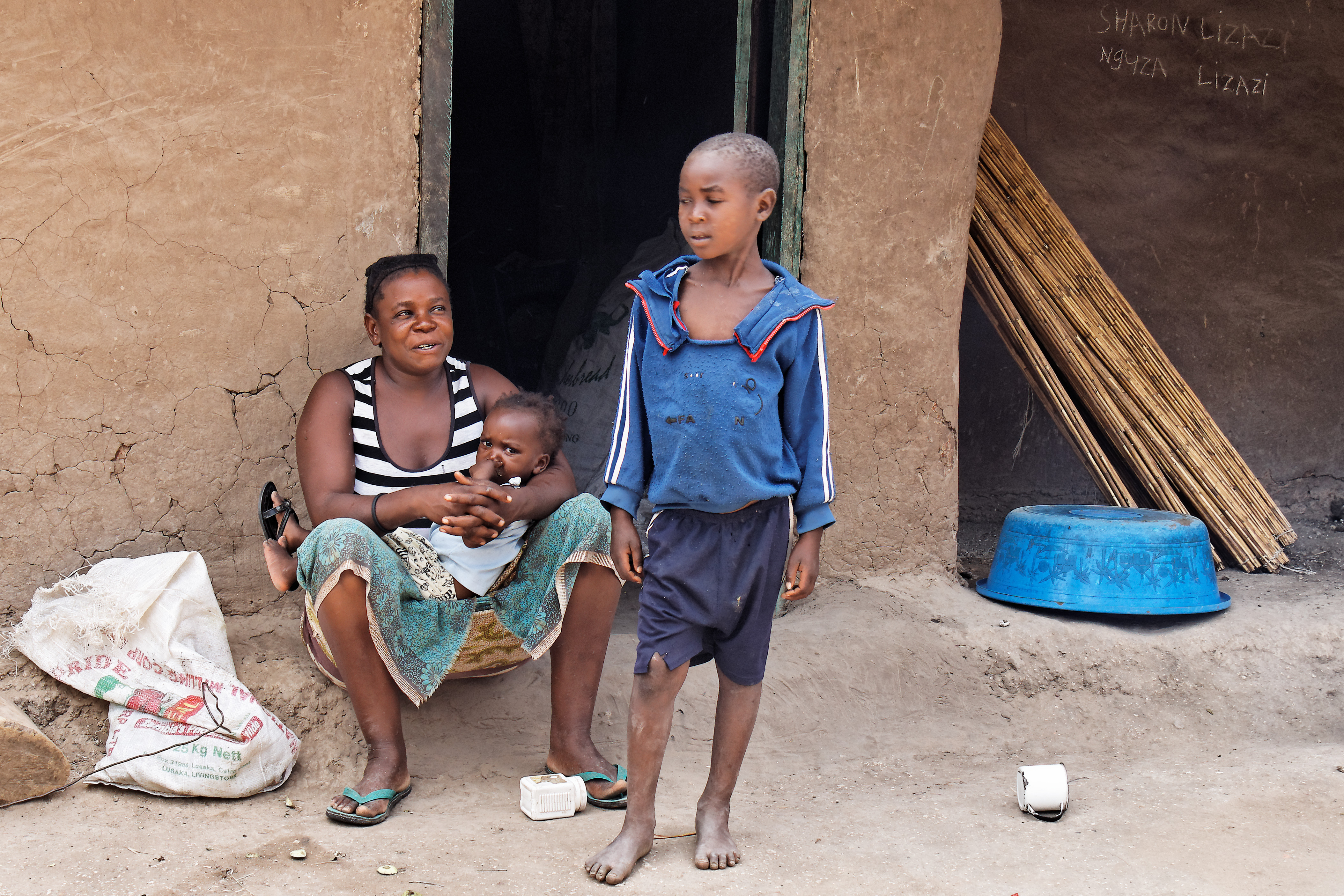
We visited a nearby mainland village, learning about architecture of stick, mud and thatch wood homes, about school/church construction of more modern and costly supplies. We sat with a local mom while she skillfully wrestled a pot of nshima, the sticky cornmeal mush we ate all throughout our trip.
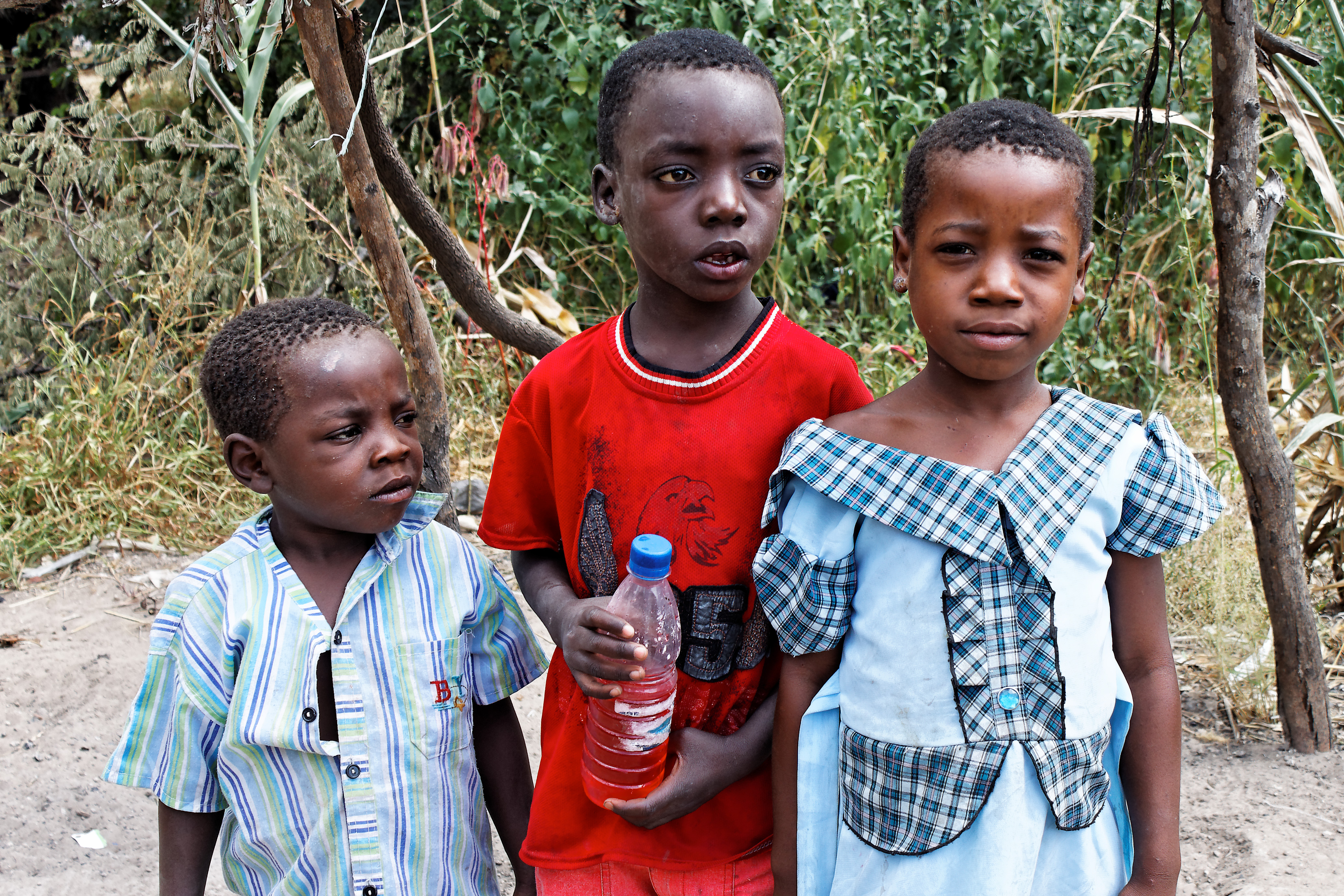
Village familyKids, coming to investigate the funny-looking white foreigners.A kid from the village takes a first photo of DanielMuch better! He's a natural.
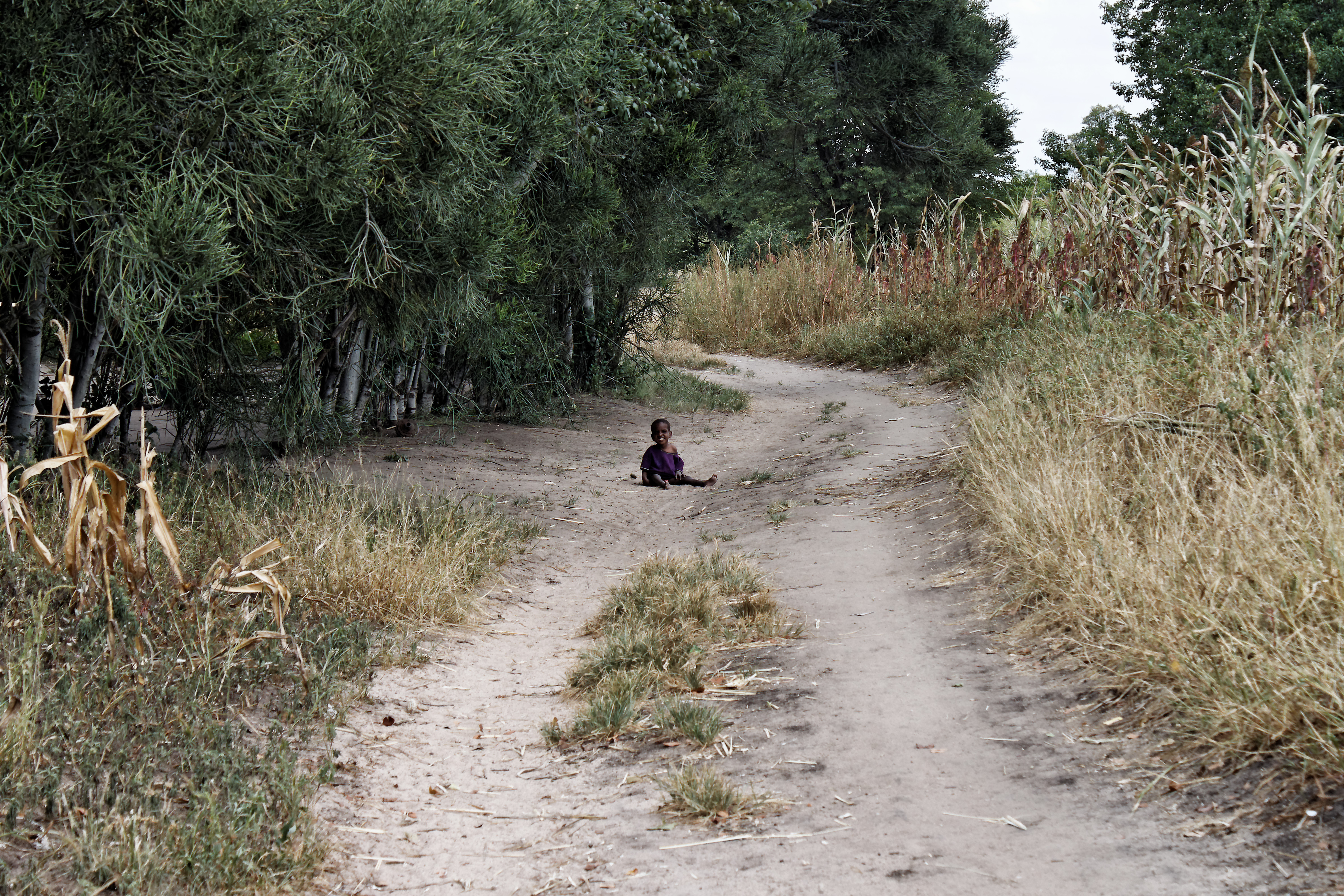
A little girl with a disability that would permanently prevent her from walking, playing happily in the dirt.The still-being-built school and church building
A few days later we boarded a bus to Lusaka, still operating within the strict 7-day visa the border official had stamped in our passports. We didn’t really want to go to the capitol city, but after much debate we decided it was the most sensible option to position ourselves there so we could board a bus to Kapiri Mposhi, where we planned to catch one of the twice-weekly trains across the border into Tanzania. On the bus to Lusaka, I met a 12th grade girl named Felicit, coming home on vacation from boarding school. She was quite talkative and had all kinds of questions for me, normal chatty questions like what do you like to read?, do you like dancing?, what’s your favorite color?, to more in-depth questions about religion, faith, and tribal affiliations within the US, to the structure of our schooling system and specifically my relationship to Daniel.
We had decided to tell people we were married since a male and female sleeping in the same bed together out of wedlock is pretty taboo in eastern Africa, from what we had read, but Felicit first asked if we were engaged, to which I said yes because it seemed easier (we’re not, for the record), but then she had all kinds of questions about when we were getting married, how long we had been together, whether we lived together or not at home, what our parents thought about it, and my story sort of fell apart and I had to explain that, well, we don’t really have a date, and maybe we’re not exactly engaged. I thought it would be really awkward but I guess I underestimated the power of young people to flex from tradition, or maybe I hadn’t done my research properly and the whole thing wasn’t that big of a deal. She transitioned seamlessly into explaining to me all sorts of bits and pieces of local economy within Zambia, import/export and agriculture, and then she told me I was more talkative and friendly than most white people she had met, which I took to be a nice compliment.
After the bus ride, we faced the inevitable swarm of taxi drivers and people pretending to be taxi drivers. Too tired to haggle or discern properly, we got into the wrong one, a car whose driver stopped to pick up another friend and later tried to swap my 20,000 kwacha note (about 5 USD) saying I’d only handed him a kw1,000 note. We spent the night at a crummy hostel in Lusaka, pinning the mosquito net together with hair pins and rubber bands, hunting the bugs that got in before going to sleep, probably more worried about malaria than strictly necessary for a large city. We couldn’t sleep much, preparing for the long haul train ride into Tanzania the next day.





















 brown paper blue ink