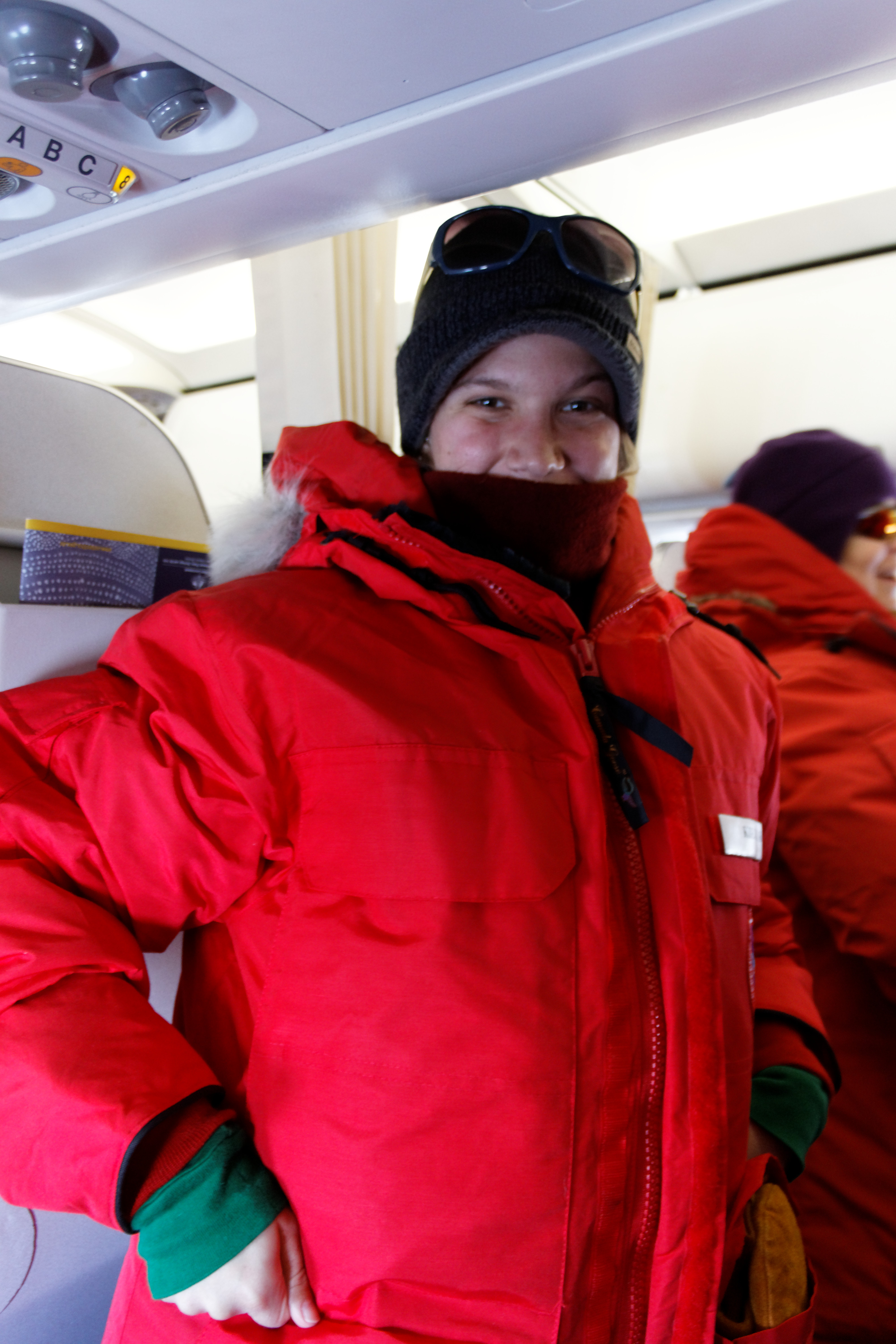
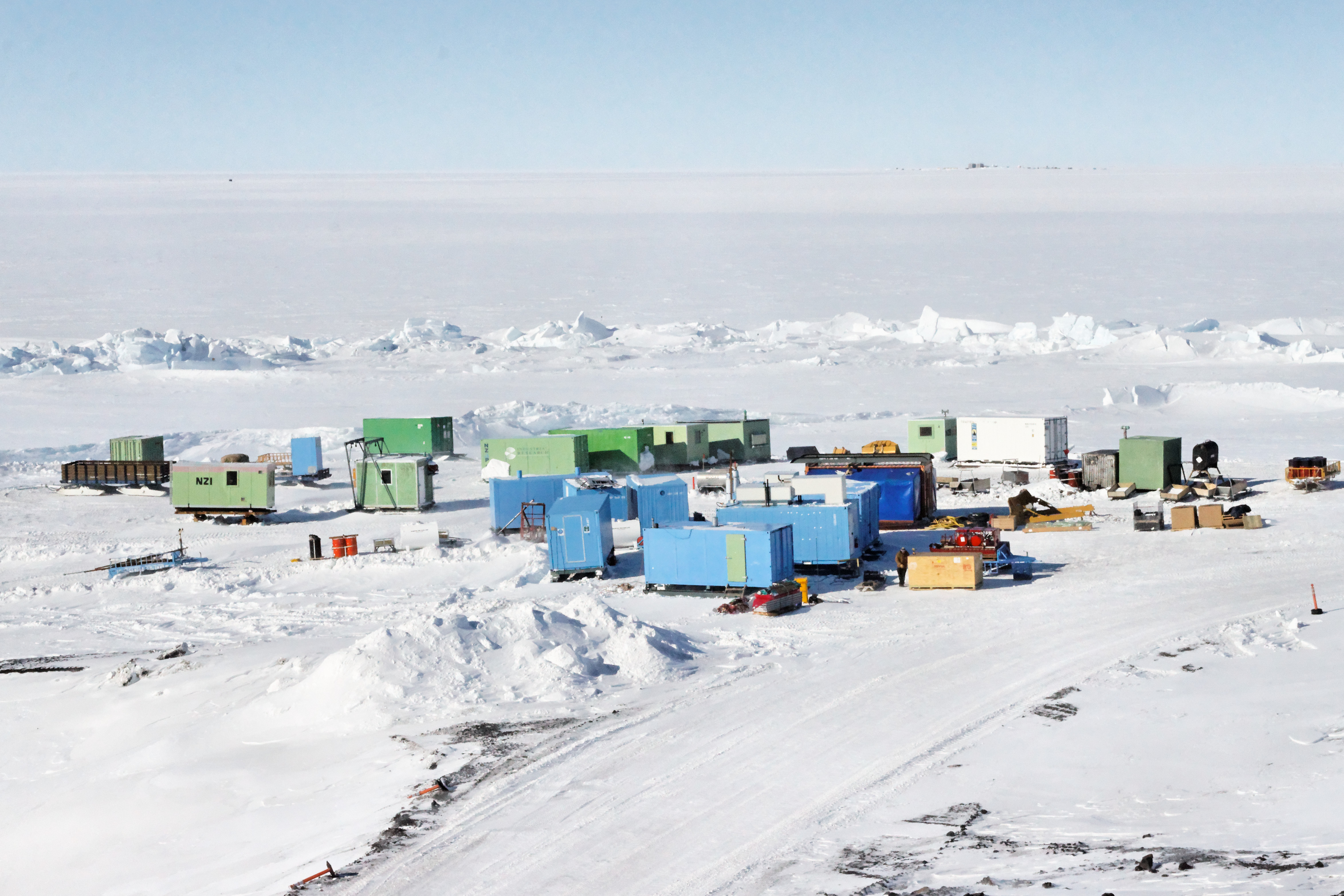
A quick update

So, I do want to write a little more soon about the end of the South Pole season and what we’ve been up to in Christchurch (not much, really), but we have both made it back to New Zealand and some of our friends from Pole have rented a house in Wanaka–we’ll be leaving Christchurch tomorrow morning and camping for a night before meeting up with them.

A few things we’ve been working on in the past few days:

Our trip itinerary. We’re leaving New Zealand March 4th-ish for South Africa, and heading later to Victoria Falls, Tanzania and Zanzibar, Mauritius, Turkey and perhaps a bit of overland travel through Eastern Europe, depending on our energy level and ability to be strict about our budget before that point. This trip would have us landing in Minneapolis in early May. I will post our full itinerary with dates as soon as the tickets go through.

Packing. We really want to do a better job packing this year and we’re bringing our tent and a few other odds and ends for camping that we didn’t have last year. We both have a smallish backpack–mine is a 35Litre framepack and Daniel has a normal backpack–and a messenger bag. We’ve managed to fit the tent inside the backpacks and left the sidebags mostly empty for daytrips and food.

Our “tans”. I got in on Monday night, and we went to Sumner beach the next day (amazingly beautiful, by the way) and promptly got incredibly sunburned. It is now Friday and our skin is starting to fall off.

I’ll write more soon. Take care!

Welcome to the South Pole

From McMurdo, we flew to South Pole Station in a C-130 military plane, a deep gray monster machine, passengers lined up along the walls stuffed in in our ECW gear, slouched on the industrial webbing cot-like seats. Our carry on luggage, mostly in orange issue duffel bags, was lined up neatly in the center of the plane and strapped down tight for stability; our checked luggage, which we had parted with at Bag Drag the night before our first of many scheduled and canceled flights to Pole, was palletized and loaded into the back of the plane, right where we could see it. Because of the noise from the engines, everyone wore earplugs, making conversation strained. Most of us read or slept, people sinking into their parkas and nearly disappearing for a few hours.

We landed smoothly, about three and a half hours later, some thousand miles South and nine thousand feet higher, greeted by a bitterly cold, dry wind and a bundled up welcoming committee standing off to the side of the ski-way; all you could see was red parkas, white snow, metallic blue-gray buildings, sky-blue sky. Many of our managers were there to meet us, including mine, although I had to be reintroduced to him later that evening since both of our faces were entirely obscured by polar fleece and snow goggles. We carried our bags across the ski-way and towards Destination Alpha, essentially the well-dressed front door to the station. We were heaving and breathing hard by the time we reached the stairs leading up to the station (which is elevated to prevent it from being buried in snow drifts) due to our added gear weight and the altitude. The galley had saved us dinner, and after a brief orientation we ate, explored the building that would be our home for the next four months, and made the first quarter mile trek to Summer Camp.

Summer Camp is a grouping of about a dozen Jamesways on a slightly elevated ice platform, olive drab war issue tents about twelve feet tall and forty feet deep, each with plywood partitions between the little rooms, and plywood or curtain doors separating the twelve beds from the very dark hallway through the center. Daniel and I got rooms 1 and 3 in the same Jamesway, which we were relieved to discover is a double—not only do we get to share a room, but we get twice as much space. The room came with a plywood wall and a door with a latch, two tall shelves, two twin mattresses with twin sheet sets, a princess-castle-frog themed bolt of fabric for decoration, a string Christmas lights, a carpet patched together of sample sized rectangles, a crusty homemade snow globe that appears to depict the Pole and station, and, unfortunately, a previous resident’s plastic water bottle labeled “pee.” Some people who live in Summer Camp (and some very, very lazy souls who live on station) use jars to pee in so that they don’t have to leave their rooms at night; I guess this makes sense as you have to go outside and face the cold and the bright sun to get to the Summer Camp bathrooms, but it’s not a practice we partake in. It’s really not that bad going outside, especially now that we’re acclimated to the temperature; I can go outside in just long underwear, boots and sunglasses without getting too cold.

Within the first few days of arrival, we experienced the full gamut of weather. From -40 degrees Fahrenheit with a -60 windchill when we arrived, the temperature dropped to -50 with a -80 windchill, and within a few days an unusual storm blew in, warming the air to -11 but blasting us with 30 knot winds for nearly a week and covering the sun with a heavy haze of blowing ice crystals. This made Summer Camp invisible from the station, transformed the walk to the station into an aerobic fight every morning, and prevented all incoming and outgoing flights, about 6 a day, leaving Pole winterovers stranded here and incoming Polies at McMurdo Station. Part of my work before the storm was to help install lines of red flags from the station to some of the remote science facilities and to Summer Camp; we also ran guide ropes from the station to Summer Camp to prevent people from losing their way.

The drifts from the storm were enormous, and all old ice crystals rather than fresh snow. One morning I spent four hours shoveling out the inside of the big bay doors at the Vehicle Maintenance Facility (where I spend most of my time), dense snow drifts up to my armpits. The outside of the door was considerably worse, with fifteen foot drifts blocking some doorways. The plows can only get so close to the building, leaving some intense shoveling for the GAs (General Assistants—that’s me). The heavy vehicle operators plowed for days, clearing out the “bowl” that the VMF is nestled inside of; its metal arch encasing used to be on top of the ice years ago when it was built, but has been slowly buried and now has a somewhat cavernous entryway. The tractors waltzed around each other, one pulling backwards into the bay doors of the VMF while another slid up alongside the front side of the building, pushing snow into its pathway, then backing up while the first vehicle pushed the pile up the bowl hill to sit on the “ground” level until it could be taken care of at a later date.

This post is photoless because we have been having some major satellite failures and I have very little access to internet. I hope to get some pictures up soon.

Antarctica, the Beautiful

I celebrated my 25th birthday differently than any other year, waking up at 5am, slightly jetlagged, to catch a pre-arranged shuttle to the Christchurch Clothing Distribution Center. All of the people in my training group, plumbers, electricians, bakers, power plant operators, IT staff and manual laborers such as myself, were presented with two worn orange duffel bags filled with loaner extreme cold weather (ECW) gear, washed and folded. Our project for the day was to try on each item and make sure, for comfort and safety, that everything fit well.

(Click on images to enlarge!)

Inside the bag was a pair of off-white rubber bunny boots, awkward but very insulated Cold War Era footwear so named for their rabbit’s foot-esque appearance; a heavy red parka with a faux fur-lined hood; Carhartt overalls and work jacket; slippery windpants; multiple pairs of expedition-weight long underwear; polar fleece pants and jacket; fluffy gray tube socks; balaclava, fleece hat and neck gaiter; huge leather bearpaw mittens; work gloves, and a few other odds and ends. Once it was all tried on and any misfits exchanged for different sizes, we repacked everything, leaving it in the Center until our morning of deployment.

Daniel in bunny boots

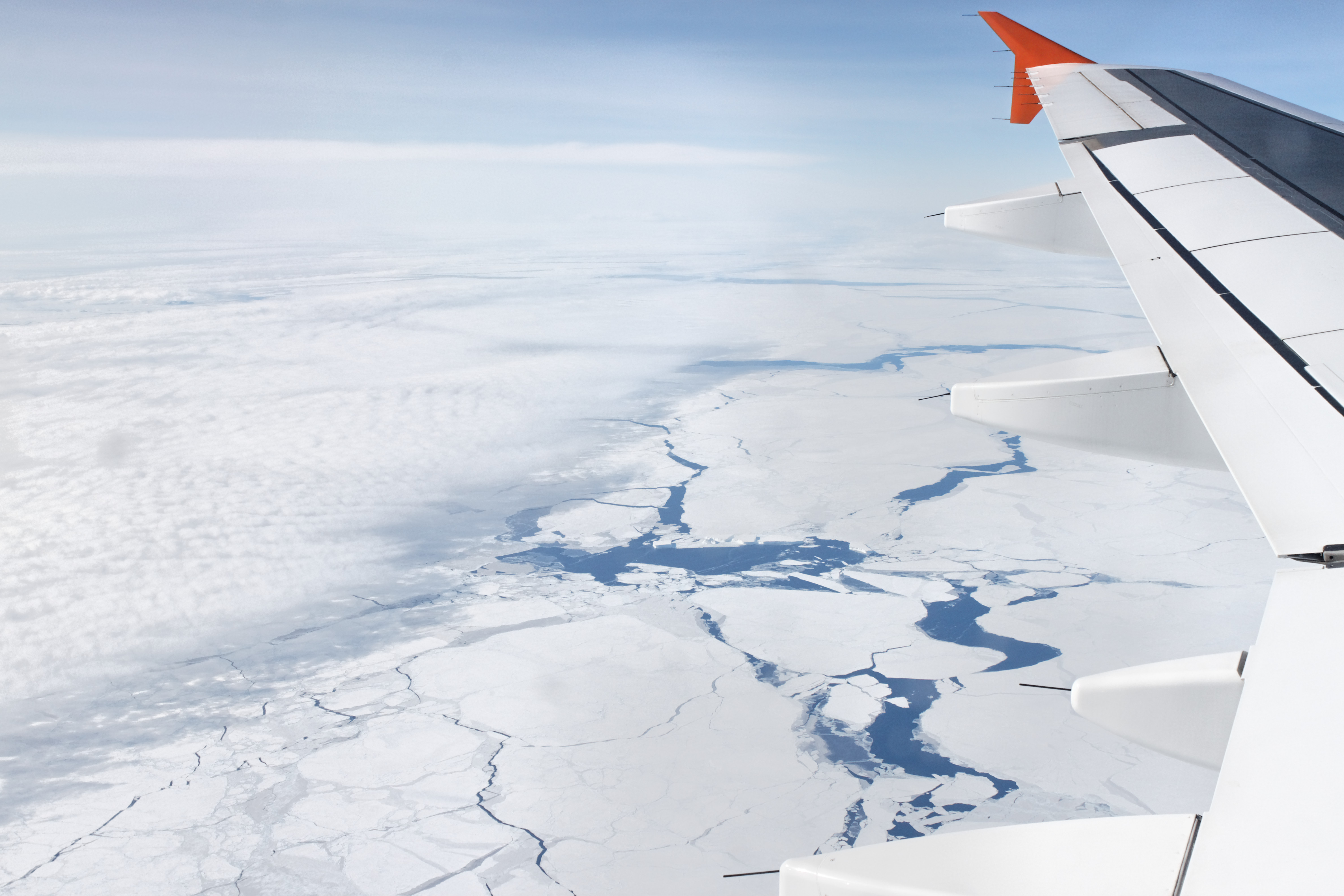
We flew to the continent in a commercial airliner, which afforded us an amazing view on arrival, veins of cerulean and navy blue ocean, striking through cracks in the sea-ice. The stewardesses transitioned from their skirted, nylon’d and heeled uniforms, to soft fleece pants, to black overall snowpants and chunky Sorel boots.

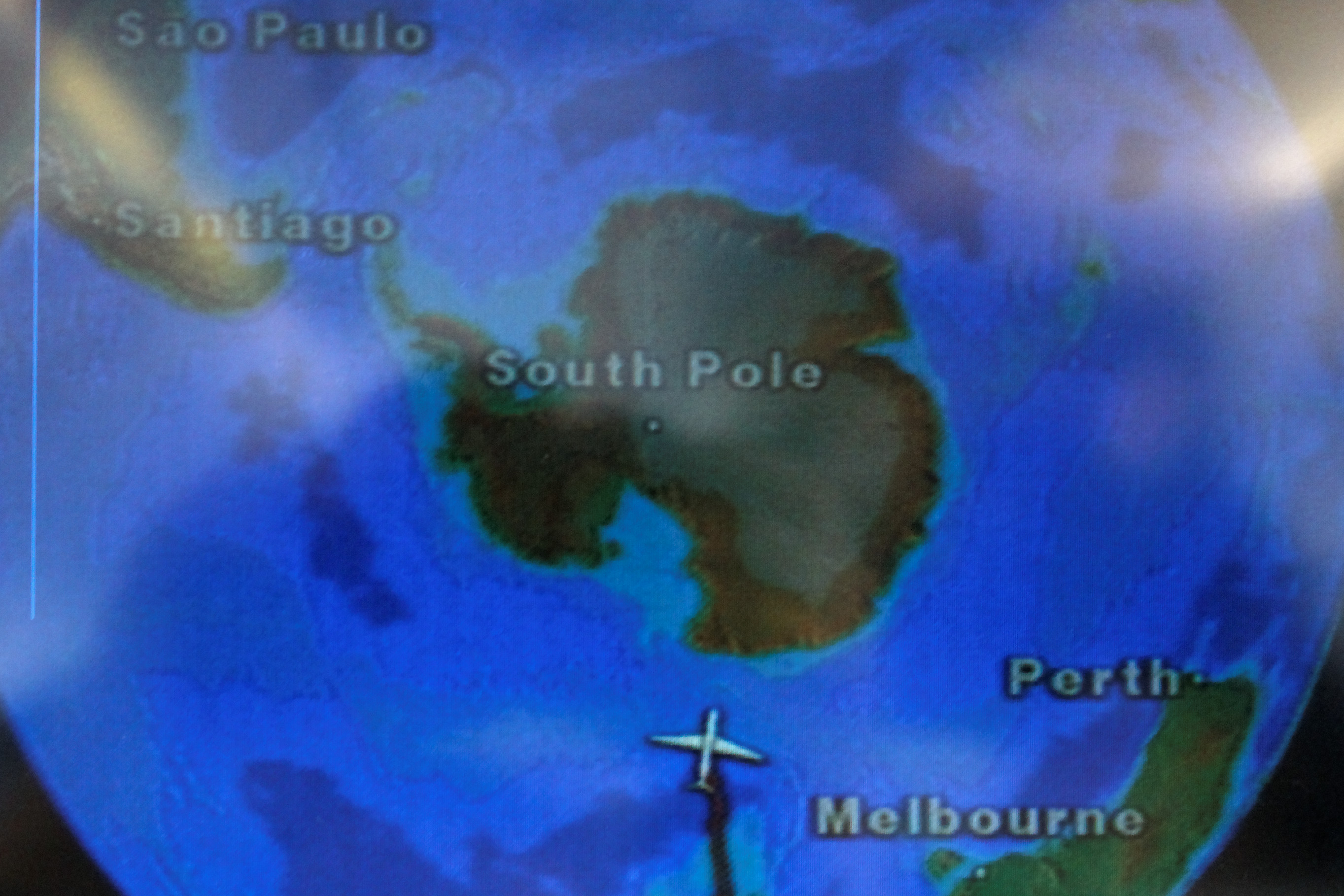
Flight path screen
Sea Ice and Clouds
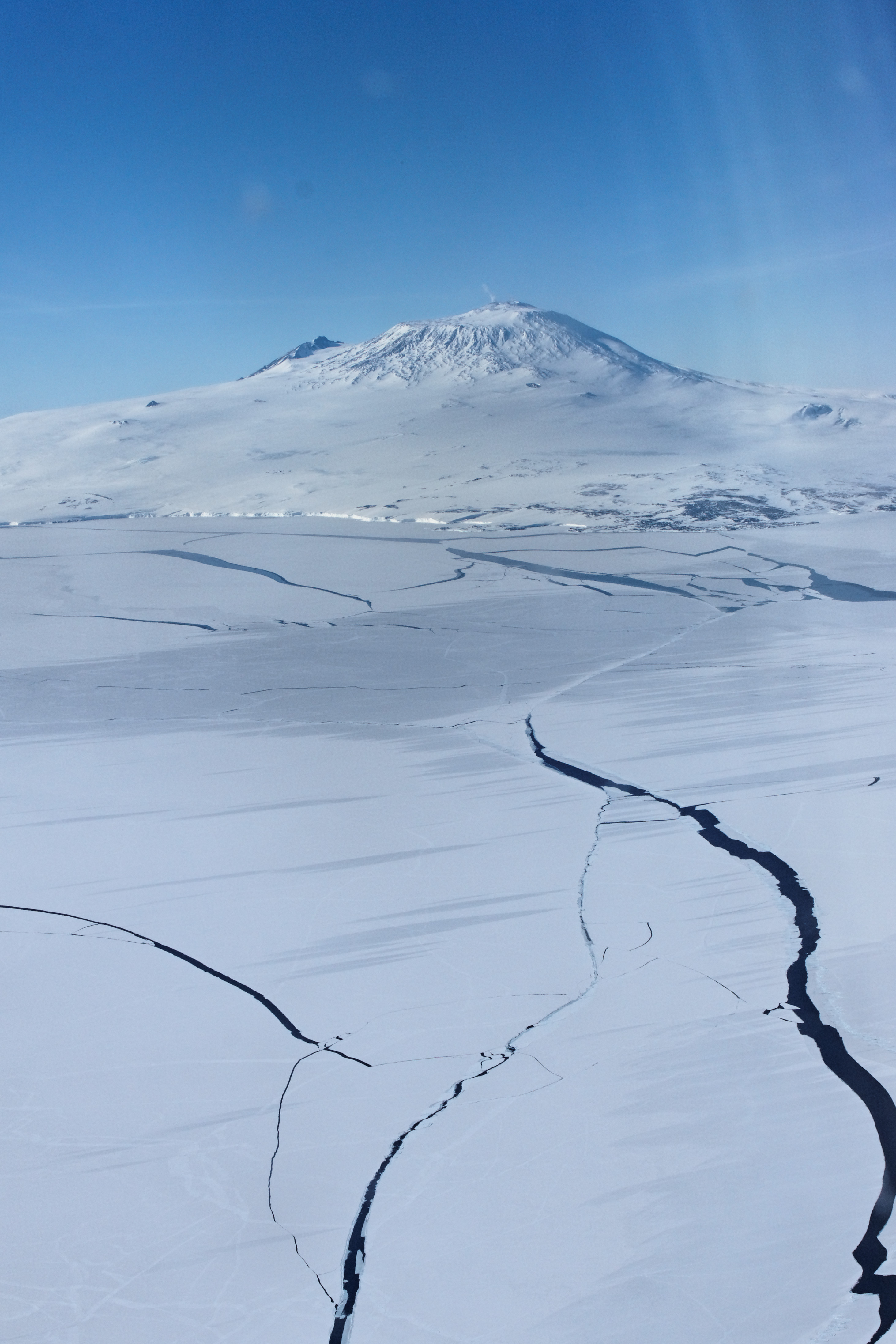
Mount Erebus
A seat with a view

All of us, craning towards the windows to see the ice, the land, steaming Mount Erebus—like giddy kids on a school bus, sitting backwards in our seats, climbing over each others’ laps to see outside. We landed on the ice runway, McMurdo in the distance like a construction town during a Minnesota winter, dirt churned up in the snow.


Daniel looking out the plane window
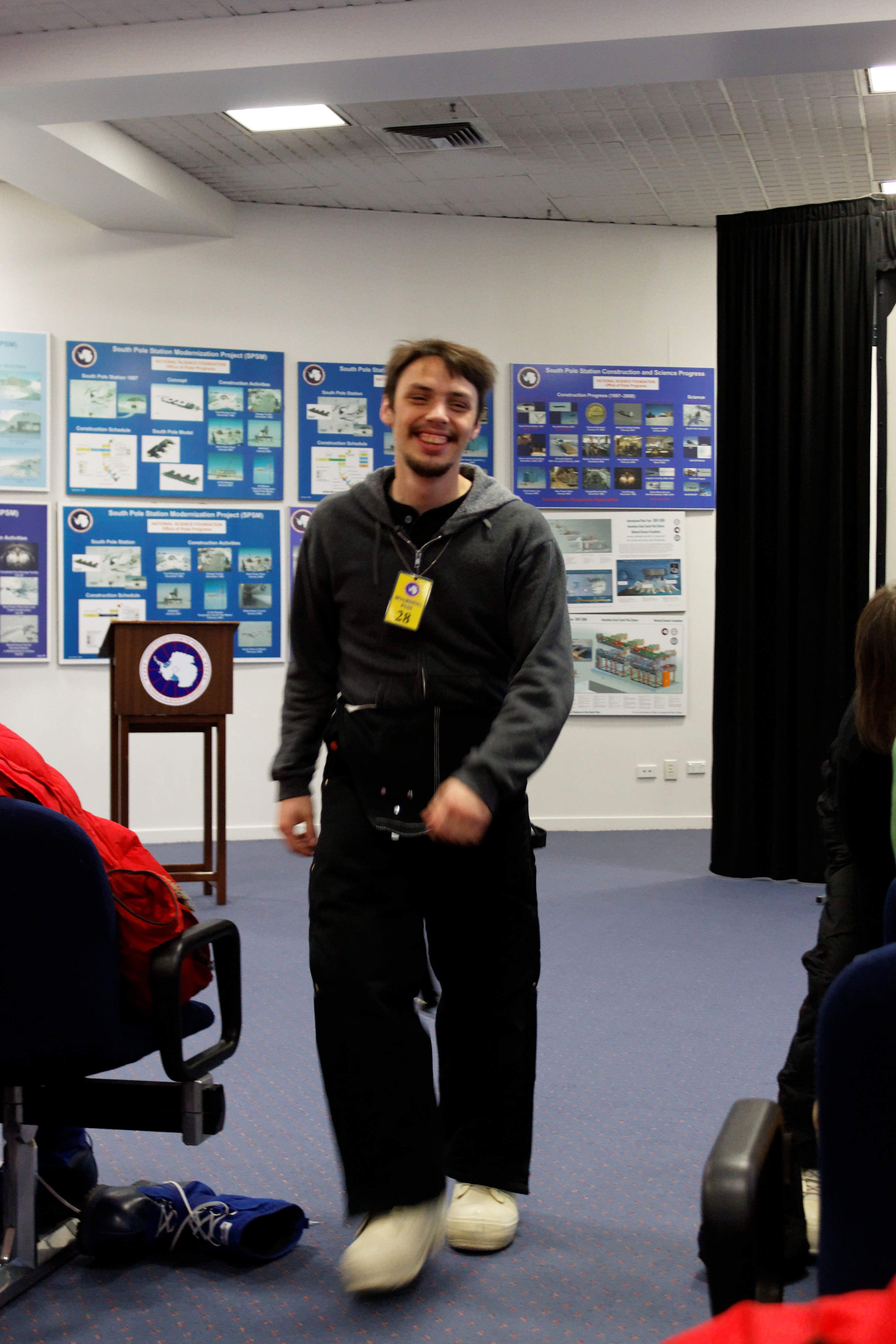
Kiell getting ready to disembark
Ivan the Terra Bus, our ride into McMurdo

We walked to New Zealand’s Scott Base one morning, about a mile away. As we crested the ridge dividing the stations, the wind picked up, stinging our faces in the gaps between our balaclavas and snow goggles, making me feel like a kite in my huge jacket. Walking down the hill toward the frozen shoreline, textured by pressure ridges where the ice crushes up against the earth and vaults up a bit, the wind blew snow past us, slithering like smoke on the road. An American mechanic was kind enough to give us a ride back against the headwinds, all ten or so of us piled in the bed of the pickup like red marshmallows. I took my hands out to take a photo, and by the end of that minute, my bones were aching and my hands were so stiff I nearly lost my mittens to the gust as I tried to put them back on.


Kiwi Scott Base

We climbed steep Ob Hill, spectacularly overlooking the town and the ice runway, struggling up in our ECW gear, crab walking and sledding down on our bottoms in the parts that were too slippery to walk.


View of McMurdo from Ob Hill
Russell the Electrician and Kiell on Ob Hill, with McMurdo town in the background (about 10 pm)


Kiell sliding back down

Walking back from Hotel California, home to the infamous 24 bunk male dorm room not-so-affectionately nicknamed “Man Camp,” near midnight— the sun glaring brightly, everything was silent but the wind, straight line and brutal, playing with power lines and handrails, sounding a bit like a boatyard in a storm. People struggled by with their parkas cinched up around their faces. I drank hot tea in the galley, getting ready to fly to the Pole in the morning.


This post is dedicated to the four French workers who died in a helicopter crash in Antarctica the day we arrived on the continent. My heart goes out to their families.

Summer Scenes

We camped in the middle of August with Val and Peter, leaving Minneapolis in the middle of a heavy rainstorm, feeling apprehensive about the bad weather. When we got to the park a few hours later, the weather had turned, and we hiked in to the site to set up camp and help out with dinner. There was just enough time walk a bit further down the path to a little dock for a private sunset swim. Hiking the next morning to Lake Maria, we sunned on the dock, swimming, having lunch in our wet bathing suits—cheese, bread, stone ground mustard, apples. We picked a lunchbox full of fresh blackberries from the bramble behind the ranger’s office, our arms and legs stinging from thorny branches, our lips stained purple.

I flew to Atlanta to visit my mom, spending ten hours in the car with her driving to Florida and feeling really lucky to have her. Catching up with my grandparents over cocktails and 5pm “salties,” having really good, really real conversations. Mom and I tanned through the clouds by the pool, swimming in the rain when it started. Doing one or two (or six) last cannonballs before going in for dinner, with her laughing and running up to the pool, hugging her knees and jumping in, her hair so straight when wet.

Daniel and I drove out west and back for two weeks, through torrential prairie downpours the first night, lightning eventually illuminating the hills forming out of the North Dakota flatlands and making camping impossible. The red, brown, sage and black striated earth of Montana made us regret only driving through and we want to plan a return trip in the future.

We stayed with a friend of Daniel’s from South Pole at the permaculture farm he lives on on Orcas Island, a few hours north of Seattle by ferry. He let us sleep in his quarters, a double layer canvas tent lit with a smoky oil lantern, drink his home brewed beer, and make pancakes with fruit we picked on our walk and eggs taken straight from the chicken coop. The three of us hiked down a mountain on the island on a mossy-quiet, switchback-riddled path, short but steep. We stopped at a pair of lakes nestled on the side of the mountain, skinny dipping off of a rock ledge into the breathtakingly cold water; dark, clear and still, save for us gasping at the chill. The sunset that night was purple-orange, one of the most beautiful we have ever seen.

In Portland, we stayed a night with artist friends we met in Beijing earlier this year, comparing travel notes and catching up, eating pad thai and wandering around the funkier-than-thou jewelry shop openings, microbrew pubs, secondhand clothes shops and record stores. Later in the week we went further west to see good family friends, driving out to Tillamook and following a gravel path to their super-secret beach spot and making a huge driftwood fire in the sand. We watched riders on horseback gallop down the waterside with Mabel the Oceandog loyal at our feet.


Grasshopper at Craters of the Moon National Preserve, Idaho


Dogs in an RV


Back east, we drove through the snowy looking sands of the Great Salt Lake Desert at sunset, coming all of a sudden through a twisty mountain pass and confronting a vast, unreal flatness. Through Colorado on Highway 14, our prairie driving mindset was again shattered by nighttime mountain driving, foxes and moose crossing our path, almost less scary not being able to see off the precipice on the really sharp curves. We drove and drove that same night, unsuccessfully looking for a campsite in Wyoming and Nebraska and gave up in the wee hours of the morning, drinking the best-ever warm beer and falling asleep on the nearly exposed mattress springs of a roadside motel, late night TV on in the background.


Carhenge, Alliance, Nebraska


On our last marathon day of driving, Daniel read aloud to me from a book he bought for us as I drove, and we stopped midday for overcooked bison burgers and bitter diner coffee, the South Dakota sun warming us through the window.

In September we camped with close Danebod friends by the Temperance River gorge, clambering down slippery log stairways late at night to feel the cold Superior wind on our faces, lying on our backs on the bridge over the river, listening to the crashing water and counting the north shore stars. We hiked during the day across the red lava rock flows, pocked and studded with pale green lichen and butting up against the insanely blue water. I listened to Daniel talk about this cove or that rock formation, fond memories from his childhood, realizing with a sorrowful but excited shock how soon we’d be leaving.

Pre-Deployment Thoughts

This particular brand of anticipation is different than I had expected when I first considered applying for a job with the Antarctic program. It’s a blend of excitement, ordinariness and relief—that I got a job at the South Pole, that I don’t have to spend another winter without my partner, that Daniel and I will be working at the same station. It seems so routine and normalized after his season that one would be going to Antarctica for a job that sometimes I forget about what an incredible, unique thing it really is.

This July, I got a call from the manager who interviewed and hired me as an alternate for the General Assistant position for last year’s season, asking me a few questions, making sure I was still interested, and letting me know that he would hold a place for me if my other interviews didn’t pan out. A few weeks later, I got a quiet offer letter by email, which I signed and faxed back. It seemed so anticlimactic after all the stress, excitement and anguish of the application process in early 2009—but easy enough that it feels a little bit like I didn’t work my ass off for it, which I did. And now that deployment is here, only days away, it feels like it isn’t happening, which it is. And I can’t wait.

Madrid, Spain and Fez, Morocco (May 2010)

Daniel and I took the easy, clean and cheap Madrid Metro straight from the airport to the Sol station. We met up with our friend Edward, just in from Minnesota that morning, on the way up to the hostel where he had already made a reservation for the three of us. We spent the afternoon walking around the web of streets, winding out from the Plaza del Sol like spokes on a wheel in the El Centro district–populated by, in addition to the Spaniards and international tourists, monuments of soldiers on horses, angels overlooking the city, stately lions, naked goddess women slaying crustacean enemies, and Colonial style white marble-like buildings overlooking cobblestone plazas. Street performers scatter about the streets, string quartets and human statues (some of whom were deceptively still, others quite wiggly and not very statuelike), life size toy soldiers painted green to the eyelashes, bullfighters, human gargoyles, solitary cellists, and people in random costumes not doing anything (e.g., wearing a gorilla suit and having a cigarette, hoping for tips).

The city is quite lively, but not too noisy, due to the fact that most car traffic is restricted to a few main thouroughfares. The wind was strong and blustery, and the luminous-clouds-on-cerulean-sky contrast so intense, like your vision just got better. The city has a lot of nice parks, including the central Parque el Retiro with vast green spaces (mostly looking like you’re not allowed to sit on them) and a funny little station where pensioner Madrileños can sit on benches with stationary bike pedals planted in the red gravel at their feet and get in their daily exercize. At the heart of El Retiro is the Estanque, a smallish man-made lake with square cement shores and people on rented boats rowing away, teenagers splashing each other with their oars. The city itself doesn’t have a main body of water to it, as Ted pointed out, and it has a feeling like something is missing–there are certain parts of town where we would look out over a hill and expect to see a river or lake, but be greeted with a street instead. We ate picnics in the gardens of the Royal Palace, feeding bits of crusty bread, granny Smith apples and soft, bland queso fresco (fresh cheese) to those sparrows brave enough to approach us.

Madrid unfortunately doesn’t have as many free museums as London–at least, we didn’t know about them– but a lot of the more famous museums have a few hours a week where you can save your nine Euros and get in for free. We saw the Reina Sofia art museum during it’s free hours, which from the outside is a massive modern glass structure that could be a hospital with a lot of money and a creative architect, and from the inside a pleasant juxtaposition of clean windows, black glossy plexiglass and pocked, ancient looking stone floors and moulding. Its collection is impressive and very interesting; we liked the melamine board installation painted red to look like bricks, a clear plastic tube sculpture filled with lights and water looking like an aquatic roadmap on the floor, and a whole room of somber WWII-era ink drawings. The museum houses Picasso’s black and white masterpiece Guernica, flanked by security guards and art-viewers trying to take a good photo from outside the door of the gallery salon. In a glass case nearby are the studies that Picasso created in the making of the huge painting, arguably more interesting than the piece itself. We toured Museo del Prado, a staggeringly large collection of paintings and statues more classical and idealistic than the Reina Sofia’s modern collection, including Velazquez’ Las Meninas, considered by some art scholars to be the best painting in the world. An exciting anomaly in the museum is the room filled with Goya’s Pinturas Negras (Black Paintings), dark and morbid and fascinating.

Four days after arriving, we took the Metro back to the airport and boarded a flight to Morrocco. We arrived in the Fez airport in the afternoon, greeted on the tarmac by palm trees, a clear blue sky, and a mess of people clearing immigration, overwhelming the tiny airport’s staff. We didn’t want to take a taxi and had read that you could take bus 16 to the Medina, where we planned to stay, and walked out to the curb on the side of the road where we hoped the bus stopped, as there weren’t any signs. There was a man with a shaved head, a cream colored scarf and a velour suitjacket slung over his suitcase sitting at the roadside, and we shyly asked him in highschool French if this was the bus stop. He responded in English, and proceeded to give us advice on exactly how to take the bus to the Medina, chatted with Ted for the whole busride and even got off the bus with us at our stop to indicate where we should walk, and that we should turn left at the fountain plaza.

We ended up getting lost anyway, but were helped by numerous people along the way, including two young women and a little girl in full head coverings and floor length robes, policemen who gave me incredibly long and detailed directions in French, complete with hand gestures (of which I understood the words left, red and round), and a man who stopped us on a street to tell us that the road we were walking on didn’t go anywhere. I have to admit, from some of the other experiences we’ve had with advice on the road, my guard was raised and I was a little worried about someone trying to scam us or try and get us to stay somewhere we didn’t want to stay. My worries were totally unfounded though–people were genuine and just generally helpful.

We finally made it to the Medina’s Bab Boujeloud gate, which is cradled by tall limestone walls with hollow windows, punctuated at strategic intervals by minarets. We spent the next few days exploring. The walkways are narrow and winding, with enough curves and switchbacks to be generally counterintuitive, but still fairly relaxing to walk in– it’s actually the largest car-free urban zone in the world. I have heard Fez’ Medina compared to Jerusalem in the way it looks, and it certainly did feel more Middle Eastern than African. Women wore clothing in varying coverage levels, from some women with long shirtdresses but no head coverings to women covered head to toe, including black gloves and a veil.

Wandering the markets of the medina is a pretty intense sensory experience. We were surrounded from every angle by vendors with their fares laid out on the cobblestone walkways–zucchini, cabbage, onions, lemons, carrots, avocados, melons, strawberries, eggplants, oh my. Stalls with dried figs and dates exploding out of burlap sacks, green and black and kalamata olives, pickles, cashews, sunflower seeds, dry grains and beans and pasta. Butchers with huge cuts of meat on display in the open air, a grotesque camel head hanging by a ruff of skin on it’s neck, tongue hanging out, flesh and spine exposed from behind, live chickens and pigeons tied with yarn to their cages, squawking and screeching and generally making a ruckus. Brightly colored leather products everywhere–shoes, bags, pillows for the floor. Stalls with shampoo, soap, instant coffee, water, soda. Jewelry–earrings, ornate bracelets, giant necklaces, rings with colorful stones, even an ivory pistol. Everything apart from the butcher shops smells of ripe fruit, cumin, sandalwood, thyme, fresh mint, donkeys, rose petals and tanned leather. People all around speaking French and velvety Arabic, bits of Spanish and English peppered in. And the cats! There are cats and kittens everywhere, slinking in the streets, camped out on pallets of produce, baskets of garlic, velour pillows originally intended to be jewelry displays, begging for steak tagine and couscous at the tables of the numerous outdoor restaurants. Cats screamed and mewled outside our guesthouse window, prowling the overlapping corrugated metal roofs below our room. A rooster nearby had a broken internal clock, and despite its earnest and persistent cock-a-doodle-dooing attempts, couldn’t make the sun come up at 2:30 in the morning. On one of our last nights in Fez, I woke up at 4:30 am to the eerie cacaphony of the Muslim call to prayer, interspersed with the rooster crowing, dogs baying, and the occasional honk of a truck.

I ended up getting stuck inside floored for three days with food poisoning (I think it was the chicken pastilla, a savory pastry dusted with powdered sugar and cinnamon–maybe it was made from one of the forlorn pigeons in the market). Mohammed, the proprietor who worked at Pension el-Kasbah every other day, tried to help me. He checked in on me while I was in our room and face-down in the toilet, advising that I only drink bottled mineral water (um, yes), and even went out to the market for me, coming back with a cone of graphing paper filled with one dirham worth of cumin (approximately the size of one of those green-topped spice jars at eleven cents US). He explained that it was Arabic medicine, which when swallowed dry by the handful and chased with water is apparently supposed to make tummies better (he taught by example, tossing back a handful himself). I was sick enough that it only helped for about an hour and the result was unearthly green when I saw it again.

On the third day I was sick, Mohammed brought me to his home where he lived with his wife, mother, sister, and neices, only a 2 or 3 minute walk from the pension. Through a four foot doorway and up a winding set of stone stairs, we entered a tiny apartment, with a dining room full of a low table covered with a plastic tablecloth, a kitchen, and a lounge with a TV off to the right, which someone thoughtfully changed to an English-language crime show for me. I sat with the littlest girl, maybe 3 or 4 years old, with soft curly hair, milky skin, intense big brown eyes and rotten baby teeth. She was brave and friendly, kissing my hand, climbing on the couch next to me, trying to feed me blobs of orange marmelade from her sticky little fingers (I figured, what the hell, I was taking incredibly strong antibiotics anyhow). Mohammed had gone back to the guesthouse and I couldn’t communicate very well with the women–the mother only spoke Arabic and I still couldn’t speak French so I couldn’t understand most of the lively conversation flying back and forth across the table–but the little girl spoke the universal language of Tickle (she started it). For dinner, they fed me corn bread and another, thinly layered bread, olives, marmelade, olive oil and soft cheese, with sweet milk tea and coffee. We ate on the table without plates, them urging me, “Mangez, mangez!” (Eat, eat!) I still couldn’t eat very much, but it was nice to be cared for like that. A little bit of on-the-road, substitute mom time.

We saw our friend from the bus, whose name was Abdel, a few more times. He invited us to contact him if we ever go to Paris, where he lives, and gave us his email address. On the bus on the first day, Abdel told us that while Paris was one of the most beautiful places he had ever been, Fez (his hometown) was the friendliest. And I have to agree with him– the people in Fez were overwhelmingly kind and definitely went out of their way to help us, total strangers. Early on, after we bartered the price of our room down to an affordable price, Mohammed had agreed to the rate on the condition that we give him a souvenir from America. On our last day I shot a photo of him and a few of his family members, and left him with a pen from Jorgensen Financial Services in Tyler, Minnesota before leaving for the airport.

We got back into Spain for a few more days, and got to experience the trademark Madrid bedtime: never. The country had won a world cup finals game (this was in early May), and feisty fútbol fans roared in the streets until about 10 the next morning. We also went to a free midnight showing of a Monet exhibit, which was a perfect way to end the European/North African leg of our trip. The next morning we saw Ted off to Minneapolis and caught our own flight to Lima.

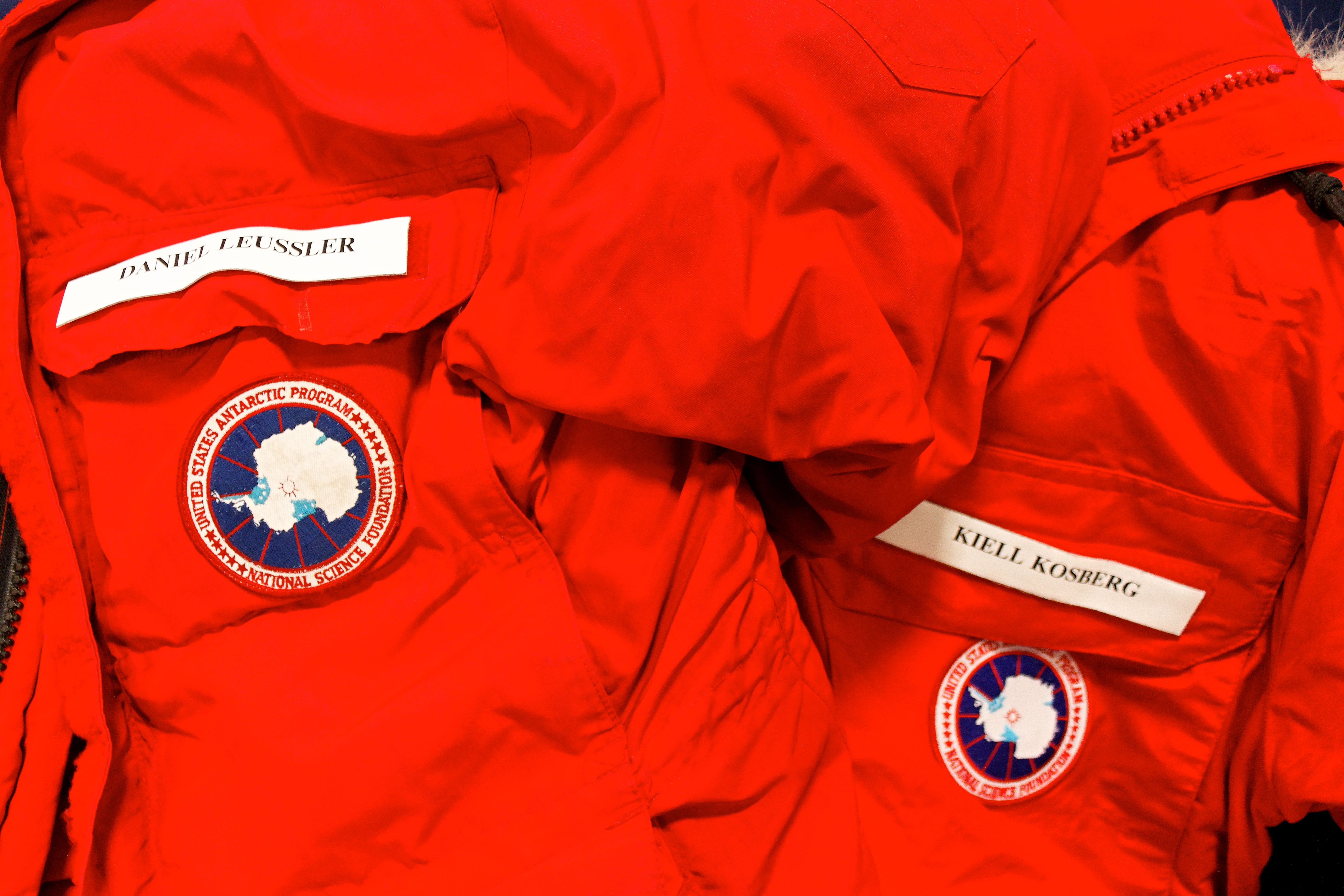
London and Stansted, England and Oslo, Norway (April 2010)

London overwhelmed our noses in a frenzy of scents: cool, clean air, pink and white flower trees blooming in grassy parks, everything moist from spring rains. We took the Tube’s Picadilly line to King’s Cross, and after making our hostel beds took a walk through the neighborhood, visiting community gardens with painted plywood cutouts of children and a playground (something we hadn’t seen for a long time, and it seemed kind of strange). Kebab shops and pubs lined the street, old red brick buildings, or painted black and white wooden facades facing statues in the road, red double decker bendy buses barreling past.

The most striking thing about being in London was how easy it was to be there. Everyone spoke English, we could read the signs. It was shockingly clean. No one really needed anything from us, for us to buy something from them–our wealth was insignificant and relatively small. No one stared at us. No one approached us upon leaving the airport or hostel, offering a rickshaw or travel agency services. We were blissfully ignored.

We took a walking tour of London, checking out the sights that everyone sees: Buckingham Palace, mounted guards, a glimpse of 10 Downing Street (where Gordon Brown resided when we saw it but not at the moment I write this post), Green Park, and the London Marathon which happened to be the day after we arrived. While it was nice to blend in and pretend to not be a tourist for a while, it was also a relief to take a guided tour and see sights without having to research or plan–something we hadn’t really done at all yet. We even learned a few things! For example, did you know that the Queen owns a gold-plated Nintendo Wii, and that her favorite game is Wii Bowling?

Since money was (is) getting pretty tight, we walked all over the center of London instead of taking the subway, and ate picnics from Tesco grocery–baguettes with feta cheese and crisp apples, milk from a tiny jug. We gorged ourselves on art, visiting the National Gallery, the Portrait Gallery, the Tate Modern. We even splurged and saw a live performance of Priscilla: Queen of the Desert, the musical (about two drag queens and a male-to-female transwoman crossing the Australian desert in a bus); while the dialog wasn’t quite as punchy as the movie, the costumes and dance routines were pretty fantastic.

On the day we were flying to Oslo, we checked out of our hostel and walked about two hours to the Victoria station across the center of London. We caught a bus to the Stansted Airport, about an hour out of the city, got there early and waited around until we could check in, checked in and cleared the passport/visa check counter, and began going through security to wait at our gate when the security officer did a double take of our boarding passes and cheerily said, “oh, you’re flying tomorrow!” I started to panic before assessing our options–it was incredibly frustrating because I’ve had a few major, moneysucking, screwups and roadblocks with air travel. I nearly missed my flight out of LA in February after being forced to buy a ticket on the spot to leave New Zealand before being allowed to board the flight, then I bought a ticket from Christchurch to Auckland to see Daniel (not realizing I had inverted the cities until I checked in at the Auckland airport). Now this, only half an hour after I had started writing the India blog post which started with “After more than two months of traveling, we think we’re getting a bit better at it.” Crap. Daniel kept me calm and we decided to stay in Stansted for the night. We walked two more hours to the center of town.

Stansted itself was actually very pleasant, beautiful and quaint with cobblestone roads and little brick homes surrounded by blossoming lilacs and various flower trees which looked like they were covered in a blanket of floral snow. And the weather was fantastic. It really felt like England, moreso than London did. We stayed in a hotel built into an old house, with sea-blue walls and starched white sheets, and wifi that worked if you laid on the floor with the laptop right up by the door. We had a picnic the next day on a lovely little public footpath (which we found purely by accident) nestled between a creek and the train tracks, which felt surprisingly like being at home near the Minnehaha creek. We were definitely both starting to feel a little homesick.

We flew into Oslo/Rygge, successfully this time, greeted by a cold rain and incredibly low cloud cover on the tarmac. We took the hourlong bus into Oslo, arriving late (in retrospect, Ryanair was not the right choice for this trip, since all these bus trips pretty much negated any cash we’d saved on ticket prices). My dad’s cousin Karen graciously picked us up at the bus terminal, took us home and fed us open-face sandwiches on hearty bread before we went to sleep.

In the morning, we had breakfast with HansErik and Christina (my dad’s dad’s brother and his wife) in their apartment, open with warm wood floors and a nice book collection. They fed us bacon and eggs, hot black coffee, wholegrain bread, grapefruit juice, and anchovies (which we passed on). Through a little wooded area we walked to the bus stop and rode to the center of Oslo and they showed us the city. We walked along the edge of the fjord, where chilly-looking fishermen were selling their catches from the decks of their boats, while kids skateboarded in the plaza, and a statue of FD Roosevelt overlooked the waterfront (we learned that Norway’s royal family lived in the White House during WWII, and that FDR upheld Norway as an example of how the US could improve). Nearby was a castle that is now unused except for visiting purposes, which was once surrounded by a moat that has now been converted into a street which is full of electric cars. Oslo, like London, is much more steeped in war history than you’d ever see in the US, for obvious reasons, in both public and private ways. HansErik took us to the red wooden house he and Farfar grew up in, pointing out the cellar door where they evacuated to when the war started, and told us how the older neighbor boys who lived downstairs rode their bikes to check out the nearby site where the fighting was happening.

The city itself was pretty, clean and surprisingly walkable, with modern and historical buildings mixed up together, hills with fashionable shops, populated by people looking effortlessly well put together and street musicians playing accordion and hammered dulcimer. We got to see buildings designed by HansErik, who was an architect, and by his daughter Alessandra(Sandra) and her husband Lars, who practice the same profession–it was kind of neat to feel related to the city like that. We had Indian food for dinner with HansErik, Christina, Sandra, Lars and their son Gustav, and returned to the young family’s apartment after dinner. It was high-ceilinged with a modern, open layout, warm yellow wood floors, and a low table with Moroccan floor cushions. Daniel played on the computer with Lars and Gustav while the rest of us talked, and the later the night went the more I fantasized about coming to Norway to study architecture. It was a great night.

The next day we went to the FRAM Museum, housing the ship on which Amundsen traveled to Antarctica during the expedition which reached the South Pole successfully for the first time. Amundsen was Norwegian and the country is pretty proud of him; they seem to have a lighthearted sense of ownership of the continent, complemented by Svalbard, which has the northernmost town and is a part of Norway. It was fun to read about the expeditions, successful and otherwise, and to realize that less than a hundred years ago no one had ever been to the South Pole. Today you can get there by having a job fixing computers, fueling airplanes, or washing dishes, without having to mount an expedition and risk getting yourself killed. We went to the Vigeland sculpture park, which was interesting but got a little boring since the sculpture is all by the same artist–I think Minneapolis’ sculpture garden is better, but I might be biased. The park overlooked the cemetery where my great grandparents are buried, and we stood for a while on the hill watching the ocean clouds which, to a midwest girl, seemed unreal and more beautiful and contrasting than clouds at home, no matter how many times I saw them.

That evening we had dinner with Karen, her husband Ronnie, and their two children at their home, and Nina, the youngest of HansErik and Christina’s daughters and her two children. Karen prepared salmon sashimi with sprouts, soy sauce and wasabi, a green salad with hand-roasted pine nuts and avocado, steak and roasted potatoes. They live in the house the three women grew up in (another beautiful dwelling–I wonder if all homes in Norway look so good?), which is the same house my dad and his brother stayed at when they visited Norway as kids. We had a great evening, and I only wish that we had been able to stay more than two days.

Everyone was so friendly and kind, and we got along with the whole family really well (I have to admit I was worried before we arrived that they wouldn’t like us or that something would go wrong)–it was so nice to be able to make that connection in person, and we simply wouldn’t have been able to travel to Norway if they hadn’t been so generous to us. At one point during the evening HansErik asked me how it felt to “be a part of the clan.” It felt good.

New Delhi and Jaisalmer, India (April 2010)

After more than two months of traveling, we think we’re getting a bit better at it. When we got to Delhi, we used the Delhi police station pre-paid taxi stand, where the driver doesn’t get paid until they present their official voucher back to the police, but we still managed to get ourselves stuck with a scam artist driver. On our way to the Pahar Ganj area (backpacker cluster) our driver, after a few tricky twists and turns down dark streets, brought us to a road that was blocked by a pile of rubble, explaining that he didn’t know another way to get to our guesthouse. He took Daniel into a nearby sketchy “tourist information office” and was going to have them, rather than us, make a call to the guesthouse (presumably to tell us that the guesthouse was closed). The guy at the tourist information office told Daniel that everyone had been having trouble getting to that area, that all the roads were closed off and it would be impossible to get there (most likely they would have had a suggestion of another place to stay, from which they would receive a commission for delivering us). Daniel smartly lied to them, saying that that was funny – we were meeting friends there and they hadn’t had any issues arriving. The information office guy said a quick word to the driver in Hindi, definitely not enough to be alternative directions to the guesthouse, and the driver proceeded to take us directly to the door. Take that, jerks.

We spent the first few days in Delhi nursing a nasty cold that we had picked up at our hostel in Beijing and feeling a bit travel weary and sort of homesick. It was also over 100 degrees out every day, and staying in the backpacker area we were hounded by touts and travel agents every time we left the guesthouse. One wouldn’t let us go and when we finally said okay to his business card, he wouldn’t give it to us but had us come inside instead and read testimonials. When we tried to leave, he started making accusations and getting really aggressive yet telling us to relax and not be in such a hurry, to not be afraid of him because he was a human being, too, which of course made me feel terrible. Finally we just left. Another guy followed us up and down the street talking to us while his friend followed us from about ten feet behind for quite awhile (unnerving because we were actually looking for an ATM, although most likely they were just taking turns harassing us). We did check out some of the area’s many rooftop restaurants, open air or draped in thin, sarong-like tapestries, above the chaos of the street below, eating dal and chapati, vegetable biryani, hardboiled egg curry (delicious), incredibly salty pickles, and a few “thalis”, combination platters with tasty things on them that we couldn’t identify. We even got to see a marionette show and some fireworks, but never made it to any of the city’s famous sights. We did, however, learn a few jingles on TV from commercials for air conditioning systems, which I think is a pretty useful thing to know.

We decided to go to Jaisalmer in the state of Rajasthan, principally because we heard it was really relaxed but also because it was a small enough town that we could walk across it. We purchased our tickets at the New Delhi train station; inside of the insanity of touts everywhere and lines piled up behind service windows with undecipherable signs there is a little office for non-Indian tourists to buy train tickets, air conditioned with sagging sofas and helpful people behind desks. To our surprise, it was fantastically easy to buy the tickets. We took the subway, which was really nice, to the Old Delhi Junction, after a Delhi taxi driver had helpfully told us it would be easier and cheaper to use than a taxi ride! The station itself was huge and filthy, with trash and feces blanketing the tracks and flies everywhere. Sitting on the ground of the platform were dusty children with poor mothers, fat ladies in sparkling saris, and men in crisp shirts and cheap plastic sandals. On our return trip to Delhi there was a huge pile of rifles on the ground (someone’s luggage?), as well as three monkeys on the stairs (why in the train station I’m not sure, since we didn’t see any other monkeys in the entire country).

We were expecting something similar to trains in China, with clean sheets and pillows and our own place to sit. Not so. The train quickly became packed full of people with unreserved tickets– 5 or 6 people on the bottom bunk crammed in all together, standing in the aisles, hunching over on the top bunks, sitting two-deep on the side bunks. I think I heard people thumping around on the roof, although I may have imagined that. It was hot and sticky, and although we like to think of ourselves as pretty relaxed travelers in general (despite a few moments of freakout here and there, almost exclusively on my part), it was a bit uncomfortable until someone explained that people would start getting off around 10pm or so, and we would actually get our bunks back at some point. Ironically, the toilets were actually fairly clean, simply because they emptied out directly onto the tracks (which you could see whizzing past if you looked into the toilet)–although I commend the locals, as in China and Thailand, for their apparent grace in the skill of using a squat toilet on a moving train. It’s quite hard. The people in our berth were really friendly, especially the man across from us who made a real effort to speak to us in English. We regret not having a map of the US with us, to show people where Minnesota is. We’ve had to explain a lot that it’s not actually located within the state of California.

Outside of the windows of the train, barred up against intruders, we passed by homes made of tarps, the poverty of the people living in them omnipresent and overwhelming. Miles of piles of trash lined the tracks, and we passed by a lot of men and boys squatting and shitting, watching the train go by, their genitals dangling in the dust. Makeshift livestock farms were here and there, emaciated cows, goats and chickens mixed in with stray dogs wandering around. Things became cleaner as we got farther out from the city, and by the next morning the air smelled much better.

By the time we got to Jaisalmer about 19 hours later, glued with sweat to our plastic beds, everything was covered in a thick layer of fine sand, and the air in the train seemed hazy with it. People started coming by and asking us where we were staying, trying to convince us to stay at their guesthouse. When we got off the train, we were mobbed by more touts than I have seen getting off a train or plane anywhere on this whole trip so far–we were two of maybe three tourists on the day’s single incoming train, and since it’s hot as hell and in the middle of Jaisalmer’s low tourist season, people were desperate for customers. When we got separated by the crowd and I called out to Daniel, a tout started yelling, “Daniel! Daniel!,” trying to get his attention and a sale. It was impossible to calmly inquire about prices for rooms and we blindly got into the back of the car of someone who said he worked for the guesthouse we had decided to stay at. We later realized that he had been one of the people on the train asking us where we were staying, and just parroted the name back to us to get us in his car, and proceeded to take us to a completely different guesthouse. Daniel called him on it and accused him of lying, and the man had the nerve to keep claiming it was Jeet Mahal, even though the sign said Hotel Henna (which we had heard some pretty scary things about online, including threatening to confiscate people’s luggage who didn’t take their camel safari). We started to get angry and the tout passed us along to his brother, who also had a taxi, and while delivering us to Jeet Mahal, tried to sell us yet another guesthouse, and was going to take us there until we demanded to be taken to our guesthouse (we weren’t even sure we wanted to stay there, but at this point it was a matter of principle). I’m pretty sure he waited outside for us, hoping to get us to come to his place–not likely. Despite not having wifi as promised, or a functioning rooftop restaurant, the place was pretty nice, with pink walls and stone arches around the window, tattered but relatively clean silk-like bedcoverings. They even had a generator for the frequent power outages (all across India the electric infrastructure isn’t strong enough to deal with the needs of the country, and the power failed daily while we were there).

Once in Jaisalmer, things were much calmer than in Delhi. It’s a small town, maybe 1.5 kilometers across, with little winding hilly streets squiggling around the city’s yellow stone fort. It’s a living fort, with homes and shops and restaurants all active inside, and looks fantastic and exotic at sunset. Horned cows with barrel-shaped ribcages meandered in the streets, wart-hoggy pigs with bristly hair slept in the square drain system and adorable piglets played in the cow pies. It smells much better there than in Delhi– just dust, hay, incense, and the relatively inoffensive smell of cow manure.

We decided to take a camel safari, which Jaisalmer is famous for, although we hadn’t actually known that when we chose to go there. We took a very bumpy jeep ride out to a small village included in the tour, and when we got off the truck little kids ran up to us saying, “Rupee? Pencil?,” asking for gifts. We gave them a few rupees in exchange for a picture. When we made it out to the base camp in another village, it was the wind, rather than the sun, which was fiercely beating down on us. We used our sunglasses as sand goggles, and wrapped our faces in scarves and bandannas, covering our mouths and noses. We watched the jeep driver and the camel boy outfit the camels with layers of quilts, ropes and a wooden saddle covered in padding placed on the hump. Getting on a camel is easier than getting off: you pull yourself onto the camel’s back and grip the saddle’s metal nub, lean back and squeeze with your legs while the camel does a knobbly-kneed awkward hoist up. On getting down, the camel boy pulls on the reins attached to a painful-looking spike through the camel’s nostrils, saying “Jhu! Jhu!,” and after fighting it for a while the camel gives in and falls to its front knees (a long way down and rather scary), then to its back knees and finally to its chest.

We rode the camels out past scrubby dry foliage, dry animal bones, and over the smallish sand dunes to a little ring of huts where we were supposed to stay for the night, but it was so windy that you couldn’t see the sky (and subsequently, the sunset or the stars either, the main selling points of the tour). We couldn’t sleep outside as originally planned, or build a fire to cook on. We were pretty disappointed; the decision was made to go back to the village, and we were glad that we did.

The building was simple, hand-packed clay painted white and pale teal, with three rooms for people, two rooms for hay feed for the family’s livestock, and a main central area open to the sky. We sat in a room near the door, and through intermittent power outages watched the oldest woman (although she was probably not over 40) peel potatoes with a paring knife, crush and roll and peel garlic on the floor, muddling it with a mortar and pestle, slicing tomato and cucumber, soaking rice and lentils and cooking it over the fire. Another younger girl, quite pregnant, ate skinny green beans and fed the fire, while a third sifted flour and salt and mixed it with water for chapati dough. She broke the dough into balls, rolled it out with a ridged rolling pin on a small, round piece of wood which she stabilized with her toes, and cooked it on a small concave pan moistened with water, rotating the bread with the palm of her hand. All three had on colorful patterned saris, worn and faded with age, plastic bangles embedded with rhinestones, gauzy scarves casually tossed over their heads or shoulders, sparkles in their ears and noses, rings on their fingers and toes, polished toenails, and anklets that tinkled when they walked.

They cooked spicy vegetables, rice and chapati, and we ate on a rug on the floor, drinking chai made over the hot fire with milk straight from the cow–rich, spicy and grainy (maybe a little sandy). The beer we had was another story–the next day the camel boy informed us we owed him 240 rupees for it, which he failed to mention when he gave it to us, and everything was supposed to be covered by the amount we paid to take the tour. The food itself was decent, much better having watched them prepare it.

We slept on cots with aged quilts under the open sky, our backs to the wind. We could see a few stars despite the wind and it was refreshing to feel the cool night air after the 110 degree weather of Jaisalmer. When we awoke, we picked the crusty sand out of our eyes and noses and climbed up to the roof where the family slept on blankets. We sat on the wall of the roof with our legs hanging over the side, watching the village wake up–little kids playing in a nearby tree, the women and older children feeding their cows, batting at them with sticks until the piles of hay were properly separated. A man herding black and white goats came over the ridge, zigzagging back to collect those that had strayed from the group. For breakfast we had more of the amazing chai, hardboiled eggs, oranges, bananas, biscuits, toast and jelly. We got to ride the camels a bit more before taking the jeep back to Jaisalmer for another night. We took the train back to Delhi and spent a night there before getting up at an ungodly hour to catch a flight to London.

China, part 2 (March and April 2010)

We arrived in Xian early in the morning, and got off the train to what seemed like a city with not too many people. We followed the map in the guidebook Abbie lent us, looking for the city’s central Bell Tower, where we were due to rendezvous in 14 hours with a guy we met on couchsurfing.org. We didn’t have a plan for the day (which is pretty much how we start most days), and with all of our luggage we didn’t really want to do a lot. We walked past mobile breakfast stands with flat fry pans that the cook uses to make a round of bread so thin it’s nearly translucent, followed by an egg that gets broken up with a spackling knife, green onions and some mysterious, delicious spicy sauce, all deftly folded into an easily transportable meal that gets inserted into a thin plastic bag. There was an old man practicing Tai Chi in a deserted mall plaza, lots of fluffy little stray dogs pooping on the sidewalk, and street cleaning trucks that played Jingle Bells, ice cream truck style. Past the Bell Tower we found a sweet little plaza, a grid of manicured gardens filled with petunias enclosed by little white fences. Middle aged men in grey sweat suits stretching, jogging (both forwards and backwards, curiously), and massaging their muscles, occasionally shot us bemused glances, while a grown businessman nearby flew a long string of mini kites.

Xian turned out to be a much more populous city than it seemed at our early morning arrival, and in fact was more overwhelming in the density of people than Beijing was. It wasn’t exactly a surprise to us that there are a lot of people in China, but it was still shocking to deal with the people everywhere–masses on the sidewalks and in the streets, dodging cars in intersections and motorbikes on the sidewalk, maneuvering around stalls selling belts, pantyhose, pineapples, puppies, bunnies in tiny cages, turtles in cups, fried breads, dumplings, kebabs, wind-up toys, cigarettes and lottery tickets, stepping over amputee beggars sprawled out (intentionally) face down on the filthy sidewalk, sneaking behind musicians who had brought out guitars and portable amps. Shopkeepers scream out until their voices go hoarse, waving you in, or if it’s a larger company they have hired young women with headset mics and a speaker on their belt to advertise their wares. Cars honk loudly and incessantly, buses blast their stop announcements outside of the bus, and people yell and play music from their phones.

One of the more interesting, albeit equally chaotic, places in Xian was the Muslim quarter – west of the train station inside of the city’s ancient walls. The narrow streets bustle with shoppers (as well as rickshaws and motorbikes with quiet electric motors that sneak up on you with startling horn blasts), vendors in headscarves sell dried fruits and candied ginger, red, green and yellow spices in burlap bags, tables on the curb are piled high with giant, wooden-looking purple livers, wheelbarrows sit full of livestock’s stripped ribcages, open flames shoot out of oil barrels cooking snacks. While there were some delicious looking street foods here, it was actually relatively difficult to order them if there were any choices to be made about the ingredients– we could say hello and thank you, count to ten and ask how much something cost, but if there were any followup questions we couldn’t understand them and couldn’t answer. At a restaurant in Xian one evening, we managed to order ourselves a plate of peanuts for dinner (and that was even with the help of an English menu), which we sat and dejectedly ate with chopsticks.

We took a day in Xian to do something more officially touristy, since we didn’t make it to the Great Wall, and saw the Terra Cotta Warriors. While an interesting find from an archaeological perspective, we weren’t really impressed and felt like the sight was too expensive (it cost 90 yuan per person entry fee, and we were working on a 200 yuan per day budget shared between the both of us), overhyped, and more interesting to read about than to see in person, in addition to having so, so many other tourists that it was sometimes difficult to stay standing up due to the people crushing in from all directions. Without elbowing some kid in the head, it was almost impossible to get to the front of the crowd to see any of the exhibits. The warriors themselves are separated into 3 pits, with pit 3 the smallest, 1 the largest, and 2 in the middle. Pit 3 is small enough that you find yourself mostly underwhelmed, and pit 2 is still mostly unexcavated, so we found little to interest us until reaching pit 1 – also the most crowded of the three. We didn’t stay for very long.

We stayed with Lars, our couchsurfing host from the UK, who is living and teaching English in Xian, and had a good time with him even though we didn’t get to spend too much time together due to his work schedule. Lars lives in a fairly nice apartment in Xian, on the 7th floor of a mid-rise building. The entrance wound past a half-size basketball court, which was usually busy at night; basketball is quite popular in China, and many Chinese are fans of the NBA. Like many buildings here, the style was Soviet influenced and mostly concrete, with unbelievably heavy metal doors to each apartment; they seemed more appropriate for a bomb shelter than a residence. We spent our days wandering Xian, and then came back to the apartment when Lars was finished with work and talked, mainly about the differences between American, British, and Chinese culture (especially fast food restaurants). Although we would have liked to spend some more time talking with him, we were ready to leave Xian when the time came.

We had gotten our train tickets in advance, after writing out all of the information in Chinese characters copied from Lonely Planet and praying that they were legible, even if appearing to have been written by a child. When we got to the Xian train station, we couldn’t locate a platform with our train’s number on it. We approached a uniformed attendant and awkwardly gestured around the station, trying to ask where to go. A young Chinese guy happened to come up to her at the same time, presumably asking the same question, and she indicated for us to follow him. We walked up the stairs to a waiting room and sat down, and he tried to tell us something, maybe about the train which was still not showing on the departure display (we also by this point had learned the phrase “I don’t understand”). We sat in silence for a while; he got up and came back with 3 bottles of water to share, and he and Daniel proceeded to have a short and extremely slow conversation translating from pinyin (Chinese words written in Roman characters) to English and back again, using a Chinese dictionary on Daniel’s phone, one word at a time. He sat with us the whole time we waited for the train, which was reassuring since our train didn’t show up on the departure board until 5 minutes before departure and the crowd surged the platform, and he even walked us to our car. We tried to thank him as much as possible with our limited vocabulary, and got on the train.

We had purchased “hard seat” tickets to Lanzhou, rows of two and three soft seats (go figure) facing little tables, and even got to sit next to each other despite not having the proper tickets for that, thanks to the kindness of a young woman who took pity on us and managed rearranging all the other passengers. We sat near a group of youngish Chinese men playing an intense card game that involved slapping the table and yelling, as well as sneaking cigarettes in their seats when the conductor wasn’t looking. On this train, as well as everywhere else in China, we tried to get used to people flat-out staring at us wherever we went for much longer than we would expect (which is incredibly unnerving), or walking by us shouting out “hellloo!”

Abbie picked us up at the train station, and generously gave us a copy of the keys to her apartment, which worked despite apparently being made by a drunken key maker. We spent most of our time in Lanzhou relaxing: sleeping in on the foldy bed, eating, and going for walks in the city which was approachably small and nestled in a valley between mountains, but not too small. We walked along the Yellow River, Huang He, taking photos of the dusty, broken down houses, piles of dust, debris from old buildings, and honeycomb shaped charcoal briquettes. We walked East along the street that Abbie and her husband Afton live on, by masses of schoolchildren wearing matching tracksuit uniforms, toting noodles and soup in little plastic bags. We took the bus to a park North of the river which snaked up the side of the mountain. The park was deserted (which was surreal since everywhere else we had been in the entire country was full of people)–there was a little amusement park with bumpercars and rides, but no one riding them. Closer to the top of the mountain the view of the city was fantastic and the day we went was clear for Lanzhou–it was pretty dusty most of the time, and on the last day we experienced a dust storm, cold and dry and we couldn’t see the mountain from Abbie’s window anymore. We spent a lot of time with Abbie and Afton in the evenings, making dinner or going out, Daniel helping out with some computer issues. It was so good to be with friends.

It was fun eating with Abbie and Afton, since we benefited from their language skills as well as their gastronomic trial-and-error. It was better to have them order what they knew was good than point-and-hope at the menu, or to try and decipher the English-language menus, offering such goodies as “speeid fried rice yahoo,” or my favorite in Beijing, “pork with nausea sauce.” We ate niouroumian, Lanzhou’s specialty spicy beef noodle soup made with fresh noodles, spicy paste, oil, pink turnip and green onion floating on top, which we have been craving since we left. It was fascinating to watch the chef make noodles, skillfully scooping up a pale blob of dough, pulling and combing it with his fingers until he had a handful of homogeneous noodles (with unreal speed, this all took maybe ten seconds) and tossing them into the soup pot to his side, barely looking. We had Muslim ka rou, meat on a stick with a gritty, flavorful paste on it and a carefully placed piece of fat on each skewer, and hot fresh cumin bread and sweet black tea. Breaded and fried eggplant in a thick sweet sauce, spicy chicken with peanuts, mushrooms with bok choy, and hot water or mild green tea with every meal. We had hotpot (a little like fondue) in hot spicy oil with heavy and delicious lamb ribs, sweet potato and tofu, fresh noodles and bunches of long, thin mushrooms. The takeaway streetfood stands, dangerously close to the apartment, served folded bread: thin like a pancake and slightly eggy with spicy sauce painted on and green onions or peppers hidden inside. Skewered fruit kebabs, with sour apples, kiwis and oranges, encrusted to the stick with glasslike caramelized sugar. Seven treasure tea with green tea leaves, goji berries, sour apples and maybe a nut, and big chunks of crystalline sugar.