South Pole Centennial

December 14, 1911

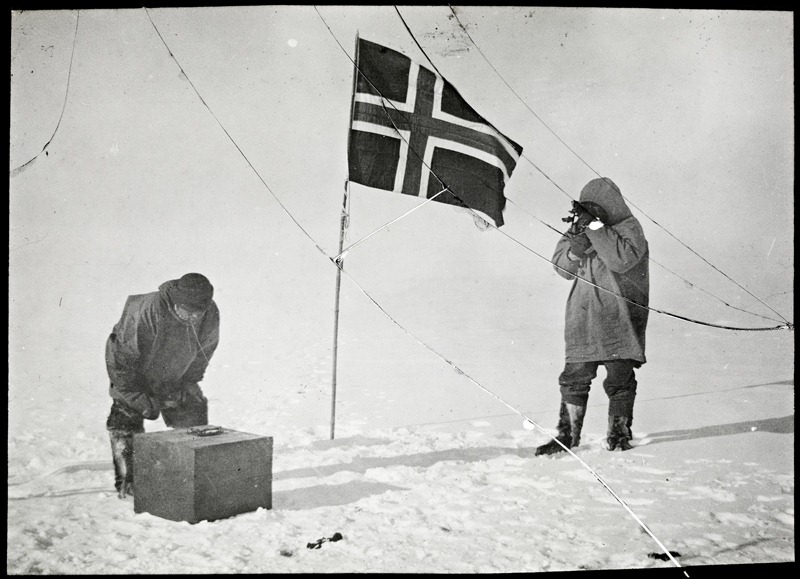
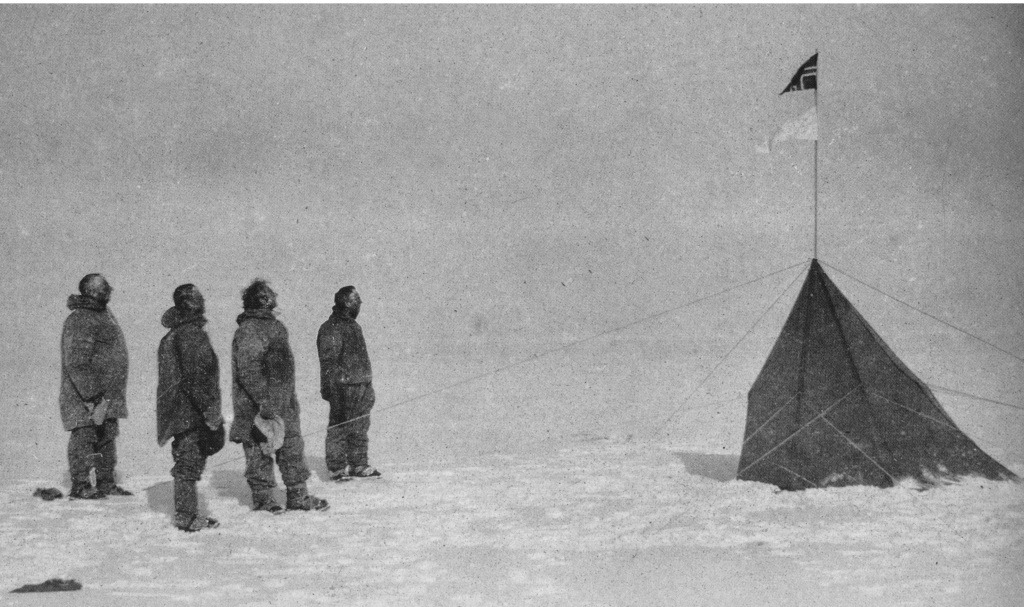
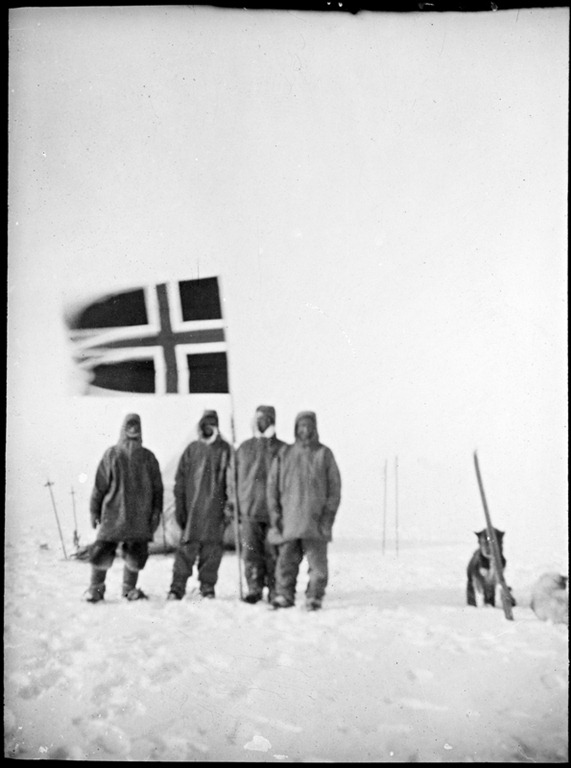
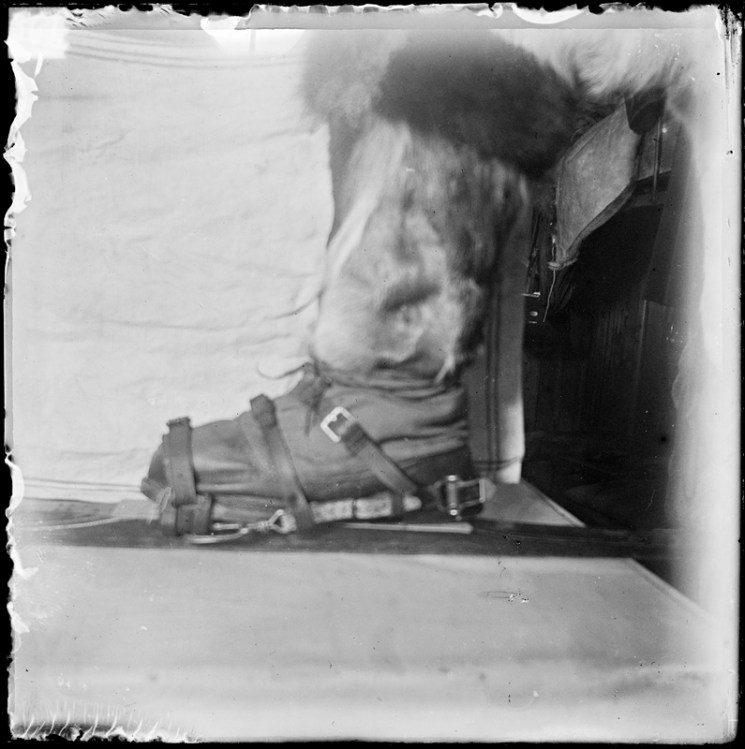
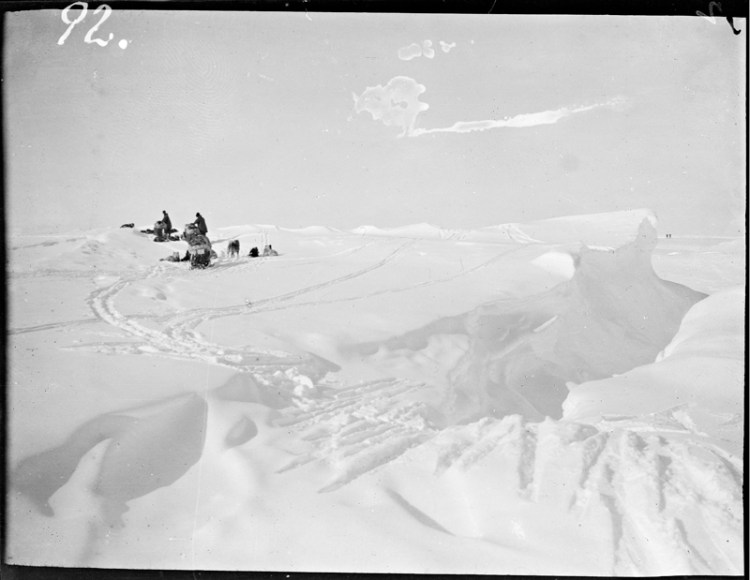
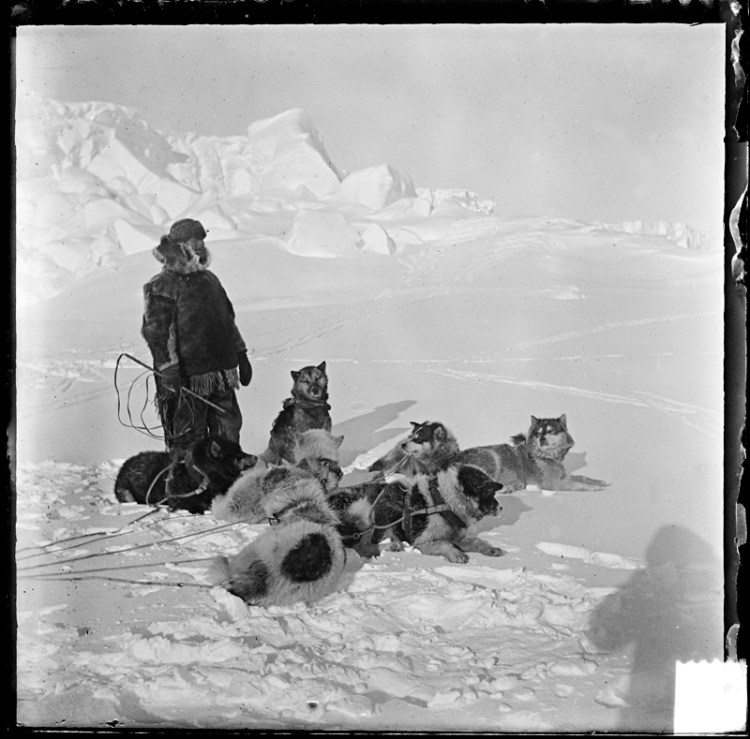
One hundred years ago today, after months of desperate cold, preserved food, wicked dryness and beating wind, after skiing many, many miles and enduring lost and broken gear, tired men, cranky dogs and dangerous terrain, Roald Amundsen and his crew (Olav Bjaaland, Helmer Hanssen, Sverre Hassel, Oscar Wisting, four sledges and 52 dogs) reached the South Pole, alive and happy and sunburned, the first men in history to reach the bottom of our earth. They took measurements to determine their accuracy, and planted the flag of Norway to mark their achievement.

no-nb_bldsa_NPRA0132

no-nb_sml_ 1309

Amundsen 1

no-nb_sml_ 1310

December 14, 2011

pole_anniversary_groupshot

“When the explorer comes home victorious, everyone goes out to cheer him. We are all proud of his achievement—proud on behalf of the nation and of humanity. We think it is a new feather in our cap… But the rails of science are laid; our knowledge is richer than before. And the light of the achievement shines for all time.”

–Fridtjof Nansen, May 3, 1912

~

We are so proud to be here and to be a part of the US Antarctic Program, to support in our own small, peripheral ways the science that is carried out: astronomy and astrophysics, aeronomy, auroral, and geospace science studies, meteorology, geomagnetism, seismology, earth-tide measurements, and glaciology. Here we live on the seventh continent, dedicated to science and peaceful international exchange, and we are grateful to be a part of its history.

Happy Centennial, everyone. Here’s to the next hundred years.

The Prime Minister and the Polie

Yesterday, Norway’s Prime Minister Jens Stoltenberg and his party landed at South Pole Station, just in time for lunch. The galley was packed full of people, craning, trying to look like they weren’t looking, trying not to choke on their sandwiches.

Tomorrow, Mr. Stoltenberg and his party will ride out to twenty or so miles off station to spend a night with their countrymen, the Norwegians who have skied in from the coast, and they will, on the Centennial itself, ski back in together following Amundsen’s footsteps.

He gave a speech at dinner last night, trying to put words to the grave and joyous importance for Norway as a country in 1911 to arrive first to the South Pole in an era where parts of the world such as Antarctica were still unexplored. He thanked us for a warm welcome, and congratulated us on the work we do here (now, I’m not sure he was referring specifically to shoveling or inventory, but I’m being liberal with my interpretation).

It was quite sweet, really.

IMG_0261_DxO

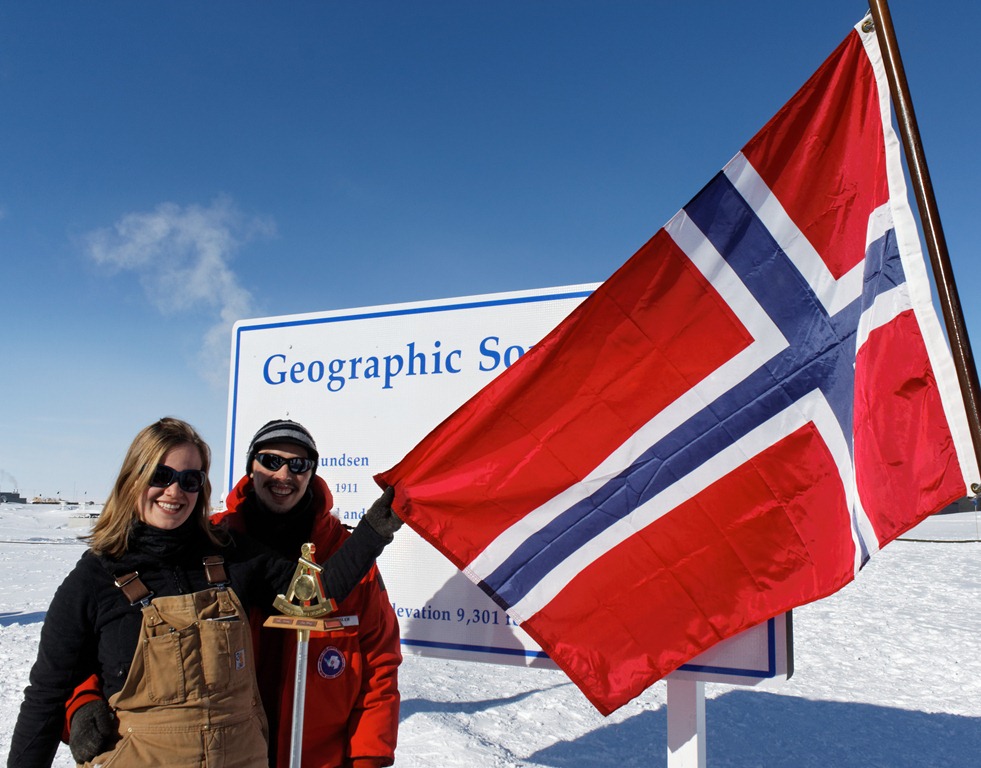
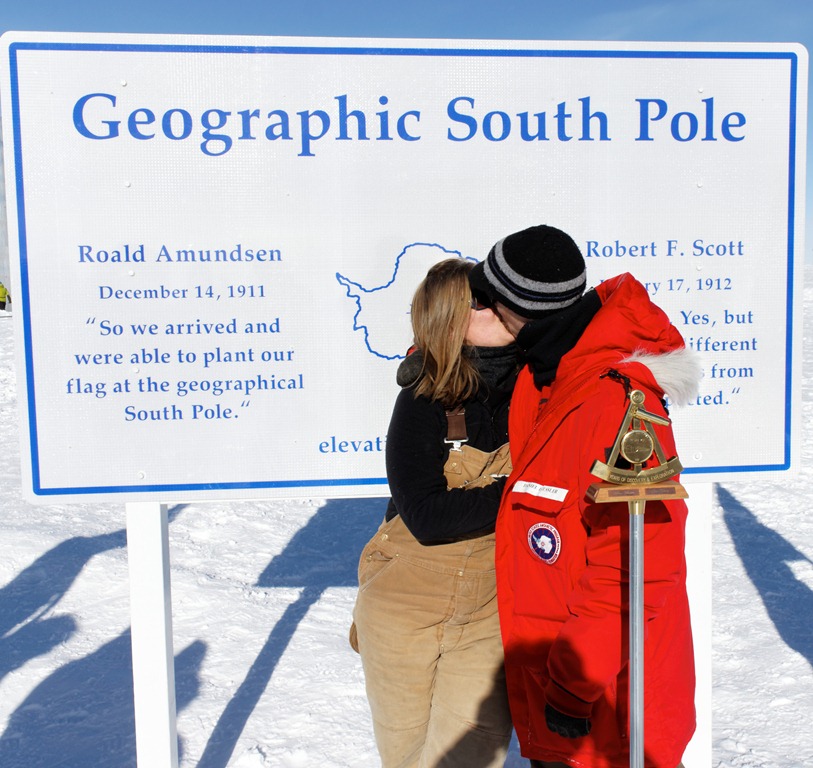
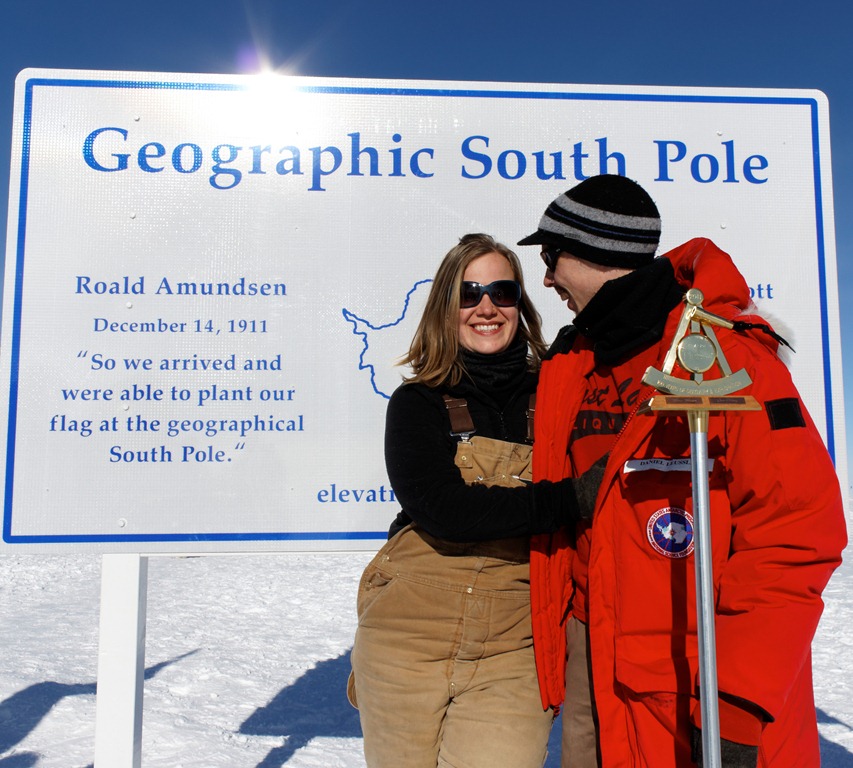
After dinner he went out to the geographic South Pole to take a photo with most of the station population. We were able to meet him and take a few photos.

Here are the Norwegians walking out to the Pole:

IMG_0273_DxO

Daniel and I with Mr. Jens Stoltenberg:

IMG_0301_DxO

IMG_0306_DxO

IMG_0313_DxO

IMG_0314_DxO

As you may know, the ice shelf drifts constantly because of the geography of the continent. What that means is that the geographic South Pole shifts something like 30 meters in relation to the station every year. On New Year’s Day, there is a ceremony in which the Pole marker is changed to a new design and the whole Pole gets plucked out of the ice and moved to the actual location. It is not New Year’s Day yet, and so we currently have three Poles: the Ceremonial Pole, with the barbershop red and white stripes and the silver garden ball on top, surrounded by the flags of the original treaty nations; the 2011 Geographic Pole, with the artist-cast Pole marker (which unfortunately gets missed by many distracted tourists); and the actual, current Geographic Pole which has been determined by the surveyors:

IMG_0329_DxO

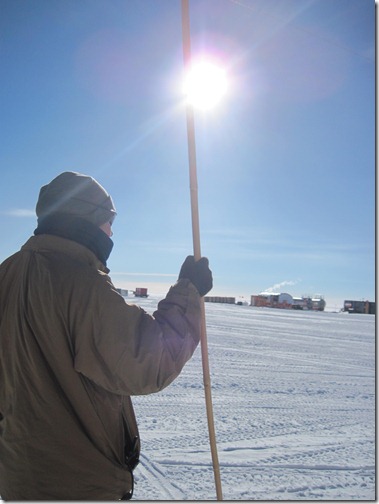
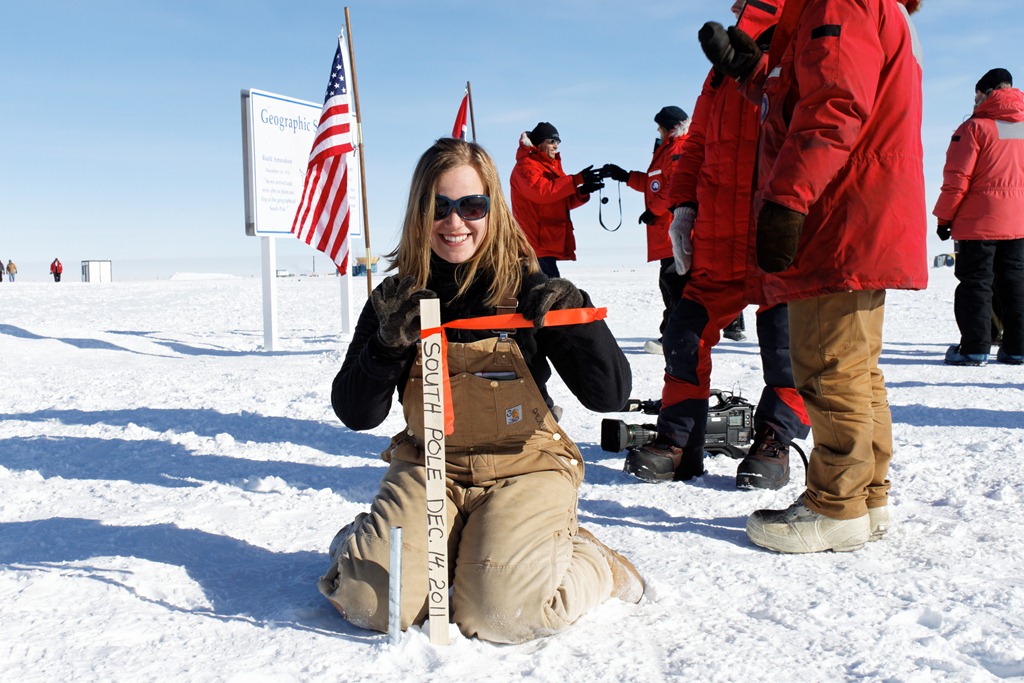
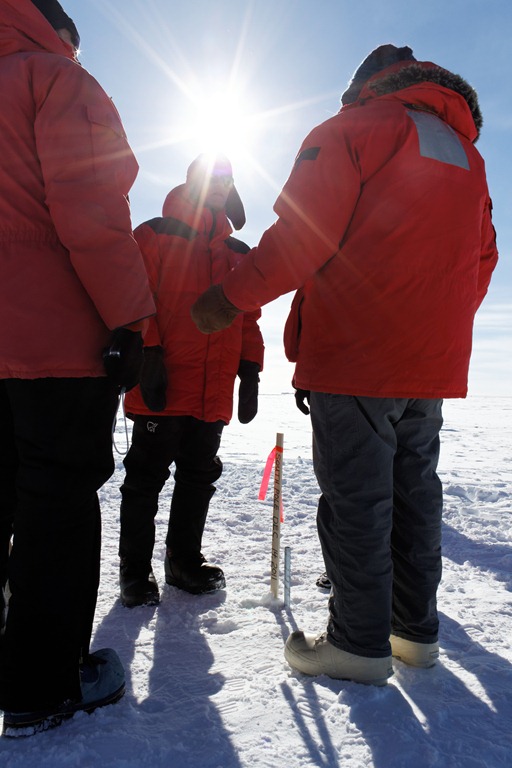
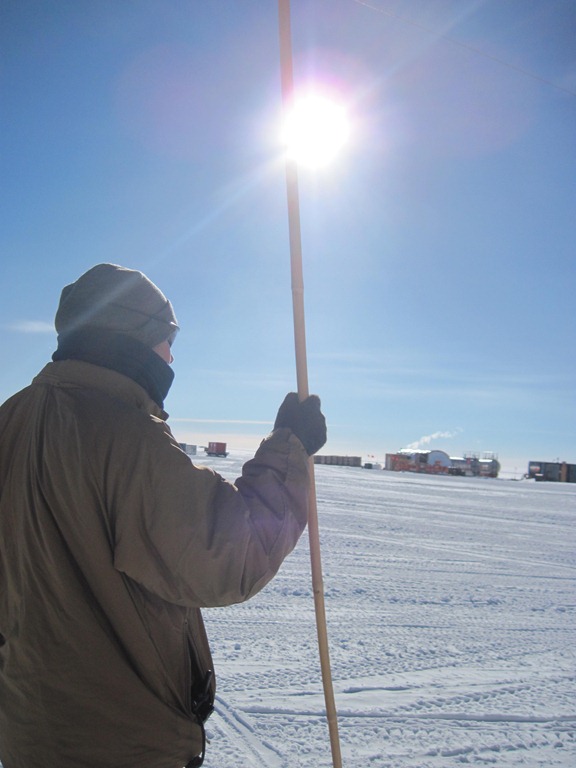
I’m not joking: that’s the real deal! The stick with the orange surveyor tape is the southernmost point on our planet. Here’s the Prime Minister (center) with the real-deal South Pole:

IMG_0326_DxO

It’s humble, but also awesome.

We all came in to some special Norwegian mulled wine, the spelling of which I can’t remember for the life of me (glůgg? glŏvvig? I’m going to stop trying). It was delicious, hot and spiced with slivered almonds and raisins plopped in to the bottom.

IMG_0423_DxO

A good way to end a cold night.

Sunday Brunch

Saturday night was the Summer Camp Open Mic Night, and Daniel’s debut as a keyboardist/vocalist! He was nervous but did great… people keep coming up to me and telling me how awesome he sounded. I agree.

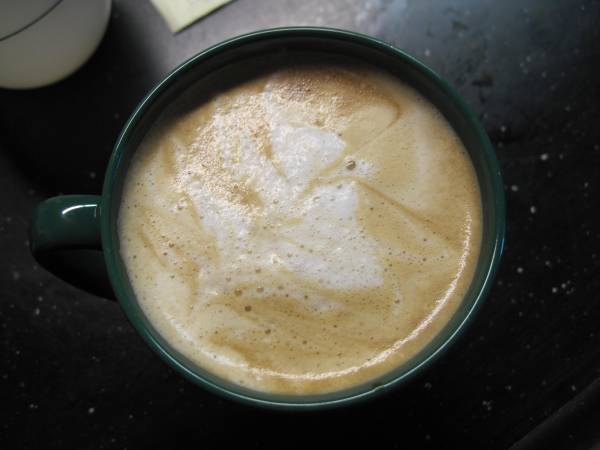
I have become entirely dependent on Sunday Lattes and cheese. I’m not sure I could function properly without them.

Have a wonderful weekend, everyone!

Happy Camper

Last night, I slept on the ice.

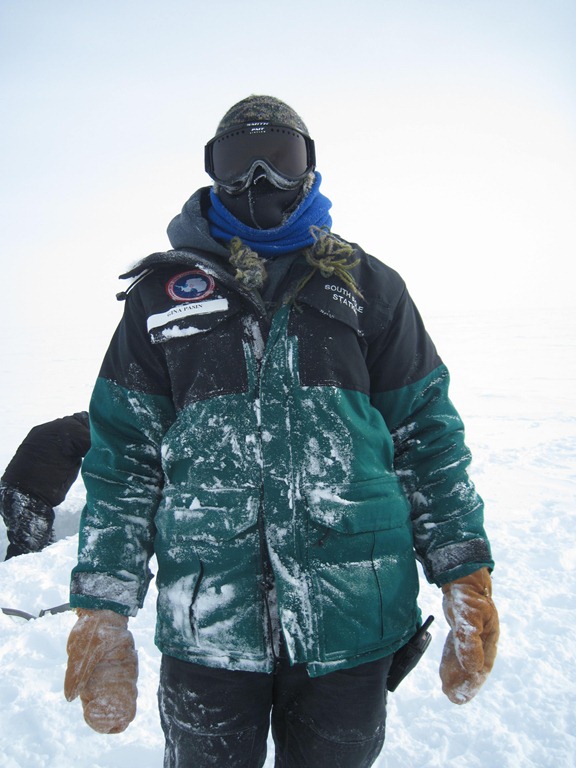
Many workers in the US Antarctic Program participate in the Field Survival Training Program (FSTP, pronounced F-Stop), better known as Snow School and even better known as Happy Camper.

IMG_8168

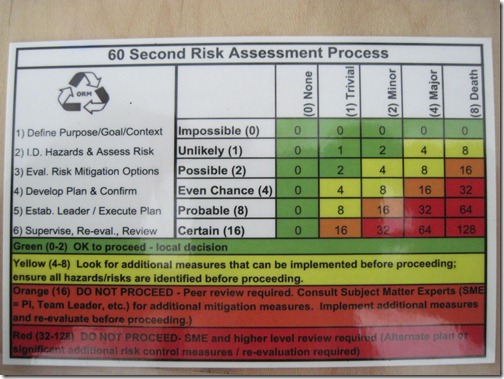
The idea behind the course is to give us skills that could save our lives in the case that we are at some point lost or trapped in the Antarctic Wilderness, whether at a very remote field camp or traveling off South Pole Station to work with surveyors for a day trip (don’t worry Grandma, I don’t think either of these situations apply to me). There was some pretty tangible stuff in there, skills I feel I could employ winter camping at home, and some really intangible and theoretical stuff, like Risk Management. Which makes sense in theory and is really quite pragmatic, but if I were lost in a whiteout/blizzard/shark attack I doubt I would stop to consult this graph:
IMG_8169

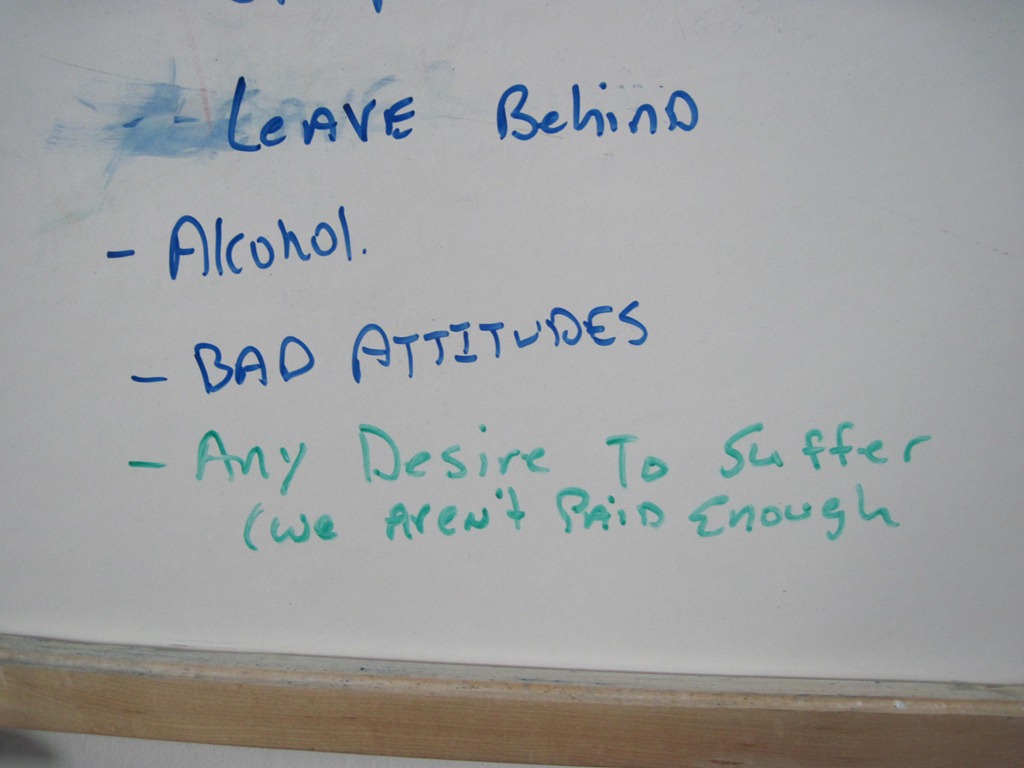
We did classroom type stuff for the first part of the morning and had calorie-intense lunches: Reuben sandwiches, chicken soup and french fries. After stuffing ourselves to the point of discomfort, we put on extra fleece pants, donned our balaclavas, used a flushing toilet for the last time and filled our water bottles. The weather was hazy and overcast, which was a good thing because weather like that usually traps warm-ish air above us. The actual temperature was somewhere between –20 and –30 F, with windchills between –40 and –50 F. Perfect camping weather.

IMG_8174

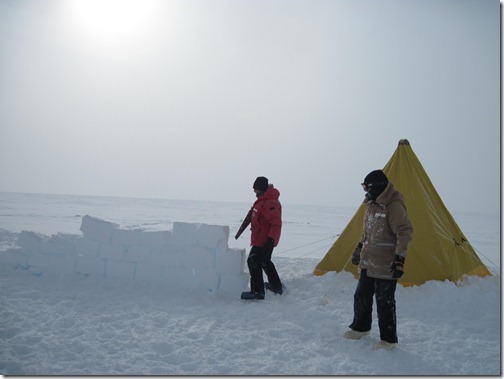
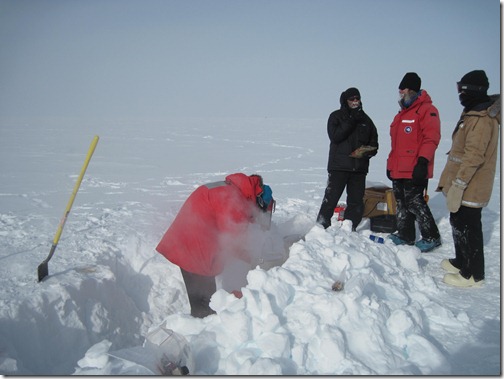
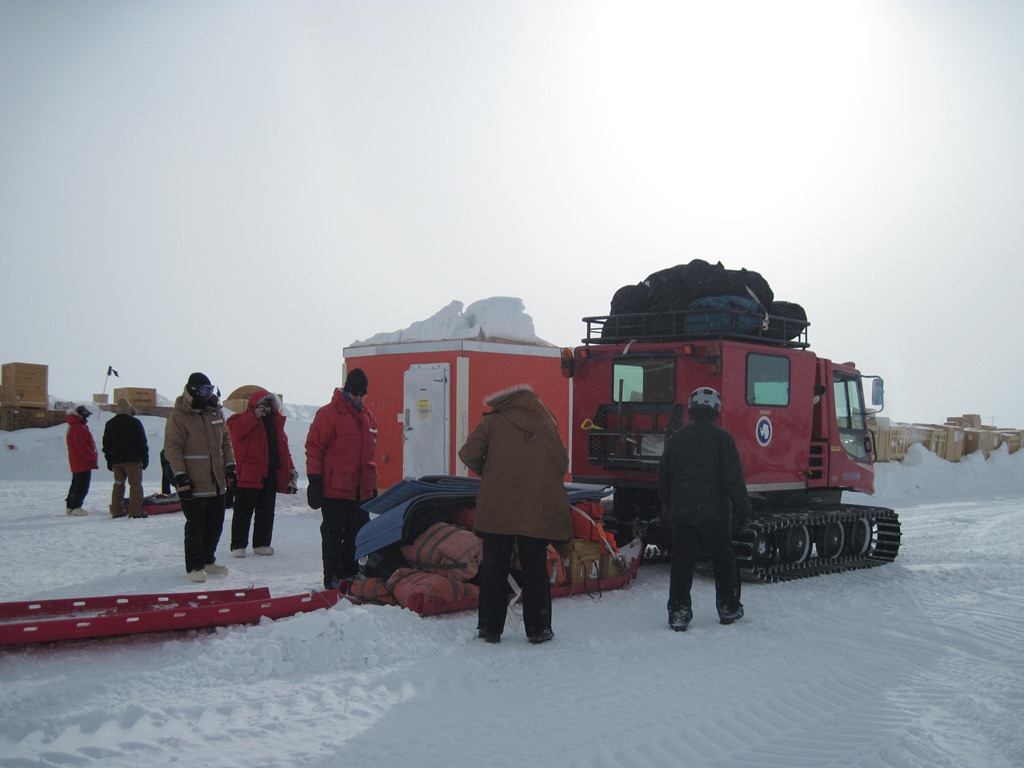
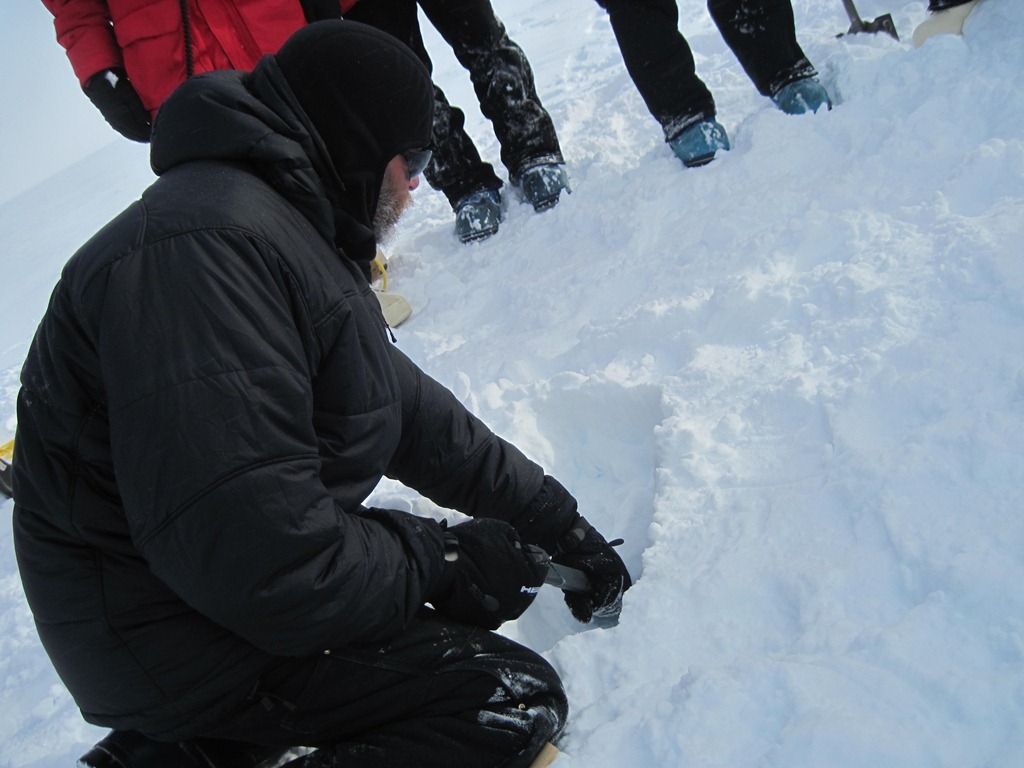
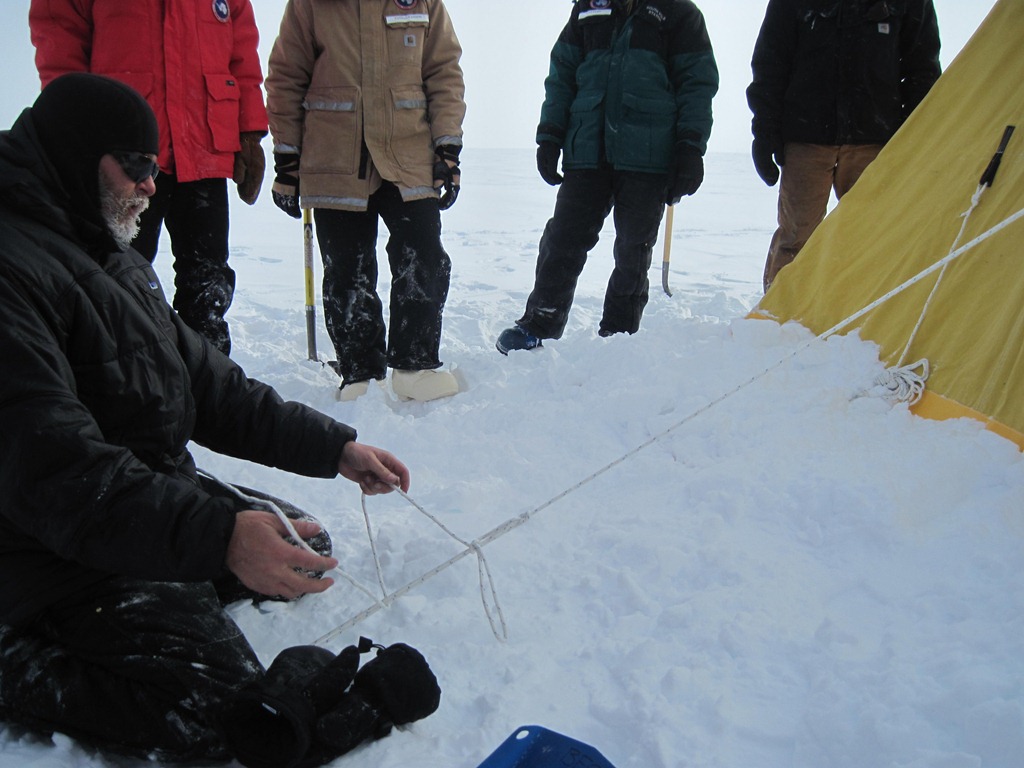
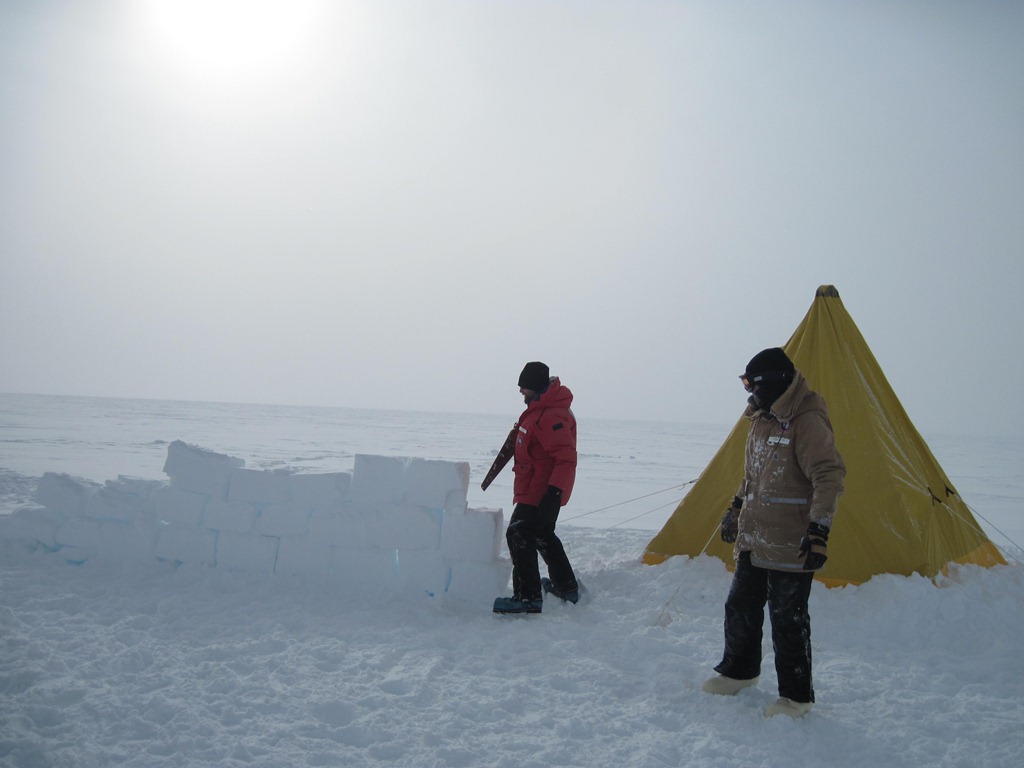
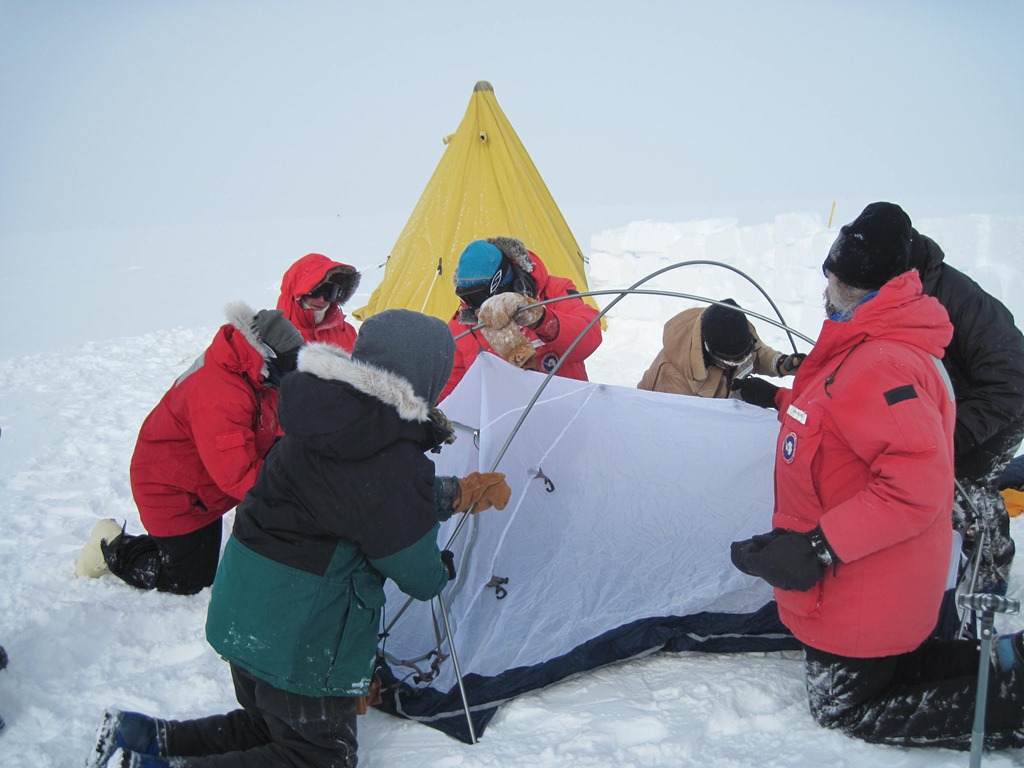
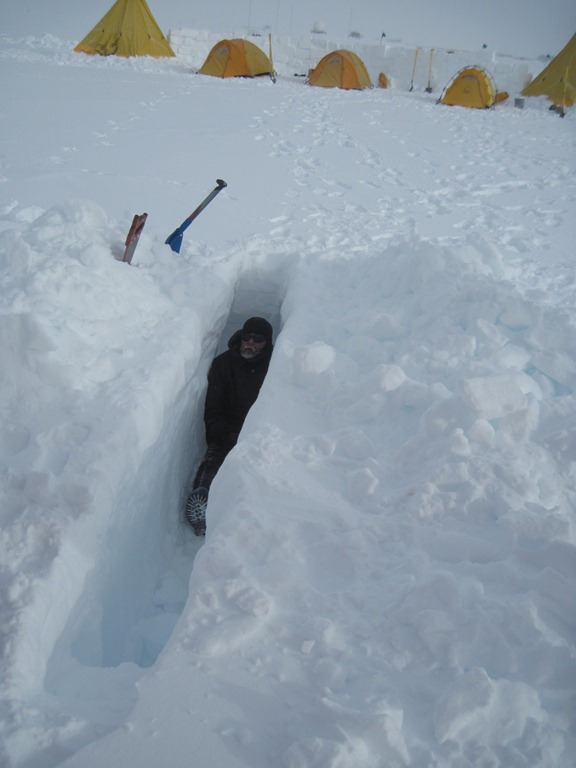
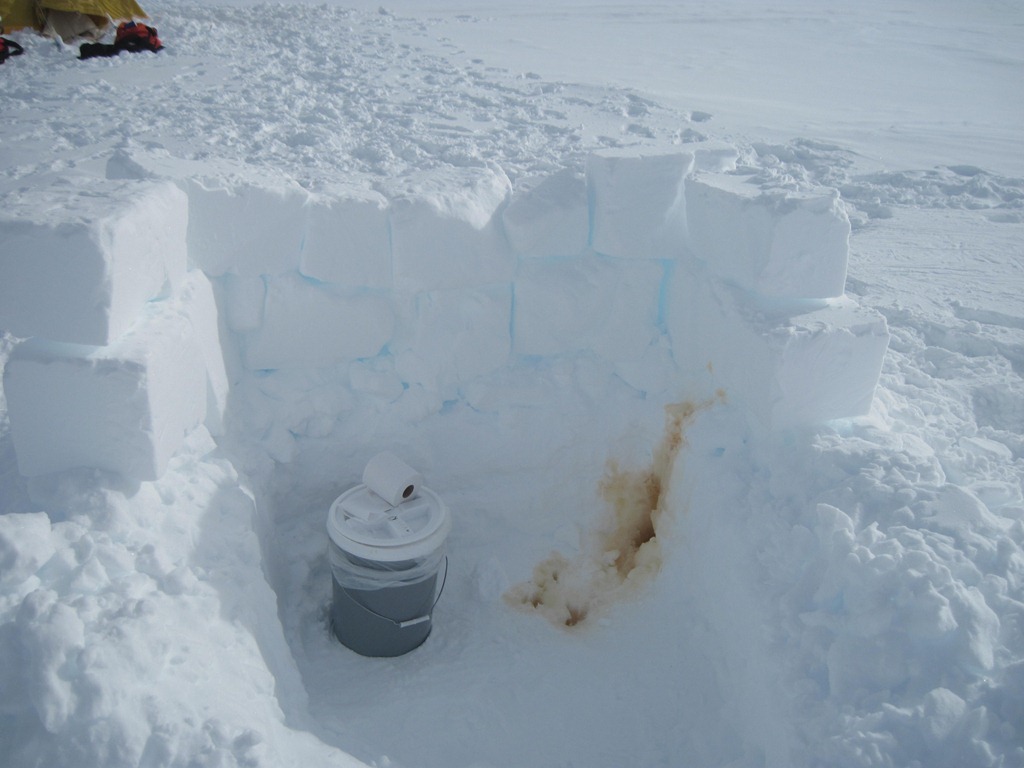
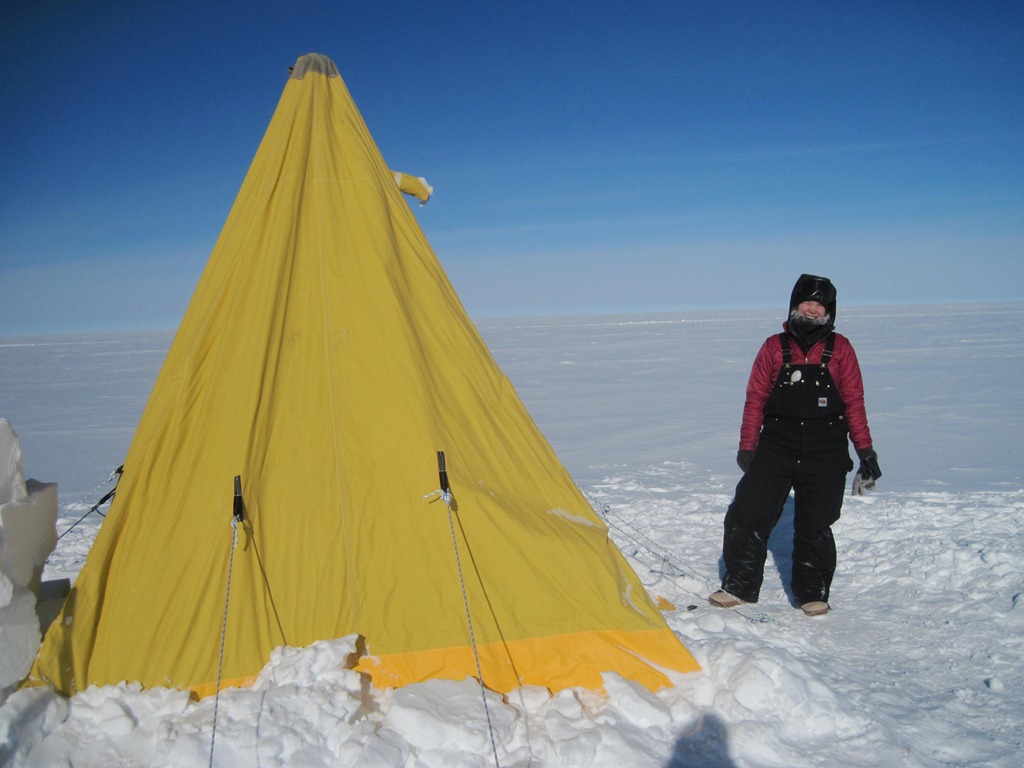
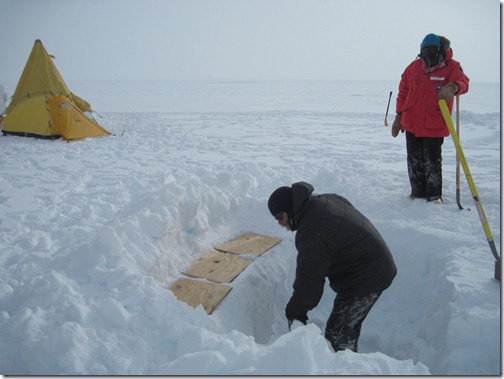
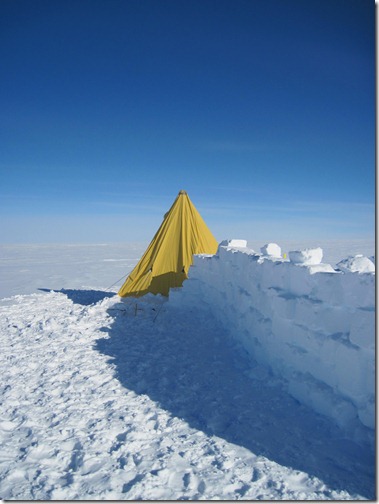
We loaded up the Pisten Bully (car camping, Antarctica-style), and headed out past RF about a mile and a half, to the End of the World. The first thing we did was set up an emergency shelter in case the weather turned bad, a common and fast occurrence in Antarctica, although much more of a risk at McMurdo than here at Pole. This was a Scott tent, designed by Robert Falcon Scott himself, a ridiculously heavy yellow canvas monstrosity that can evidently withstand Antarctic storms, heavily drifted snow, 150 MPH winds, and atomic bomb detonations. We learned how to place a bamboo T-support to prevent tent stakes from ripping out in high winds, how to make an ice wall from igloo blocks cut with a saw from a little ice-quarry, how to best build a galley hole/wind wall, how to best build a toilet hole/wind wall, and how to dig and protect a sleeping trench.

IMG_8178

Putting in a T-support. I felt like I was digging a grave for the family gerbil.

IMG_8179

IMG_8181

IMG_8186

IMG_8180

We had to stop for a body-needs-calories-right-now break. The chocolate was frozen, ridiculously hard. You had to suck on it for minutes at a time to warm it up so you wouldn’t break a tooth.

IMG_8182

Then we set up mountaineering tents, which are more like what are in the off station emergency survival bags.

IMG_8190

Trench digging:

IMG_8185

Explaining the finer points of building/sleeping in a trench:

IMG_8195

The galley (which was actually really nice: take note, winter campers).
IMG_8197

IMG_8201

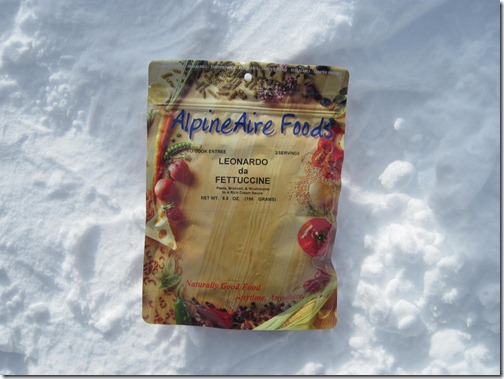
Dehydrated dinner:

IMG_8204

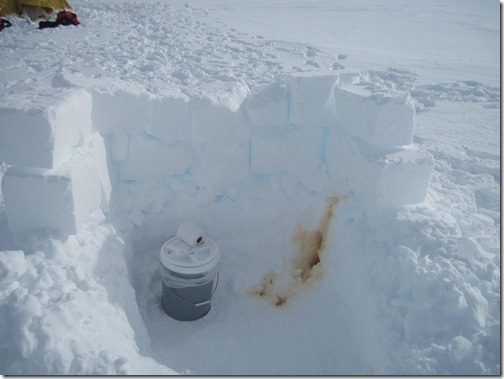
The loo:

IMG_8221

IMG_8205

And finally, we were finished working and ready for bed.
IMG_8222

IMG_8209

IMG_8199

IMG_8214

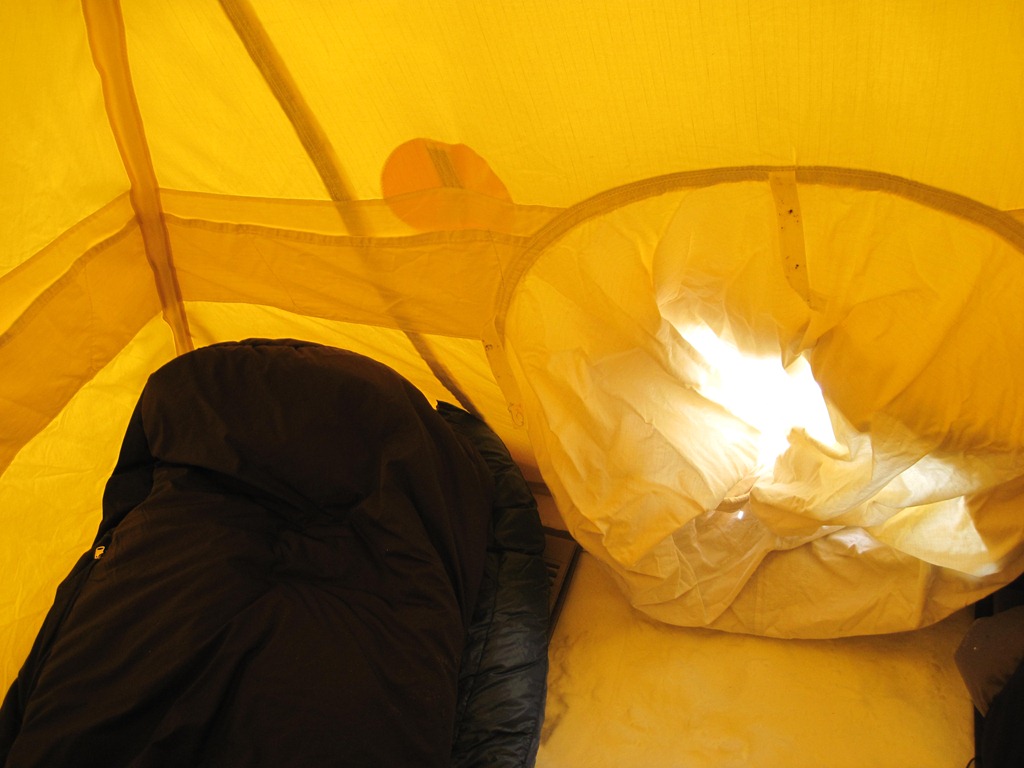
I slept in a Scott tent with Sven the Swedish Scientist, on an open snow floor on top of 2 mat pads, 2 flat sleeping bags, my parka, and inside of a sleeping bag with a fleece liner. I filled my drinking water bottle with boiling water and snuggled up to it. In the beginning, I felt the heat from my body seeping down into the ice little by little, and fidgeted for an hour dreading the night ahead. And then, I fell asleep so hard that I didn’t hear the LC-130 land or Sven get up to pee or other campers wandering around awake for no reason at 3am. I slept through the night, which almost never happens to me here.

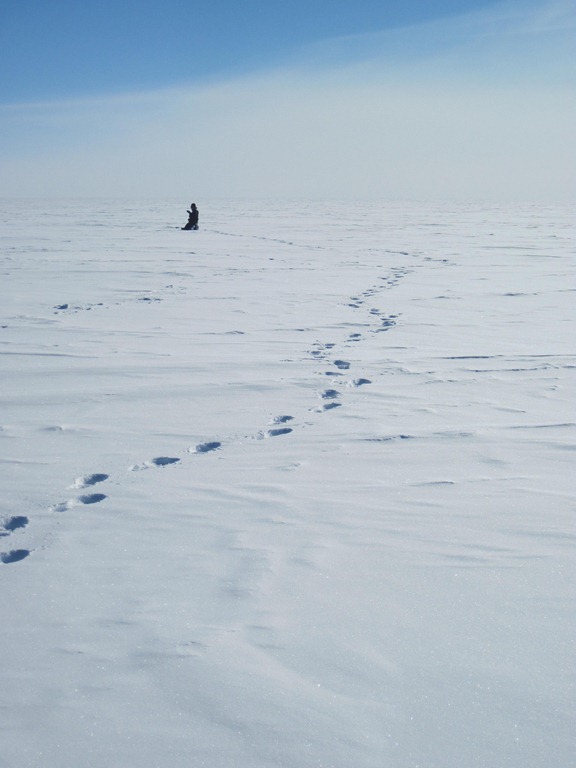
In the morning when the other campers started to wander around, I awoke to the sounds of footsteps, deep, resounding creaky screeches in the snow, and a creak-creak-creak-FWOOMP as someone compromised the structure of the ice shelf beneath them and the whole ground shifted a bit.

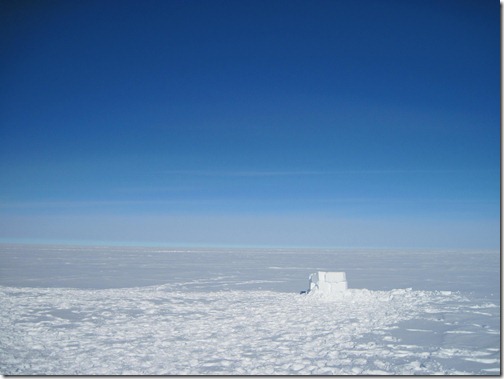
Morning (the same as evening, but clearer, and the sun had rotated 90 degrees in the sky):

IMG_8215

IMG_8207

IMG_8220

Antarctic Sunbathing:

IMG_8217

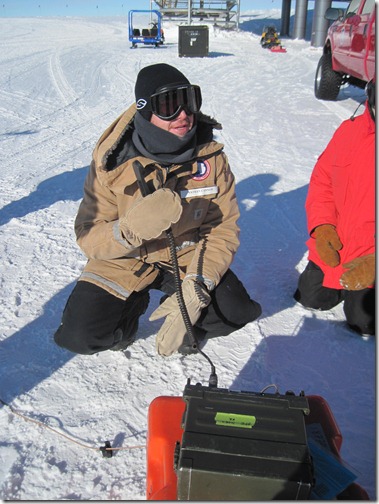
We packed up and the Pisten Bully came back to bring us home to learn about HF Radio Ops and search and rescue techniques. I’m glad to be done, but Happy Camper was pretty neat.
IMG_8230

IMG_8228

IMG_8233

Snow

Today snow is falling: real snow. Fine, nearly imperceptible flakes that you can barely see unless you hold your head really still. Real snow is so rare here, mostly the ice crystals just blow around, and every time I see snow it makes my heart hurt because I feel so homesick for Minnesota. For winter, for snow, for sunrise and sunset, for family and winter bonfires and for dogs to play with and real evergreen trees, for frozen lakes and ice skating and hearing snowflakes fall by streetlight. I usually feel like I’m too busy to be homesick, except on Sundays, and this season has been no exception.

The Centennial of Roald Amundsen’s arrival is in just one week, and the first tourists have already begun to arrive. Some in planes, some in trucks, and they have started to set up little tents that we can see looking out from the galley windows over the ceremonial South Pole. The ski-in expeditions will start arriving soon, as will the Distinguished Visitors from Norway and beyond. The station is buzzing; the carpenters have built a visitors’ center, the head executive chef is planning a special dinner for the Prime Minister and his party, and the IT folks are busy preparing for a live broadcast to Norwegian television the morning of the centennial. It is so exciting.

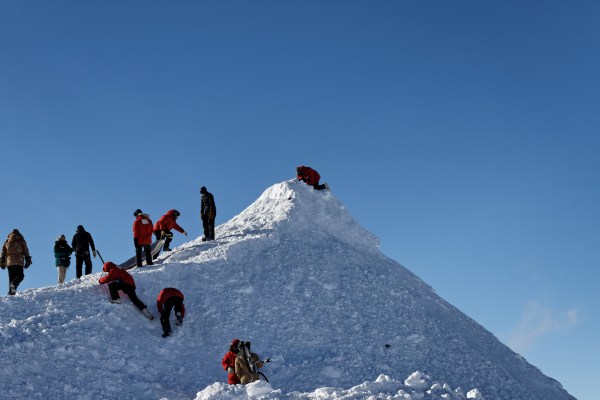
Two weeks ago we celebrated Thanksgiving, which is really not the same as it is at home but still really nice. We slept in, showered, ate a ton like you’re supposed to, went sledding in our formalwear on a hill that has been removed by now, and went to a dance party in summer camp. I think I’ve been to more dance parties in Antarctica than I have even been to in my entire life combined.

Here is a panoramic photo of sledding behind the elevated station, taken by Daniel. More sledding soon. Click to enlarge.

Sledding pano big cropped

This Week in Antarctic History

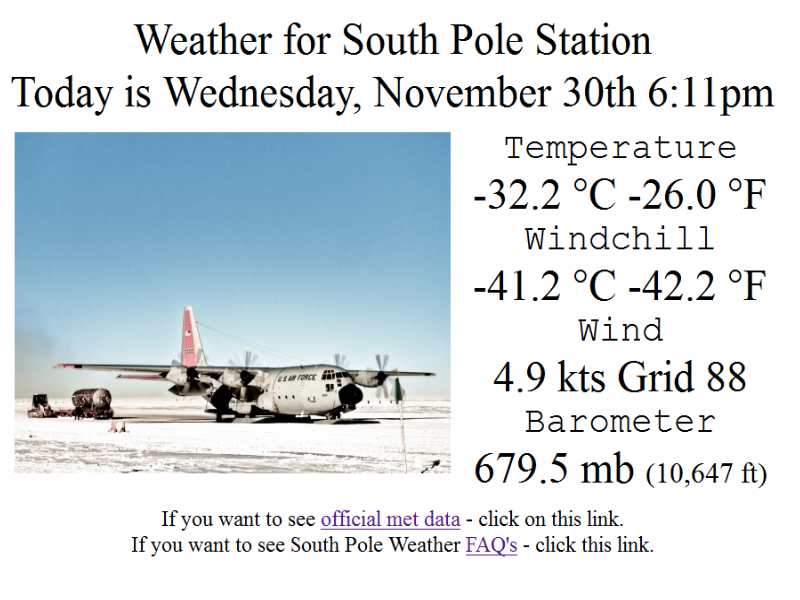
We are reaching the height of the Antarctic summer, the solstice, in approximately three weeks. What that will mean for us is an ambient temperature of about 0 degrees Fahrenheit. The air is already warming up quite a bit—yesterday the ambient temperature was only –26 F, and windchill was –42. Walking in to station from summer camp, I wore boots and overalls and normal face coverings, but only a t-shirt, two sweatshirts and a down vest. The barometric pressure is fluctuating down, causing the physiological altitude to go up. The actual altitude is 9,300 feet, and we are presently experiencing an altitude of 10,647 as you can see from the weather scroll. Higher altitude means more strenuous work and exercise, a longer moment to catch your breath after ascending the 92 stairs of the “beer can” stairwell, and sometimes trouble sleeping.

wx 113011


The warmest part of the season means the middle part of historical and present-day expeditions.

Here is what was happening this week in 1911, 1929 and 1959; we got this little history lesson from Comms and I thought you might be interested, too.

On November 28, 1929, Byrd and three others took off in their Ford Tri-motor and headed south. After a harrowing climb over the Transantarctic Mountains, Byrd and his crew became the first to fly over the South Pole at 1:14 in the morning on November 29, 1929.

The Antarctic Treaty was signed on December 1, 1959 and came into force on June 23, 1961. Among other provisions, this treaty limits military activity in the Antarctic to the support of scientific research. In essence, this treaty (ratified by all parties in 1961) set the continent of Antarctica aside for peaceful, scientific purposes and placed all territorial claims on hold.

100 Years ago…


Notes from Amundsen:


“On December 1 we left the glacier in high spirits. It was cut up by innumerable crevasses and holes. We were now at a height of 9,370 feet. In the mist and driving snow it looked as if we had a frozen lake before us; but it proved to be a sloping plateau of ice, full of small blocks of ice. Our walk across this frozen lake was not pleasant. The ground under our feet was evidently hollow, and it sounded as if we were walking on empty barrels. First a man fell through, then a couple of dogs; but they got up again all right. We could not, of course, use our ski on this smooth-polished ice, but we got on fairly well with the sledges. We called this place the Devil’s Ballroom. This part of our march was the most unpleasant of the whole trip.”

“On December 2 we reached our greatest elevation. According to the hypsometer and our aneroid barometer we were at a height of 11,075 feet — this was in lat. 87º 51′.”

Notes from Scott:

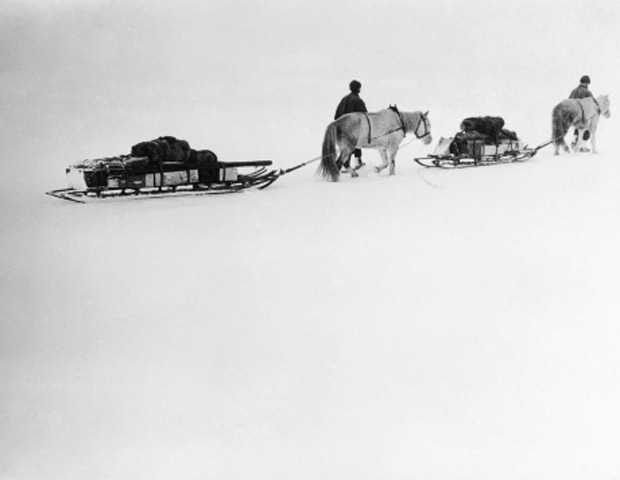
Thursday, November 30.—”Camp 26. A very pleasant day for marching, but a very tiring march for the poor animals, which, with the exception of Nobby, are showing signs of failure all round. We were slower by half an hour or more than yesterday. Except that the loads are light now and there are still eight animals left, things don’t look too pleasant, but we should be less than 60 miles from our first point of aim. The surface was much worse to-day, the ponies sinking to their knees very often. There were a few harder patches towards the end of the march. In spite of the sun there was not much ‘glide’ on the snow. The dogs are reported as doing very well. They are going to be a great standby, no doubt. The land has been veiled in thin white mist; it appeared at intervals after we camped and I had taken a couple of photographs.”

Friday, December 1.—”Camp 27. Lat. 82° 47′. The ponies are tiring pretty rapidly. It is a question of days with all except Nobby. Yet they are outlasting the forage, and to-night against some opinion I decided Christopher must go. He has been shot; less regret goes with him than the others, in remembrance of all the trouble he gave at the outset, and the unsatisfactory way he has gone of late. Here we leave a depot [31] so that no extra weight is brought on the other ponies; in fact there is a slight diminution. Three more marches ought to bring us through. With the seven crocks and the dog teams we must get through I think. The men alone ought not to have heavy loads on the surface, which is extremely trying.”

“Nobby was tried in snowshoes this morning, and came along splendidly on them for about four miles, then the wretched affairs racked and had to be taken off. There is no doubt that these snowshoes are the thing for ponies, and had ours been able to use them from the beginning they would have been very different in appearance at this moment. I think the sight of land has helped the animals, but not much. We started in bright warm sunshine and with the mountains wonderfully clear on our right hand, but towards the end of the march clouds worked up from the east and a thin broken cumulo-stratus now overspreads the sky, leaving the land still visible but dull. A fine glacier descends from Mount Longstaff. It has cut very deep and the walls stand at an angle of at least 50°. Otherwise, although there are many crowns on the lower ranges, the mountains themselves seem little carved. They are rounded massive structures. A cliff of light yellow-brown rock appears opposite us, flanked with black or dark brown rock, which also appears under the lighter colour. One would be glad to know what nature of rock these represent. There is a good deal of exposed rock on the next range also.”

scott-ponies_2010730i

South Pole Partial Solar Eclipse 11-25-11

When I was in elementary school, my dad found a broken welding mask in our alley and, after carefully removing the glass, taped it neatly into a crisp cardboard box, covering the chipped corner. He brought it to my class one day when we were due to have a solar eclipse, and the whole class got to look at the sun, one at a time, thanks to my dad. I felt famous.

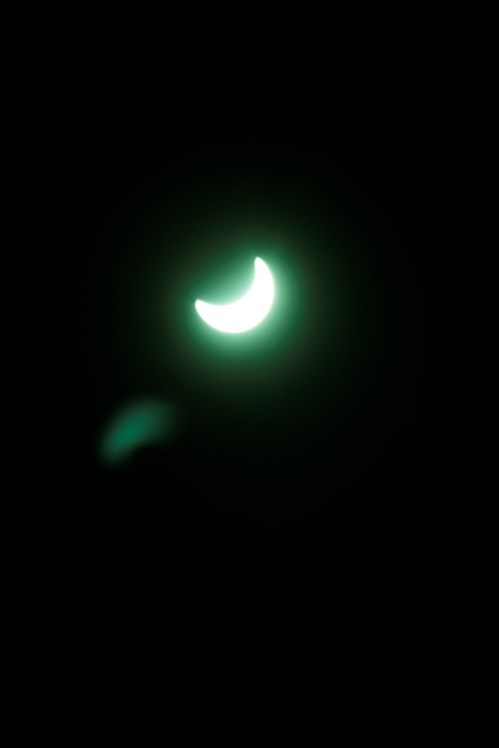
Yesterday we experienced an eclipse here at Pole, with about 75% coverage, and I carried on the tradition.

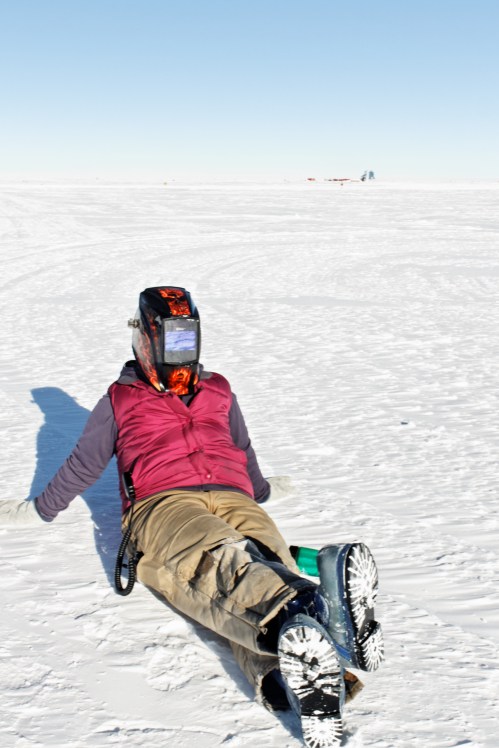
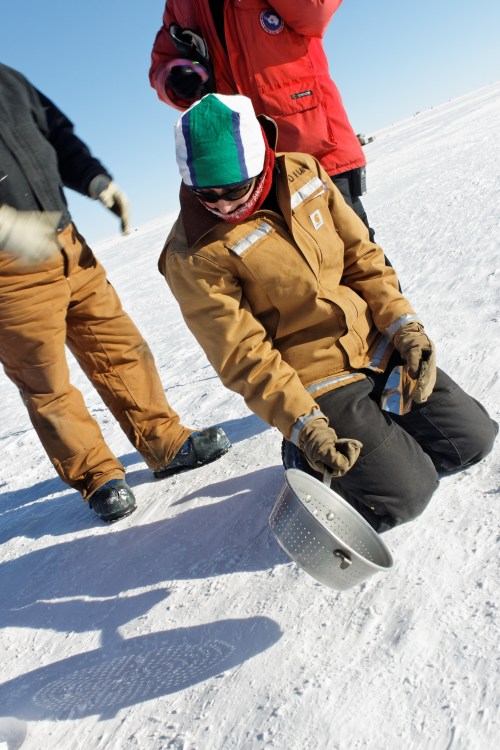
The sun started to peek out just a few hours before the eclipse was to begin after a full day of icy haze. Excited, I went to the B2 Science Lab and a scientist from South Pole Telescope helped me attach a piece of welding glass to my telephoto lens to take pictures of the sun directly. You should have seen my bag; I looked like a one-woman band getting ready for a performance. A welding mask, blank CDs, hand warmers, aluminized mylar squares, a cup of coffee and a sieve borrowed from the kitchen. We went out to the ceremonial pole, cameras in hand.

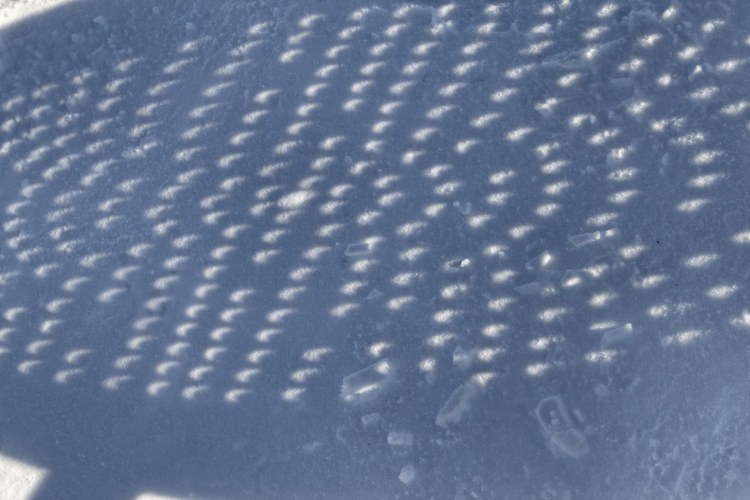
The sieve was really neat. A scientist had volunteered to make pinhole cameras in the galley before the eclipse, and the sieve was like a hundred pinhole cameras put together. See how all the pinholes are crescent shaped?