
The TAZARA train never leaves on time, except when it does.
On a Friday morning in April we set out for Tanzania. Our one-week visas were due to expire the coming Monday, and this was the last train leaving during that time period. Neither of us wanted to find out what happens if you overstay your visa in Zambia, so we stopped by the TAZARA office in Lusaka. An employee there told us she had reserved a compartment for us and that when we got to town and arrived at the office, we just needed to speak with “Alfred” and we’d be all set with our own compartment for the three-day train ride (mixed genders are not an option in compartments unless you reserve all four beds as a family). We had four hours to take a two hour bus ride to Kapiri Mposhi and depart at 2pm, which seemed like it should be enough.
It wasn’t, really. After an hour of waiting for the bus to fill, finally leaving with a little more than enough time to make it, and nearly three hours of Bus Stop Reverend preaching and conversion, loud music, white-knuckle passing and infuriating dirt loop detours, we arrived in Kapiri Mposhi at 1:52 pm. We had been shuffled to the very back of the bus with all of our stuff (a backpack and messenger bag each) and as soon as the bus started to slow down, Daniel took his first opportunity and shot to the front of the bus. It took me a minute and I got waylaid behind slow adults and even slower kids, and a few minutes later when I finally got to the door, I found myself in the middle of a fist-fighting mini mob. Daniel ran in and pulled me out by the arm, and as we got into our taxi he explained to me that he agreed to take the first driver that offered, and the next three or four guys had gotten into a fight over our prospective fare.
As our driver lurched over an apparently recently plowed road, red dirt lumping along under the tires and pedestrians casually scooting over to let us drive by, we counted down the minutes. Now, Kapiri Mposhi is not much of a town. The reason the train begins here is supposedly because, when laying the line southwest from Dar es Salaam, they ran out of tracks in Kapiri Mposhi, and so the train station was born. The place is maddeningly spread out for a town of such small origins, and it took what felt like forever to get to the station. We prayed that the train would leave late, which is apparently common.
We barely remembered to pay the cab driver when he stopped, dodged the pushy “bag porters” and ran through the gate, literally at 2pm, the hour of departure. Sprinting to the now-empty sales desk, we asked anyone who would listen where we could find Alfred, our magical ticket holder, but the people just yelled at us to go, get on the train. “But we need to pay,” we protested. “Just get on!” The train blew its whistle and shuddered to a start, and we ran down a few cars before finding one with open doors, hopping on as best we could without knocking each other down.
We were on the last train to leave before our visas expired, but we didn’t have tickets. And Alfred, the only person who could vouch for us, was nowhere to be found. None of the staff had us on our list, and the train was full. The staff on the train, however, were wonderful. They rearranged a few other families, put us in with a random white South African tourist (mixed gender compartment!), took our money and wrote us tickets.
Never have I been so happy to squish skittering blonde cockroaches while eating chewy organ meat with the valves still on, or sleep on pillows that felt like a bag of popcorn and smelled like a wet towel. The train started and stopped so suddenly and forcefully that we kept getting knocked over if standing. Each time, we assumed the train was starting to derail itself. But we had made it.
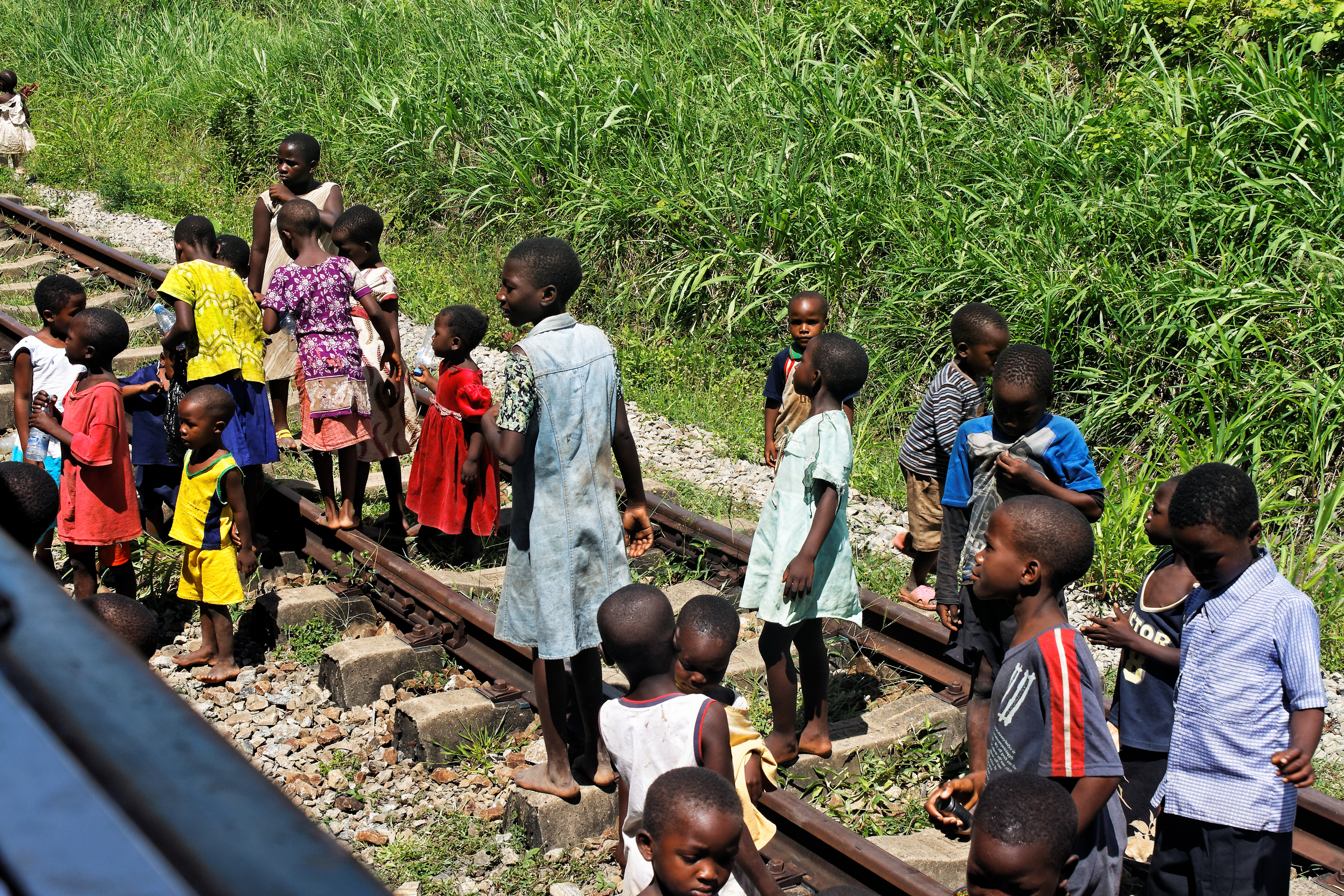
Outside the train, men, women and children sold corn on the cob, hard boiled eggs, finger-sized bananas, rice from open sacks balanced on the head, mealy meal, cassava and potatoes, leather jackets, SIM cards, limes and groundnuts. Women in printed cloth kangas and kids in clothes so oversized and tattered their shoulders lay bare to the sun asked us for empty water bottles (maji ya chupa!) or money. Passengers exited carrying luggage on their heads, rollerboard suitcases or mystery packages in giant woven plastic totes. Zambia rolled past: flat, felled areas, fields eaten clean by herds. Cool air and few mosquitoes blew through the windows.


Crossing the border, officials charged us 100 USD each, twice what we expected; we put up a fight and protested corruption until the border officials lectured us on reciprocal visa fees and threatened to throw us off the train if we didn’t pay up. We later found out that the visa fee is actually $100 for a US citizen now, and although the border officials had started off seeming rude and unprofessional, that we were the ones overstepping our bounds.
The scenery in Tanzania was so much more lush–in no man’s land we went through a tunnel and came out in another world. Huge, tropical, prehistoric-looking palm plants, tall trees and a wall of hot and humid air that smelled like an herb I couldn’t identify marked our entry into the Great Rift Valley. Instead of drought-ridden Minnesota-prairie-like flatlands, there were hills and trees and moist flora clutching to sheer inclinations of land.
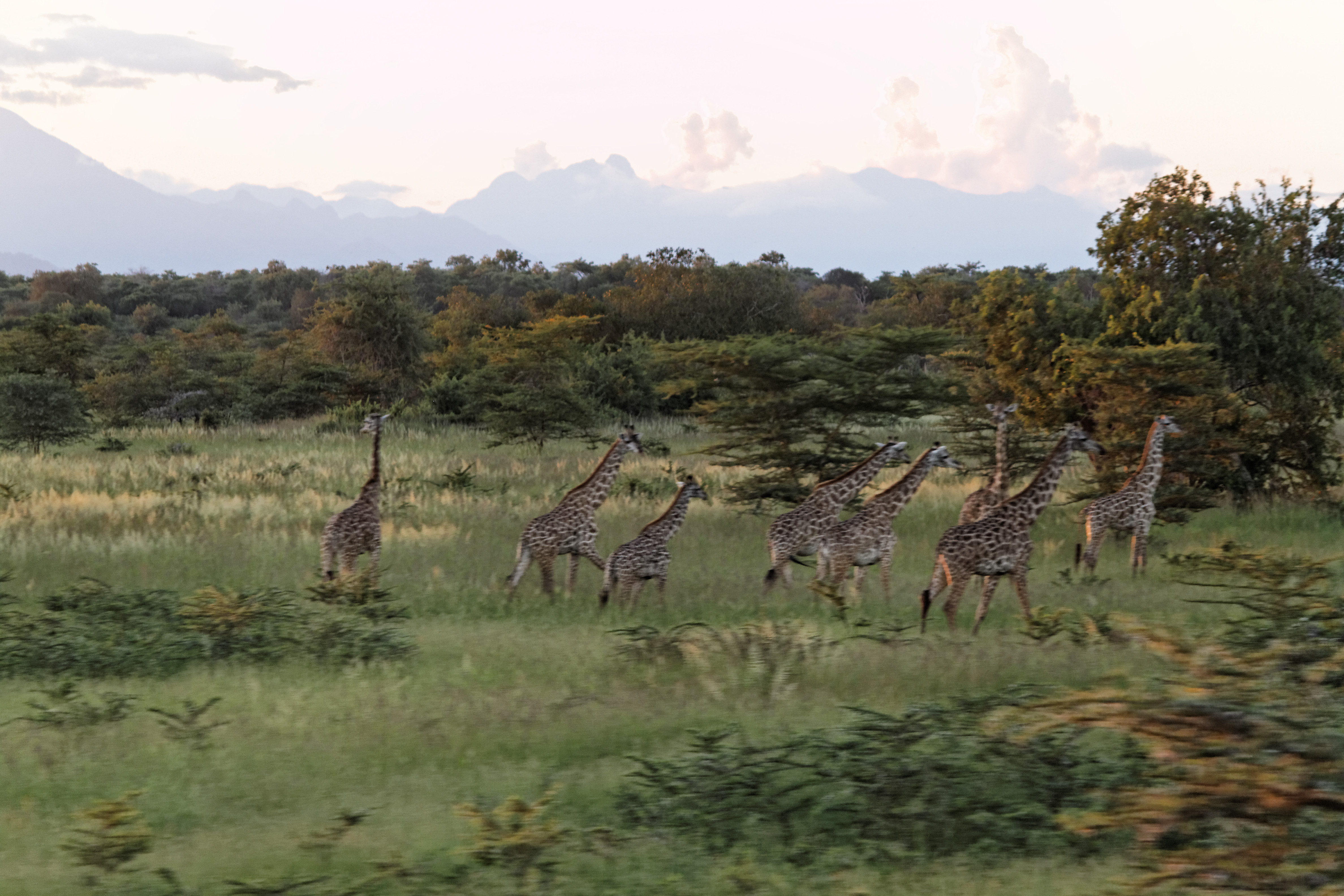
Near the last ten hours of the trip, we got a new bunkmate, a Tanzanian lady who spoke very little English. As the train ran through the Selous Game Reserve, we saw zebras, giraffes, wildebeests, antelope and one extremely terrified elephant, running away from the train as fast as it could manage. This was the closest we came to a safari the whole time we were in Africa–the budget traveler safari. Our new bunkmate, along with all the other passengers, hung out the train as far as she dared to take pictures with her cellphone, telling us the words for the animals in Swahili and pointing out the ones we missed. At one point I asked her, with Swahili read from a little phrasebook, where she was from, and she said something I didn’t recognize. I asked, “Tanzania?” and she indicated that it was outside of Dar, where we were headed. She slapped my palm and held on, laughed and said, “Dar es Salaam IN DA HOUSE!”
(For more information on the TAZARA train, or any train travel worldwide, check out www.seat61.com. We have used this site so many times when preparing for train trips in Thailand, China, India and Zambia/Tanzania. I highly recommend its content, especially when researching for a leg of your trip right before you go: they have a lot of practical information on things like how you get visas on an international train or money exchange, safety tips, food and photos of what different classes of seating look like.)







 brown paper blue ink